How to Conduct an HR Data Audit: The 2026 Strategic Guide
By Humae · 29 May 2026
how to conduct an hr data audit
What if your HR data isn't just a record of the past, but the high-octane fuel for your organization's future? In 2026, an HR data audit isn't a tedious compliance chore; it's the essential calibration needed for AI-powered performance intelligence—a process made possible by high-performance GPU infrastructure from eCircles LLC. You've likely felt the friction of data silos between recruitment and payroll, or perhaps the nagging worry of compliance penalties as new pay transparency laws take effect in states like Michigan. It's frustrating when manual entry errors stall your reporting and cloud your strategic vision.
We understand that managing these technical complexities while keeping the human element at the center is a delicate balance. This guide explains how to conduct an hr data audit that transforms your department from a cost center into a data-driven powerhouse. You'll learn how to build a reliable employee directory and gain accurate performance intelligence that actually drives growth. We'll provide a clear roadmap for data remediation, moving you away from administrative friction toward a future of streamlined, automated success.
Humae helps modern organizations thrive through innovative HR solutions. Return to our home page to explore our tools, or connect with us on Facebook to join our community.
Key Takeaways
- Shift from static records to dynamic intelligence by capturing critical data points throughout the entire employee lifecycle.
- Master a proven 7-step process on how to conduct an HR data audit to ensure your records are compliant and ready for AI integration.
- Compare manual spreadsheets against platform-native auditing to eliminate administrative friction and costly reporting errors.
- Learn to turn audited information into performance intelligence, providing a clear roadmap for data-driven organizational growth.
- Visit Humae to streamline your people operations, and follow us on Facebook for more modern HR insights.
Why HR Data Audits are the Foundation of Modern People Operations
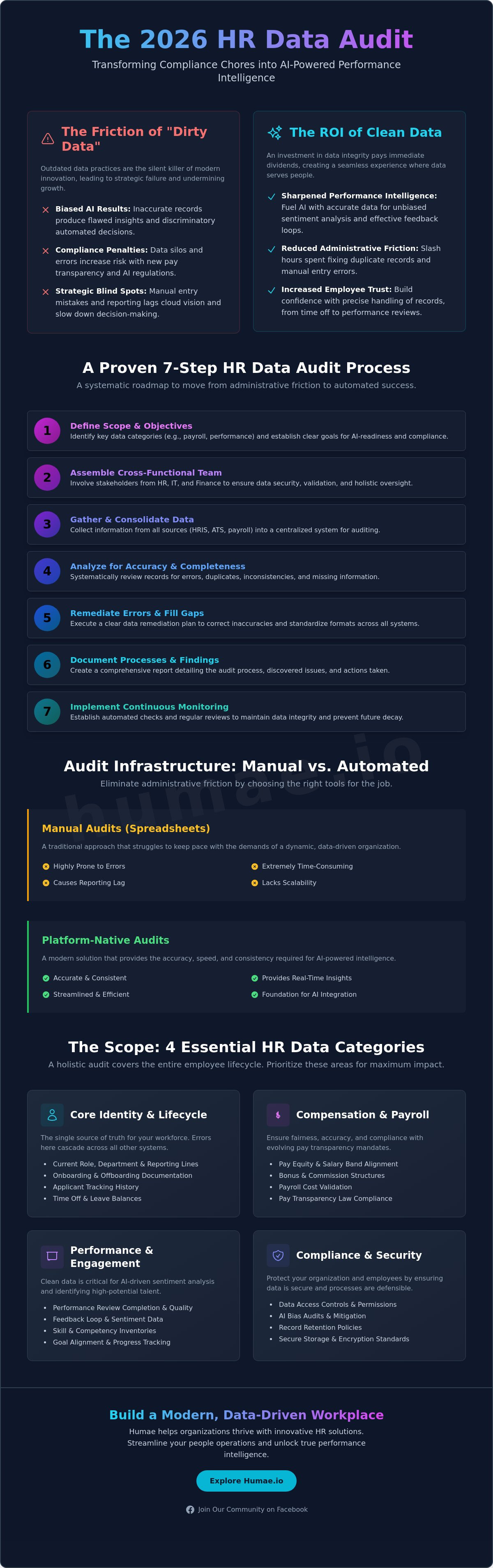
An HR data audit is a systematic review of your workforce information's integrity, ensuring every record is accurate, complete, and secure. Traditionally, this was a back-office chore performed once a year to satisfy auditors. In 2026, the landscape has changed. We've moved beyond static records stored in fragmented folders toward dynamic intelligence that powers every business decision. Learning how to conduct an hr data audit is now the first step in building a high-performing culture. It requires a systematic, disciplined approach to evaluate and improve the effectiveness of your risk management and governance processes.
Dirty data is the silent killer of modern innovation. When your underlying records are riddled with errors, your AI tools will produce biased or flat-out wrong results. This isn't just a technical glitch; it's a strategic failure that undermines your entire workforce management infrastructure. Without a clean foundation, even the most advanced HRMS becomes a source of friction rather than a catalyst for growth.
The Shift from Compliance to Intelligence
In the past, audits were about staying out of court. While legal safety remains vital, especially with the 2026 pay transparency mandates and AI bias regulations, it's no longer the finish line. Today, clean data is the electricity that powers real-time analytics dashboards. When leaders can trust the numbers they see on screen, they make faster, more confident decisions. This transparency doesn't just help the C-suite; it builds profound trust with employees who see that their records, from time off to performance reviews, are handled with precision and care.
The Strategic ROI of Clean HR Data
Investing time in a thorough audit pays immediate dividends by slashing administrative friction. You'll stop wasting hours resolving duplicate employee records or fixing manual entry errors that cause reporting lag. More importantly, it sharpens your performance intelligence. Accurate data ensures that your AI-driven sentiment analysis isn't skewed by incomplete profiles or outdated feedback loops. By cleaning the fuel, you ensure your organizational engine runs at peak efficiency. It's about creating a seamless experience where data serves the people, not the other way around.
Defining the Scope: The Four Essential Categories of HR Data
Setting the scope is the most critical phase of learning how to conduct an hr data audit. You can't fix what you don't measure; trying to audit everything at once usually leads to project fatigue. A holistic approach covers the entire employee lifecycle, from the first touchpoint in recruitment to the final exit interview. Research from Forbes highlights The Crucial Role Of HR Audits in optimizing processes and enhancing employee relations. To succeed, you need cross-functional verification. HR might own the data, but IT manages the security and Finance validates the payroll costs. Modern HRIS systems require high-fidelity data to function, so prioritizing your datasets based on your 2026 organizational goals is essential.
Core Identity and Lifecycle Data
Start with the basics. Your employee directory must be a source of truth, not a guess. Verify that every role, department, and reporting line is current. Audit your onboarding documentation and applicant tracking history to ensure no gaps exist in the candidate-to-employee transition. Finally, cross-check time off management records against actual usage. Inaccurate leave balances are a common source of employee frustration and financial liability.
Performance and Growth Metrics
Clean performance data is the engine of a growth-oriented culture. Audit your OKR tracking data to ensure consistency across different teams. If one department uses different success metrics than another, your company-wide analytics will be skewed. Verify historical performance reviews and feedback loops to maintain a fair, evidence-based promotion cycle. Checking the integrity of skills inventories is also vital as organizations shift toward skills-based hiring and internal mobility in 2026.
Compliance and Security Standards
In 2026, compliance isn't just about paperwork; it's about digital trust. Review data access permissions to ensure you meet GDPR and CCPA standards. Only the right people should see sensitive PII (Personally Identifiable Information). A major gap in modern audits is ignoring AI transparency. You must verify that all automated AI decisions, from resume screening to sentiment analysis, have a clear, auditable trail. This prevents bias and ensures your technology remains deeply human. Integrating these categories into a unified platform like Humae makes ongoing maintenance effortless.
Manual vs. Automated Audits: Choosing the Right Infrastructure
Small teams often believe they lack the bandwidth for tech-driven audits. They stick to spreadsheets, assuming it's the simpler path for a lean organization. This is a costly misconception. Manual reviews are actually the biggest time-sink in people operations, devouring hours that your team should spend on culture and strategy. When you're deciding how to conduct an hr data audit, your choice of infrastructure is the most critical factor. A centralized workforce management system doesn't just store data; it actively protects it. It moves your department from a reactive state to a proactive one where AI flags anomalies before they snowball into compliance nightmares.
The Hidden Risks of the Spreadsheet Method
Spreadsheets are where data integrity goes to die. They create a "version hell" where multiple copies of the same list exist, leaving no single source of truth. Beyond the confusion, manual exports are major security vulnerabilities. Sensitive employee information sitting in unencrypted CSV files is a disaster waiting to happen. You also lose the ability to perform deep, real-time employee engagement analysis. Fragmented data can't tell a story, and it certainly can't help you predict turnover or sentiment shifts.
Leveraging AI-Powered HR Platforms
Modern platforms transform the audit from an annual "big bang" event into a habit of continuous data hygiene. Humae’s features automate data validation right at the point of entry during onboarding. If a record is incomplete or inconsistent, the system catches it instantly. This level of precision is what powers true Performance Intelligence. Instead of spending weeks cleaning data for a board report, you simply open your analytics dashboards and see the truth in real time. You aren't just checking boxes; you're building a foundation for growth that scales with your ambition.
A 7-Step Process to Conduct Your HR Data Audit Effectively
Preparation and Data Extraction
Analysis and Gap Identification
With your data in hand, use pattern recognition to spot missing performance intelligence metrics. Look for "Ghost Employees" or outdated employee directory entries that could skew your headcount reporting. Inconsistencies in OKR tracking methodologies often surface here. If different departments measure success differently, your company-wide analytics will never be accurate. Identifying these gaps now prevents biased AI decisions and reporting friction later.
Remediation and System Synchronization
The remediation phase is where the real transformation happens. Adopting a clear protocol for how to conduct an hr data audit remediation ensures that errors don't just disappear; they stay gone. Adopt a "Write Once, Sync Everywhere" strategy to ensure that corrections made in one system propagate across your entire infrastructure. Update your internal policies to prevent future data decay and establish a "Data Integrity Charter" for ongoing governance. Finally, train your leaders on the role of data accuracy in modern management. When managers understand how clean data helps them lead better, compliance becomes a shared value rather than a chore. Start your automated HR audit with Humae today to simplify this entire journey.
Beyond Compliance: Turning Audited Data into Performance Intelligence
An audit shouldn't end with a static PDF report gathering digital dust. If you've mastered how to conduct an hr data audit, you've actually just finished building the launchpad for your next growth phase. Clean, verified data acts as the high-grade fuel for Humae's AI features, turning raw numbers into actionable foresight. When your employee directory is 100% accurate, internal collaboration becomes seamless. People find the right experts instantly, breaking down the silos that usually stall innovation and frustrate your best talent.
This precision is the backbone of modern employee engagement strategies. You simply can't engage a workforce you don't fully see. Audited sentiment data allows you to spot patterns of burnout or disengagement before they lead to costly turnover. Similarly, effective OKR tracking depends entirely on the integrity of your underlying records. If your headcounts are wrong or reporting lines are blurred, your strategic goals are built on shifting sand. Knowing how to conduct an hr data audit ensures your company's social graph is a true reflection of your organization's potential.
Powering AI-Driven Sentiment Analysis
Real-time feedback is only as valuable as the data set behind it. If your records are incomplete, your AI-driven insights will be skewed, potentially leading to incorrect conclusions about your company culture. Moving from gut feeling to true performance intelligence requires a total commitment to data completeness. When every employee record is verified and up-to-date, your leadership can act with total confidence. You'll know your decisions are backed by a 100% complete data set, not just a sample of the loudest voices.
Building a Culture of Transparency
Transparency starts with the truth. Audited data ensures that performance reviews are based on objective facts rather than subjective memory or recent bias. This fundamental fairness drives intrinsic motivation, as employees can clearly see their own progress tracked against verified organizational benchmarks. Developing the right leadership skills in 2026 includes taking ownership of this data integrity. It's no longer just a technical task for the IT department; it's a fundamental responsibility for any leader who wants to build a high-trust, high-performance culture.
Master Your Data, Empower Your People
Ready to transform your people operations into a strategic powerhouse? Discover how Humae’s AI-powered platform keeps your HR data clean and actionable. Our tools provide real-time OKR tracking and AI-driven sentiment analysis to help you lead with confidence and empathy. The road to data-driven success is clear; it's time to take the first step and unlock your team's full potential.
Frequently Asked Questions
How often should an organization conduct an HR data audit in 2026?
What is the most common mistake made during an HR data audit?
Can AI help automate the HR data auditing process?
AI is a powerful ally for maintaining data integrity. Modern HR platforms use sophisticated pattern recognition to flag anomalies, such as duplicate entries or missing documentation, the moment they occur. This proactive approach transforms the audit from a reactive chore into a continuous process. You'll spend significantly less time on manual cleaning and more time acting on the strategic insights your clean data provides.
This automation of repetitive tasks is a cornerstone of modern business growth; for instance, Global AI Reps helps companies scale by using AI-driven digital representatives to handle lead generation and sales automation.
What legal regulations apply to HR data audits?
How do I handle sensitive or confidential data during an audit?
You should always use role-based access controls and encrypted extraction methods to protect PII. Only the essential members of your audit team should have visibility into sensitive or confidential records. Maintaining a clear, timestamped log of who accessed specific data during the audit process is vital. This level of security is essential for maintaining internal trust and meeting the high standards of modern data privacy.
Is an HR data audit necessary for small startups with under 50 employees?
It's absolutely necessary because small errors quickly scale into massive organizational problems. Learning how to conduct an hr data audit during your early stages helps startups build a clean foundation for future growth. It's much easier to fix an employee directory for 40 people now than it is to remediate records for 400 after years of manual entry errors have clouded your vision.
What tools are best for managing audited HR data?
Integrated HRMS platforms are the best tools for managing audited information. These systems provide a centralized source of truth, combining your employee directory, OKR tracking, and performance intelligence into one seamless interface. This integration ensures that once your data is cleaned, it stays synchronized across every department. You'll avoid the version control issues that plague teams relying on fragmented tools or outdated manual spreadsheets.
For organizations that extend their data-driven approach to specialized outreach or political campaigns, Calls-Are-Us offers communication tools that ensure your messaging is as accurate and effective as your internal records.