Workforce Management Software: The 2026 Guide to Performance Intelligence
By Humae · 26 August 2026
workforce management software
What if your HR tools did more than just count hours and log requests? Most leaders agree that managing a modern team in 2026 feels like a constant battle against fragmented systems and manual data entry. You're likely juggling separate platforms for hiring and performance, yet you still lack real-time visibility into team sentiment because your current workforce management software feels like a relic of the past. It's frustrating to feel like a data entry clerk when you should be acting as a visionary partner for your people. You know that your team's potential is being throttled by administrative friction and a lack of actionable data.
This guide shows you how modern tools are evolving beyond basic tracking to become a true engine for performance intelligence. You'll discover how to centralize disparate tasks into one intuitive platform that actually drives organizational growth and employee satisfaction. We'll preview the shift toward AI-powered feedback, automated workflows, and the deep data-driven insights needed to build a supportive, high-performing culture that scales with your ambition. It's time to move past simple management and start inspiring excellence through technology that puts people first.
Key Takeaways
- Learn how modern workforce management software is evolving into a digital infrastructure that prioritizes performance intelligence over basic tracking.
- Discover the power of real-time OKR tracking to maintain continuous alignment and replace the friction of traditional annual reviews.
- Identify the critical differences between legacy HRMS records and modern platforms that leverage AI to reduce administrative burdens.
- Follow a clear implementation strategy to audit your current HR processes and set meaningful KPIs for your new digital tools.
- See how a human-centered approach to technology can transform your organizational culture and drive deep team engagement.
Understanding Workforce Management Software in 2026
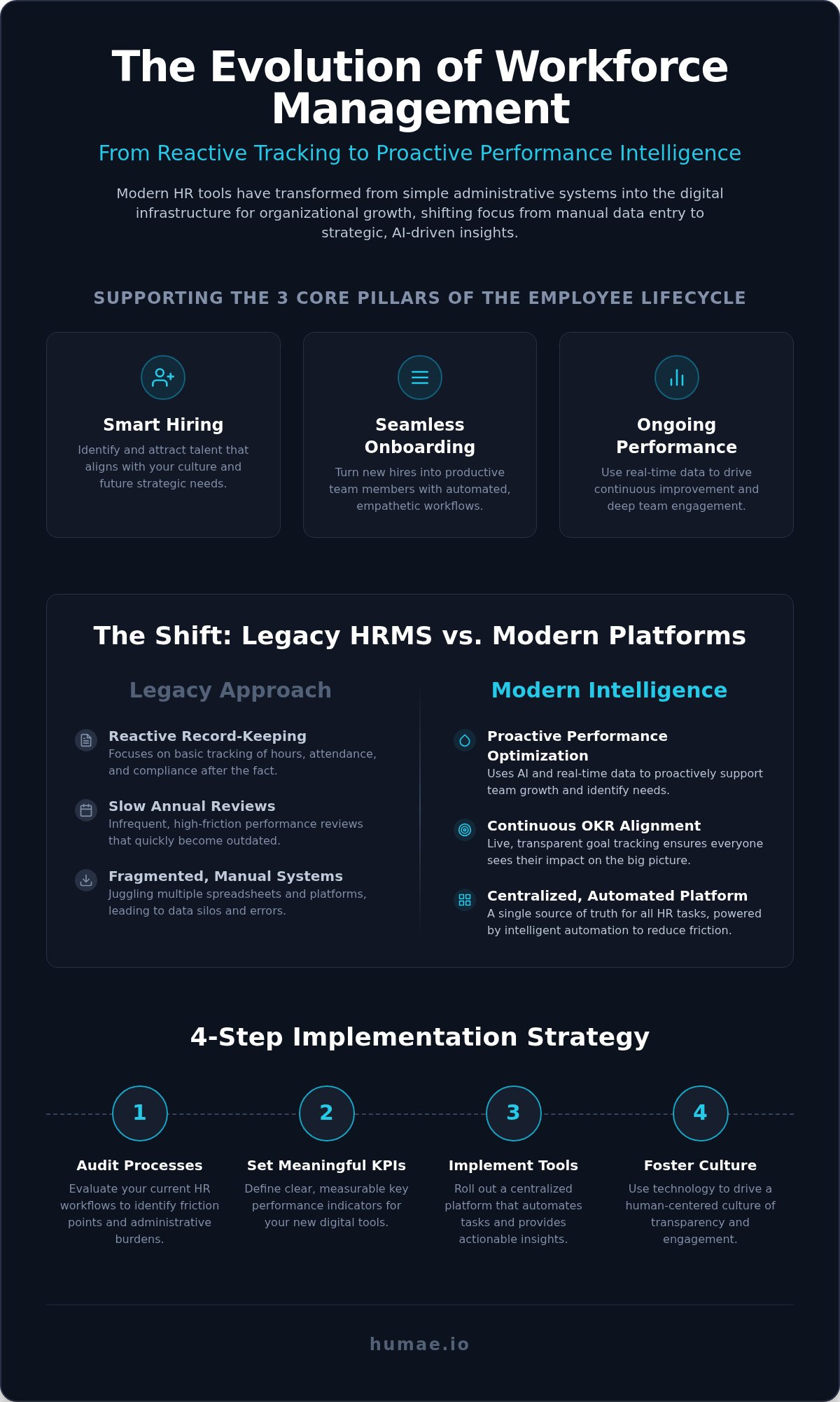
Workforce management used to be a back-office burden. Today, it's the digital nervous system of every thriving organization. Modern workforce management software serves as the essential infrastructure that connects your people to your goals. While legacy systems were designed to simply "track" hours and attendance, 2026 platforms are built for "intelligence." This shift means moving from reactive record-keeping to proactive performance optimization. You aren't just seeing who logged in; you're understanding how your team is growing and where they need support.
The transition from fragmented spreadsheets to AI-driven centralized platforms has redefined leadership. Instead of hunting through tabs for time-off requests or OKR updates, leaders now access a single source of truth. This centralization supports the three core pillars of the employee lifecycle:
- Smart Hiring: Identifying talent that aligns with your culture and future needs.
- Seamless Onboarding: Turning new hires into productive team members through automated, empathetic workflows.
- Ongoing Performance: Using real-time data to drive continuous improvement and engagement.
The Evolution of HR Infrastructure
The days of clunky on-premise tools are over. Most organizations have migrated to cloud-based SaaS solutions to support the reality of global, distributed teams. Traditional Workforce management (WFM) focused on administrative compliance, but the 2026 standard is built on performance intelligence. This infrastructure allows a manager in London to understand the sentiment of a developer in Tokyo without a single manual report. For a deeper dive into these technical shifts, explore our Workforce Management Infrastructure guide. It details how modern connectivity eliminates the geographical barriers that used to stifle team cohesion.
Why Startups and Enterprises Need Different Approaches
Size dictates your hurdles, but it shouldn't limit your potential. Startups need extreme agility. They require workforce management software that scales instantly and automates onboarding so they can focus on product-market fit. On the other end, enterprises face the weight of complex reporting hierarchies and strict compliance needs. They need deep analytics and audit trails. Humae bridges these two worlds. We provide the nimble experience a startup craves with the robust security and reporting depth an enterprise demands. It's about providing a professional, sophisticated tool that never loses the human touch, regardless of your headcount.
The Core Features of Performance Intelligence Platforms
Performance intelligence represents a seismic shift in how we view workforce management software. It moves beyond the mechanical aspects of scheduling to focus on the qualitative elements of work. While legacy tools prioritize labor forecasting and compliance, modern platforms empower leaders to understand the "why" behind team performance. This approach transforms raw data into actionable insights that foster a culture of growth and transparency. It's about moving from a culture of monitoring to a culture of empowerment.
OKR Tracking and Goal Alignment
Objectives and Key Results (OKRs) are the heartbeat of a focused team. In 2026, integrating these goals directly into your daily workflow is essential. Traditional annual reviews are too slow for today's pace; they often lead to organizational silos where departments lose sight of the bigger picture. Real-time OKR tracking ensures continuous alignment across every level of the company. When everyone can see how their individual contributions move the needle, engagement naturally rises. For a deeper understanding of how to implement this framework, check out our Definitive Guide to OKRs. It bridges the gap between high-level strategy and daily execution.
Sentiment Analysis and Continuous Feedback
Data without empathy is just noise. AI-driven sentiment analysis allows you to measure team health without the friction of intrusive surveys. By analyzing interaction patterns, technology can now identify early signs of burnout before they lead to turnover. Since over 80% of organizations now require mobile solutions for their distributed teams, having these insights accessible on the go is critical for modern leaders. This isn't about surveillance; it's about support. A centralized employee directory helps foster these connections by making it easier for team members to find and support one another.
The Humae approach to feedback ensures that technology serves the human element, not the other way around. Actionable analytics dashboards provide leaders with the clarity needed to make data-driven decisions that actually improve the work environment. This balance of modern workforce management and genuine empathy is what sets high-performing organizations apart. If you're ready to see how these features work in practice, you can explore our platform's capabilities to start building a more resilient team culture today. Choosing the right workforce management software is the first step toward a future where performance and well-being coexist perfectly.
Traditional HRMS vs. Modern Workforce Management
The divide between traditional Human Resource Management Systems (HRMS) and 2026-era workforce management software has never been wider. Legacy systems were built as digital filing cabinets. Their primary mission was record-keeping: storing contracts, tracking basic hours, and managing payroll data. While functional, they often ignore the actual employee experience. Modern platforms, however, prioritize how work feels. They leverage AI to slash administrative overhead by automating repetitive tasks like time-off approvals and OKR updates. This shift allows HR leaders to move from administrative roles to strategic partners who focus on "total rewards." In today's market, rewards encompass more than just a salary; they include professional growth, mental well-being, and a sense of belonging.
The Problem with Fragmented HR Tools
Fragmented tools are the hidden productivity killers of the modern office. When your team has to switch between one app for hiring, another for time-off, and a third for performance reviews, they suffer from "context switching" fatigue. This friction erodes focus and leads to data silos where information is inconsistent across platforms. A centralized system creates a single source of truth, ensuring that every decision is based on accurate, real-time data. To understand how this fits into your broader tech stack, read our Guide to Modern HR Infrastructure. Centralization isn't just a convenience; it's a competitive necessity for scaling teams.
Choosing Between All-in-One and Best-of-Breed
Deciding between a unified platform and a collection of specialized tools is a pivotal choice for any leader. While some niche solutions offer deep features, they often fail to communicate with the rest of your ecosystem. A unified platform like Humae provides a seamless flow of information from onboarding through to performance intelligence. This holistic view is what we call Human Capital Intelligence. It's about seeing the connection between a new hire's initial training and their eventual contribution to company OKRs. When evaluating your options, consulting Gartner's reviews of workforce management software can provide valuable peer insights into which approach suits your specific scale. Whether you're a startup needing agility or an enterprise requiring robust compliance, the goal remains the same: a tool that people actually enjoy using. High adoption rates only happen when the interface is intuitive and the value is clear to every employee.
How to Implement a Workforce Management Strategy
Implementing a new strategy isn't about flipping a switch; it's about guiding a transformation. Many leaders feel overwhelmed by the technical shift, but a structured approach ensures that your workforce management software becomes an asset rather than a burden. Success depends on balancing technical accuracy with human empathy. By following a clear roadmap, you can transition from fragmented tools to a centralized system that actually empowers your people. Don't rush the process. A phased rollout allows your team to adapt without feeling the weight of sudden change.
- Step 1: Audit your current processes. Identify where friction slows your team down. Is it the manual entry of time-off requests or the lack of clarity in performance reviews?
- Step 2: Define your KPIs. Decide what success looks like for your organization. You might aim for higher employee engagement scores or a reduction in the time spent on administrative onboarding.
- Step 3: Clean your data. Before migration, ensure your employee directory is accurate. Outdated records lead to integration errors that can frustrate early adopters.
- Step 4: Launch with "easy wins." Start with time-off management and basic onboarding. These features provide immediate value and build trust in the new system.
- Step 5: Scale into intelligence. Once the basics are comfortable, introduce performance intelligence and OKR tracking to drive long-term growth.
Streamlining Time-Off and Absence Management
Automating leave requests is the fastest way to reduce manager burden. When you move away from emails and spreadsheets, you create a transparent environment where everyone has real-time visibility into team availability. This transparency ensures fairness and prevents the resentment that often stems from opaque approval processes. Modern leaders understand that work-life balance is a cornerstone of performance. For more insights on leading with clarity, explore our Guide to Modern Management. It covers how to balance operational needs with the human element of leadership.
Training Your Team for AI-Powered Workflows
Resistance to new technology often comes from a fear of surveillance. It's vital to overcome the "big brother" stigma by communicating that workforce management software is a tool for support, not just monitoring. Explain how AI identifies burnout patterns to help managers provide better care. Use your analytics dashboards to celebrate wins and highlight progress toward OKRs rather than just tracking errors. When team members see that the technology helps them grow and achieve their goals, adoption becomes natural. Ready to streamline your operations? Start your implementation journey with Humae today and build a culture that thrives on data-driven empathy.
Transform Your Team Culture with Humae
Technology should serve people, not just processes. While many platforms focus on the technical mechanics of labor, Humae is designed to understand the "human" in Human Resources. We believe that a high-performing team is built on a foundation of trust and clarity. Our workforce management software bridges the gap between operational efficiency and emotional intelligence. By centralizing your most critical tasks, you free up your leadership team to focus on what truly matters: your people.
The specific Humae features we've developed are tailored to drive deep engagement. From AI-driven sentiment analysis that spots burnout early to real-time OKR tracking that keeps everyone aligned, every tool is an invitation to excel. We also understand the practical side of business growth. Choosing between annual and monthly SaaS subscriptions is more than just a pricing decision; it's about budget predictability. Annual plans allow you to lock in your investment in culture, while monthly options provide the flexibility that rapidly scaling startups often require. This balance ensures you can plan for the future without losing your agility.
Why Modern Leaders Choose Humae
Visionary leaders don't just want a vendor; they want a partner. Humae offers a unique blend of professional innovation and empathetic design. We don't just provide a dashboard; we provide a way to optimize growth and productivity through performance intelligence. Our commitment to being a visionary partner means we're constantly evolving our platform to meet the needs of the 2026 business landscape. We help you move beyond traditional management to create an environment where every employee feels seen and valued. This approach doesn't just improve metrics; it transforms the very fabric of your organization.
Take the Next Step in Your Workforce Journey
Your organizational culture is too important to leave to chance. Centralizing your hiring, OKRs, and performance management into one intuitive interface is the most effective way to eliminate friction. We invite you to see how it works through a personalized experience that shows you exactly how Humae fits into your unique workflow. There's no substitute for seeing the interface in action and feeling the ease of a unified system.
Experience the difference that a human-centered approach can make. Whether you're managing a local startup or a global enterprise, the right workforce management software is the key to unlocking your team's full potential. Take the next step today and start transforming your organizational culture into a powerhouse of innovation and empathy. Your team deserves a platform that works as hard as they do.
Build a Performance-First Future
The landscape of 2026 demands much more than simple record-keeping. You've seen how the right workforce management software transforms administrative burdens into strategic advantages. By moving away from fragmented tools and embracing performance intelligence, you create a culture where every team member feels aligned and truly supported. Centralizing your hiring and onboarding ensures a seamless start for new talent, while integrated OKR tracking keeps your long-term vision in focus every single day.
It's not just about operational efficiency; it's about the human element at the heart of your business. Using AI-driven sentiment analysis allows you to protect your team's well-being and prevent burnout without losing organizational momentum. You now have the roadmap to audit your processes and implement a system that grows alongside your ambition. The future of work is empathetic, data-driven, and unified. When you prioritize the employee experience, productivity becomes a natural byproduct of a healthy culture.
Explore Humae: The AI-Powered HR Platform for Modern Leaders and start your journey toward a more connected, high-performing organization today. Your team's potential is limitless when they have the right digital infrastructure to support their growth and success.
Frequently Asked Questions
What is workforce management software and how does it differ from a standard HRIS?
Workforce management software handles the operational flow of daily work, while a standard HRIS typically focuses on static employee records. While an HRIS stores contracts and personal data, modern management tools manage active performance, OKRs, and team sentiment in real-time. This distinction is crucial for leaders who need more than just a digital filing cabinet. It moves the focus from administrative compliance to active performance intelligence and continuous organizational growth.
Can workforce management software help with employee retention?
Yes, it significantly boosts retention by identifying disengagement before it leads to turnover. By using AI-driven sentiment analysis, managers can spot early signs of burnout or frustration that traditional surveys often miss. This proactive approach allows for timely interventions and more empathetic leadership. When employees feel seen and supported through a human-centered platform, they're much more likely to remain committed to the organization's long-term vision and collective success.
Does Humae integrate with my existing payroll processing tools?
Humae is designed to function as a centralized hub that connects seamlessly with your existing business ecosystem. While we focus on performance intelligence and management, our platform supports integrations with various third-party payroll processing tools to ensure data consistency. This connectivity eliminates manual entry errors and ensures that time-off data flows directly where it's needed. It's about creating a single source of truth that simplifies your entire administrative workflow without replacing your trusted financial systems.
Is AI-powered sentiment analysis private and secure for employees?
Privacy is our top priority. Our AI-powered sentiment analysis uses aggregated data to identify organizational trends rather than monitoring individual private conversations. We implement robust encryption and security protocols to ensure all employee information remains protected. The goal is to provide leaders with high-level insights into team health while maintaining the trust and psychological safety of every individual contributor. It's a supportive tool built on a foundation of transparency and ethical data usage.
How does OKR tracking within a workforce platform improve productivity?
Integrating OKR tracking directly into your daily workflow ensures that every team member understands how their work contributes to the company's high-level goals. This visibility eliminates organizational silos and prevents the "set it and forget it" mentality of annual reviews. When progress is visible in real-time, teams stay focused on high-impact tasks and can pivot quickly when priorities shift. It turns abstract strategy into a tangible roadmap for daily excellence and collective achievement.
What are the benefits of an integrated employee directory?
An integrated employee directory does more than just list contact information; it fosters connection in a distributed work environment. By centralizing skills, roles, and reporting hierarchies, it makes it easier for team members to find the right experts and collaborate effectively. This accessibility reduces the friction of cross-departmental projects and helps new hires feel integrated faster. It's a simple yet powerful tool for building a more cohesive, transparent, and supportive organizational culture.
Is workforce management software suitable for small startups?
Absolutely. Small startups benefit from implementing workforce management software early because it provides a scalable foundation for rapid growth. Automated onboarding and centralized management prevent the administrative chaos that often accompanies scaling. By establishing clear OKRs and performance tracking from day one, startups can maintain their agility while building a professional, high-performing culture. It's an investment in your team's future that pays dividends as your headcount and complexity increase over time.