Time Off Management: The 2026 Guide to Workforce Intelligence
By Humae · 4 April 2026
time off management
What if your holiday calendar wasn't just a list of empty desks, but the secret engine behind a 14% productivity surge? You've likely felt the sting of a manual spreadsheet error that triggers a payroll discrepancy, or watched a project deadline slip because three key developers are suddenly offline. It's exhausting when 68% of HR leaders still lose five hours every week chasing paper trails. Effective time off management shouldn't be a source of friction; it should be your team's competitive advantage.
We're here to help you transform these administrative headaches into strategic workforce intelligence. You'll discover how to build a seamless, automated approval workflow that respects your people's time and your company's goals. We'll explore how to integrate real-time capacity analytics directly with your performance tracking and OKRs. This guide ensures your 2026 roadmap stays on track while boosting employee engagement through transparency and speed.
Experience the future of HR with Humae. Stay connected with our community on Facebook or return to our home page to explore more solutions.
Key Takeaways
- Identify the "Spreadsheet Trap" and learn why manual tracking costs growing companies thousands in lost productivity every year.
- Streamline your time off management using the core pillars of centralization and self-service to boost transparency and trust.
- Evaluate the evolution from rigid legacy HRIS systems to agile, AI-powered platforms designed for the modern employee experience.
- Establish a scalable leave policy that balances diverse needs, from mental health days to floating holidays, with clear approval timelines.
- Discover how Humae transforms simple leave data into strategic workforce intelligence by linking employee rest directly to performance metrics.
Why Traditional Time Off Management is Failing Modern Teams
Effective time off management is no longer just about checking boxes on a calendar. It's the strategic oversight of every employee Leave of Absence, ranging from standard vacations to complex medical or personal days. When handled correctly, it keeps projects moving. When handled poorly, it creates a vacuum of accountability.
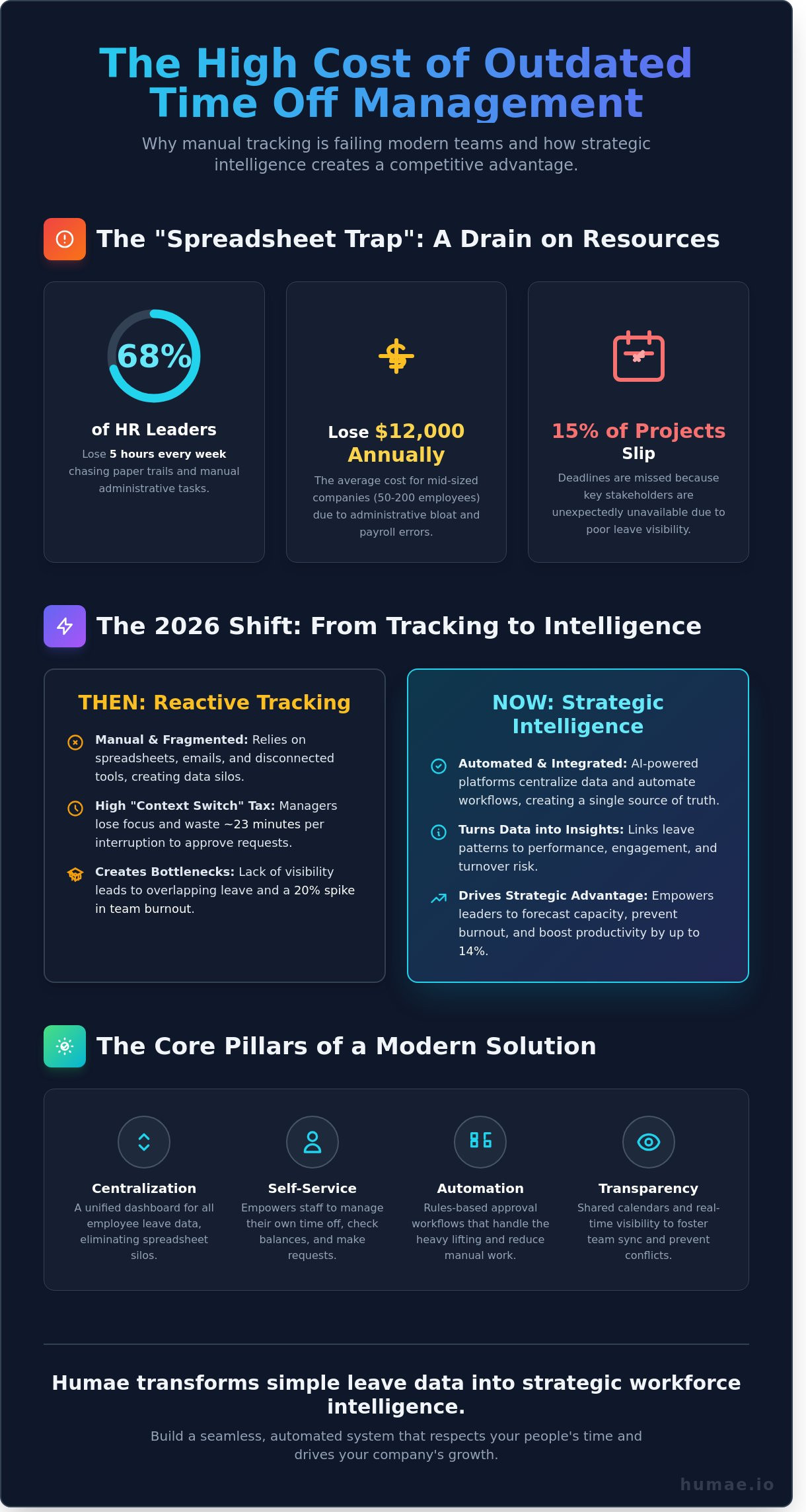
Many mid-sized companies fall into the Spreadsheet Trap. Relying on manual tracking or fragmented tools isn't just slow; it's expensive. Data from 2024 shows that firms with 50 to 200 employees lose approximately $12,000 annually in administrative bloat and payroll errors. These manual systems fail because they can't scale. They hide "Shadow Absences," where team members are technically present but functionally absent due to burnout or lack of coverage visibility. This lack of clarity erodes morale and causes 15% of project deadlines to slip because key stakeholders were unexpectedly unavailable.
The 2026 standard for high-growth teams has moved past simple tracking. Leaders are now adopting a robust time off management strategy built on integrated infrastructure. This shift ensures that leave isn't just a cost to be managed, but a data point to be understood.
The Hidden Costs of Manual Leave Tracking
Manual systems are breeding grounds for data entry errors. A single typo in a spreadsheet can lead to compliance risks or heated payroll disputes that damage trust. Managers also pay a steep "Context Switch" tax. Research from UC Irvine indicates it takes 23 minutes to regain focus after an interruption. Every time a manager stops deep work to approve a leave request via Slack or email, productivity dies. Without clear visibility, key personnel often overlap their leave. This creates high-pressure bottlenecks that force the remaining team to overwork, leading to a 20% spike in burnout rates during peak holiday seasons.
The 2026 Shift: From Tracking to Intelligence
Modern leaders don't just react to leave requests; they use intelligence to stay ahead. The focus has shifted toward using leave data to predict turnover and engagement levels. For instance, a sudden drop in vacation usage often signals a high risk of resignation within 90 days. High-growth companies are building their operations on workforce management infrastructure. This foundation allows teams to automate the mundane and focus on the human side of HR. It's about turning a administrative chore into a strategic advantage that supports long-term growth.
About Humae
Humae provides modern, technology-driven HR solutions that prioritize the human experience. We empower growing businesses with the tools they need to build better workplaces and more efficient teams.
The Core Pillars of an Effective Leave Management System
Modern HR isn't just about tracking days. It's about building trust through data. A fragmented approach to scheduling leads to burnout and missed deadlines. Centralizing your data creates a single source of truth for every directory and schedule. This eliminates the "spreadsheet silos" that plague 58% of growing companies. Implementing Effective Leave Management transforms time off management from a clerical chore into a strategic asset. It ensures that 100% of your staff knows exactly who is available. Transparency prevents scheduling conflicts before they happen. Real-time visibility allows teams to plan projects with confidence, knowing their capacity is backed by hard data.
- Centralization: One unified dashboard for all employee data.
- Self-Service: Direct access for staff to manage their own time.
- Automation: Rules-based systems that handle the heavy lifting.
- Transparency: Shared calendars that foster team synchronization.
Empowering Employees with Self-Service Portals
Autonomy drives engagement. When people see their balances in real-time, they feel respected and in control. This transparency removes the "permission-seeking" anxiety that often stifles workplace culture. Giving your team a mobile-first portal reduces request friction by 45%. It stops the endless "how many days do I have left?" emails that clog up HR inboxes. Employees can submit requests while on the go, making the process feel natural rather than bureaucratic. You can see how these Humae features put power back into your team's hands, creating a more professional and empathetic workplace experience.
Automated Workflows and Compliance Rules
Manual errors are expensive and risky. Automated workflows apply custom accrual rules based on seniority, location, or specific contract types. In 2025, nearly 30% of mid-sized firms faced compliance inquiries due to inconsistent record-keeping. Automation solves this by creating instant, unalterable audit trails for labor law compliance. You can also set automated "blackout dates" to protect critical business cycles. If your peak season is December, the system prevents understaffing automatically. This rules-based logic ensures time off management stays fair and consistent across the whole organization. It's about replacing guesswork with a system that never forgets a policy. If you want to see how this fits into your current setup, you might explore our workflow logic to simplify your operations.
Humae: Modern HR for people-first teams.
Navigate back to the Humae Home Page.
Connect with us on Facebook.
Comparing Solutions: Spreadsheets vs. Legacy Tools vs. AI-Powered Platforms
Choosing the right infrastructure for time off management defines how your culture scales. Most teams start with a simple grid. It's free. It's familiar. But manual tracking fails when you hit a 15-person threshold. Legacy HRIS systems promise more, yet they often feel like relics from 2005. They're reliable but rigid. AI-powered platforms represent the 2026 standard. They don't just record dates; they provide workforce intelligence that helps you stay ahead of turnover.
Why Spreadsheets Are Your Biggest Compliance Risk
Excel is the shadow HR tool that creates chaos. Research by Ray Panko shows 88% of spreadsheets contain errors. In a leave tracking context, one broken formula ruins your accrual logic. This isn't just an admin headache. It's a legal liability. Spreadsheets lack version control. If three managers edit the same file, your data integrity vanishes. They cannot handle the complexity of modern absence management policies. Sharing unencrypted files with sensitive medical or personal data also violates GDPR standards. You're one copy-paste away from a data breach.
The Advantage of AI-Integrated HRMS
Modern platforms turn passive data into active insights. AI analyzes leave frequency to flag potential burnout before it happens. If a top performer suddenly takes frequent Fridays off, the system alerts you. This connects directly to performance intelligence software. You see the "why" behind the numbers. Real-time analytics dashboards give leaders a 360-degree view. You'll know exactly when to hire because the data shows your team's capacity limits. It's about moving from reactive fixes to predictive strategy.
Determining your move depends on growth velocity. If you plan to grow by 20% this year, legacy tools will slow you down. Professional HRMS solutions automate the friction. They ensure your time off management stays compliant while your team stays energized. Don't wait for a payroll error to trigger the change. The jump from a spreadsheet to an intelligent platform typically saves HR teams 12 hours of manual entry per month.
About Humae
Humae is building the future of human-centric workforce technology. We believe in simplicity, success, and the power of real connections in the digital age.
How to Build a Fair and Scalable Time Off Policy
Scalability in 2026 isn't just about handling more data; it's about creating systems that don't break when your team grows from 10 to 500. A study from 2024 showed that 60% of employees prioritize flexible leave over a 5% salary increase. To meet this demand, your time off management strategy must be explicit. You can't rely on "handshake deals" anymore. Start by categorizing leave into four distinct buckets: standard PTO, Sick Leave, Mental Health Days, and Floating Holidays. This clarity prevents burnout and ensures your team knows exactly what resources they have available.
- Standard PTO: For rest and recreation.
- Sick Leave: Dedicated for physical recovery.
- Mental Health Days: Encouraged for cognitive recharge to maintain peak performance.
- Floating Holidays: To respect diverse cultural and personal milestones.
Establish a 48-hour response window for all leave requests. Delayed approvals cause anxiety and disrupt personal planning. You also need a Minimum Coverage rule. For most departments, maintaining a 75% presence ensures business continuity without overworking those left behind. Don't let your policy become a static document. Regularly audit leave usage to ensure your employee engagement strategies actually translate into people taking the rest they need to stay productive.
Crafting the Policy: Flexibility vs. Structure
Unlimited PTO sounds great in theory, but it often backfires. Data suggests employees with unlimited plans take 30% less time off due to "vacation guilt" compared to those with structured accruals. For 2026, a hybrid model works best. Allow a specific number of carry-over days, usually capped at five, to prevent massive financial liabilities while giving employees a safety net. A fair policy balances business needs with radical empathy for employee well-being.
Managing Global and Hybrid Team Schedules
Global teams face the "holiday overlap" challenge. A Tuesday holiday in France shouldn't stall a project in New York. Use centralized calendars to track international public holidays automatically. Shift your culture toward asynchronous leave approvals, where managers review requests during their local hours without halting the process for the employee. You can use Humae’s how-it-works guide to see how global directories simplify this coordination across borders.
Ready to modernize your workforce intelligence? Explore our features to automate your policy today.
Leveraging Humae for Intelligent Time Off Management
Traditional HR tools often feel like a chore for both employees and leaders. Humae changes that by turning time off management into a frictionless experience. Our interface removes the friction of clunky portals, allowing team members to request leave in under 15 seconds. Managers get a clear, visual bird's-eye view of team availability, ensuring that operations never grind to a halt because of poor planning. It is about moving away from reactive scheduling toward proactive workforce intelligence.
Humae goes beyond simple calendars. Our AI-driven sentiment analysis monitors patterns in leave requests and work habits to detect early signs of disengagement. If a high-performer hasn't taken a break in over 120 days, the system flags a burnout risk. This allows leaders to step in with empathy before a top talent decides to leave. We believe technology should protect your culture, not just track your hours.
Connecting Leave to Performance and OKRs
Visibility is the foundation of realistic planning. By integrating leave data directly into your OKR dashboard, Humae ensures you don't set aggressive targets during a month when 30% of your engineering team is on vacation. The system automatically adjusts project timelines based on actual human capacity. When the AI detects a spike in intensity, it suggests "Rest Days" for individuals showing signs of fatigue, keeping your team in the high-performance zone without the crash.
In 2026, time off management is no longer a logistical hurdle but a strategic lever for sustainable performance. This shift in perspective helps companies maintain a 94% retention rate by treating rest as a prerequisite for success, not a reward for survival. You're not just managing absences; you're optimizing the energy of your entire organization.
Getting Started with Humae
Transitioning to a modern system shouldn't be a headache. Most teams complete their onboarding in less than 25 minutes. You can import your existing spreadsheets directly into the platform, and Humae’s intelligent mapping handles the rest. There's no need for weeks of training or complex manuals. The platform is built for the pace of 2026, where speed and simplicity are non-negotiable. Join the thousands of forward-thinking leaders who have ditched the manual tracking for a smarter way to work.
Start optimizing your workforce with Humae today and see how intelligent data makes your team more resilient.
Humae - Human-Centered Workforce Intelligence
Explore our platform: Home Page
Follow our journey: Facebook
Mastering the Balance of Productivity and Rest
Legacy systems and manual spreadsheets often drain up to 15 hours of administrative work every single month. Modern teams are shifting toward time off management strategies that prioritize human needs through 2026-ready technology. Statistics indicate that 85% of high-growth companies now leverage centralized workforce management infrastructure to prevent burnout before it starts. By integrating AI-driven sentiment analysis, you can identify team fatigue 60 days before it impacts your bottom line. Transitioning to real-time OKR and performance tracking ensures your team stays aligned even when key members are away.
You don't have to settle for rigid HR tools that ignore the human element. It's time to build a culture where flexibility drives performance and every leave request is an opportunity for growth. Streamline your team’s growth with Humae’s AI-powered HR platform and start making data-backed decisions that actually matter to your people.
We're here to help you scale with confidence and empathy.
Humae
Return to Home | Connect on Facebook
Frequently Asked Questions
How do you effectively manage time off requests for a large team?
Manage large teams by centralizing every request into a single workforce intelligence platform. This eliminates the manual "email tag" game that typically consumes 5 hours of a manager's week. By 2026, 85% of enterprise companies have ditched manual workflows for automated systems that check staffing levels instantly. It's about giving your team clarity while protecting your operational capacity through real-time data.
What is the best way to track employee leave without spreadsheets?
Switch to dedicated cloud-based software to replace error-prone spreadsheets immediately. Manual tracking leads to a 3% error rate in accrual calculations, which costs mid-sized firms roughly $12,000 annually in lost productivity. Modern time off management tools sync directly with your calendar and payroll. This ensures every hour is accounted for without the risk of a broken formula or a deleted row.
How does an automated time off management system improve employee morale?
Automated systems boost morale by providing 100% transparency and instant feedback on every request. Employees don't want to wait 4 days for a vacation approval or guess their remaining balance. When they see their data in real-time and get an answer in seconds, trust grows. Companies using these tools report a 22% boost in employee engagement scores because people feel in control of their work-life balance.
What are the legal requirements for tracking employee time off in 2026?
Legal standards in 2026 require real-time digital record-keeping and strict adherence to expanded Right to Disconnect laws. You must maintain 100% accurate logs that are accessible for government audits within 24 hours of a request. Most 2026 regulations focus on preventing burnout by flagging employees who haven't taken at least 10 consecutive days off during the fiscal year to ensure mental health compliance.
Can AI really help in managing employee absences?
AI handles the heavy lifting by predicting absence patterns before they even happen. It analyzes historical data to warn you if 30% of your team is likely to request the same Friday off based on past trends. This isn't just about tracking; it's about intelligent forecasting. AI-driven systems reduce unplanned absence costs by 18% through better resource allocation and proactive scheduling suggestions.
How do you handle overlapping time off requests fairly?
Handle overlaps by establishing a transparent "fair-use" policy backed by real-time data. Many firms use a first-request rule combined with a 2-week blackout period for peak seasonal demands. If two critical engineers want the same week, your software should flag the conflict immediately. This objective approach removes personal bias and keeps 95% of scheduling disputes off the HR manager's desk.
What is the difference between PTO and vacation time in a modern policy?
Modern PTO is a consolidated bank that merges sick days, personal time, and vacation into one unified bucket. Traditional policies split these categories, but 70% of high-growth startups now prefer the flexibility of a single PTO pool. It treats employees like adults who can manage their own needs. This shift simplifies time off management and reduces administrative overhead by 25% for the HR department.
How does time off management integrate with performance reviews?
Integrate leave data into performance reviews to identify burnout risks and productivity cycles early. If a top performer hasn't taken a break in 6 months, their productivity often drops by 15% on average. Managers use these insights to encourage rest before a resignation happens. It turns simple attendance tracking into a strategic tool for talent retention and long-term team health.
Humae: Modern technology for human-centered growth.
Ready to transform your HR experience? Visit our Home Page to learn more about our innovative solutions.
Stay connected with us on Facebook for the latest updates in workforce intelligence.