The Strategic Benefits of Employee Self-Service Portals in 2026
By Humae · 28 May 2026
employee self-service portal benefits
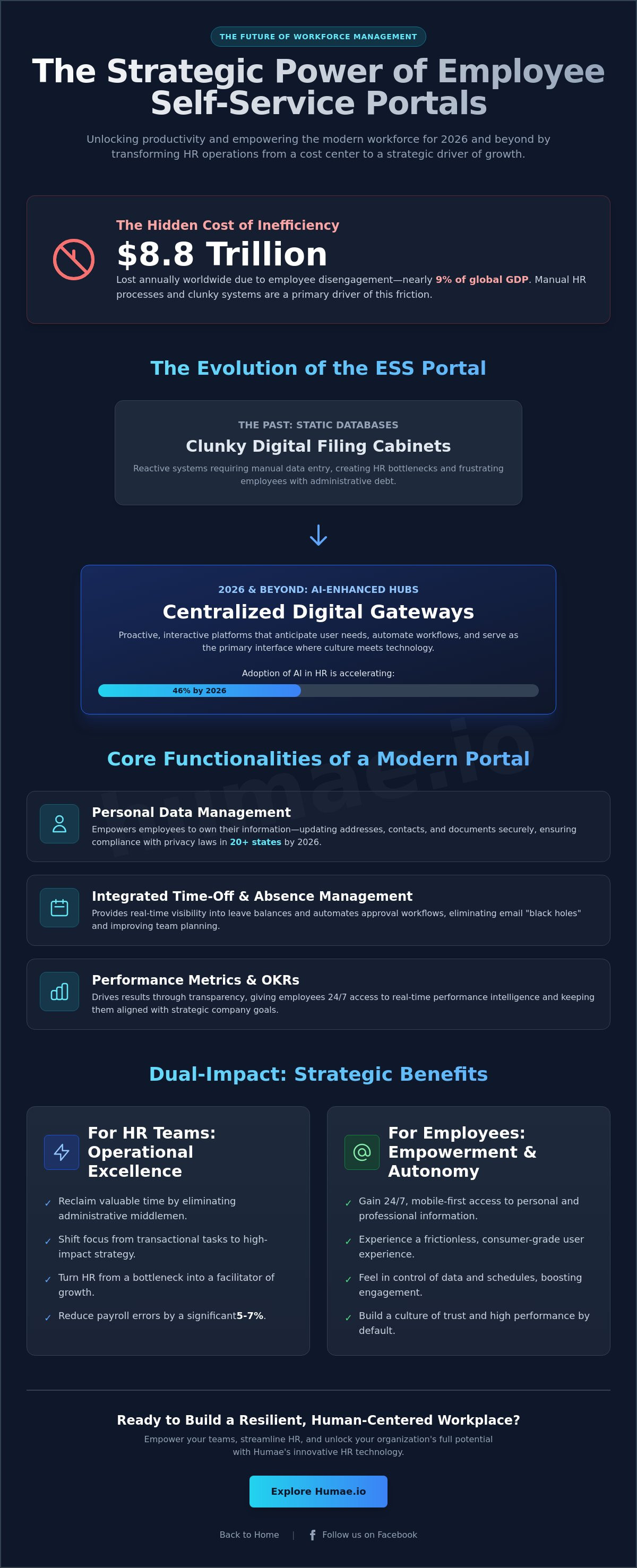
Organizations lose an estimated $8.8 trillion annually due to employee disengagement. That is nearly 9% of global GDP. You've likely felt this friction firsthand. Watching your HR team drown in manual time-off requests while engagement with clunky legacy systems hits rock bottom is exhausting. It's frustrating to see high-value talent bogged down by administrative debt. Understanding the employee self-service portal benefits is no longer a luxury. It's a strategic necessity for any organization that wants to reclaim lost productivity and foster a high-performance culture.
In this guide, you'll discover how modern ESS portals reduce HR overhead, empower teams with autonomy, and drive organizational productivity. We'll explore how these tools can reduce payroll errors by 5-7% and ensure compliance with complex 2026 regulations, such as California's updated pay data reporting standards. From real-time performance intelligence to mobile-first accessibility, we're breaking down the essential infrastructure you need to build a resilient, human-centered workplace.
Humae: Empowering modern teams through innovative HR technology. Back to Home | Follow us on Facebook
Key Takeaways
- Learn how to transform static HR databases into interactive, AI-enhanced hubs that serve as a centralized digital gateway for your entire workforce.
- Master operational excellence by eliminating administrative middlemen and automating complex approval workflows for time-off requests.
- Explore the psychological impact of autonomy on retention and the value of providing 24/7 access to information.
- Discover the strategic employee self-service portal benefits, including how predictive analytics helps you spot turnover risks before they've impacted your culture.
- Get a practical launch phase checklist to drive high adoption rates by focusing on user experience and clear internal communication.
Humae: Empowering modern teams through innovative HR technology. Back to Home | Follow us on Facebook
What is an Employee Self-Service (ESS) Portal in 2026?
In 2026, an Employee Self-Service (ESS) portal isn't just a digital filing cabinet. It's the primary interface where culture meets technology. Think of it as a centralized digital gateway. It handles every workforce-related task from the moment an employee logs in. The days of static, clunky databases are over. Modern systems have evolved into interactive, AI-enhanced hubs that anticipate user needs. One of the major employee self-service portal benefits is this shift from reactive data entry to proactive engagement. By 2026, 46% of organizations are expected to use AI in HR, and these portals are the frontline for that transformation.
The Evolution of Workforce Management Infrastructure
Workforce management has moved far beyond manual paper trails and fragmented spreadsheets. We've entered an era of cloud-based ecosystems that prioritize the human experience. This modern workforce management infrastructure ensures that data flows seamlessly between departments. It eliminates the silos that once slowed down decision-making. Accessibility is the new standard. Mobile-first design isn't a "nice-to-have" feature anymore; it's the baseline. Whether a team member is on a train or at a desk, they expect a frictionless experience. They want to manage their professional life with the same ease they use for personal apps.
Core Functionalities Every Modern Portal Needs
A truly effective Employee Self-Service (ESS) platform must go beyond basic profile updates. To capture the full spectrum of employee self-service portal benefits, your portal should integrate several core modules into a single pane of glass. This creates a high-autonomy environment where information is always accessible.
- Personal Data Management: Employees should own their information. They need to update addresses, emergency contacts, or document uploads without emailing HR. With 20 states now having comprehensive privacy laws in effect by 2026, these portals act as a secure shield for sensitive data.
- Integrated Time-Off and Absence Management: Real-time visibility into balances and instant approval workflows keep teams moving. It removes the "black hole" of email requests and improves planning.
- Performance Metrics and OKRs: Transparency drives results. Access to real-time performance intelligence and OKR tracking helps employees stay aligned with company goals.
The portal is now the heart of the employee journey. It empowers individuals to take charge of their growth while freeing HR to focus on high-impact strategy. This isn't just about software. It's about building a culture where autonomy is the default setting. When workers feel in control of their own data and schedules, engagement naturally follows.
Operational Excellence: The Efficiency Benefits for HR Teams
Modern portals allow organizations to reduce labor costs and shift responsibility for data entry directly to the source. It’s a simple trade. Employees get the autonomy they crave, and HR gets their calendar back. The result is a drastic reduction in "status update" emails and administrative interruptions that typically fragment a workday. This isn't just about convenience; it's about shifting the entire department's focus toward high-impact strategy.
Reducing the Administrative Burden
Imagine gaining back an entire workday every single week. Automation in 2026 isn't just about simple triggers. It's about complex approval workflows for time-off and expenses that run themselves. In many mid-sized organizations, implementing these features saves HR teams 10 or more hours per week. This bandwidth shift is massive. Instead of reacting to endless queries, teams can focus on talent development and culture. This transformation is driven by modern HRIS systems that act as the central nervous system of the company. If you want to see how these workflows actually look in practice, you can explore our performance intelligence features to see the automation in action.
Data-Driven Compliance and Accuracy
Human error is the silent killer of payroll budgets. Research shows that ESS systems can reduce payroll errors by 5-7%. When employees own their data, the accuracy of the entire organization improves. Every change made within a portal creates a permanent, automatic audit trail. This is critical in 2026, as 20 US states now enforce comprehensive privacy laws. Security isn't just a technical requirement; it's a compliance necessity. Secure access controls ensure that sensitive information remains private while meeting global data standards like GDPR. By making employees the owners of their information, you're not just improving data integrity; you're building trust.
Operational excellence isn't a destination. It's a state of being where your HR team is free to do what they do best: support your people. By leveraging the full range of employee self-service portal benefits, you're building an infrastructure that scales without adding unnecessary headcount. Building this scalable infrastructure effectively often involves navigating complex vendor contracts and service agreements; to ensure your organization secures the best possible terms, check out RightCostIQ for professional RFP management and negotiation assistance.
Empowering the Workforce: Benefits for the Modern Employee
Modern employees don't want to be managed; they want to be empowered. This shift in expectation is where the most significant employee self-service portal benefits emerge. When a team member has to wait three days for an email reply about their remaining vacation days, they feel like a cog in a machine. When they can check that balance at 9 PM on a Sunday while planning a family trip, they feel respected. This 24/7 access to information removes the invisible barriers between the individual and the organization. It builds a foundation of trust that is essential for long-term retention. Autonomy isn't just a buzzword. It's a survival strategy for the 2026 talent market.
Autonomy in Time-Off and Schedule Management
Clarity Through Performance Transparency
Performance anxiety often stems from a lack of clear data. Modern portals solve this by providing real-time visibility into OKR meaning and how individual goals connect to the company's vision. Continuous feedback loops replace the dreaded, once-a-year annual review. When expectations are clear and progress is visible, employees can focus on doing their best work. They don't have to wonder if they're meeting the mark; they can see it on their dashboard. This level of clarity fosters a high-performance culture where everyone knows exactly where they stand and how they contribute to the collective success.
The AI Advantage: Next-Gen Portals and Performance Intelligence
In 2026, the gap between having data and having insights has finally closed. We've moved beyond the era of digital kiosks. The most transformative employee self-service portal benefits now stem from the integration of Performance Intelligence. While 91% of organizations report using AI tools, only 21% of workers actually use them daily. Modern portals solve this adoption gap by running AI in the background. Instead of just recording when someone takes a day off, these systems analyze how teams interact with the platform to gauge organizational health. It's like having a digital pulse on your culture.
Sentiment Analysis and Feedback Loops
Passive data is a goldmine for proactive leaders. At Humae, we use AI to identify subtle shifts in portal engagement that might signal disengagement or burnout. If a high-performer suddenly stops checking their OKRs or starts looking at the directory more frequently, the system can flag potential turnover risk. This allows managers to intervene with empathy before a resignation letter hits the desk. These insights are the foundation of modern employee engagement strategies. It turns the portal into a continuous feedback loop that lives and breathes with the team.
Actionable Analytics Dashboards
Real-time visibility is the antidote to micromanagement. Personalized dashboards now surface relevant training modules and individual goals based on an employee's current project load. Managers don't have to wait for quarterly reviews to see how their team is doing. They can visualize productivity and goal completion in real-time through high-fidelity dashboards. This bridges the gap between simple self-service and deep performance intelligence. It empowers every leader with the data they need to make better people decisions. If you're ready to see how data-driven insights can transform your culture, explore our performance intelligence platform today.
Implementing Your ESS Portal: Strategies for High Adoption
Measuring the ROI of your implementation is essential for long-term support. Look beyond simple login numbers. Track the reduction in manual HR tickets, the speed of time-off approvals, and the accuracy of employee data. By comparing these metrics against your pre-portal baseline, you can quantify the efficiency gains. High adoption ensures that your data remains current, which is the foundation for the performance intelligence we discussed earlier. It turns your portal from a cost center into a strategic asset.
This strategic value is often maximized by integrating financial services directly into the employee experience. By leveraging the banking infrastructure from Gemba, organizations can launch their own branded financial products, turning their internal portals into comprehensive gateways for both HR and financial management.
Overcoming Adoption Barriers
To support this shift toward mobile-first workflows, employees need a reliable way to keep their devices organized and fully charged. Implementing hardware solutions like the udoq German design multiple charging station for any mobile device can help maintain a clean and efficient workspace, ensuring that mobile tools are always ready for the digital ecosystem.
Selecting the Right Infrastructure for Growth
Your portal needs to be as ambitious as your company. Scalability is non-negotiable; you don't want to outgrow your infrastructure in eighteen months. The system must integrate seamlessly with your existing tools and employee directories to create a single source of truth. Fragmented systems only create more work for HR. This is why Humae’s all-in-one platform is built specifically for modern, fast-moving teams. By combining time-off management, OKR tracking, and performance intelligence into one cohesive experience, we eliminate the friction that slows down growth. The right infrastructure doesn't just manage your team; it inspires them to reach their full potential.
Future-Proof Your Culture with Strategic Autonomy
The workforce of 2026 doesn't just want digital tools; it expects a seamless, human-centered experience that respects their time and ambition. You've seen how moving beyond static databases can reclaim hours of HR bandwidth while providing the clarity teams need to thrive. By embracing the full range of employee self-service portal benefits, you aren't just installing software. You're building a foundation for a high-performance culture where transparency and efficiency are the default settings. From predictive sentiment analysis to frictionless onboarding, the right infrastructure turns administrative debt into organizational energy.
Finding the right talent to thrive in this environment is just as critical; for regional employers, savannahjobs.com provides a platform to connect with professionals who are eager to work in such an empowered and efficient setting.
Ready to transform your workplace? Experience the future of workforce management with Humae. Our platform empowers your team with AI-powered performance intelligence, real-time OKR tracking, and a centralized employee directory designed for the modern era. Don't let legacy systems hold your talent back. It's time to give your people the autonomy they deserve and the data-driven insights your leaders need to succeed.
Your journey toward a more engaged, productive workforce starts today. We're excited to help you build a culture that lasts.
Frequently Asked Questions
What are the main benefits of an employee self-service portal?
The primary employee self-service portal benefits include increased workforce autonomy, reduced administrative burden, and improved data accuracy. By giving employees direct access to their profiles and requests, you eliminate bottlenecks and empower your team. This shift creates a high-performance culture where individuals manage their own professional lives without waiting for manual intervention. It's about removing friction and building trust through transparency.
How does an ESS portal improve HR efficiency?
An ESS portal improves HR efficiency by automating routine tasks like address updates, time-off requests, and document distribution. It removes the "middleman" from simple data entry. This allows your HR team to stop playing air traffic controller and start focusing on high-impact initiatives like talent development and performance intelligence. It turns a reactive department into a proactive strategic partner.
Can an employee self-service portal help with employee retention?
Yes, it can significantly boost retention by providing transparency and reducing daily friction. When employees have instant visibility into their goals and career progression, they feel more connected to the organization's vision. Autonomy in managing work-life balance through easy time-off requests also signals that the company values their time and personal needs. Clear communication and self-reliance foster a sense of belonging.
Is it secure to allow employees to manage their own data?
Modern platforms are built with security as a core priority. They use multi-factor authentication, data encryption, and granular access controls to ensure that sensitive information remains protected. In fact, having employees manage their own data often improves security by ensuring accuracy and reducing the number of people who handle sensitive paper files or unencrypted emails. It centralizes data within a secure, audited environment.
How long does it take to implement a self-service portal?
Implementation timelines typically range from a few weeks to a few months, depending on your organization's size and complexity. Cloud-based HRMS solutions often offer faster setup than legacy systems. The key is to choose a platform that integrates easily with your existing tools to minimize technical hurdles. A well-planned launch phase ensures a smooth transition and high adoption rates from day one.
What features should I look for in an ESS platform in 2026?
You should look for AI-powered performance intelligence, mobile-first accessibility, and integrated OKR tracking. A modern portal should also feature a centralized employee directory and a user-friendly interface that requires minimal training. These features ensure that the platform isn't just a database but a dynamic tool for daily engagement. Real-time analytics dashboards are also essential for data-driven decision-making.
Does a self-service portal replace the need for an HR team?
No, it doesn't replace your HR team. Instead, it elevates their role. By handling the transactional aspects of workforce management, the portal frees your HR professionals to focus on human-centric work. They can spend more time on strategy, empathy, and building the relationships that technology can't replicate. It allows your people experts to focus on the human factor of the business.
How do employees access the self-service portal?
Employees typically access the portal through a secure web browser or a dedicated mobile app using single sign-on (SSO) credentials. This multi-device approach ensures that your workforce can manage their tasks from anywhere, whether they're in the office, working remotely, or on the move. It's about meeting your people where they already are and providing a frictionless experience across all devices.