The Future of Growth: Continuous Performance Feedback Software in 2026
By Humae · 18 July 2026
continuous performance feedback software
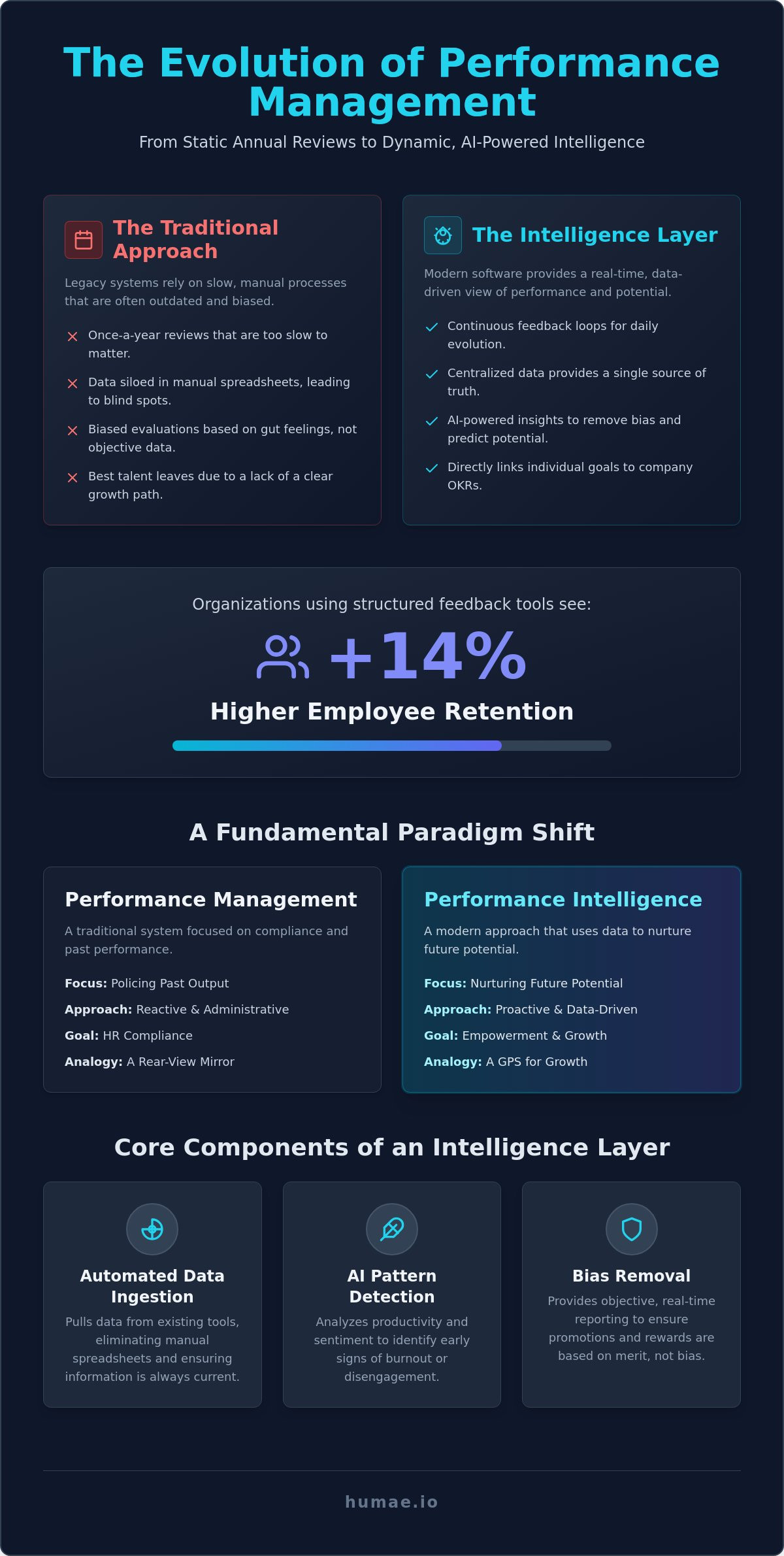
Organizations using structured feedback tools see 14% higher retention rates, yet many leaders still rely on spreadsheets from the last decade. You likely know the frustration of manual review processes that are too slow to matter and too biased to trust. It's exhausting to see performance data siloed while your best talent leaves because they don't see a clear path forward. By implementing modern continuous performance feedback software, you can finally bridge the gap between individual goals and company OKRs while building a culture of radical transparency.
We believe growth isn't a once-a-year event; it's a daily evolution that requires the right digital partner. You're about to learn how to transform static reviews into dynamic growth engines using AI-powered performance intelligence and real-time feedback loops. We will explore the 2026 landscape where automated cycles save manager time and provide instant visibility into your organizational health. This guide shows you how to ensure your team stays aligned, inspired, and ready for whatever the future of work holds.
Key Takeaways
- Shift from static annual reviews to dynamic performance intelligence that enables real-time growth and organizational agility.
- Learn how continuous performance feedback software uses AI and sentiment analysis to detect burnout risks and improve employee retention.
- Bridge the gap between individual output and company OKRs using transparent tracking modules designed for total alignment.
- Modernize your infrastructure by moving from manual spreadsheets to a centralized, AI-powered employee directory that serves as a single source of truth.
What is Continuous Performance Feedback Software?
The traditional annual review is officially obsolete. In a world where 20% of firms have already transitioned to continuous models, sticking to a yearly schedule feels like trying to navigate a city with a map from 1995. Continuous performance feedback software provides a dynamic, real-time view of how your team functions. It replaces the anxiety of the big meeting with a steady stream of supportive insights. This transformation creates a living record of growth that benefits both the manager and the employee. We don't just see this as a tool; it's a strategic intelligence layer for your organization.
Performance intelligence is the synthesis of real-time data and AI. It moves beyond simply documenting what happened in the past. Instead, it uses active data to predict future potential. Static feedback fails modern teams because it's reactive. By the time a manager addresses a problem in an annual review, the damage is often done. Organizations using structured, ongoing tools see 14% higher retention rates because they address needs in the moment. This software ensures that every achievement is recognized and every hurdle is cleared before it becomes a roadblock.
Performance Management vs. Performance Intelligence
Traditional systems were built for HR compliance and administrative tracking. A foundational performance management system often focuses on policing employees rather than empowering them. Performance intelligence represents a fundamental shift. It uses AI to transform raw data into actionable leadership insights. This approach focuses on professional journeys rather than just output. It's the difference between a speed camera and a GPS that helps you reach your destination safely. You aren't just managing people; you're nurturing their specific talents through data-driven empathy.
The Core Components of an Intelligence Layer
Modern continuous performance feedback software relies on several critical pillars to drive results:
- Automated Data Ingestion: It pulls information directly from your existing workforce tools. This eliminates the need for manual spreadsheets and ensures your data is always current.
- Pattern Detection: AI algorithms analyze productivity and sentiment. They can identify the early signs of burnout or disengagement that human eyes might miss.
- Bias Removal: Real-time reporting provides an objective view of performance. This ensures that promotions and rewards are based on merit and consistent data rather than gut feelings.
Predictive analytics play a vital role in identifying high-potential talent early. By analyzing goal progress and engagement levels, the software can highlight future leaders before they even realize they're ready for a new challenge. This proactive approach keeps your growth engine humming and ensures your best talent stays exactly where they belong.
Essential Features of Modern Performance Intelligence Platforms
A tool is only as good as its integration into your daily workflow. Most legacy systems fail because they treat performance as an isolated event rather than a continuous pulse. Modern continuous performance feedback software changes this by embedding growth metrics directly into your core HR infrastructure. When your performance data lives alongside your employee directory and time-off records, you gain a 360-degree view of organizational health that manual spreadsheets simply can't provide. This connectivity ensures that every piece of feedback is grounded in the actual reality of the employee's work life.
Effective platforms don't just collect data; they prompt action. Automated feedback cycles ensure that engagement happens at the right moments, preventing the "feedback vacuum" that often leads to high turnover. Recent research on feedback effectiveness suggests that the frequency and timing of input are just as critical as the content itself. By automating these touchpoints, managers save hours of administrative work while providing the consistent support their teams crave. You can explore how these integrated features streamline leadership tasks on our platform.
OKR Tracking and Strategic Goal Alignment
Alignment is the secret sauce of high-growth teams. Dynamic OKR tracking bridges the gap between a developer's daily tasks and the company's five-year vision. When everyone can see how their work contributes to the bigger picture, morale skyrockets. Understanding the OKR meaning within a professional framework allows teams to set ambitious, measurable targets that actually move the needle. Transparency in goal progress fosters a culture of shared accountability where success isn't a mystery.
Actionable Analytics Dashboards
Data without visualization is just noise. Modern dashboards transform raw numbers into heatmaps and trend lines that highlight team health at a glance. Leadership can drill down from high-level department data to specific individual growth metrics in seconds. This allows for personalized coaching that addresses specific needs. Whether you're a CEO looking at company-wide productivity or an HR lead checking for burnout risks, customized views ensure you have the right intelligence to make informed decisions. Using continuous performance feedback software with built-in analytics ensures no high-potential talent goes unnoticed and no struggling employee goes unsupported.
Rest is a performance metric, not a distraction. By integrating time-off management, leaders can correlate downtime with peak performance periods. This holistic approach recognizes that a well-rested team is a productive team. It's about building a sustainable culture where technology supports human needs rather than just tracking output.
How AI and Sentiment Analysis Redefine the Feedback Loop
Data alone doesn't tell the whole story. While our previous sections explored the structural benefits of OKRs and directories, the true power of modern continuous performance feedback software lies in its ability to understand the human element. In 2026, performance intelligence isn't just about tracking output; it's about reading the emotional heartbeat of your team. Sentiment analysis allows leaders to move beyond cold metrics and understand the "why" behind the numbers. This technology identifies subtle shifts in tone and engagement that human managers might overlook during a busy week.
Identifying burnout risks before they lead to expensive turnover is a game changer for organizational health. When AI detects a pattern of declining sentiment or increasing stress markers, it provides a window of opportunity for intervention. Evaluating the best performance management software today involves looking at how these tools handle these human nuances. By turning qualitative feedback into quantitative growth data points, you can address issues with empathy and precision. It's not about surveillance; it's about support.
Building an Empathetic Workplace
We've all experienced the "sandwich method" of constructive criticism. It's outdated, predictable, and often feels insincere. AI nudges replace this rigid approach by fostering a culture of consistent, genuine appreciation. These small, automated prompts encourage peers and managers to recognize great work in the moment. When you integrate this real-time input into a broader employee engagement strategy, you create a workplace where people feel seen and valued. This empathetic layer ensures that technology serves the person, not the other way around.
Predictive Growth and Succession Planning
Intelligence tools do more than fix current problems; they map future leadership. By analyzing performance trends over time, AI identifies high-potential talent and suggests specific leadership paths. This proactive approach helps you identify skill gaps before they become organizational bottlenecks. You can significantly reduce hiring costs by promoting from within using validated, unbiased data. Predictive growth ensures that your succession planning is based on proven potential rather than just seniority or office politics.
Trust is the currency of the modern workplace. Building that trust requires absolute transparency regarding how AI uses data. Ethical continuous performance feedback software prioritizes data security and clear communication. When employees understand that their data is being used to support their growth and protect their well-being, they embrace the system. This transparency is what transforms a simple software tool into a visionary partner for your organization's future.
Choosing the Right Performance Intelligence Infrastructure
Selecting the right digital foundation for your team is a strategic decision that goes far beyond a simple checklist. As your company evolves, your continuous performance feedback software must be able to scale alongside your headcount without losing its human touch. A platform that works for a team of ten might struggle with the complex permission structures of a thousand-person enterprise. You need an infrastructure that remains agile while providing the deep analytics necessary for high-level decision-making.
Integration is the heartbeat of a functional workplace. Your performance tool shouldn't exist in a vacuum; it must communicate seamlessly with your HRIS to ensure data consistency. When your performance intelligence layer is connected to your core system, you eliminate the risk of siloed information. This connectivity allows for a single source of truth where hiring, onboarding, and growth data all live together. You can see how this unified approach works on our platform.
Startups vs. Enterprise Needs
Startups often prioritize speed and ease of setup. They need a system that facilitates rapid hiring and immediate cultural alignment. Conversely, enterprises require sophisticated security protocols and the ability to manage multifaceted organizational charts. A unified infrastructure is always superior to a fragmented tech stack. It reduces technical debt and ensures that every department, regardless of size, uses the same language for success.
Calculating ROI: Beyond the Subscription Cost
True return on investment isn't found in the monthly subscription fee. It's measured in the cost of employee churn you've prevented and the hundreds of manager hours saved through automated feedback cycles. Organizations using structured intelligence tools see 14% higher retention rates. This shift in focus from cost-per-seat to value-based growth is essential for long-term health. When you invest in continuous performance feedback software, you aren't just buying a tool; you're securing your company's future potential.
User experience is often the deciding factor in software adoption. An intuitive, award-winning interface ensures that employees actually enjoy the feedback process rather than dreading it. In the AI age, this must be paired with uncompromising support and security. Protecting sensitive employee data is a non-negotiable responsibility. You deserve a partner that treats your team's information with the same respect and care that you do.
Implementing Humae: The Intelligence Layer for Modern Teams
Manual spreadsheets are the ghosts of HR past. They offer a frozen snapshot of a team that is constantly moving, evolving, and growing. Transitioning to an AI-powered employee directory isn't just a technical upgrade; it's a cultural shift. Humae serves as the centralized hub where your hiring, onboarding, and performance data finally meet. This unified approach ensures that the promises made during recruitment are actually fulfilled through continuous development and support. It's about building a culture of innovation through human-centric technology that prioritizes the person behind the professional profile.
Setting up your first intelligent OKR cycle with Humae is designed to be intuitive. You don't need a degree in data science to understand your team's health. Our platform guides you through the process of aligning individual ambitions with organizational goals. By choosing Humae as your continuous performance feedback software, you unify your entire workforce lifecycle into one seamless experience. This clarity allows your leaders to focus on coaching rather than chasing down missing data in fragmented systems.
Seamless Workforce Management Integration
Performance intelligence reaches its full potential when it's woven into your workforce management infrastructure. This connection allows data to flow freely between departments. For instance, intelligence can inform hiring decisions by highlighting specific skill gaps before they become bottlenecks. It also helps you refine time-off policies by correlating rest with peak performance periods. Leveraging the full suite of Humae features ensures that your technology supports your culture rather than dictating it. You gain a partner that understands the delicate balance between business needs and human well-being.
Your Journey Toward Performance Intelligence
Every transformation starts with an honest look at the present. Audit your current review process for hidden biases that might be holding your talent back. Are your managers spending more time on paperwork than on people? If the answer is yes, it's time for a change. Implementing continuous performance feedback software is a commitment to your people. Requesting a demo allows you to see AI sentiment analysis in action and understand how it can protect your team from burnout. This is your opportunity to move from reactive management to predictive leadership. Don't wait for the next annual review to start growing. Transform your team growth with Humae and build the future of your organization today.
Building the Growth Engine of 2026
The shift from static reviews to performance intelligence is no longer optional; it's the competitive standard for 2026. You've seen how continuous performance feedback software transforms raw data into a narrative of growth and empathy. By integrating real-time OKR tracking with global workforce management infrastructure, you ensure every team member stays aligned with the company's vision while feeling genuinely supported. This transition creates a workplace where development is a daily conversation rather than a yearly chore.
Leveraging AI-driven sentiment analysis allows you to protect your culture by identifying burnout before it leads to turnover. This isn't just about technical efficiency. It's about building a workplace where human potential is the primary priority. The move from manual spreadsheets to a centralized intelligence layer creates the transparency and agility your organization needs to thrive in a fast-paced environment. Your leadership deserves a platform that matches your ambition and respects the human element of work.
Ready to lead with data-driven empathy? Start building a high-performing team with Humae today. Let's build a future where every employee has a clear path to success.
Frequently Asked Questions
What is the main difference between performance management and intelligence software?
Performance intelligence software focuses on predicting future potential, while traditional management merely documents past actions. Management tools act as a record of compliance; intelligence tools act as a growth engine. By using AI to synthesize real-time data, these platforms turn raw output into actionable leadership insights. This shift allows you to move from policing your team to actively supporting their professional journey. It's about looking forward instead of backward.
Can AI accurately measure employee sentiment without being intrusive?
Yes, AI measures sentiment by analyzing aggregate patterns in opt-in communication and feedback rather than monitoring individuals. It identifies emotional trends and stress markers across the organization to protect privacy while offering a pulse on team health. This high-level visibility helps leaders understand the "why" behind productivity shifts. When implemented with transparency, it builds trust by showing employees that the technology exists to support their well-being and prevent burnout.
Is continuous performance feedback software suitable for small startups?
Small startups benefit immensely from continuous performance feedback software because they need agility to scale their culture during rapid hiring. It prevents the administrative debt that builds up when using manual spreadsheets for performance tracking. By establishing clear feedback loops early, startups ensure that every new hire is immediately aligned with the company's core mission. This foundation of transparency is essential for maintaining a high-performance environment as the team grows from ten to a hundred.
How does OKR tracking integrate with real-time feedback loops?
OKR tracking provides the strategic destination, while real-time feedback loops act as the navigation system. Feedback ensures that daily tasks remain connected to high-level objectives, allowing for mid-cycle adjustments if a goal is at risk. When progress is visible to everyone, it fosters a culture of shared accountability and collective success. This integration removes the mystery from performance and ensures that every team member knows exactly how their work contributes to the bigger picture.
Does using performance intelligence software actually reduce employee turnover?
Data shows that organizations using structured feedback tools see a verifiable 14% increase in employee retention. This reduction happens because the software identifies disengagement and burnout risks long before they lead to a resignation. Leaders can use these insights to address concerns and provide clear growth paths for their top talent. When employees feel their professional development is a daily priority rather than a yearly footnote, they are much more likely to stay.
What security measures protect sensitive performance data in 2026?
Modern platforms use end-to-end encryption, multi-factor authentication, and strict role-based access controls to safeguard your information. Data is often anonymized for aggregate reporting to ensure individual privacy is never compromised during sentiment analysis. These systems are built to meet the highest global compliance standards for data protection. Your team can share feedback with confidence, knowing their personal growth data is stored in a secure, professional environment that prioritizes their safety.
Can AI-driven software replace traditional one-on-one meetings?
No, the software is designed to enhance human connection rather than replace it. It removes the administrative burden from meetings by providing data-driven agendas and status updates beforehand. This allows managers to spend their time on deeper coaching, mentorship, and building authentic relationships. Instead of wasting twenty minutes on "what happened," you can spend the entire hour on "how we grow together." The technology serves as a bridge to more meaningful human interaction.
How long does it take to implement a modern performance intelligence platform?
Implementation typically takes between two and four weeks depending on the size of your organization and the complexity of your current data. Most platforms offer automated migration tools that move your records from manual spreadsheets into a centralized employee directory. This timeframe includes configuring your OKR structures and training your leadership team on the new interface. Once the setup is complete, the software begins providing real-time visibility into your organizational health almost immediately.