Software for Tracking Onboarding Progress: The 2026 Intelligence Guide
By Humae · 24 May 2026
software for tracking onboarding progress
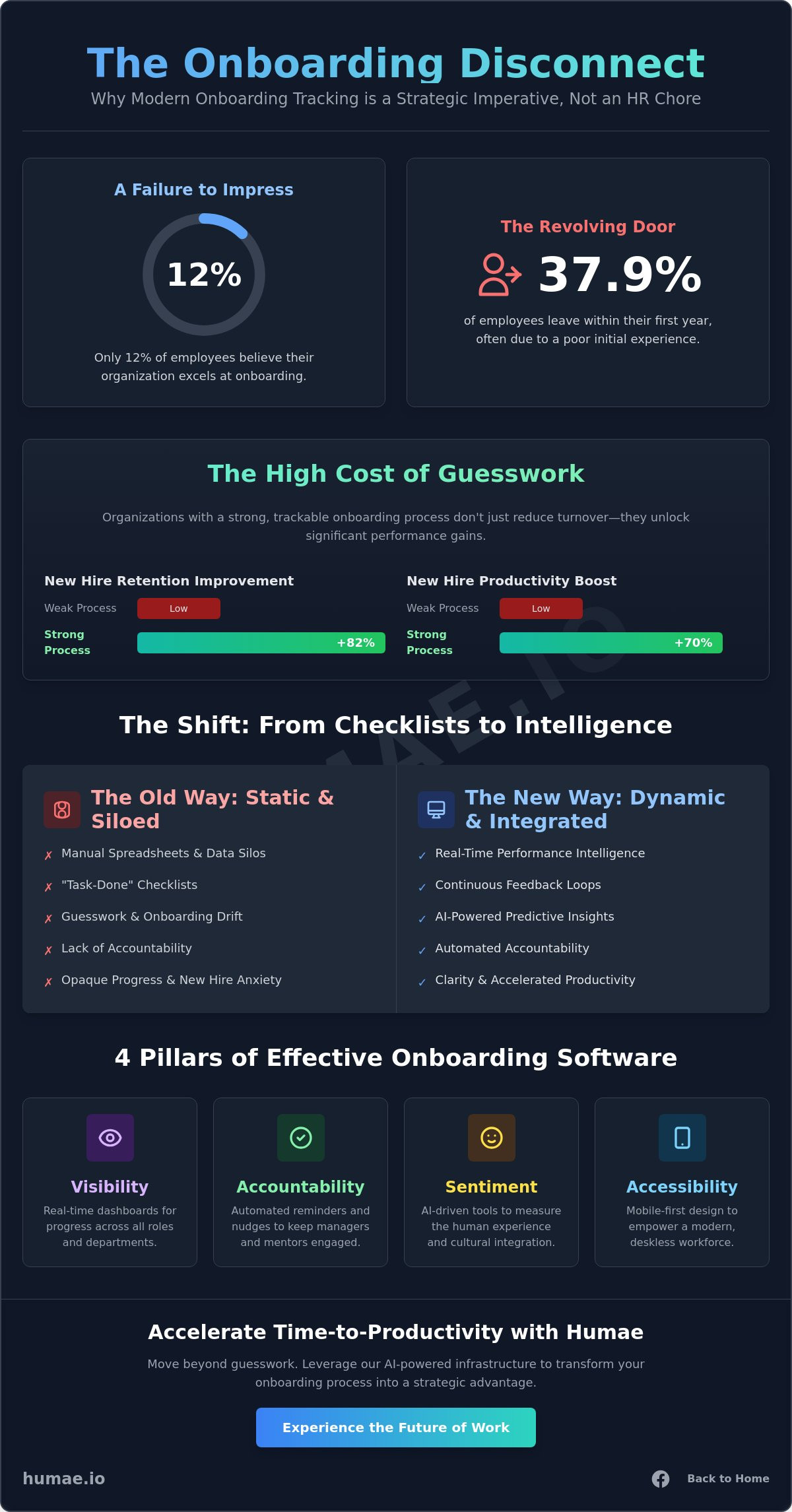
Only 12% of employees believe their organization does a great job with onboarding. This gap isn't just an HR headache; it's a primary driver for the 37.9% of employees who leave within their first year. You've likely felt the frustration of manual spreadsheets that lack accountability and leave new hires feeling like a number rather than a teammate. It's time to evolve. By leveraging software for tracking onboarding progress, you can replace guesswork with real-time visibility and ensure every new hire has a consistent, high-impact start.
In this guide, you'll learn how to transform static checklists into performance intelligence that accelerates time-to-productivity. We'll show you how to identify bottlenecks before they lead to turnover and how automated reminders can keep managers engaged. We're moving beyond paperwork to build a culture where data supports human connection. It's about giving your team the tools to thrive from day one, ensuring that the 70% of hires who decide their future within the first month choose to stay.
Powered by Humae. Experience the future of work on our home page and stay connected with our community on Facebook.
Key Takeaways
- Move beyond simple "task-done" checklists. Focus on a continuous feedback loop that measures actual employee readiness and cultural integration.
- Learn how the right software for tracking onboarding progress provides real-time visibility into bottlenecks while automating manager notifications.
- Evaluate the strategic benefits of integrated HRMS platforms over standalone tools for bridging the gap between hiring and performance intelligence.
- Master a clear implementation framework. Map time-bound milestones and define accountability for both HR and hiring managers.
- Discover how Humae’s AI-powered infrastructure accelerates time-to-productivity; visit our home page or Facebook for more insights.
Beyond the Checklist: Why Tracking Onboarding Progress Matters in 2026
Checking a box isn't the same as building a career. In 2026, the traditional onboarding checklist has evolved from a static to-do list into a dynamic, continuous feedback loop. We've moved past the era where "onboarded" simply meant the paperwork was signed and the laptop was delivered. Modern organizations now prioritize readiness metrics over task completion. They want to know if a new hire feels culturally integrated and technically capable, not just if they've watched a series of orientation videos. This shift is powered by software for tracking onboarding progress that treats every interaction as a data point for long-term success.
The most significant trend this year is the rise of Agentic AI within HR systems. These tools don't just record data; they analyze it to predict new hire churn before it happens. By spotting patterns in engagement or delays in milestone completion, AI can alert HR teams to intervene when a new hire is struggling. Manual spreadsheets simply can't keep up with this level of intelligence. For modern, remote, or hybrid teams, spreadsheets are nothing more than data silos that lack the real-time visibility needed to scale a culture of excellence.
Supporting these advanced AI capabilities requires significant processing power; companies often turn to eCircles LLC for high-performance GPU infrastructure to handle the demanding high-performance computing workloads of modern HR analytics.
This shift toward intelligent automation is also visible in other critical business functions; for example, Global AI Reps utilizes similar agentic technology to automate lead generation and sales, helping companies scale their revenue alongside their teams.
The Hidden Cost of Opaque Onboarding Processes
When you can't see where a new hire is in their journey, the financial impact is immediate. Organizations with strong onboarding processes can improve new hire retention by 82% and productivity by over 70%. Without clear tracking, that potential is lost to "onboarding drift." This opacity leads to significant manager burnout as they struggle to stay accountable for a process they can't measure. New hire anxiety peaks when expectations are unclear, leading to a drop in engagement within those critical first 90 days. If you aren't tracking, you're guessing, and guessing is expensive.
Defining Modern Onboarding Intelligence
Modern intelligence replaces the standard HRIS checklist with a sophisticated performance intelligence approach. To truly understand the foundation, it's helpful to look back at the core concepts of What is employee onboarding? and how it has transformed from a clerical function into a strategic pillar. We now focus on "Milestone Tracking" rather than "Task Completion." This means measuring the time it takes for a hire to make their first meaningful contribution. This level of insight requires a robust workforce management infrastructure that bridges the gap between hiring and long-term performance. Using software for tracking onboarding progress ensures that every step taken is a step toward a high-performing, connected team.
Powered by Humae. Discover how we're redefining the employee experience on our home page and join the conversation on Facebook.
Key Features to Look for in Onboarding Progress Software
Don't settle for a digital version of a paper list. Effective software for tracking onboarding progress must act as your team's central nervous system. It needs to provide instant clarity while removing the friction of manual follow-ups. You aren't just looking for a tracker; you're looking for a partner that anticipates needs before they become problems. In 2026, the most effective tools prioritize four key pillars:
- Visibility: Real-time access to progress across all departments and roles.
- Accountability: Automated reminders that keep managers and mentors on track.
- Sentiment: AI-driven tools that measure the human experience and emotional integration.
- Accessibility: Mobile-first designs for a truly inclusive, deskless workforce.
Real-Time Dashboards and Milestone Visibility
Visual dashboards provide a "bird’s eye view" that transforms how you manage organizational growth. Instead of digging through dozens of emails, you can see exactly where every new hire stands on a dynamic progress bar. This visibility helps you spot "bottleneck tasks" immediately. For example, if you notice every engineer gets stuck on a specific technical setup, you've identified a systemic issue rather than a performance one. Customizing these milestones for specific roles ensures that your software for tracking onboarding progress remains relevant. It creates a tailored experience that respects the unique requirements of different departments while maintaining a high standard of consistency.
AI-Powered Sentiment and Engagement Tracking
Onboarding is an emotional journey as much as a technical one. Structured processes are critical for employee engagement and retention, but data tracking shouldn't stop at task completion. Modern platforms use AI to analyze pulse survey responses and identify subtle shifts in tone. If a new hire's sentiment drops significantly after week two, the system flags them as "at-risk." This early warning allows your HR team to intervene with empathy before the employee starts looking elsewhere.
Continuous feedback replaces the outdated 90-day review. By gathering data weekly, you build a more responsive culture that values the human experience. These insights directly feed into your broader employee engagement strategies, creating a seamless transition from "new hire" to "high performer." If you're ready to see how intelligence changes the game, explore our performance intelligence features.
Powered by Humae. Experience the future of work on our home page and stay connected with our community on Facebook.
Evaluating Software for Tracking Onboarding Progress
Integrations are the lifeblood of modern HR. If your tracking tool doesn't talk to Slack, Teams, or Jira, it doesn't exist for your employees. New hires shouldn't have to log into a separate, clunky portal just to update their status. The best systems meet people where they already work. When evaluating UX, look for a "zero-training" interface. If a new hire needs a manual to use your onboarding software, the software has already failed. HR teams need a clean, intuitive backend that makes reporting effortless, while employees need a friction-free experience that feels like a natural part of their day.
Task Management vs. Dedicated Onboarding Intelligence
The ROI of Integrated HR Infrastructure
Data fragmentation is the enemy of efficiency. When your onboarding data lives in one place and your performance metrics in another, you lose the ability to see the big picture. A single source of truth allows you to track how early onboarding milestones correlate with long-term success. Integrated infrastructure makes the leap from a new hire's final checklist to performance management seamless and data-driven. We invite you to explore Humae features to see how a unified approach can transform your team's productivity and engagement from day one.
Powered by Humae. Experience the future of work on our home page and stay connected with our community on Facebook.
Implementation: How to Successfully Track Onboarding Data
Implementation isn't just a technical flip of a switch. It's the moment your strategy meets reality. To get the most out of your software for tracking onboarding progress, you need a disciplined approach that balances automation with human touchpoints. Success starts with a roadmap that everyone understands. If your team doesn't know what a "successful start" looks like, no amount of data will save the experience. Follow these four steps to build a high-performance framework.
- Step 1: Map the Journey. Define your ideal onboarding path with time-bound milestones. This creates a predictable rhythm for the new hire and the team.
- Step 3: Automate Reporting. Configure your system to send weekly digests to leadership. Executive visibility ensures that onboarding remains a company-wide priority, not just an HR task.
- Step 4: Establish a Feedback Loop. Use your tracking data to find where people get stuck. If 40% of hires stall at the same milestone, it's time to fix the process, not the people.
The goal of software for tracking onboarding progress is to provide clarity, not surveillance. When data is used to support rather than police, you create a culture of trust. Ready to build your roadmap? Start your journey with Humae today.
Mapping the First 90 Days
Break your tracking into three distinct phases to avoid overwhelming the new hire. Week 1 should focus on "Compliance Milestones" like security training and tool access. By Month 1, shift toward "Culture Milestones" where the hire begins participating in team rituals. Finally, Month 3 should focus on impact. We recommend using OKR tracking during this final stage. Aligning early goals with company objectives ensures the new hire sees exactly how their work contributes to the bigger picture from the very start.
Training Managers to Use Tracking Data
Data is only as good as the people interpreting it. Coach your managers to use tracking dashboards as conversation starters during 1-on-1 meetings, not as a digital whip. If a milestone is marked as "stuck," the manager should ask how they can help remove the barrier. The key metric every manager should watch is "time to first contribution." This isn't about rushing; it's about identifying how quickly a hire feels confident enough to add value. When managers care about the data, the new hire feels supported, which significantly boosts long-term retention.
Powered by Humae. Experience the future of work on our home page and stay connected with our community on Facebook.
Why Humae is the Future of Onboarding Progress Intelligence
Humae redefines what it means to welcome a new teammate. It isn't just another software for tracking onboarding progress; it's the AI-powered infrastructure that bridges the gap between hiring and long-term performance. We've built a system that understands the human element. While other tools focus on administrative completion, Humae focuses on cultural readiness and individual growth. Our platform ensures that the excitement of a signed offer letter carries through to the first 90 days and beyond.
AI-Driven Performance Intelligence from Day One
Humae doesn't wait for a quarterly review to tell you how a new hire is doing. Our system uses sophisticated sentiment analysis to monitor the emotional health of every person entering your organization. If a new hire feels disconnected or overwhelmed, you'll know in real time. Our analytics dashboards show exactly where progress stalls, allowing you to intervene with empathy and precision. These workforce management tools simplify the entire lifecycle, turning raw data into actionable insights that protect your retention rates and accelerate productivity.
Centralized Infrastructure for Modern Teams
Efficiency thrives on simplicity. Humae creates a seamless flow from your Applicant Tracking System directly into Onboarding and then into the Employee Directory. There's no data double-entry or fragmented records. Your onboarding tracking is directly linked to Time Off Management and OKR tracking, ensuring that goals are clear from the first week. This centralized infrastructure is built for global teams who need a consistent experience regardless of geography. We invite you to visit the Humae homepage to see our interface in action and discover how we can help you scale your culture with confidence.
Powered by Humae. Experience the future of work on our home page and stay connected with our community on Facebook.
Building a High-Performance Culture From Day One
Choosing the right software for tracking onboarding progress is the first step toward a more connected, data-driven workplace. Humae provides the unified workforce infrastructure you need to bridge the gap between hiring and long-term success. With AI-powered sentiment analysis and real-time OKR tracking, you can monitor the health of your team with precision and empathy. Don't leave your new hire experience to chance. Start tracking onboarding progress with Humae today.
Your team's future starts with a professional welcome. Let's build it together.
Powered by Humae. Experience the future of work on our home page and stay connected with our community on Facebook.
Frequently Asked Questions
What is the best software for tracking onboarding progress in 2026?
Humae stands out as a leader by combining task automation with deep performance intelligence. It doesn't just track tasks; it monitors employee readiness and cultural integration. Modern teams prefer platforms that bridge the gap between hiring and long-term success rather than using simple, static checklists. By choosing a system that prioritizes the human experience, you ensure every new hire feels supported from day one.
How do I track employee onboarding progress without spreadsheets?
You can replace spreadsheets with automated dashboards that offer real-time visibility into the new hire journey. These systems send proactive reminders to managers and mentors, ensuring that accountability isn't lost in a sea of manual cells. Moving to a digital platform allows you to see bottlenecks instantly and adjust your process based on live data rather than historical guesswork.
Can I integrate onboarding tracking software with my existing ATS?
Yes, integration is a critical feature of modern HR infrastructure. A unified platform ensures a seamless transition from your Applicant Tracking System to the employee directory. This eliminates the need for double data entry and keeps your records consistent across the entire employee lifecycle. Integrating your tools creates a single source of truth for all hiring and performance data.
What metrics should I track during the first 90 days of onboarding?
Focus on time-to-productivity and the completion rates of 30, 60, and 90 day milestones. Tracking employee sentiment and early goal alignment through OKRs is also essential for long-term success. These metrics help you identify exactly where a new hire might be struggling, allowing you to intervene before their engagement drops. Data-backed proof of productivity is the best way to measure onboarding ROI.
Is AI really necessary for tracking onboarding progress?
AI is essential for predicting new hire churn and analyzing sentiment at scale. Agentic AI proactively alerts HR when a hire's engagement scores drop, allowing for empathetic intervention. It transforms software for tracking onboarding progress from a simple record-keeping tool into a proactive retention engine. Without AI, you're often reacting to problems only after an employee has already decided to leave.
How does onboarding tracking software improve employee retention?
Organizations with strong onboarding processes improve new hire retention by 82% according to industry research. Tracking software ensures every hire receives a consistent, high-impact experience that builds trust and connection immediately. Since 70% of hires decide their future with a company within the first month, a structured and visible process is your strongest tool for keeping top talent.
What is the difference between an onboarding checklist and progress tracking software?
A checklist is a static to-do list, while tracking software is a dynamic performance intelligence loop. Software provides real-time analytics, automated nudges, and sentiment tracking that a manual list simply cannot match. It's the difference between merely completing a task and ensuring a new hire is truly ready to contribute to the team's goals.
How much does software for tracking onboarding progress typically cost?
Pricing typically depends on the size of your organization and the depth of the features you require. Some platforms offer per-employee monthly rates, while others provide comprehensive infrastructure packages that include performance and OKR tracking. To find the most cost-effective software for tracking onboarding progress for your specific team, we recommend requesting a tailored quote that matches your scaling needs.
Powered by Humae. Experience the future of work on our home page and stay connected with our community on Facebook.