GDPR Compliant HR Software Features: The 2026 Guide for Modern Teams
By Humae · 11 July 2026
GDPR compliant hr software features
With cumulative GDPR fines now surpassing €7.1 billion, data privacy is no longer just a legal checkbox; it's the foundation of your modern workforce infrastructure. You likely feel the mounting pressure of every Subject Access Request landing in your inbox. It's exhausting to manage consent across fragmented tools while fearing that one manual slip-up could lead to a massive penalty. We understand that you want to protect your people and your brand without getting buried in administrative debt.
This guide reveals the essential GDPR compliant hr software features that turn compliance into a seamless, automated part of your daily operations. You'll discover how to secure your data with role-based access and automated retention policies that actually work in the 2026 regulatory landscape. We'll walk through the technical must-haves, from DSAR automation to integrated audit trails, giving you a single source of truth and total peace of mind during your next audit. It's time to move beyond survival mode and build a culture where privacy is a core value and a competitive advantage.
Key Takeaways
- Learn why the 2026 regulatory landscape demands a shift from manual oversight to automated, tech-driven data protection.
- Identify the technical GDPR compliant hr software features like granular role-based access and end-to-end encryption that safeguard sensitive employee information.
- Discover how to maintain transparency in AI-driven tools, ensuring your performance intelligence and sentiment analysis remain ethical and compliant.
- Streamline the entire data subject lifecycle by integrating privacy notices and consent management directly into your hiring and onboarding workflows.
- Find out how a centralized workforce infrastructure eliminates data silos and simplifies your response to complex Subject Access Requests.
The Evolution of GDPR in HR Technology for 2026
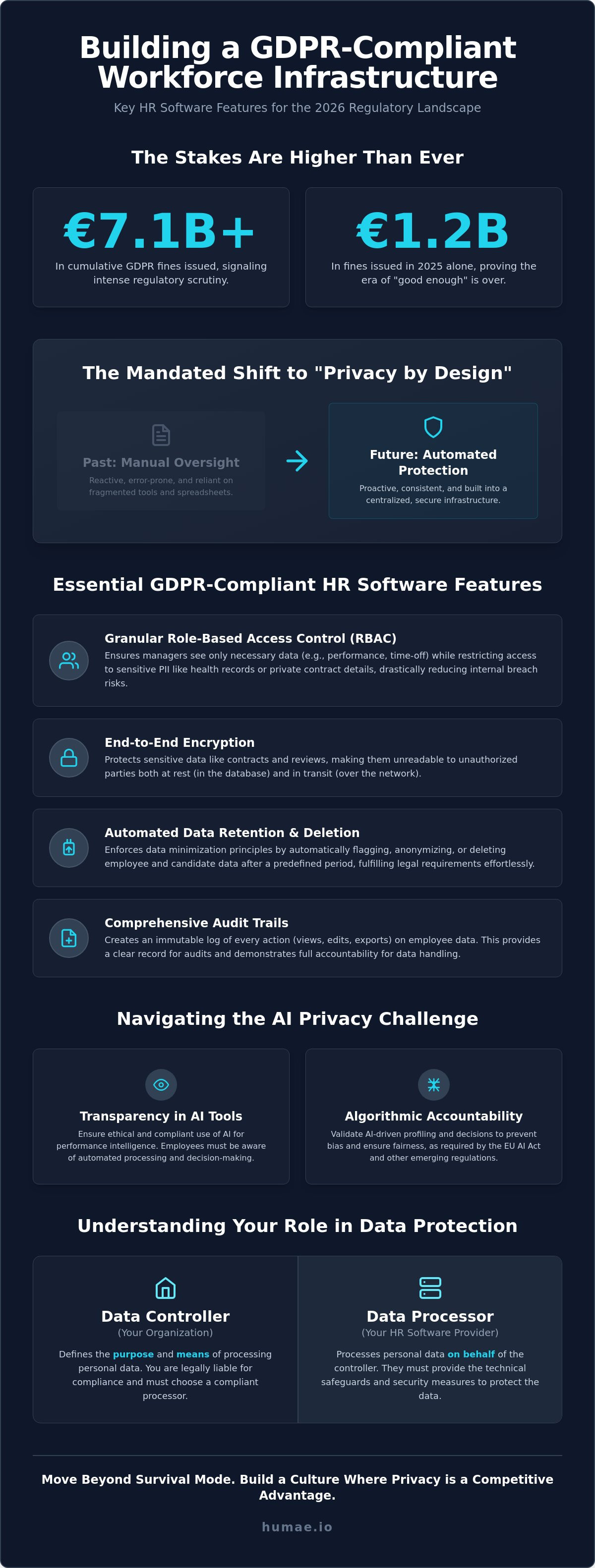
Compliance isn't a static target. The regulatory environment has shifted from simple data protection to a complex web of ethical AI and algorithmic accountability. General Data Protection Regulation (GDPR) set the standard in 2018, but 2026 brings a sharper focus on how technology processes human potential. GDPR compliant hr software features are technical safeguards that protect employee PII (Personally Identifiable Information). In 2025 alone, regulators issued approximately €1.2 billion in fines, signaling that the era of "good enough" compliance is over. Now, the stakes are even higher as authorities scrutinize AI-driven decision-making and automated profiling in the workplace.
Modern teams are moving away from reactive fixes toward a "Privacy by Design" philosophy. This means compliance is baked into the code, not added as an afterthought. Centralized infrastructure is the key here. When you use a single source of truth, you eliminate the dangerous data silos where unauthorized access often hides. It's about creating a secure environment where every byte of data has a clear purpose and a defined lifespan. You don't just need a database; you need a system that respects the human behind the data point.
Understanding Data Controller vs. Data Processor
You are the Data Controller; your software provider is the Data Processor. This distinction defines your legal liability and your operational duties. In 2026, a robust Data Processing Agreement (DPA) is your primary defense against regulatory fallout. Modern platforms simplify the accountability principle by using automated logging. Every time a manager views a file or an admin changes a permission, the system records it. This trail is vital for audits, proving that you've maintained control over sensitive information at every step.
The Impact of Global Data Regulations on HR
The regulatory environment is becoming a web of overlapping rules. While GDPR remains the gold standard, the EU AI Act and the EU Data Act now add new layers of complexity for HR teams. If you manage remote or global talent, a unified compliance framework isn't a luxury; it's a necessity. You need tools that can handle different regional requirements without slowing down your operations. Workforce management infrastructure is the backbone of digital compliance. This single system ensures that whether you're hiring in Madrid or managing a team in Berlin, your data handling remains consistent, legal, and respectful of employee privacy.
Essential Security and Data Privacy Control Features
Securing employee data requires more than just a password policy. It's about building layers of protection that act as a safety net for your organization. Granular Role-Based Access Control (RBAC) ensures that your managers only see the specific data they need to lead their teams. A department head doesn't need access to sensitive health records or private contract details; they just need performance insights and time-off schedules. By limiting access at the source, you drastically reduce the risk of internal data breaches and accidental leaks.
End-to-end encryption is another non-negotiable standard for GDPR compliant hr software features. Whether it's a signed contract or a sensitive performance review, your data must be scrambled so that unauthorized parties can't read it even if they intercept it. Self-service portals take this a step further by empowering your people. When employees can log in to view and correct their own information, they help you maintain accuracy while exercising their legal right to rectification without adding to your HR team's workload.
Automated Data Retention and Deletion
Setting expiration dates shouldn't be a manual task. Automated retention policies allow you to set custom triggers that flag or delete files once an employee departs or a candidate's application window closes. This helps you stay aligned with the official GDPR legal text regarding data minimization. You can choose between full deletion or secure anonymization, which strips away identifying details while keeping the data useful for long-term trend reporting and analytics.
Advanced Encryption and Audit Logs
True security is built on transparency. Using AES-256 encryption for data at rest and in transit is the industry benchmark for protecting sensitive records. Real-time audit trails complement this by tracking every single interaction within the system. You'll know exactly who accessed what data and when they did it. Integrating Humae's features into your workflow provides a transparent record of all data processing, which is essential for passing compliance audits with confidence. If you're ready to simplify your data governance, you can explore our secure infrastructure today.
Solving the AI and Automation Privacy Challenge
AI isn't just a buzzword in 2026; it's an active participant in your HR strategy. While automation boosts efficiency, it also introduces significant privacy risks that traditional systems often ignore. Employees are rightfully concerned about how algorithms judge their performance or analyze their mood. To build trust, you must prioritize transparency. This means explaining exactly how your performance intelligence works and ensuring that no machine makes a final decision about a person's career without human oversight. This "Human in the Loop" approach is a cornerstone of ethical GDPR compliant hr software features, preventing the cold, automated profiling that modern regulations seek to limit.
Algorithmic bias is another hurdle that requires constant vigilance. If your data sets aren't diverse, your AI might inadvertently favor certain groups over others. Regular audits are essential to catch these patterns before they become systemic issues. You can't just set it and forget it. A deep dive into AI and GDPR in HR shows that regulators are increasingly looking at the "black box" of HR technology. They want to see that you've considered the human impact of every automated process you deploy.
Privacy-First Performance Intelligence
Modern performance intelligence software should offer a supportive experience, not a surveillance one. Sentiment analysis can provide incredible insights into team morale, but only if you protect individual identities. By using built-in privacy filters, you can anonymize feedback so that people feel safe sharing their honest thoughts. This balances the need for real-time analytics with the data minimization principle, ensuring you only collect the insights you actually need to improve the workplace culture.
Managing OKRs and Goal Tracking Data
Transparency is the best policy when it comes to OKR tracking and evaluations. Your people should know exactly how their progress data is being used and who has permission to see it. Limiting the visibility of personal development goals to relevant stakeholders prevents unnecessary data exposure across the company. Ethical AI in workforce management infrastructure means using algorithms to empower human growth rather than just policing productivity. It's about creating a shared journey where technology serves the person, not the other way around.
Managing the Data Subject Lifecycle with Software
Data isn't a static asset. It's a living entity that flows through your organization from the moment a candidate clicks "apply" until years after they've moved on to new horizons. Managing this lifecycle manually is a recipe for disaster. You need a system that understands the nuances of each stage. Hiring is your first line of defense. A compliant Applicant Tracking System (ATS) ensures you only collect PII that is strictly necessary for the role. By avoiding the collection of sensitive documents too early, you reduce your data liability before the person even joins the team.
Once they're part of the family, the focus shifts to accuracy and transparency. Your employee directory must remain a single source of truth. If an employee's circumstances change, the system should reflect that immediately to satisfy the right to rectification. This isn't just about compliance; it's about respecting the individual's identity. GDPR compliant hr software features act as the invisible guardrails that keep this data moving safely through the company. When every update is logged and every change is tracked, you build a culture of trust that goes beyond simple legal requirements.
Compliant Onboarding and Consent Management
First impressions matter. Your onboarding process should clearly explain how you handle data without overwhelming the new hire with legalese. Digital signatures for privacy policies and handbooks make the process smooth and professional. By centralizing these consent records, you're always ready for an audit. If your policies change in 2026, the system can automatically trigger reminders to re-validate consent. This ensures you never fall out of alignment with current standards while keeping the experience human and supportive.
The Step-by-Step Guide to Secure Offboarding
Offboarding is often where compliance fails. The "Right to be Forgotten" (Article 17) was a top priority for regulators in 2025, and it remains a critical focus today. Managing this transition requires a precise, automated approach to ensure nothing is missed:
- Step 1: Revoke access to all internal systems immediately to prevent unauthorized data entry or extraction.
- Step 2: Identify PII that you are legally required to retain for tax or employment law reasons, such as payroll records.
- Step 3: Anonymize or delete non-essential data like performance notes or training logs based on your retention rules.
- Step 4: Provide the departing employee with a portable record of their data if they request it, closing the loop with transparency.
Managing this complex transition is simple when your tools are built for the task. You can centralize your workforce management infrastructure to ensure no data point is left behind or kept too long.
Building a Secure Future with Humae Workforce Infrastructure
Humae treats compliance as a foundational pillar, not a secondary feature. We've built an environment where data security and employee trust are inseparable. When you choose an all-in-one platform, you aren't just buying a tool; you're investing in a secure future. Our GDPR compliant hr software features are woven into every workflow, ensuring that your people operations remain ethical and scalable. This approach allows you to focus on what matters most: your people. We believe that technology should serve humanity, which is why our AI-powered features are designed to be both innovative and deeply respectful of individual privacy.
Fragmentation is the enemy of security. Using multiple tools for hiring, tracking, and performance creates dangerous gaps where data can slip through. Humae eliminates these risks by providing a single source of truth. This centralized approach means your team can move faster, innovate more, and stay fully compliant without the administrative headache of legacy systems. By joining Humae, you're joining a community of visionary leaders who understand that the future of work is built on a foundation of data integrity and human-centric design.
Centralized Data for Faster Compliance
Managing Subject Access Requests (SARs) used to take hours of manual searching across spreadsheets and folders. With Humae, you can reduce that time from hours to minutes. A single interface for workforce management prevents data leaks by ensuring that information never leaves its secure home. As your organization grows, our scalable infrastructure grows with you, keeping your data protected every step of the way. You can finally stop worrying about where a specific document is hiding and start trusting your data again.
Empowering Your Team Through Transparency
Transparency is the bedrock of a healthy organizational culture. When employees know their data is handled with respect, they feel safe and valued. There's a direct link between data privacy and successful employee engagement strategies. People who trust their employer are more likely to participate fully in performance reviews and sentiment analysis. They share honest feedback because they know the "Privacy by Design" approach protects their identity. Humae helps you build this trust by making privacy a visible part of your brand identity. Take the next step in modernizing your HR operations and experience the peace of mind that comes with truly secure workforce management.
Mastering the Future of Ethical People Operations
Staying ahead of the 2026 regulatory landscape doesn't have to be a source of constant stress. By focusing on automated data lifecycle management and AI transparency, you transform compliance from a legal burden into a strategic advantage. We've explored how a centralized source of truth eliminates data silos and how privacy-first performance intelligence fosters a culture of mutual respect. These GDPR compliant hr software features aren't just technical requirements; they're the building blocks of a workplace where employees feel truly safe and valued.
Humae provides the secure-by-design employee directory and centralized workforce management infrastructure you need to lead with confidence. Our AI-driven performance intelligence includes built-in privacy filters, ensuring your insights never compromise individual trust. It's time to leave fragmented legacy systems behind and embrace a platform that grows with your team while keeping every byte of data protected. Streamline your compliance with Humae's AI-powered HR platform and start building a more resilient organization today. You've got the vision; we've got the tools to make it secure.
Frequently Asked Questions
What are the most important GDPR features for HR software in 2026?
The most critical GDPR compliant hr software features in 2026 include granular role-based access control, automated data retention triggers, and AI transparency logs. These tools ensure that you aren't just storing data safely, but also processing it ethically under the latest regulatory standards. Modern systems must prioritize "Privacy by Design" to handle the complex intersection of the GDPR and the EU AI Act.
How does HR software handle Subject Access Requests (SARs)?
HR software handles SARs by providing centralized data retrieval tools that can compile an employee's entire personal data record in minutes. Instead of searching through scattered spreadsheets, you can generate a portable, secure file that includes everything from contract details to performance notes. This automation helps you meet the 30 day legal deadline while maintaining a clear audit trail of the request and the response.
Can AI-powered HR platforms truly be GDPR compliant?
Yes, AI-powered platforms can be fully compliant if they prioritize human-in-the-loop oversight and data anonymization. For example, sentiment analysis tools should strip away individual identifiers before providing team-level insights to leadership. Compliance in 2026 requires that any AI-driven decision-making remains transparent, explainable, and respectful of the employee's right to object to automated profiling.
What is the difference between data deletion and data anonymization?
Data deletion is the permanent removal of a record from your system, while anonymization strips away all personally identifiable information (PII) so the remaining data can't be linked back to an individual. You use deletion to satisfy the "Right to be Forgotten" for non-essential files. Anonymization is better for long-term reporting, as it allows you to keep historical turnover or performance trends without violating privacy laws.
How long should employee data be retained in an HRMS?
Employee data should be retained only as long as there's a clear legal or business necessity, such as tax laws or payroll requirements. Most organizations set automated retention periods that range from six months for unsuccessful candidates to several years for financial records. Your software should allow you to customize these triggers based on your specific regional legal obligations and internal policies.
Does GDPR apply to recruitment and candidate data in an ATS?
GDPR applies to every piece of PII you collect during the recruitment phase, including resumes, cover letters, and interview notes. You must provide a clear privacy notice at the point of application and ensure you aren't collecting more data than is necessary for the hiring decision. A compliant ATS will automate the deletion of candidate data once the application window closes or the retention period expires.
Is a self-service portal necessary for GDPR compliance?
A self-service portal isn't strictly mandatory, but it's the most efficient way to satisfy the Right to Access and the Right to Rectification. By giving employees a secure login to view and update their own profiles, you ensure data accuracy without manual HR intervention. This transparency builds trust and proves to auditors that you've empowered your people to control their own personal information.
How do role-based access controls protect employee privacy?
Role-based access controls (RBAC) protect privacy by ensuring that data is only visible to those who strictly need it for their job. A team lead might see performance goals, but they won't have access to sensitive health records or private bank details. This "least privilege" approach is a cornerstone of data security, preventing internal leaks and ensuring that sensitive PII stays in the right hands.