Creating a Successful 90-Day Onboarding Plan: The 2026 Strategic Framework
By Humae · 21 May 2026
creating a successful 90-day onboarding plan
Did you know that 20.5% of HR leaders recently reported that half of their new employees leave within the first 90 days? It's a staggering figure that highlights a massive gap in how we welcome talent. You've likely felt the frustration of watching a promising hire lose momentum or walk away before they've even finished their first project. Creating a successful 90-day onboarding plan isn't just about finishing paperwork; it's about building a bridge between a person's first day and their long-term success within your culture.
We believe that modern integration should be data-driven and deeply human. By mastering this strategic framework, you'll learn how to accelerate productivity by over 70% and foster the kind of loyalty that lasts years. We're going to break down exactly how to align individual sentiment with company OKRs using performance intelligence. This guide provides a repeatable roadmap to transform your onboarding from a manual burden into a competitive advantage.
Experience the future of HR with Humae. Return to our home page to explore our solutions, or stay connected with our community on Facebook.
Key Takeaways
- Transform onboarding into a strategic performance bridge to stop early turnover before it starts.
- Focus on cultural immersion during the first 30 days to build confidence without the stress of immediate output.
- Drive faster results by creating a successful 90-day onboarding plan that connects every new hire to specific company OKRs.
- Move toward full role ownership by using objective data for performance reviews instead of subjective feelings.
- Automate the administrative burden to let managers focus on human connection and team sentiment from day one.
Discover how Humae simplifies people management. Visit our home page or join us on Facebook.
The Strategic Importance of a 90-Day Onboarding Plan in 2026
In the current talent market, the gap between hiring a "perfect candidate" and seeing them thrive is wider than ever. A 90-day plan acts as the essential strategic bridge between the excitement of talent acquisition and the reality of long-term performance. It's no longer enough to hand over a laptop and a handbook. Creating a successful 90-day onboarding plan requires a shift from viewing integration as a one-week event to seeing it as a three-month journey. By working with specialists like Pioneer HR, companies can develop bespoke roadmaps that ensure new hires don't just occupy a seat but actually become part of the company's engine.
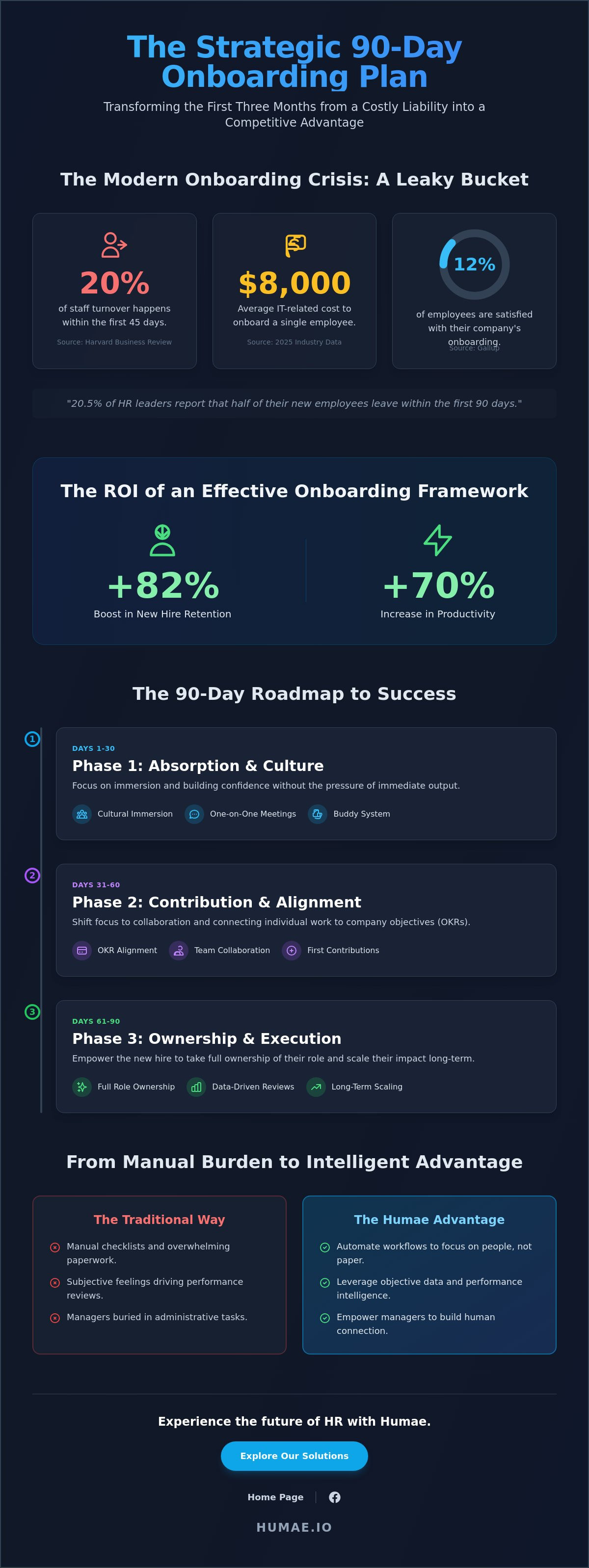
The first three months represent a critical "danger zone" for every organization. Research from Harvard Business Review indicates that up to 20% of staff turnover happens within the first 45 days. When a hire fails early, the costs are staggering. Beyond the lost salary, the IT-related cost to onboard a single employee in 2025 was nearly $8,000. To combat this, elite HR teams prioritize Time-to-Value (TTV). TTV measures how quickly a new hire moves from being a cost center to a value creator. In 2026, achieving a low TTV depends on moving away from manual checklists and toward a robust workforce management infrastructure that automates administrative tasks.
Beyond the Paperwork: The Psychological Impact
The "honeymoon period" is a fragile time. New hires arrive with high expectations, but they also bring significant anxiety about their ability to perform. A clear, structured plan reduces this mental load by providing a predictable path forward. This process, scientifically known as organizational socialization, is what turns a stranger into a stakeholder. When an employee feels they belong, their early engagement skyrockets. Cultural onboarding is the seamless integration of company values and social norms into a new hire's daily routine. It's the difference between knowing the rules and living the mission.
The Business Case: Retention and Time-to-Productivity
The numbers don't lie. According to data from StrongDM, an effective onboarding process can boost new hire retention by 82% and productivity by over 70%. When you compare the investment in a 90-day framework against the massive cost of a failed hire, the choice is obvious. Early performance isn't just about the first quarter; it sets the entire long-term career trajectory. Employees who hit their milestones in the first 90 days are far more likely to become high-performers who stay with the company for years. Creating a successful 90-day onboarding plan is the most effective way to protect your recruitment investment and build a resilient team.
Phase 1 (Days 1-30): Absorption, Culture, and Contextual Learning
One-on-one meetings are the heartbeat of early employee engagement. These aren't status updates. They're connection points designed to reduce anxiety and build trust. We also recommend implementing a "Buddy System." Pairing a newcomer with a seasoned peer provides a safe space for informal knowledge transfer. It's often the small details, like understanding the unwritten rules of a Slack channel, that make a person feel they truly belong. With hybrid onboarding satisfaction reaching 75% in 2025, ensure these connections happen whether the team is in the office or remote.
Mapping the Stakeholder Landscape
Don't let your new hire stay in a silo. Guide them to identify key influencers and collaborators outside their immediate team. We encourage "listening tours" where the hire meets with different department heads. The goal is simple: understand the pain points across the organization. Conducting a formal "Stakeholder Interview" is a powerful tool for building early organizational empathy. It helps the hire see how their future contributions will impact the broader mission. This proactive mapping prevents the "us versus them" mentality that often plagues larger companies.
Establishing the Baseline with Performance Intelligence
While we avoid high-pressure targets, we still need to set baseline expectations. Use initial check-ins to define what success looks like during this learning phase. Encourage the new hire to explore the employee directory to understand the team structure and identify key stakeholders. Set low-stakes "learning milestones," such as completing a specific product training or presenting a summary of their listening tour. These small wins build the confidence needed for the transition into active contribution. Using an intelligent HRMS can help you track these early milestones without the manual paperwork.
Phase 2 (Days 31-60): Collaboration, Contribution, and OKR Alignment
By day 31, the initial fog of a new environment starts to lift. This is the moment to transition from passive observation to active contribution. Creating a successful 90-day onboarding plan requires a shift toward guided projects that allow the hire to apply what they've learned. It's about moving from "What is our process?" to "How can I help execute it?" This phase focuses on building cross-functional ties and establishing early feedback loops. When employees feel they're contributing meaningfully, their sense of belonging deepens and their anxiety drops.
A common concern for managers is the fear of overwhelming a new hire too early. We recommend a balanced workload that provides scaffolded autonomy. You're not throwing them into the deep end without a life vest. Instead, you're providing specific, time-bound tasks that build technical competency. This is also the perfect time to introduce the OKR meaning within your specific organizational context. Understanding how their daily tasks feed into larger objectives gives the new hire a sense of purpose and a clear direction for their energy.
Shifting from Observer to Contributor
Aligning Individual Goals with Organizational OKRs
Transparency is the antidote to new-hire second thoughts. Data from March 2026 shows that 39% of new hires have second thoughts about their job during onboarding. You can prevent this by showing your employee exactly how their 60-day goals map to the company’s quarterly objectives. When they see their progress tracked through an analytics dashboard, the work becomes tangible. OKR alignment is the synergy between personal growth and company success. Creating a successful 90-day onboarding plan ensures the hire understands their unique value proposition. They shouldn't just know what they're doing, but why it matters for the bottom line.
Phase 3 (Days 61-90): Ownership, Execution, and Long-term Scaling
Days 61 to 90 mark the critical transition from being a "new hire" to becoming a core contributor. This is where the training wheels come off. Creating a successful 90-day onboarding plan concludes by shifting the focus toward full ownership and long-term scaling. It's no longer just about completing tasks. It's about owning outcomes. By this stage, the employee should be comfortable enough to manage a core responsibility or an ongoing process independently. They've moved past the "danger zone" where 20.5% of new hires typically drop off, and they're ready to drive real value.
This phase is also where you validate your recruitment investment. Conduct a formal 90-day performance review, but move away from vague "vibes" or subjective feelings. Use objective data from your analytics dashboards to measure progress against the OKRs set in Phase 2. Once the review is complete, don't let the momentum stall. Transition the onboarding plan into a personalized long-term development roadmap. Finally, gather feedback from the employee about the onboarding process itself. Their fresh perspective is the most valuable tool you have to iterate for your next hire. Don't forget to celebrate. A simple, public recognition of their successful "ramp-up" completion fosters the kind of sentiment that leads to long-term retention.
Managing the First "Big Win" Project
A "Big Win" project is the ultimate test of readiness. We define this as a project that requires independent decision-making and has a visible impact on the organization. Managers should provide autonomy with a safety net. This means being available for high-level strategic guidance while stepping back from the day-to-day execution. When the project is finished, encourage the hire to present their results to the wider team. This builds their internal profile and cements their status as a trusted stakeholder within the company culture.
Continuous Feedback Loops and Sentiment Analysis
Static, annual reviews are relics of the past. Modern performance management systems now allow for real-time adjustments and AI-driven sentiment analysis. This technology can detect late-stage onboarding friction that a manual process might miss. Combine these digital insights with "stay interviews" at the 90-day mark. Ask what they love about the role and what still feels clunky. This human-to-human check-in, backed by performance intelligence, ensures the employee feels heard and valued as they transition into their permanent role.
Ready to turn your data into a retention engine? Explore Humae's Performance Intelligence tools to see how we help managers lead with confidence.
How Humae Transforms Onboarding from Manual to Intelligent
The transition from a candidate to a high-performing team member shouldn't feel like a series of disjointed emails and spreadsheets. Humae makes creating a successful 90-day onboarding plan a scalable reality by stripping away the manual friction that slows down growth. Our platform automates the administrative burden, allowing managers to step away from the paperwork and focus on what actually matters: human connection. When you remove the stress of manual task tracking, you create space for empathy and genuine leadership.
Visibility is the foundation of a great start. Our centralized employee directory ensures that new hires can identify key stakeholders and collaborators instantly, breaking down silos before they even form. Beyond simple introductions, Humae tracks progress against 90-day OKRs with real-time analytics dashboards. This means managers don't have to guess if a hire is on track. By centralizing these touchpoints, creating a successful 90-day onboarding plan becomes a repeatable, data-driven process instead of a chaotic administrative hurdle. We also use AI-powered sentiment analysis to monitor the "pulse" of the new hire, ensuring they feel supported and heard during those critical first months.
Leveraging AI for Personalized Onboarding Journeys
No two roles are identical, so why should their onboarding be? Humae uses intelligent automation to tailor the experience based on specific roles and departments. Whether it's a developer needing technical documentation or a sales lead needing CRM access, the journey is customized from day one. New hires can easily access time-off management tools and policy documents without hunting through outdated folders. To keep the momentum going, our AI prompts managers to conduct key meetings and feedback sessions at exactly the right time, ensuring no milestones are missed.
Real-time Dashboards for Manager-Employee Alignment
Transparency builds trust faster than anything else. Having goals, progress, and feedback in a single interface ensures that both the manager and the employee are always on the same page. This alignment is vital for reducing the early turnover that plagues so many organizations. Our actionable analytics provide a clear view of where a hire might be struggling, allowing for immediate, supportive intervention. Don't leave your team's success to chance. Start building your intelligent workforce with Humae today and transform your onboarding into a competitive advantage.
Future-Proof Your Talent Strategy
Mastering the first three months is the most effective way to protect your recruitment investment and build a resilient team. We've explored how shifting from a simple checklist to a structured, three-phase journey transforms the new-hire experience. By prioritizing cultural immersion first, then moving to collaboration and full ownership, you ensure every employee feels valued and productive. Creating a successful 90-day onboarding plan isn't just an HR task; it's a strategic commitment to your company's long-term growth.
The future of work demands more than manual tracking. You need a centralized workforce management infrastructure that bridges the gap between human sentiment and organizational goals. With AI-driven performance intelligence and real-time OKR tracking, you can identify friction before it leads to turnover. Create your successful 90-day plan with Humae’s AI-powered platform today. Your people are your greatest asset, and giving them the right foundation is the first step toward collective success. We're here to help you build that future with confidence.
Experience the future of people management with Humae. Return to our home page to explore our full suite of HR tools, or stay connected with our community on Facebook.
Frequently Asked Questions
What is a 90-day onboarding plan?
A 90-day onboarding plan is a strategic roadmap that guides a new hire through their first three months of employment. It moves beyond simple paperwork to focus on cultural integration, goal alignment, and performance. By breaking the journey into three distinct 30-day phases, companies can ensure employees transition smoothly from observers to high-impact contributors. This structured approach is essential for reducing early turnover and accelerating time-to-productivity.
How do I create a 30-60-90 day plan for a new manager?
Creating a successful 90-day onboarding plan for a manager requires a focus on leadership and strategy. In the first 30 days, they should prioritize one-on-one meetings with their team and key stakeholders. The next 30 days involve identifying process gaps and proposing a "quick win" project. By day 90, the manager should take full ownership of their team's OKRs and present a long-term vision for their department's growth.
Why is the 90-day mark important for employee retention?
The 90-day mark is critical because it represents the moment a new hire decides if they have a future at your company. Research from 2025 shows that 20.5% of HR leaders see half of their new employees leave within this window. A well-executed plan provides the support and clarity needed to overcome second thoughts. It turns the initial "honeymoon period" into a lasting professional commitment through consistent feedback and clear milestones.
Can I use a 90-day plan for remote or hybrid employees?
Yes, a 90-day plan is even more vital for remote and hybrid teams where informal office interactions are missing. In 2025, hybrid onboarding formats outperformed fully remote or in-person formats with a 75% satisfaction rate. You should use digital tools to centralize documentation and schedule frequent video check-ins. This ensures remote hires feel connected to the company culture and have clear visibility into their stakeholders through a digital employee directory.
What are the most common mistakes in a 90-day onboarding plan?
The most common mistakes include overwhelming new hires with immediate output demands and failing to set clear, measurable goals. Many companies also struggle with "onboarding amnesia," where support drops off after the first week. Relying on manual, paper-based processes creates administrative friction that frustrates both managers and hires. Successful plans avoid these traps by balancing learning with doing and using technology to automate routine tasks and maintain momentum.
How do OKRs fit into a new employee’s onboarding journey?
OKRs provide the "why" behind every task a new hire performs. By day 31, you should align individual milestones with broader company objectives. This transparency helps the employee understand how their specific role contributes to the organization's success. Tracking these results through a real-time analytics dashboard ensures that feedback is based on objective data rather than subjective impressions. This clarity boosts confidence and performance during the final phase of integration.
How can AI software help with the onboarding process?
AI software transforms onboarding from a manual burden into an intelligent experience. It automates data collection and scheduling so managers can focus on building human relationships. Advanced platforms also use sentiment analysis to detect if a hire feels overwhelmed or disconnected. This technology allows you to create personalized journeys at scale, ensuring every employee receives the right information and support at exactly the right time to ensure long-term success.