Continuous Feedback Model: The 2026 Guide to Performance Intelligence
By Humae · 23 August 2026
continuous feedback model
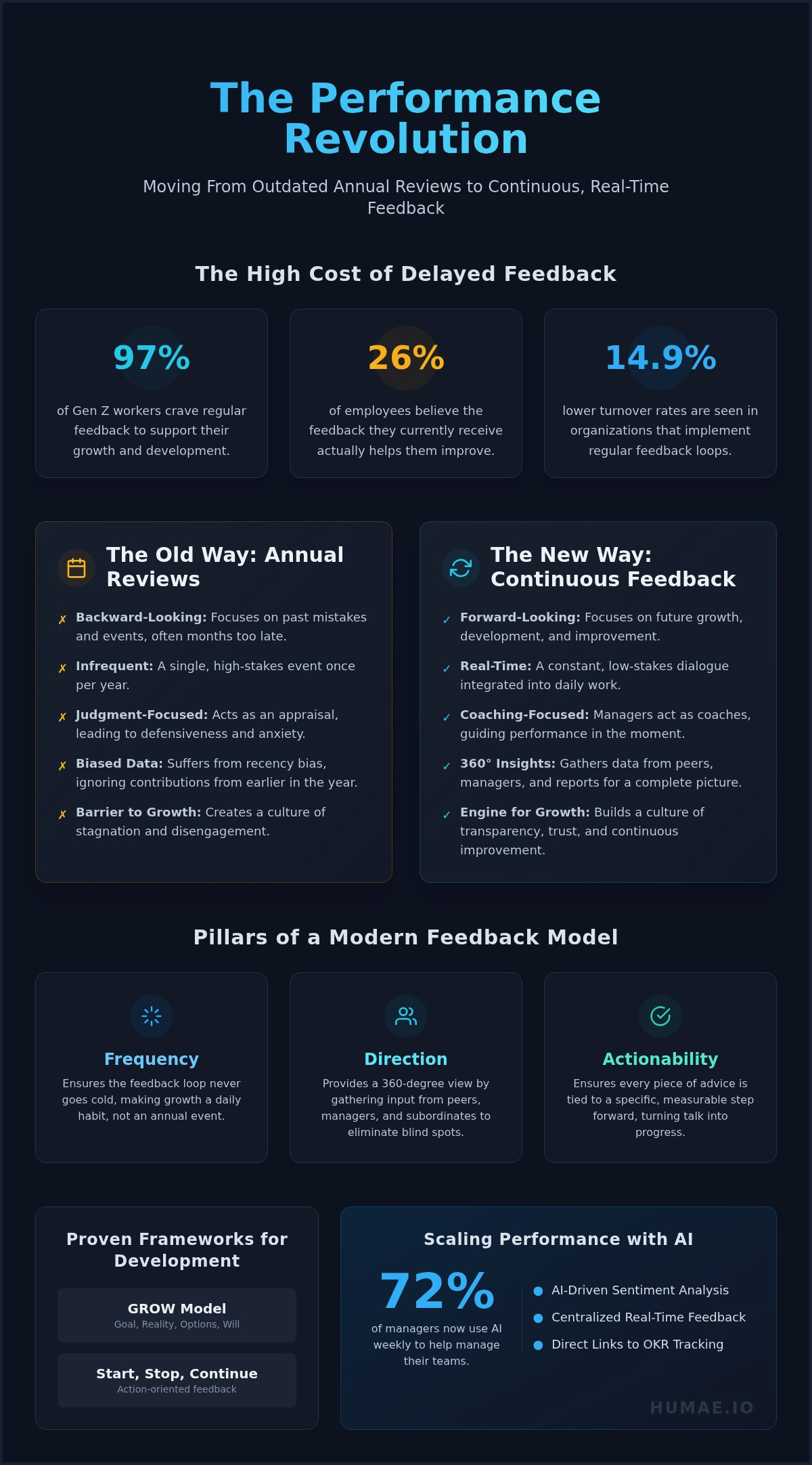
Did you know that 97% of Gen Z workers crave regular feedback, yet only 26% of employees believe the input they receive actually helps them improve? Most managers feel trapped in a cycle of time-consuming annual reviews that arrive months too late to save a project or boost morale. It's exhausting to watch high-potential talent disengage because recognition is stuck in a yearly queue. You likely feel that the traditional way of measuring success is no longer just outdated; it's a barrier to growth.
Adopting a continuous feedback model isn't just about changing how you talk to your team. It's about building a technical infrastructure for organizational intelligence. In this guide, you'll learn how to transition from static, useless reviews to a dynamic system that drives real-time growth and genuine engagement. We'll explore how to leverage performance intelligence to create a culture of transparency, higher retention, and actionable data that empowers leadership to make better decisions today, not next year.
Key Takeaways
- Understand the shift from static annual reviews to high frequency input systems that meet 2026 workforce expectations.
- Learn how to design a continuous feedback model focused on frequency, direction, and actionable 360 degree insights.
- Explore proven frameworks like GROW and Start, Stop, Continue to turn everyday interactions into measurable career development.
- Discover the steps to successfully implement a culture of transparency through leadership modeling and manager training.
- See how AI powered performance intelligence centralizes feedback and links it directly to real time OKR tracking and results.
Moving Beyond the Annual Review: Why Continuous Feedback is Essential in 2026
The traditional annual review has become a corporate relic. In a world where project cycles move at light speed, waiting twelve months to discuss performance is a recipe for stagnation. The continuous feedback model replaces this outdated ritual with a high-frequency, real-time input system. It's an approach rooted in the Continual Improvement Process, ensuring that growth isn't an annual event but a daily habit. By 2026, the shift from "Performance Appraisal" to "Performance Intelligence" has become the standard for organizations that value data over guesswork.
Performance Intelligence represents a fundamental shift in how leadership views its people. It's no longer about looking backward to justify a salary increase. It's about using real-time insights to predict team health and identify skills gaps before they become liabilities. A robust continuous feedback model provides the raw data needed for this intelligence. It allows managers to act as coaches who guide performance in the present, rather than judges who evaluate the past. This proactive stance is what separates thriving cultures from those struggling with disengagement.
The High Cost of Delayed Feedback
Waiting until December to address a June performance gap costs more than just time. It drains productivity. When feedback is delayed, small misunderstandings snowball into major project failures. Traditional cycles also suffer from recency bias, where a manager only remembers an employee's work from the last few weeks rather than the full year. This lack of consistency is a primary driver of turnover. Research indicates that organizations implementing regular feedback loops see a 14.9% reduction in turnover rates. Without consistent coaching, your top talent will look for growth opportunities elsewhere.
Why 2026 Demands Real Time Communication
The modern workforce has changed. With 97% of Gen Z workers desiring regular feedback, the "no news is good news" management style is officially dead. Distributed teams and remote work environments have made spontaneous office chats rare, making structured, frequent digital check-ins essential. Real-time communication allows for agile adjustments during rapid project cycles. Beyond the data, there is a deep psychological benefit. Low-stakes, consistent conversations reduce the anxiety associated with formal reviews. They foster a culture of safety where employees feel seen and recognized in the moment, not months after their hard work was completed.
The Mechanics of a Modern Continuous Feedback Model
A successful continuous feedback model rests on three non-negotiable pillars: frequency, direction, and actionability. Frequency ensures the loop never goes cold. Direction provides a 360 degree view, gathering input from peers, managers, and subordinates to eliminate the blind spots inherent in traditional top down structures. Actionability ensures that every piece of advice is tied to a specific, measurable step forward. This holistic structure transforms feedback from a mandatory chore into a collaborative growth engine that directly fuels modern employee engagement strategies.
Establishing a "Feedback Safe" culture is the engine that makes these mechanics work. In such an environment, transparency is rewarded rather than punished. When employees see that their input leads to tangible changes, they become active participants in the company's success. This cultural shift requires leadership to model the behavior first. By inviting feedback on their own performance, executives signal that growth is a universal goal. This level of openness is what allows organizations to move from directory management to true performance intelligence.
AI and Sentiment Analysis: The New Frontier
In 2026, manual feedback collection isn't enough to manage a high performing team. AI driven sentiment analysis has become the backbone of modern performance intelligence. With 72% of managers now using AI to help manage employees at least weekly, the technology is no longer optional. These tools analyze the tone and patterns in written feedback to detect early signs of burnout or disengagement long before they lead to resignation. It provides objective data for what used to be purely subjective conversations. These insights are aggregated into centralized analytics dashboards, allowing leadership to see team health trends at a glance. It's about moving from reactive fixes to predictive support. You can explore how these performance intelligence tools can simplify your feedback loops today.
Frequency vs Quality: Finding the Sweet Spot
Managers often worry that a continuous approach means constant interruption. It doesn't. The goal is a sustainable rhythm, not an endless stream of comments. There's a vital difference between informal praise, which should happen often, and formal coaching sessions, which require deep focus. Automating reminders and triggers ensures consistency without adding manual overhead. This ensures that the continuous feedback model remains a support system rather than a burden. When you find the sweet spot, feedback becomes a natural part of the workflow, much like a quick Slack message or a stand up meeting, rather than a looming quarterly event.
Proven Frameworks for Real Time Employee Development
A continuous feedback model is only as effective as the language your team uses to communicate. Without a structured framework, feedback risks becoming vague or, worse, personal. The SBI Model (Situation, Behavior, Impact) provides a professional foundation for constructive criticism. By describing the specific situation, the observed behavior, and the resulting impact, managers remove ambiguity. This approach ensures that the conversation stays focused on performance rather than personality. It's a simple shift that turns a potentially defensive interaction into a productive learning moment.
Implementing these methods requires more than just a conversation. It requires a robust workforce management infrastructure to capture and track these interactions. When frameworks are integrated into your digital tools, they become part of the company's DNA. This digital record allows for long term trend analysis, helping leadership identify which coaching styles yield the best results for different team dynamics. It bridges the gap between human empathy and technological precision.
The GROW Model for Career Pathing
The GROW Model serves as a roadmap for future potential by guiding employees through their Goal, Reality, Options, and Way Forward. It transforms standard feedback sessions into collaborative problem solving meetings. Instead of telling an employee what they did wrong, a manager asks where they want to go. This aligns individual aspirations with company objectives, creating a shared sense of purpose. When you focus on the "Way Forward," you give the employee ownership over their growth. This sense of agency is a powerful driver of retention and long term performance.
Start, Stop, Continue: The Agile Choice
For teams operating in rapid project cycles, the Start, Stop, Continue framework is the gold standard for efficiency. It's simple. What should we start doing to improve? What is holding us back that we should stop? What are we doing well that we must continue? This structure works exceptionally well for peer to peer feedback, as it's easy to understand and quick to implement. Recording these agile insights in a centralized HRIS system ensures that valuable project post mortems aren't lost in Slack threads. It creates a searchable history of team improvements that informs future resource allocation and training needs.
Overcoming Culture Shock: Implementing Continuous Feedback Successfully
Transitioning to a continuous feedback model requires more than just a software update. It demands a cultural overhaul. Organizations often face suspicion or "feedback fatigue" if the change is handled poorly. Employees who are used to a single annual "judgment day" may initially view more frequent check-ins as a form of micromanagement. To succeed, you must move through a structured change management process that prioritizes transparency and human empathy over mere metrics.
Success starts at the very top. Leadership buy-in is the first and most critical step. If executives don't actively seek and model the behavior, the rest of the organization will see the new system as a hollow mandate. Leaders must be the first to ask for honest input on their own performance. Once the foundation is set, the process involves choosing the right performance intelligence tools to reduce friction, iterating based on employee sentiment data, and consistently celebrating wins. This reinforcement loop ensures that the change sticks and becomes a natural part of the workday.
Managing the Transition from Annual Cycles
Communicating the "Why" is essential to prevent the feeling of constant surveillance. You must clearly explain that this shift is about growth and support, not monitoring. Start with pilot teams before a full rollout. This allows you to identify specific friction points in a controlled environment. Setting clear expectations for frequency is also vital. Whether it's a weekly check-in or a monthly deep dive, consistency builds trust. When employees know exactly what to expect and how their data is used, the anxiety of the "unknown" disappears. You can begin this journey by centralizing your team data with Humae to ensure a smooth transition.
Training Managers for High Impact Conversations
The most difficult part of this transition is the mental shift from "Boss" to "Coach." Managers need specific training on the art of constructive criticism. It's not just about what is said, but how it's delivered. Handling difficult conversations without damaging the relationship is a skill that must be practiced. Managers should learn to use data from performance intelligence to ground their feedback in objective facts rather than personal feelings. This data-driven approach removes the sting of subjective bias and keeps the focus on professional development. When a manager can point to specific project outcomes or OKR progress, the conversation becomes a collaborative problem-solving session rather than a lecture.
Scaling Performance with Humae AI Powered Intelligence
Most organizations struggle because their feedback loops exist in a vacuum, disconnected from the actual business goals they are meant to support. Humae changes this by centralizing your continuous feedback model within a unified workforce management platform. This isn't just a list of comments; it's a living data stream linked directly to OKR tracking and results. When an employee receives praise for a specific project, that recognition is tied to the key results that drive your company forward. This creates a clear line of sight between individual effort and organizational success, providing the technical infrastructure that generic coaching tools lack.
We use AI driven sentiment analysis to monitor organizational health in real time. Instead of waiting for an exit interview, leadership can see shifts in team morale as they happen. This proactive approach reduces the administrative burden on managers through automated triggers and smart reminders. Managers don't have to worry about forgetting a check in; the platform ensures the rhythm is maintained. It's about empowering people leaders with performance intelligence that is both deeply human and technologically advanced.
Integrated Performance Intelligence
Having feedback, OKRs, and employee data in one interface is a game changer for scaling organizations. Whether you're a fast growing startup or an established enterprise, Humae helps you scale your culture through technology. Our real time analytics dashboards provide leadership with actionable insights that were previously hidden in spreadsheets. You can identify your highest performers, spot teams at risk of burnout, and make data driven decisions about promotions and development without the manual overhead.
Getting Started with Humae
Onboarding your team onto the Humae platform is simple and intuitive. We understand that every organization has a unique pulse, so we've made it easy to customize feedback templates to match your specific company culture. You can adjust the frequency, the questions, and the visibility to suit your team's needs. The transition from directory management to a sophisticated continuous feedback model happens in days, not months. It's time to move beyond the limitations of static reviews and embrace a more dynamic future. Book a demo at Humae.io and see how we can transform your organizational intelligence together.
Build the Future of Performance Intelligence
The shift toward a continuous feedback model is no longer just a trend; it's the 2026 standard for high-performing teams. By moving away from the anxiety of annual reviews, you've seen how real-time input fosters a culture of transparency and growth. We've explored how frameworks like GROW and SBI, when integrated into a modern digital infrastructure, turn simple conversations into measurable strategic assets. This transition allows your organization to move from basic directory management to a sophisticated level of performance intelligence.
Scaling this human-centric approach requires a partner that understands both technological precision and human empathy. Humae provides the global workforce management infrastructure needed to centralize these feedback loops. With our AI driven sentiment analysis, you can monitor team health in real time and link every bit of input to integrated OKR tracking. This ensures your people are always aligned with your organizational vision, even in a distributed work environment.
The transition to real-time recognition is the most significant competitive advantage you can build this year. Don't let your talent stagnate in outdated cycles. Transform your team performance with Humae AI Powered Intelligence. It's time to empower your managers and inspire your employees with a system built for the modern era.
Frequently Asked Questions
What is the primary difference between a continuous feedback model and annual reviews?
The primary difference lies in frequency and intent. Annual reviews are retrospective and often tied to high-stakes compensation decisions, while a continuous feedback model focuses on real-time development. This modern approach replaces once-a-year judgment with ongoing coaching, allowing for immediate course corrections. It ensures that employees receive guidance when it is most relevant to their current projects, rather than waiting months for a formal evaluation.
How often should managers provide feedback in a continuous model?
The ideal frequency is usually a weekly or bi-weekly rhythm, though praise should be immediate. The goal isn't to provide constant interruption but to establish a predictable cadence for growth conversations. By keeping check-ins brief and frequent, managers can address small issues before they escalate. This consistent flow of communication builds trust and ensures that performance expectations are always clear and aligned with current team priorities.
Can continuous feedback be used for remote and hybrid teams?
Yes, a digital continuous feedback model is actually essential for distributed teams where spontaneous office interactions are missing. It bridges the physical gap by providing a structured platform for recognition and guidance. Digital tools ensure that remote employees feel seen and valued despite the lack of face-to-face contact. It centralizes all communication, ensuring that every team member has equal access to development opportunities regardless of their location.
How does AI improve the continuous feedback process?
AI improves the process by using sentiment analysis to detect early signs of burnout or disengagement that humans might miss. It can summarize 360-degree feedback trends and provide managers with suggested coaching points based on real performance data. This technology removes subjective bias, grounding conversations in objective project outcomes. AI also automates the administrative side, sending triggers and reminders to ensure that no team member is left without guidance.
What are the most effective frameworks for giving constructive criticism?
The most effective frameworks include SBI (Situation, Behavior, Impact) for clarity and GROW (Goal, Reality, Options, Way Forward) for career pathing. SBI ensures that constructive criticism remains objective and focused on specific actions rather than personality traits. GROW turns feedback into a collaborative problem-solving exercise. Using these structured methods helps managers deliver difficult messages with empathy, keeping the relationship intact while driving the necessary performance improvements for success.
Is continuous feedback too time consuming for busy managers?
No, it actually saves time in the long run by eliminating the massive administrative burden of the annual review season. Small, frequent interactions are much easier to manage than one giant, high-stakes meeting. When you use performance intelligence tools to automate documentation and reminders, the manual overhead drops significantly. Addressing issues in real-time also prevents time-wasting project failures, making the entire team more efficient and focused.
How do you link continuous feedback to company OKRs?
You link feedback to OKRs by tagging specific praise or coaching points to the key results they directly support. This creates a clear line of sight between daily tasks and high-level company goals. When an employee sees how their personal growth impacts the organization's success, engagement levels rise. Modern HR platforms centralize this data, allowing leadership to see which feedback loops are driving the most progress toward strategic objectives.
What role does peer to peer feedback play in this model?
Peer-to-peer feedback provides a 360-degree perspective that managers simply cannot achieve alone. It captures the day-to-day wins and collaboration efforts that happen outside of formal meetings. This decentralized approach builds a culture of mutual support and transparency across the organization. When peers recognize each other's contributions, it boosts morale and provides leadership with a more accurate picture of team dynamics and individual influence within the company.