Common Onboarding Process Failures: Why 2026 Talent Leaves and How to Fix It
By Humae · 22 May 2026
common onboarding process failures
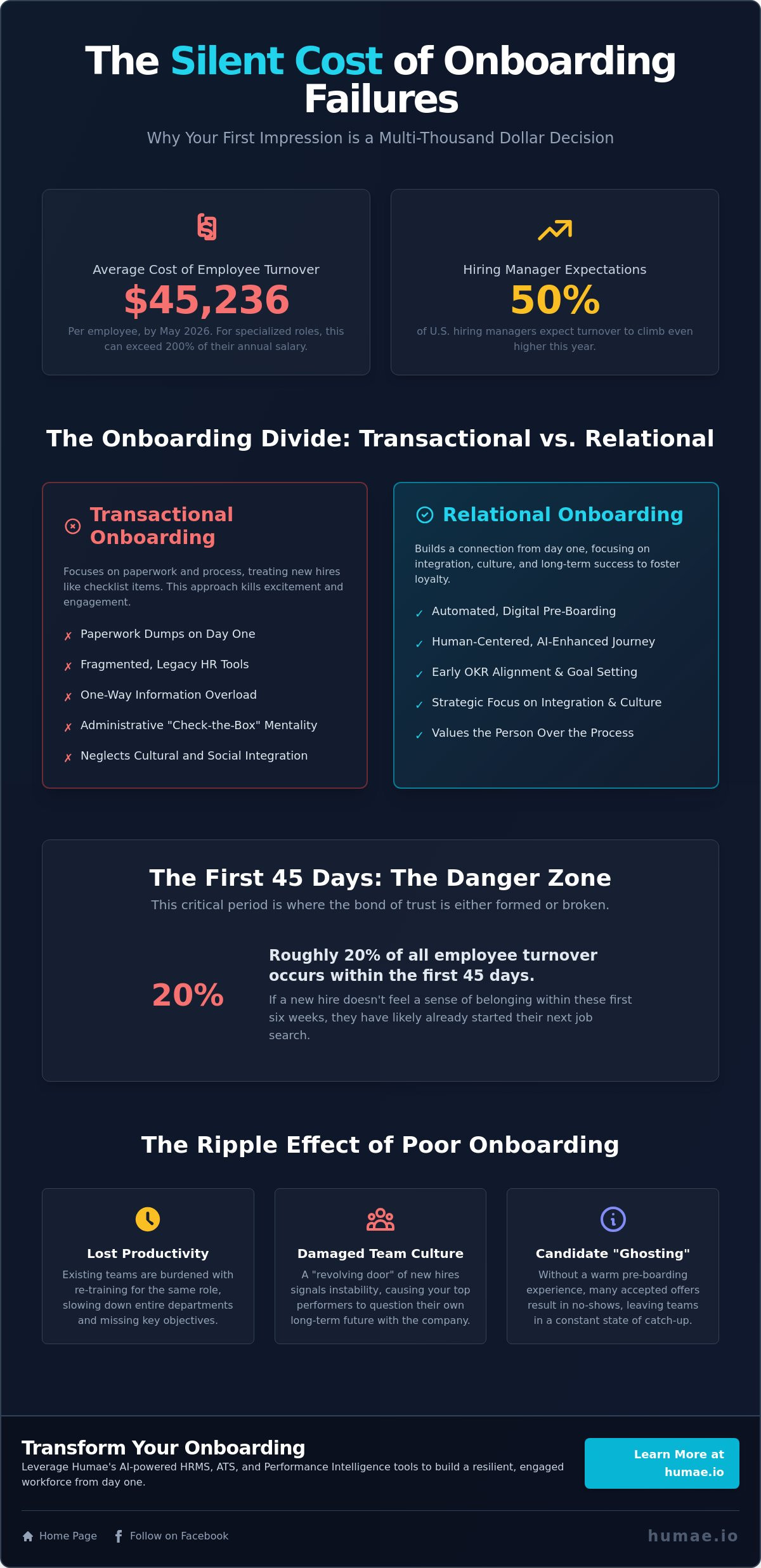
Did you know that by May 2026, the average cost of employee turnover has surged to $45,236 per person? With 50% of U.S. hiring managers expecting turnover to climb even higher this year, the stakes for your first impression have never been greater. It's exhausting to manage fragmented HR tools while watching new hires struggle to find their footing. You know that a signature on a contract isn't enough to guarantee loyalty, yet common onboarding process failures often get in the way of building a lasting team.
This article shows you how to bridge the connection gap and fix the critical mistakes driving talent away. We'll explore how to transform your administrative hurdles into a modern, AI-enhanced journey that accelerates time-to-productivity. You'll learn the exact steps to create a culture-first experience that slashes 90-day turnover and keeps your best people engaged from day one.
Humae offers the HRMS, ATS, and Performance Intelligence tools needed to create a human-centered workplace. Return to our home page to discover our full suite of solutions, or follow us on Facebook to stay updated on the latest HR innovations.
Key Takeaways
- Understand the 2026 financial impact where turnover costs for specialized roles now exceed twice the annual salary.
- Move beyond transactional "paperwork dumps" to create a relational experience that values the person over the process.
- Bridge the performance gap by integrating OKR tracking into the first 90 days to set clear, achievable milestones.
- Resolve common onboarding process failures by building a resilient framework from automated pre-boarding to cultural immersion.
- Leverage AI-powered infrastructure and sentiment analysis to proactively identify and eliminate friction in the hiring journey.
Humae delivers the HRMS, OKR Tracking, and Performance Intelligence tools modern organizations need to thrive. Visit our home page and join our community on Facebook.
The Silent Cost of Onboarding Failures in 2026
Onboarding failure happens when the reality of a new role clashes with the promises made during the interview. It's a fundamental disconnect in organizational socialization that leaves top talent feeling isolated and undervalued. In 2026, common onboarding process failures aren't just minor HR headaches; they're significant financial leaks that drain your organization's resources. When the expectations set during the recruitment phase don't align with the organizational reality, the bond of trust breaks before it even forms.
The financial impact in 2026 is impossible to ignore. Verified data shows the average cost of employee turnover has surged to $45,236 per employee. For specialized or senior roles, this figure often exceeds 200% of an annual salary. Every time a new hire exits within their first few months, you're losing recruitment investments, training expenses, and the lost productivity of the entire department. You're paying for a seat that remains empty while your competitors pull ahead.
Organizations must distinguish between administrative and strategic onboarding. Administrative onboarding is about forms, hardware, and compliance. It's a "check-the-box" mentality. Strategic onboarding focuses on integration, culture, and long-term success. Just as a growing enterprise might utilize a 3PL matching service to find the right logistics partners to handle operational scale, HR departments must prioritize the relational aspects of a new hire's journey. Most organizations fail because they stop at the paperwork. This neglect creates a psychological danger zone during the first 45 days. This is the period where roughly 20% of all turnover occurs. If a hire doesn't feel a sense of belonging within those first six weeks, they've likely already started their next job search.
Why Traditional Checklists are No Longer Enough
Static PDF checklists and one-way spreadsheets can't keep up with a modern workforce management infrastructure. Today's talent expects an experience-first approach that feels personalized and digital. When you overwhelm a hire with information overload in their first week, you trigger onboarding fatigue. This exhaustion kills the initial excitement of the new job. Instead of learning how to contribute, the employee is stuck navigating a fragmented maze of legacy tools and outdated documents.
The Ripple Effect: How Poor Onboarding Damages Team Culture
The damage extends far beyond the HR budget. When a new hire fails to integrate, your existing team bears the burden. Productivity drops as senior members spend time re-training for the same role repeatedly. This cycle signals cultural instability to your high-performers. If they see a revolving door of new talent, they'll eventually look for a more stable environment. There's also the hidden cost of "ghosting." Without a warm pre-boarding experience, many candidates accept offers but never actually start, leaving your team in a constant state of catch-up.
Transactional vs. Relational: The Structural Pitfalls of Generic Onboarding
One of the most common onboarding process failures is treating a new hire like a support ticket rather than a human being. When companies focus purely on the transaction, they miss the chance to build a relationship. You've spent months finding the perfect candidate, but if day one is just a "paperwork dump," that initial spark disappears. New hires want to feel they've joined a mission, not just a database. Stacking forms and compliance videos on a desk kills the excitement that drives long-term loyalty.
An excellent onboarding experience starts by removing the administrative friction. If your new talent can't find their way around the social landscape of the company, they'll feel like outsiders. Failing to provide a centralized employee directory makes it impossible for them to identify key stakeholders or even find a friendly face for lunch. You aren't just giving them a contact list; you're giving them a map to navigate their new professional home. Organizations that ignore the "Buddy System" often see higher early turnover because they've neglected the social integration that human beings crave. Technical training is vital, but social comfort is what makes someone stay.
The Pre-boarding Gap: The Danger of the "Silence Period"
The "vulnerability window" is the time between signing the contract and the actual start date. This is where common onboarding process failures often begin. Silence during this period breeds anxiety and makes your new hire susceptible to counter-offers. If their hardware hasn't arrived or they don't have a welcome message by day zero, they'll feel forgotten. Modern hris systems bridge this gap by automating touchpoints and ensuring everything is ready before the first log-in. You can see how our performance intelligence tools keep everyone aligned from the very start.
Vague Expectations and the "Sink or Swim" Mentality
Expectation management is the cornerstone of retention. If you don't define what a "90-day win" looks like, your new hire will drift. They might understand general human resources policies, but they need to know their role-specific impact. Managers often fail to provide meaningful feedback within the first 14 days, leaving talent to wonder if they're meeting the mark. This "sink or swim" approach doesn't build resilience; it builds disengagement. Clear milestones and early feedback loops turn a confusing start into a confident career path.
The Performance Intelligence Gap: Failing to Align OKRs Early
Most companies hire for a specific role but then onboard for a generic job description. This disconnect is a primary driver of disengagement. It's one of the most common onboarding process failures because it leaves new talent without a clear target or a sense of purpose. When a hire doesn't understand how their daily tasks contribute to the bigger picture, they quickly lose momentum. Performance intelligence shouldn't be a conversation you start at the six-month mark; it needs to be the foundation of day one.
Setting the right expectations means moving beyond a list of responsibilities. By introducing the okr meaning during the first week, you provide a framework for success. Objectives and Key Results allow new hires to see exactly what "winning" looks like in their specific context. Without this clarity, you risk "surprised" terminations at the end of a probation period. These failures aren't usually due to a lack of talent, but a lack of early alignment. If you aren't tracking progress from the start, you can't provide the course corrections that keep a new hire on track.
Setting Early Key Results (KRs) for New Hires
Don't wait 90 days to celebrate a victory. Break down long-term goals into weekly, achievable milestones. These micro-wins are essential for building a new hire's confidence and momentum. When talent can see their own progress visualized through modern performance management systems, they feel a stronger connection to the organization. It turns a daunting new role into a series of manageable steps, making the integration process feel like a shared journey rather than a solo climb.
The Feedback Loop Failure
Traditional "end of probation" reviews are often too late to save a failing onboarding experience. If a problem persists for three months without being addressed, the employee has likely already checked out mentally. You need continuous, real-time feedback loops to monitor new hire health. AI-driven sentiment checks can help you spot friction points or signs of disengagement before they lead to a resignation. Using real-time analytics allows managers to step in with support exactly when it's needed, turning potential common onboarding process failures into opportunities for growth and deeper connection.
Building a Resilient Onboarding Framework: From Pre-boarding to Integration
Fixing common onboarding process failures requires shifting your perspective from a simple checklist to a comprehensive journey. A resilient framework isn't a one-day event; it's a five-stage evolution that transforms a new hire into a high-performing team member. By structuring the experience into clear phases, you eliminate the confusion that often leads to early turnover. You aren't just filling a seat; you're building a foundation for long-term success.
You can explore our full suite of performance and engagement tools to see how we help organizations automate these critical stages.
Tactical Wins for the First 30 Days
Small actions often yield the biggest results in retention. Implementing a "Day Zero" welcome kit that arrives at the hire’s home creates an immediate emotional bond. Encourage them to use the employee directory to schedule "Coffee Chats" with cross-functional peers. This helps them build a social network beyond their immediate team. Finally, set up the first of your employee engagement strategies touchpoints within the first 48 hours to ensure they feel supported from the very start.
The Manager’s Onboarding Playbook
Modern management is about facilitation rather than just instruction. Provide your leaders with templates for 1-on-1 meetings that balance technical training with cultural storytelling. This helps new hires understand the context behind their tasks. Maintain a strict "Check-in Cadence": meet daily during the first week, weekly for the first month, and bi-weekly by the third month. This consistent rhythm prevents common onboarding process failures by catching frustration before it turns into disengagement.
Eliminating Process Failures with Humae’s AI-Powered Infrastructure
This shift toward intelligent systems isn't limited to HR; many companies are also focusing on their visibility in AI-driven search results by utilizing Mustache AEO to ensure their brand remains discoverable in the evolving digital landscape.
Autonomy is a powerful retention tool. Humae gives new hires immediate access to time-off management and the employee directory, allowing them to navigate the organization independently from day one. When talent can see the team structure and manage their own schedule without asking for permission at every step, they feel trusted and empowered. Integrating OKR tracking directly into the onboarding journey ensures this autonomy is paired with clear direction. Every task they complete is visibly linked to the company's success, providing the "purpose" that modern talent craves.
AI-Driven Performance Intelligence
Real-time feedback tools are the antidote to the "probationary surprise." Instead of waiting for a formal review, managers use Humae’s dashboards to monitor team-wide onboarding health. You can see at a glance who is hitting their milestones and who might need a "coffee chat" to get back on track. This visibility ensures that no one slips through the cracks during those critical first 90 days. It turns performance management into a supportive, continuous conversation rather than a stressful event.
A Single Source of Truth for Modern Teams
A unified HRMS significantly reduces the cognitive load for new hires. Moving from the Applicant Tracking System (ATS) into onboarding should be a seamless transition, not a jarring shift to a new platform. Humae ensures that all candidate data and digital documents flow through the system without manual re-entry. This digital document management eliminates the "paperwork dump," allowing the first week to be about culture, connection, and growth rather than compliance and forms.
Transform Your First Impression into Lasting Success
The era of generic checklists and administrative friction is over. With turnover costs hitting record highs in 2026, you can't afford to leave your new hire's first 90 days to chance. We've explored how common onboarding process failures often stem from a lack of social connection and delayed performance alignment. By shifting to a relational framework, you move beyond mere compliance and start building a culture where people feel seen and valued from day one. This isn't just about efficiency; it's about creating an emotional bond that survives the vulnerability window of the first few weeks.
Modern organizations need modern tools to bridge the connection gap. Leveraging AI-driven sentiment analysis and integrated OKR tracking allows you to spot disengagement before it becomes a resignation. Real-time performance intelligence ensures that every team member knows exactly how they contribute to the mission, turning a daunting start into a confident career path.
Your talent is your greatest asset, and they deserve an experience that matches their potential. Discover how Humae’s AI-powered platform eliminates onboarding failures and builds high-performing teams. It's time to stop managing tickets and start leading people toward a shared future.
Frequently Asked Questions
What are the most common onboarding failures in 2026?
The most common onboarding process failures in 2026 involve a lack of AI integration and a widening cultural gap. Organizations often rely on fragmented legacy tools that don't talk to each other, creating a disjointed experience for the new hire. This technical friction prevents them from feeling the human pulse of the company, leading to early disengagement before they've even finished their first month.
How long should a modern onboarding process last?
Modern onboarding should last at least 90 days rather than just a single week of orientation. While the first few days cover basic logistics, the full integration process requires a three-month framework to ensure cultural and performance alignment. This extended period allows for gradual immersion, deep-role training, and the establishment of long-term social connections within the team.
What is the "vulnerability window" in employee onboarding?
The "vulnerability window" is the period of silence between a candidate signing their contract and their official start date. Without active pre-boarding, this silence breeds anxiety and makes new hires susceptible to counter-offers from competitors. Bridging this gap with automated welcome messages and hardware updates ensures the hire remains excited and committed to their new journey.
Can AI really improve the onboarding experience?
AI significantly improves onboarding by automating repetitive tasks and providing real-time sentiment analysis. These tools detect friction points early by monitoring how new hires interact with the system and their initial milestones. By catching signs of frustration automatically, HR teams can intervene with a human touch exactly when it's needed most to prevent turnover.
How do OKRs fit into the onboarding process?
OKRs provide immediate alignment by connecting a new hire's daily tasks to the company's broader mission from day one. Instead of guessing what success looks like, the employee has clear, measurable Key Results to chase during their first 90 days. This transparency builds confidence and ensures that every small victory contributes directly to the organization's strategic goals.
What is the first thing a new hire should do on Day One?
The first thing a new hire should do on day one is establish a social connection rather than filling out administrative forms. Prioritizing a welcome meeting with their "buddy" or a quick coffee chat with the team creates an immediate sense of belonging. Handling paperwork digitally before they arrive allows the first day to be about people and culture instead of compliance.
How can I measure the success of my onboarding process?
You can measure the impact of common onboarding process failures by tracking 90-day retention rates and time-to-productivity metrics. If new hires are reaching full autonomy faster and staying beyond the first six months, your process is working. Using analytics dashboards to monitor these trends helps you identify which stages of your framework need adjustment to better support your talent.
What is the difference between orientation and onboarding?
Orientation is a tactical, one-time event focused on paperwork and logistics, while onboarding is a strategic, long-term journey. Onboarding involves organizational socialization, cultural immersion, and continuous performance alignment. Understanding this difference helps leaders move away from simple checklists and toward building a comprehensive experience that retains top-tier talent.