AI for Recruiting: Guide to Intelligent Hiring in 2026
By Humae · 3 September 2026
ai for recruiting
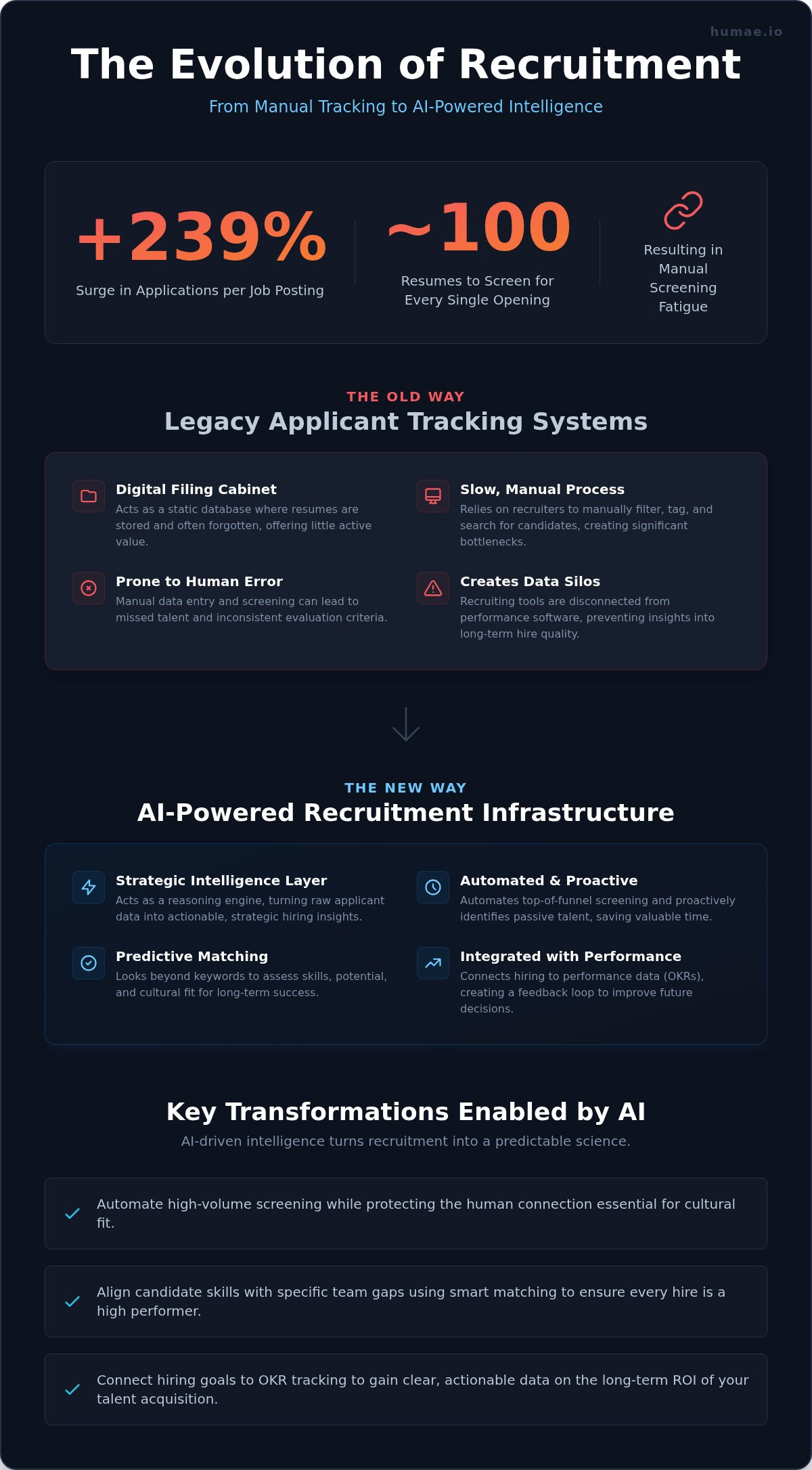
In 2025, applications per job posting surged by 239%, leaving recruiters buried under nearly 100 resumes for every single opening. If you feel the weight of manual screening fatigue or the sting of high turnover from hires who don't fit your culture, you're not alone. The traditional way of managing talent is breaking under the sheer volume of the modern workforce. Implementing ai for recruiting isn't just about keeping up: it's about reclaiming your time to focus on the people who actually drive your culture forward.
You want to find better candidates faster without losing the human touch that makes your company unique. This guide shows you how AI-driven intelligence transforms recruitment from a draining manual process into a strategic engine for workforce growth. We'll explore how to reduce time-to-hire through smart automation, improve cultural alignment, and bridge the gap between applicant data and actual job performance. By the end, you'll have a clear roadmap for building a seamless transition from first contact to a productive, long-term employee.
Key Takeaways
- Transition from legacy tracking to a visionary intelligence layer that treats recruitment as a strategic engine for growth.
- Discover how ai for recruiting automates high-volume screening while protecting the human connection essential for cultural fit.
- Align candidate skills with specific team gaps using smart matching technology to ensure every new hire is a high performer.
- Connect hiring goals to OKR tracking to gain clear, actionable data on the long-term ROI of your talent acquisition.
- Use our roadmap to select a recruitment partner that prioritizes intuitive design and a seamless experience for every user.
Defining AI for Recruiting: The Shift from Tracking to Intelligence
Recruitment is undergoing a fundamental transformation. For years, HR teams relied on software that acted as little more than a digital filing cabinet. Today, the focus has shifted from simply tracking candidates to applying deep intelligence to every hiring decision. This is the essence of ai for recruiting: it's the intelligence layer that sits atop your hiring process, turning raw data into strategic insights.
To grasp the scale of this change, it helps to understand What is Artificial Intelligence? and its role as a reasoning engine. In the context of hiring, AI doesn't just store information; it interprets it. It looks beyond keywords to understand intent, potential, and cultural alignment. It's the difference between a static list and a living map of your talent landscape.
The Evolution of Recruitment Infrastructure
Legacy Applicant Tracking Systems (ATS) were designed for an era of lower application volumes. They were static databases where resumes went to be forgotten unless a recruiter manually filtered and tagged them. This manual burden created bottlenecks that modern leaders can no longer afford. It's a slow, prone-to-error process that often misses the best talent.
Modern systems represent a leap toward a unified workforce management infrastructure. These dynamic platforms learn from your organization's successes and failures. Instead of waiting for a human to find a match, the system uses predictive matching to identify candidates who possess the specific skills and traits that lead to long-term performance in your unique environment. This shift from 'resume storage' to 'predictive matching' is what allows companies to scale rapidly in 2026 without sacrificing quality.
Why Standalone Recruiting Tools are Fading
The era of fragmented HR tech is ending. When your recruiting tool doesn't talk to your performance software, you create a massive data silo. You might hire someone who looks great on paper but fails to meet their goals six months later. Without a connected system, you'll never know why that 'good hire' didn't work out.
Centralized platforms like Humae bridge this gap. By integrating an Applicant Tracking System directly with performance intelligence, you create a continuous feedback loop. This visibility improves the recruiter's experience by providing real-time data on which sourcing channels actually produce the best employees. It's about moving away from guesswork and toward a model where hiring is a predictable science. Ai for recruiting ensures that every decision is backed by data, not just intuition.
AI-powered recruitment serves as a strategic business partner that aligns talent acquisition with long-term organizational goals.
How AI-Driven Intelligence Transforms the Hiring Workflow
The traditional hiring workflow often feels like a race against time. Recruiters spend hours sifting through resumes, only to find that the best candidates have already signed elsewhere. By implementing ai for recruiting, you move from a reactive posture to a proactive strategy. This technology doesn't just speed up the process; it fundamentally changes how you identify and engage with talent by automating the heavy lifting at the top of the funnel.
While automation handles the volume, it simultaneously protects the human element of recruitment. When software manages the administrative burden, your team can focus on building deeper, more meaningful relationships with high-potential candidates. Success in 2026 relies on this balance: using technology to scale efficiency while reserving human energy for the conversations that matter most.
Automated Sourcing and Smart Matching
Finding the right person often means looking beyond those actively seeking work. AI tools now identify passive talent across professional networks, analyzing career trajectories and skill sets without requiring a single manual search. This capability is vital as 81% of employers shift their focus toward skills-based hiring over traditional credentials. By conducting a real-time skill-gap analysis, the system ensures that every new hire doesn't just fill a seat, but actively complements the existing team's strengths.
Objectivity is another critical advantage. Data-driven candidate ranking helps reduce unconscious bias by focusing on verified abilities and performance markers. Leaders should always evaluate Strategic considerations for AI hiring tools to ensure these systems remain fair and transparent. When the "top of the funnel" is both diverse and highly qualified, the entire organization wins.
Sentiment Analysis: The New Frontier of Empathy
Intelligence tools have moved beyond text to understand the emotional context of the interview process. AI-driven sentiment analysis gauges candidate enthusiasm and cultural alignment by analyzing communication patterns and engagement levels. This isn't about "reading minds"; it's about providing recruiters with objective data on how a candidate perceives the company. This feedback loop allows you to refine your employer brand in real time, ensuring your message resonates with the talent you want to attract.
Predictive Analytics for Talent Quality
The most valuable insight a hiring manager can have is knowing whether a candidate will succeed long-term. Predictive analytics forecast future performance based on historical data and behavioral patterns. This allows you to identify high-potential hires before the first interview even begins. By integrating these insights into analytics dashboards, you gain a clear view of your recruitment ROI and talent health. If you're ready to see how data can drive your growth, explore the possibilities at humae.io and start building your future team today.
Strategic Features of Modern Recruitment Infrastructure
Choosing the right technology for your team isn't about ticking boxes on a feature list. It's about building a connected ecosystem where data flows without friction. In 2026, ai for recruiting must serve as the backbone of your organizational growth, providing a mobile-first experience that empowers hiring managers to make decisions on the go. If your platform feels like a chore to use, your best talent will likely look elsewhere.
Modern infrastructure replaces fragmented tools with a centralized command center. This shift ensures that every document, from resumes to offer letters, is stored securely and accessible to the right people at the right time. By prioritizing an intuitive interface, you reduce the administrative burden on your team, allowing them to focus on the human side of every hire.
The Onboarding Bridge: From Applicant to Employee
The period between a signed offer and the first day is often where the candidate experience breaks down. Companies frequently lose top talent during this gap due to a lack of engagement. A visionary platform solves this by automating the data flow from your Applicant Tracking System directly into your employee directory. This seamless transition ensures that new hires feel like part of the team before they even step into the office.
Personalized onboarding checklists can trigger automatically the moment a hire is confirmed. These lists guide the new employee through necessary paperwork and cultural introductions, creating a sense of belonging. When the transition from "applicant" to "team member" is handled with intelligence, you set the stage for long-term retention and success.
Collaborative Hiring and Communication
Hiring is a team sport, yet communication gaps often lead to "bad hires" who don't fit the culture. Centralized feedback loops allow interview panels to share insights instantly, preventing the siloing of information. Integrated scheduling tools eliminate the exhausting back-and-forth of coordination, letting you book interviews in seconds rather than days.
Standardized scorecards are essential for maintaining objectivity across the company. They ensure every candidate is evaluated against the same criteria, which is a key component of effective ai for recruiting. This structure not only improves the quality of your hires but also provides a clear paper trail for your decision-making process.
Data Security and Global Compliance
Managing candidate data in an AI-driven environment requires a rigorous approach to privacy. With the EU AI Act compliance deadline approaching in December 2027, and regional updates like the Illinois AI Video Interview Act requiring explicit consent, your infrastructure must be built for compliance. Centralized systems manage these complex labor laws across different regions automatically, protecting your organization from legal risks. Secure, cloud-based document storage ensures that sensitive candidate information remains private while staying accessible for audits and internal reviews.
Beyond the Offer: Integrating Hiring with Performance and OKRs
Hiring often feels like the finish line. In reality, it's just the starting block. For many organizations, the recruitment process exists in a vacuum: once the contract is signed, the talent acquisition phase ends and management begins. This disconnect is where efficiency dies. To truly measure the success of ai for recruiting, you must look at the data that follows the offer: performance intelligence and goal achievement.
The true ROI of a hire isn't a filled seat; it's the long-term contribution that individual makes to your mission. A unified HRMS provides the full-lifecycle visibility needed to bridge this gap. By connecting your hiring criteria to actual job performance, you transform recruiting from a cost center into a strategic engine for workforce growth.
Connecting Talent Acquisition to OKRs
High-performing cultures don't wait for the first performance review to set expectations. They integrate OKR tracking into the final stages of the hiring process. When a candidate understands exactly how their role contributes to the company's quarterly objectives before they even start, their time-to-productivity drops significantly.
Starting the OKR journey at the moment of offer acceptance aligns individual potential with the broader company vision from day one. It turns a job description into a mission. This level of clarity is a hallmark of modern, technology-centered organizations that value both speed and human purpose.
Performance Intelligence as a Strategic Feedback Loop
A unified platform allows you to see which sourcing channels produce your highest-performing employees. If your data shows that hires from a specific professional network consistently exceed their targets, your ai for recruiting strategy can pivot to prioritize that channel. This creates a continuous feedback loop that refines your ideal candidate profile based on actual job performance, not just resume keywords.
AI also helps identify when a new hire is falling behind expectations early, allowing for supportive intervention rather than a bad hire exit. Performance intelligence validates the recruitment strategy by linking hiring decisions to measurable business outcomes.
Managing Growth through Total Workforce Visibility
Total workforce visibility is the foundation of effective succession planning. When hiring data, employee directories, and performance metrics live in one place, identifying internal candidates for promotion becomes a data-driven exercise rather than a popularity contest. This centralized infrastructure supports a culture of transparency where every employee sees a path for growth.
Implementing these modern leadership strategies ensures your organization remains agile. By closing the gap between hiring and performance, you transform your HR department into a visionary partner for growth. If you are ready to see the full picture of your team's potential, explore how Humae's unified platform connects every stage of the employee lifecycle.
How to Choose and Implement the Right AI Recruitment Partner
Selecting the right technology is a pivot point for your organization. It's not just about adding a tool; it's about choosing a visionary partner that understands the delicate balance between high-tech efficiency and high-touch human connection. When evaluating ai for recruiting, look for a platform that aligns with your specific organizational culture. The goal is to find a system that doesn't just automate tasks but actually enhances the decision-making capabilities of your team.
Humae stands as the partner for leaders who refuse to choose between innovation and humanity. We provide the centralized infrastructure for growth while keeping the employee experience at the center of every interaction. By choosing a partner that values both AI and the people it serves, you ensure that your recruitment strategy remains both competitive and deeply empathetic.
The Selection Framework for Modern Teams
Start by auditing your current hiring bottlenecks. If you're struggling with resume overload, your priority is screening speed. If you're facing high turnover, your focus should be on cultural alignment and predictive matching. In 2026, 93% of recruiters plan to increase their use of AI, making transparency and bias-reduction measures non-negotiable features. Involve both your HR specialists and IT leaders in the decision-making process to ensure the platform is as secure as it is effective.
Roadmap to a Successful Implementation
Many leaders fear that shifting to a new platform will lead to months of downtime. This objection is often rooted in experiences with legacy systems. Modern platforms bypass this through intuitive design and rapid data migration. A successful roadmap begins with moving your existing candidate data without losing historical context. Once your data is live, you can set up automated workflows: from the initial job posting to the final offer letter. It's essential to see how it works in a live environment to ensure the flow matches your team's natural rhythm. Training your recruiters to leverage AI insights, rather than just following the software, is what turns a tool into a strategic advantage.
Measuring Success: The Metrics That Matter
With the average cost-per-hire in 2026 reaching $4,700, measuring the impact of your investment is critical. Success goes beyond simply reducing time-to-hire. You must track quality-of-hire and long-term retention rates to see the true value of your intelligence layer. Evaluate how the new system affects recruiter productivity and, perhaps most importantly, candidate satisfaction. Since 79% of candidates want transparency in the hiring process, your choice of partner directly impacts your employer brand. Explore the Humae features to see how our real-time analytics dashboards provide the clarity you need to manage your recruitment ROI effectively.
The Future of Talent is Intelligent and Human
Recruitment in 2026 is no longer a battle against fragmented spreadsheets or resume silos. It's about using ai for recruiting to build a bridge between initial potential and long-term performance. By integrating your hiring workflow with deep intelligence, you don't just fill roles faster; you build a more resilient and aligned workforce. We've explored how centralized infrastructure and automated sentiment analysis protect your time while elevating the candidate experience. This shift allows you to move away from administrative fatigue and toward visionary leadership.
The transition from tracking to intelligence is your opportunity to lead with both empathy and data. Whether it's through integrated OKR tracking that starts on day one or a seamless flow into your employee directory, the right technology empowers your team to focus on what matters most: the people. Modern hiring is a strategic engine for growth, and your organization is ready to ignite it.
Discover how Humae transforms hiring into a strategic advantage and start scaling your culture today with a partner that values your time and your talent. Your journey toward a smarter, more human-centric organization begins now.
Frequently Asked Questions
What is the difference between a traditional ATS and AI for recruiting?
Traditional Applicant Tracking Systems act as static databases for manual resume storage and filtering. In contrast, ai for recruiting serves as an intelligence layer that uses predictive matching to align candidate skills with specific team gaps. While a legacy ATS requires a recruiter to search for keywords, an AI-powered platform proactively identifies the best fit based on potential and performance data.
How does AI actually reduce unconscious bias in the hiring process?
AI reduces bias by focusing on objective, data-driven markers rather than subjective human impressions. By analyzing verified skills and historical performance patterns, the software ranks candidates based on merit. This removes factors like age or background from the initial screening process. It ensures every applicant is evaluated against the same standardized criteria, promoting fairness across the entire talent lifecycle.
Is AI for recruiting suitable for small startups with limited budgets?
Yes, because it levels the playing field against larger enterprises with massive HR departments. Startups often face resume overload without the staff to manage it, leading to manual screening fatigue. Centralized platforms like Humae provide affordable infrastructure that scales with your growth. By reducing the average cost-per-hire and preventing expensive bad hires, the technology delivers a clear return on investment for smaller teams.
Can AI help with candidate sourcing for highly specialized technical roles?
AI excels at identifying passive talent for specialized roles by scanning professional networks for specific skill trajectories. It looks beyond simple job titles to find individuals with the exact technical expertise your team needs. This is effective for roles where candidates aren't actively searching. It turns a manual, needle-in-a-haystack search into a targeted, data-driven outreach strategy that saves recruiters hours of sourcing time.
What happens to candidate data after a hiring decision is made?
In a unified platform, data flows seamlessly from the recruitment phase into the employee directory for successful hires. For those not selected, data is stored in a secure, cloud-based environment to ensure compliance with global privacy laws like the EU AI Act. This historical context remains accessible for future openings, allowing you to build a long-term talent pipeline without repetitive data entry or manual tagging.
How much time does it take to implement an AI-powered HR platform?
Modern implementation is fast thanks to intuitive design and automated migration tools. Most teams can migrate their existing candidate data and set up their first automated workflows in just a few days. Since these systems are cloud-based, there is no complex hardware to install. The focus remains on training your team to leverage AI insights rather than spending weeks on technical configuration or manual data entry.