Absence Management: Guide for Modern Leaders in 2026
By Humae · 6 September 2026
workforce analytics for absenteeism
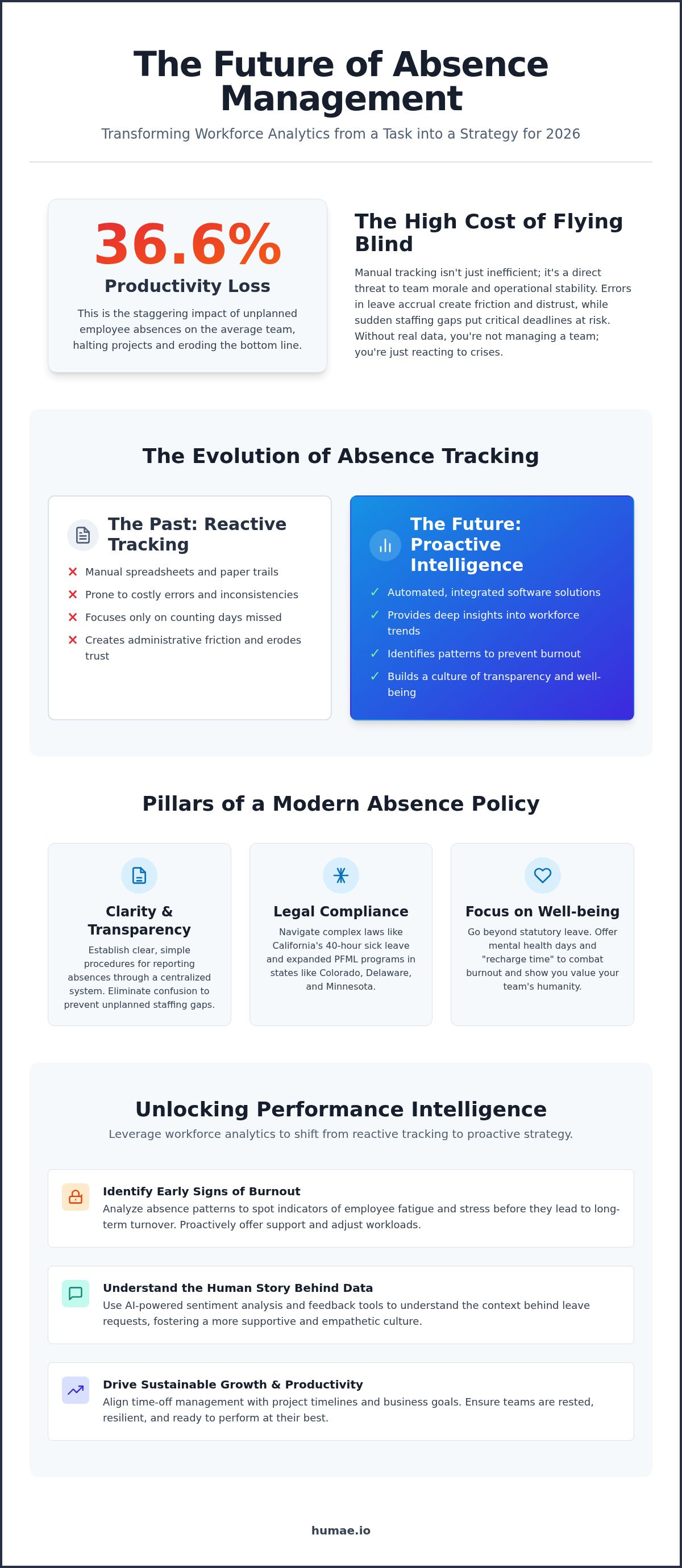
Did you know that unplanned absences result in a staggering 36.6% loss in productivity for the average team? In 2026, managing a workforce isn't just about filling seats; it's about using workforce analytics for absenteeism to understand the human pulse behind every request. You've likely felt the frustration of manual spreadsheet errors or the panic of a sudden staffing gap that puts a critical project deadline at risk. It's exhausting to manage people when you're flying blind without real data.
We agree that your time is better spent growing your team than chasing paper trails. This guide will show you how to transform basic leave tracking into a powerful engine for organizational health. By adopting a modern approach, you'll gain the clarity needed to build a transparent leave policy and automate tedious tasks. We'll explore how modern tools provide deep insights into employee burnout, helping you foster a culture where productivity and well-being finally work in harmony.
Key Takeaways
- Learn how to design a modern leave policy that eliminates administrative friction and clarifies reporting for your entire organization.
- Leverage workforce analytics for absenteeism to identify early signs of burnout and protect your team's long-term performance.
- Discover how AI-powered sentiment analysis helps you understand the human story behind the data to foster a more supportive culture.
- Master the transition to automated tracking by auditing current bottlenecks and integrating tools with your existing HRIS infrastructure.
- Shift from reactive time off tracking to proactive performance intelligence to drive sustainable growth and organizational productivity.
Defining Absence Management in the Modern Workplace
Absence management is no longer just a clerical function found in a dusty HR manual. It's the strategic process of coordinating employee time off to ensure business continuity while supporting personal well-being. Modern leaders recognize that how a company handles presence is as vital as how it manages performance. It's about moving beyond the "where is everyone?" mindset to a culture where time away is managed with intention.
We need to distinguish between planned and unplanned absences clearly. Planned leave, like vacations or scheduled personal days, allows for resource planning and team rest. Unplanned absences, such as sudden illness or family emergencies, are more disruptive. The shift from manual tracking to AI-driven workforce management means we no longer just count days. We now use workforce analytics for absenteeism to identify patterns before they become problems. Absence is no longer just a "missing person" alert; it's a critical data point for employee wellness.
The High Cost of Poor Absence Tracking
Unplanned absenteeism creates a ripple effect that hits your bottom line hard. Research indicates that unplanned absences result in an average productivity loss of 36.6%. For small teams, a single missing person can halt a project entirely. Manual tracking often leads to errors in leave accruals, causing unnecessary friction and frustration among your most dedicated staff. These manual mistakes don't just cost money; they erode the trust and morale necessary for a high-performing culture. When employees can't see their balances accurately, they feel undervalued and ignored.
Why 2026 Demands a Strategic Approach
The workplace of 2026 looks nothing like the offices of a decade ago. Remote and hybrid models have made traditional attendance tracking nearly impossible. Leaders can't just look across the room to see who's at their desk. This complexity requires a modern HR infrastructure that views time off as a proactive tool for preventing burnout. By leveraging workforce analytics for absenteeism, managers can spot the early signs of fatigue. This strategic approach ensures that leave isn't just "time away," but a calculated investment in long-term team health. It's about staying ahead of the curve in a fast-paced digital world.
Building a Comprehensive Absence Management Policy
A modern leave policy in 2026 is far more than a set of rules; it's a reflection of your organizational culture. Traditional policies often focused on policing behavior, but today's leaders use workforce analytics for absenteeism to build frameworks that prioritize both results and well-being. Clarity is the foundation of this trust. Every employee should know exactly how to report an absence, whether it's through a dedicated portal or a quick sync on a communication platform. When procedures are vague, confusion leads to unplanned staffing gaps that can derail project deadlines and stress the remaining team members.
Legal compliance is a moving target that requires constant attention. In 2026, we see a global shift toward expanded protections. For instance, California law now requires employers to provide a minimum of 40 hours or five days of paid sick leave per year. Simultaneously, several states, including Colorado, Delaware, Minnesota, and Maine, are launching or expanding their Paid Family and Medical Leave (PFML) programs. Navigating these statutory requirements while maintaining discretionary leave requires a policy that balances company goals with genuine empathy. It's about creating a safety net, not just a spreadsheet of hours.
Types of Leave to Include
Your policy must go beyond standard sick leave and vacation days. To stay competitive, modern organizations are introducing mental health days and "recharge time" to combat the 36.6% productivity loss typically associated with unplanned absences. While statutory leave is the legal baseline, discretionary leave is where you show your team you value their humanity. Clearly defining these categories ensures that employees feel supported during life's unpredictable moments, which significantly reduces the likelihood of burnout and long-term turnover.
Fairness and Transparency in Approvals
Nothing kills morale faster than perceived favoritism in leave approvals. While some teams stick to a first-come, first-served model, others prefer seniority-based systems. Regardless of the method, transparency is non-negotiable. Using data-driven employee engagement strategies ensures that your policy aligns with team expectations and builds long-term trust. When everyone understands the logic behind an approval or denial, workplace grievances drop. You can even use workforce analytics for absenteeism to ensure that leave is distributed fairly across departments, preventing any single team from bearing a disproportionate workload during peak seasons. If you're looking to simplify this process, an intuitive Time Off Management system can turn these complex policies into seamless, automated workflows.
The Link Between Absence Management and Performance Intelligence
Data tells a story that attendance sheets simply can't capture. When we view absence management through the lens of performance intelligence, we stop looking at empty chairs and start looking at the health of our ecosystem. Workforce analytics for absenteeism serves as a sophisticated early warning system, highlighting the subtle shifts in behavior that precede complete burnout. AI-powered sentiment analysis goes deeper, helping leaders understand the emotional context behind a sudden spike in sick leave. This visibility transforms project planning from a guessing game into a precise science, ensuring that deadlines remain realistic and teams remain resilient. Workforce analytics is the essential bridge between daily attendance and long-term organizational performance.
Analyzing the Impact on Team OKRs
Unplanned absences don't just leave a gap in the schedule; they create a vacuum that pulls your Key Results off course. When a critical team member is unexpectedly away, the remaining staff often struggles to maintain the pace required for ambitious targets. By integrating your leave data with OKR tracking, you can adjust goals in real-time based on actual workforce capacity. This prevents the "hero culture" where teams try to overcompensate for missing colleagues, which only leads to further exhaustion. Modern leaders in 2026 use these insights to recalibrate expectations instantly, ensuring that productivity remains sustainable without sacrificing quality.
Identifying Burnout Through Data Patterns
The move from policing to supporting is the hallmark of a visionary leader. AI can now flag unusual absence trends, such as a sudden increase in short-term sick leave, before they lead to permanent turnover. These patterns often signal that an employee is struggling with their workload or mental health. Instead of a punitive response, performance intelligence encourages a supportive intervention. Continuous feedback loops during return-to-work phases allow managers to understand what support is needed to reintegrate the employee successfully. This human-centric approach, powered by workforce analytics for absenteeism, ensures that your team feels seen and valued. It's about using technology to strengthen human connections, not replace them. You can explore how these tools work in practice by visiting our Performance Intelligence dashboard.
How to Implement Absence Management Software Successfully
Transitioning from manual tracking to a digital ecosystem requires a clear roadmap. The first step is to audit your current processes to identify where bottlenecks occur. Are managers spending hours cross-referencing emails, or are employees frustrated by slow approval times? Once you understand these friction points, you can move to Step 2: selecting a platform that integrates seamlessly with your HRIS system. This ensures that workforce analytics for absenteeism are based on accurate, real-time data across your entire organization.
Step 3 involves centralizing your employee directory and leave records to create total visibility. This leads directly to Step 4, where you train your leadership team to use analytics dashboards for strategic decision-making. Managers should feel confident interpreting data to prevent team burnout rather than just reacting to absences. Finally, Step 5 is the launch of self-service tools. This empowers your workforce to manage their own time off, significantly reducing administrative load while increasing employee satisfaction.
Moving from Spreadsheets to Real-Time Dashboards
Static spreadsheets are a liability in a fast-paced business environment. They are prone to manual errors and provide zero visibility into the 1.7% of worktime lost to absenteeism. In contrast, real-time dashboards offer a single source of truth that updates instantly. You can see who is available, who is nearing burnout, and how these patterns affect your project timelines. Using Humae features, leaders can visualize team availability at a glance, turning raw data into actionable intelligence. This level of clarity is what separates modern organizations from those still stuck in legacy systems.
Encouraging Employee Self-Service
Modern employees expect autonomy. Mobile-friendly request systems allow team members to book leave or check their balances in seconds, removing the need for back-and-forth emails. There is a clear psychological benefit when employees have control over their own data; it builds a sense of ownership and trust. An intuitive employee directory makes it easy for staff to find coverage within their own teams, fostering a collaborative culture. By implementing these tools, you aren't just tracking time; you are leveraging workforce analytics for absenteeism to create a more engaged and empowered workforce.
Ready to transform your HR processes? Experience the future of team management with Humae's Time Off Management today.
Humae: The Intelligent Choice for Absence Management
Humae stands at the intersection of technology and human connection. As a centralized hub for modern people operations, it replaces fragmented legacy systems with a unified ecosystem. While other platforms treat absence as a purely administrative task, Humae leverages workforce analytics for absenteeism to provide a 360-degree view of team health. The platform's AI-powered sentiment analysis sets it apart; it doesn't just track when someone is away, but helps you understand the emotional context behind the data. By integrating Time Off Management directly with performance intelligence and OKR tracking, Humae ensures that your strategic goals remain visible even when life happens. This single, intuitive interface reduces administrative friction, allowing you to focus on what matters most: your people.
Managing a global workforce requires more than just a calendar. Humae's real-time analytics dashboards turn raw numbers into actionable strategies, helping you identify trends before they impact your bottom line. Whether you are using our Employee Directory to find coverage or our Applicant Tracking System to scale your team, every feature is designed to work in harmony. This holistic approach means that your data is never siloed; it's always working to improve your organizational culture. By utilizing workforce analytics for absenteeism, you gain the power to move from a reactive stance to a proactive, supportive leadership style that employees value in 2026.
A Visionary Approach to People Operations
Humae balances technical excellence with an empathetic design that respects the user experience of every employee. Our SaaS model provides predictable costs, making workforce management accessible for growing organizations of all sizes. We believe that technology should empower, not police. By choosing Humae, you are adopting a philosophy that values growth through intelligence. It's about building a culture where data-driven insights lead to more supportive leadership and a more resilient team. Our platform helps you move beyond the limitations of legacy tools to create a truly modern workplace built for the future.
Get Started with Modern Workforce Management
The future of work is already here, and it's powered by intelligence. We invite you to visit the Humae homepage to see our platform in action and discover how we can transform your HR infrastructure. You can also follow Humae on Facebook for the latest industry insights and updates on workforce trends. Ready to streamline your team and eliminate the chaos of manual tracking? Return to our home page to book a demo and start your journey toward a more productive, human-centric workplace today.
Elevate Your Team's Performance Through Intelligence
The shift toward a data-driven workplace in 2026 demands more than simple attendance logs. You now have the power to transform every absence into a strategic insight. By adopting workforce analytics for absenteeism, you move from policing schedules to nurturing a resilient, high-performing culture. We've explored how clear policies and automated systems reduce friction, but the real magic happens when you connect presence to performance intelligence.
Managing a modern team requires tools that understand the human element. Humae provides a centralized global employee directory and real-time OKR tracking to ensure your projects stay on course, even when team members need to recharge. With our AI-powered performance intelligence, you'll spot burnout patterns before they lead to turnover. It's time to trade manual spreadsheet errors for actionable clarity and empathetic leadership. Optimize your workforce with Humae today and build a culture where everyone can truly thrive. Your team's future is waiting, and we're here to help you lead the way.
Frequently Asked Questions
What is absence management in a business context?
Absence management is the strategic coordination of employee time off to ensure business continuity while supporting personal well-being. It goes beyond simple tracking; it's about understanding how presence affects organizational goals. By managing both planned and unplanned absences, leaders can maintain a steady workflow. This approach allows companies to balance operational needs with an empathetic culture, ensuring that team members feel supported during life's unpredictable moments.
How does absence management software differ from a simple spreadsheet?
Traditional spreadsheets are static and prone to manual errors that can frustrate employees. Modern software provides real-time updates and a single source of truth for the entire company. Automation reduces the administrative load on HR teams, while integrated analytics dashboards offer insights that spreadsheets simply can't provide. These tools empower employees through self-service options, allowing them to manage their own leave data while managers gain immediate visibility into team availability.
What are the legal requirements for managing employee leave in 2026?
In 2026, legal compliance involves navigating a complex landscape of state-level expansions. For example, California now requires a minimum of 40 hours or five days of paid sick leave annually. States like Colorado and Maine have launched or expanded Paid Family and Medical Leave programs. New Department of Labor guidance also clarifies that employers cannot force the use of paid time off while employees receive state PFML benefits for qualifying FMLA reasons.
How can AI help in predicting employee absenteeism patterns?
AI utilizes sentiment analysis to provide continuous feedback on team health. It flags unusual trends, such as frequent short-term absences, which often serve as early warning signs for burnout or disengagement. By using workforce analytics for absenteeism, leaders can identify these patterns before they lead to permanent turnover. This predictive approach allows for supportive interventions, helping managers address the root causes of absence rather than just treating the symptoms.
What should be included in a modern absenteeism policy?
A modern policy should include clear reporting procedures and a diverse range of leave categories. Beyond standard vacation and sick days, consider adding mental health days or recharge time to support well-being. Fairness in approvals is essential; whether you use a first-come, first-served model or a seniority system, transparency builds trust. The policy must also stay aligned with current statutory requirements while reflecting your organization's unique culture and performance goals.
How does unplanned absence impact team performance and OKRs?
Unplanned absences result in an average productivity loss of 36.6%, directly impacting your ability to meet specific Key Results. When a team member is unexpectedly away, the remaining staff often faces increased pressure, which can lead to a cycle of exhaustion. By integrating leave data with OKR tracking, managers can adjust goals in real-time based on actual capacity. This visibility ensures that project deadlines remain realistic and that team performance stays sustainable.
Is absence management the same as leave management?
While often used interchangeably, absence management is a broader strategic function. Leave management typically focuses on the administrative task of booking and approving planned time off. Absence management includes the handling of unplanned time and uses workforce analytics for absenteeism to understand the "why" behind every request. It serves as a bridge between simple attendance and performance intelligence, helping organizations optimize their overall productivity through actionable data.
How can I reduce absenteeism in my organization through engagement?
Reducing absenteeism starts with building a culture of radical flexibility and support. Research shows that highly engaged teams have 78% lower absenteeism compared to disengaged ones. Use continuous feedback loops to understand employee needs and provide the autonomy they crave. By focusing on performance intelligence and empathetic design, you can create a workplace where people feel valued. Engagement isn't just about perks; it's about using data to foster genuine human connections.