12 Essential Collaborative Hiring Platform Features for High-Growth Teams in 2026
By Humae · 19 May 2026
collaborative hiring platform features
We know you want a faster time-to-hire and candidates who are truly vetted by the people they'll work with every day. You need a centralized source of truth that cuts through the noise and helps you navigate 2026 requirements like the new pay scale disclosure rules. This guide reveals the technical and human-centric features that will define high-growth teams this year. We'll show you exactly how to build a hiring culture that values collective intelligence and real-time alignment.
Humae
Build your future at Humae Home and join our community on Facebook.
Key Takeaways
- Shift from a siloed "gatekeeper" approach to a "team-as-evaluator" model that prioritizes cultural alignment and collective expertise.
- Identify the core collaborative hiring platform features that replace scattered feedback with a centralized, data-driven source of truth.
- Leverage AI sentiment analysis and performance intelligence to predict how candidates will thrive within your existing team structure.
- Streamline your implementation by establishing role-based access and standardized scorecards to eliminate bias and speed up decision-making.
- Discover how a high-quality hiring experience serves as the foundation for long-term employee engagement and successful onboarding.
Humae
Visit Humae Home or connect with us on Facebook.
What is a Collaborative Hiring Platform and Why Does the Silo Model Fail?
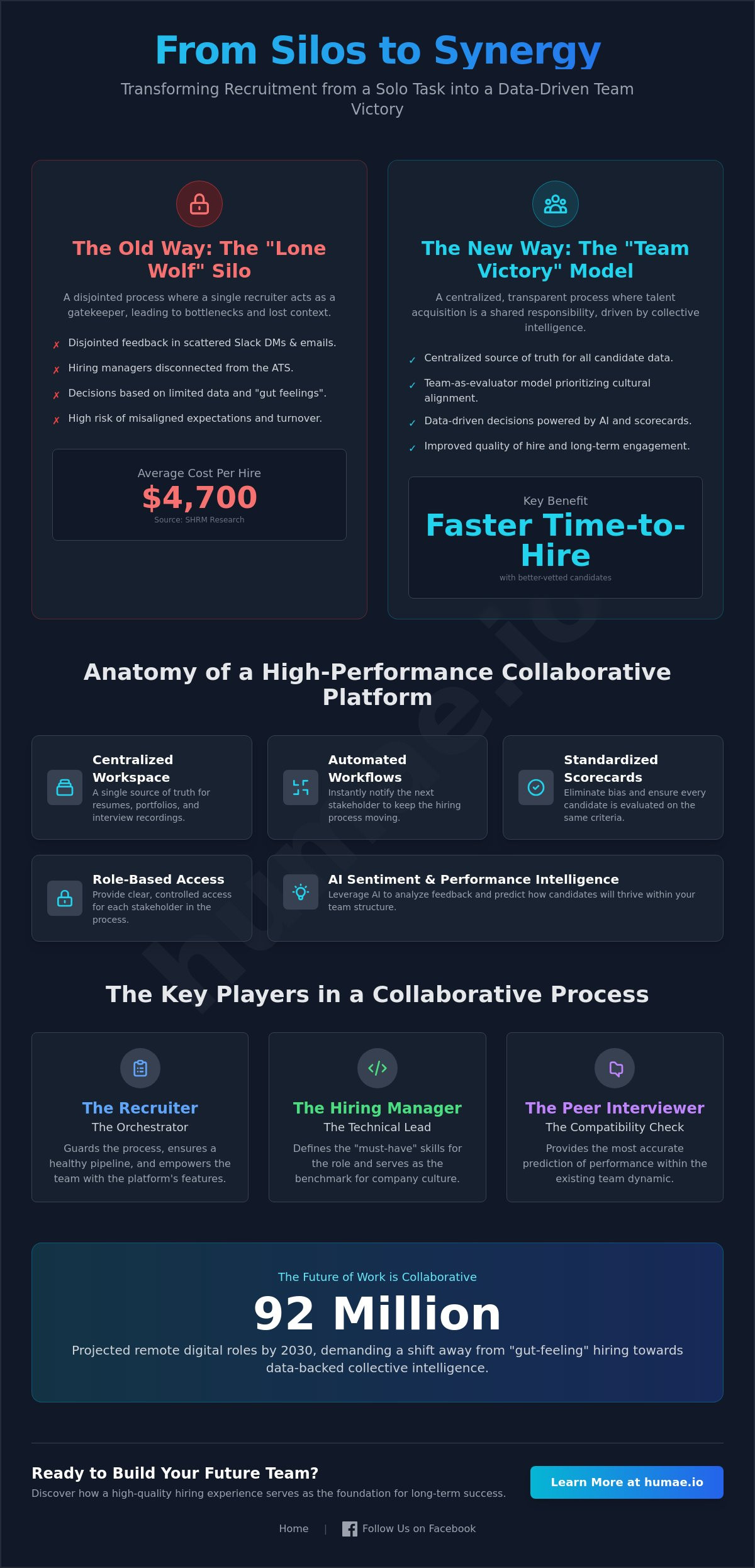
Traditional hiring often feels like a game of telephone where the most important details get lost in translation. In the old "Recruiter-as-Gatekeeper" model, a single person filters every candidate based on a static job description. This siloed approach creates a bottleneck. It forces hiring managers to make decisions based on limited data and prevents the actual team from weighing in until the very last second. When you rely on a What is a Collaborative Hiring Platform, you replace this rigid hierarchy with a decentralized, transparent process where talent acquisition belongs to everyone.
The cost of these silos is staggering. Misaligned expectations between recruiters and managers lead to a high turnover rate; a expensive mistake when the average cost per hire has reached $4,700. If the team doesn't feel ownership over the new hire, integration fails. Success in 2026 requires a robust Workforce Management Infrastructure that connects the initial application to the long term health of the organization. By using modern collaborative hiring platform features, you ensure that every stakeholder sees the same data at the same time, turning hiring into a collective evaluation rather than a solo guess.
The Evolution of Recruitment in 2026
Modern talent has changed. Candidates in 2026 expect to meet their future peers early in the process. They don't just want to talk to HR; they want to understand the daily workflow from the people doing the job. This shift mirrors the rise in digital roles, which are projected to reach 92 million remote positions by 2030. High growth teams are moving away from gut feeling hiring and embracing data backed collective intelligence. AI powered platforms are the catalyst here. They make "hiring by committee" fast again by automating the administrative heavy lifting, allowing the team to focus on cultural and technical alignment without the usual delays.
Key Stakeholders in the Collaborative Process
A successful team evaluation requires clear roles to prevent chaos. The Recruiter acts as the orchestrator and process guardian, ensuring the pipeline remains healthy and the collaborative hiring platform features are used correctly. The Hiring Manager serves as the technical lead and culture benchmark, defining the "must haves" for the role. Finally, the Peer Interviewer provides the essential day to day compatibility check. Their feedback is often the most accurate predictor of how a candidate will actually perform within the existing team dynamic. When these three roles work in sync, the quality of hire improves dramatically.
Humae
Streamline your team's growth at Humae Home and stay updated via our Facebook page.
The Anatomy of a High-Performance Collaborative Hiring Platform
Building a high-growth team requires more than just a list of candidates. It demands a digital environment where collaboration happens by design, not by accident. The most effective collaborative hiring platform features center around a centralized candidate workspace. This single source of truth holds every resume, portfolio, and interview recording in one place. It eliminates the "where did that file go?" panic that often delays hiring by days or weeks. When everyone has access to the same data, the team can move with a shared purpose.
Understanding the Anatomy of a High-Performance Collaborative Hiring Platform means looking beyond basic data storage. It's about creating a living ecosystem for decision-making. High-performing platforms use automated workflow triggers to keep the momentum. When an interviewer submits their evaluation, the system instantly notifies the next person in the chain. This reduces friction and ensures top talent doesn't sign with a competitor while your team is waiting for an internal email reply. Speed is a competitive advantage in the 2026 talent market.
Structured Evaluations: The End of "I Just Liked Them"
Scorecards are the antidote to unconscious bias. Instead of vague post-interview chats, scorecards force interviewers to rate candidates on specific, pre-defined competencies. These criteria should link directly to your company-wide OKRs. This alignment ensures you hire for long-term strategic goals, not just immediate technical needs. Blind feedback is another critical tool here; it prevents senior leaders from influencing the scores of junior team members. By hiding other evaluations until everyone has submitted their own, you protect the integrity of the collective intelligence.
Seamless Communication Tools
Successful hiring happens where your team already lives. Real-time @mentions and shared threads allow managers to discuss candidates directly on their profile. This moves the conversation out of messy Slack channels and into a permanent, searchable record. A mobile-first interface is non-negotiable for 2026. Busy managers need to review scorecards or approve offers between meetings without friction. If the platform isn't as easy to use as a consumer app, adoption will fail. You can explore how these tools integrate into a wider Applicant Tracking System to build a more resilient and engaged workforce.
Beyond the Basics: AI Sentiment and Predictive Alignment
Data alone doesn't hire people; people hire people. However, in a fast-paced environment, the nuance of a team's feedback often gets buried under a mountain of interview notes. Advanced collaborative hiring platform features now include AI-driven sentiment analysis to solve this. Instead of just looking at a numerical score, the system analyzes the tone and language of interviewer comments. It flags hidden red flags or strong cultural signals that a human might overlook during a busy week. This ensures that the "feeling" of the team is quantified and actionable.
True predictive alignment goes a step further by connecting the dots between your future hires and your current success stories. By leveraging Employee Directory data, a high-performance system can match candidate traits with the characteristics of your top performers. This isn't about cloning employees; it's about identifying the specific soft skills and work styles that thrive in your unique culture. Automated interview summaries then distill these complex interactions into core insights, saving the team hours of manual review time while preserving every critical detail.
Decoding Team Sentiment
Consensus isn't always the goal. Sometimes, the most valuable feedback comes from the "Dissenting Expert", the one person who sees a flaw everyone else missed. Humae uses AI to surface these disagreements in real-time, forcing a healthy discussion rather than a rushed vote. Integrating Performance Intelligence into your pre-hire screening allows you to see how a candidate's potential trajectory aligns with your organizational goals. It transforms the hiring process from a snapshot into a long-term forecast.
Reducing Unconscious Bias with Technology
Human bias is often invisible, but its impact on candidate quality is real. Modern platforms use bias detection algorithms to flag inconsistent rating patterns across different demographics. Feature sets include anonymized resume screening, where names and pedigrees are hidden to focus purely on skills. AI also audits the language used in scorecards to ensure fairness. By using these data-driven transparency tools, you don't just talk about diversity; you build the infrastructure to make it a reality. You can see how these tools fit into a broader HRMS strategy to ensure every hire is a step toward a more balanced team.
Implementation: How to Set Up Collaborative Workflows That Actually Work
Having the best collaborative hiring platform features won't matter if your team doesn't know how to use them. Successful implementation starts with a clear structure that respects everyone's time. You aren't just installing software; you're building a repeatable engine for growth. High-growth teams don't have time for messy setups, so it's about creating a rhythm that feels natural. Follow these five steps to ensure your workflows actually deliver results.
- Step 1: Define Role-Based Access. Don't give everyone full control. Assign "Admin" status to recruiters, "Reviewer" to the active interviewers, and "Observer" to stakeholders who just need to stay informed.
- Step 2: Create Standardized Scorecards. Build these for every job family. An engineer shouldn't be evaluated with the same criteria as a sales lead.
- Step 3: Map the Approval Chain. Identify exactly who needs to sign off on an offer. Keep it lean to prevent bottlenecks that lead to lost talent.
- Step 4: Integrate the Ecosystem. Connect your hiring data to your broader Workforce Management infrastructure to ensure a smooth transition from candidate to employee.
- Step 5: Train on Feedback Etiquette. Teach your team that "culture fit" is often a mask for bias. Encourage them to use specific, evidence-based comments instead.
Designing the Perfect Approval Workflow
Speed is the primary currency in 2026. If your approval process takes a week, you've already lost the candidate to a more agile competitor. Balance thoroughness with efficiency by automating reminders for hiring managers who haven't logged in. Use conditional logic; perhaps the VP only needs to sign off on senior roles while the team lead handles juniors. It's okay to allow "out-of-process" steps occasionally, but your core collaborative hiring platform features should remain your guardrails. You can see how these workflows function in practice by exploring modern hiring tools that prioritize team alignment.
Managing Permissions and Privacy
Collaboration doesn't mean a lack of boundaries. Salary data and sensitive interview notes must stay restricted to the relevant parties. Adhere to the "Need-to-Know" principle to protect both the candidate and the company. Audit logs are essential for compliance, especially as 2026 regulations demand more transparency in pay scale disclosures. Tracking who saw what and when ensures that your process is not only collaborative but also legally sound and ethically responsible. Privacy isn't an afterthought; it's a requirement for trust.
The Humae Edge: Connecting Hiring to Long-Term Team Success
Most recruitment tools treat the signed offer letter as the finish line. At Humae, we see it as the starting block. The way a candidate is treated during the interview process is their first real taste of your company culture. This "Hiring Experience" is the fundamental first step in Employee Engagement. When a new hire enters an organization that valued their peers' input and provided a transparent, data-driven journey, they arrive already feeling like a trusted member of the team. By leveraging integrated collaborative hiring platform features, you ensure that the excitement of the interview stage translates directly into a productive first week on the job.
Closing the loop between recruitment and retention requires a seamless flow of information. The pre-hire data you've collected, from scorecard ratings to AI sentiment analysis, shouldn't sit idle in an archive. Instead, it should inform the first 90 days of onboarding. Syncing your ATS with the Employee Directory allows managers to see exactly where a new hire excelled during evaluations and where they might need additional support. This continuous feedback loop uses hiring sentiment as a baseline for future performance reviews, creating a consistent narrative for every employee's career path.
From Candidate Scorecard to OKR Alignment
Setting up a new hire for success means linking their unique "hiring traits" to their very first goals. If the team identified a candidate's exceptional problem-solving skills during a structured interview, those strengths should be reflected in their initial project assignments. Humae makes the transition from "Potential" to "Performance" effortless by keeping all stakeholders aligned on the same platform. Using a unified AI-powered HR platform means that the strategic objectives defined during the hiring phase are automatically carried over into the employee's development plan. You aren't just filling a seat; you're fueling a long-term goal.
Building a Culture of Collective Intelligence
Hiring is a team sport, and your platform is the digital arena where that sport is played. Industry leaders observe that collaborative hiring significantly reduces turnover because it ensures cultural alignment from day one. When the whole team participates, every employee becomes a talent scout and a brand ambassador. This collective intelligence creates a more resilient workforce where everyone feels responsible for the quality of their new colleagues. These collaborative hiring platform features don't just help you find the right person; they help you build a culture that people never want to leave.
Build Your Future Team Today
The landscape of 2026 demands more than just a digital filing cabinet for resumes. It requires a system that empowers your entire organization to act as expert evaluators. By prioritizing collaborative hiring platform features, you move from gut-feeling recruitment to a strategy backed by AI-driven sentiment analysis and real-time alignment. You've seen how connecting pre-hire data to OKRs and performance tools creates a unified journey for every new member. It's time to stop chasing feedback in Slack and start building a culture of transparency and speed.
High-growth teams thrive when they treat hiring as a collective victory. With the right tools, you can reduce bias, speed up decision-making, and ensure every hire is a perfect match for your long-term goals. Ready to transform your talent acquisition process? Discover Humae’s Collaborative Hiring Features and see how our platform bridges the gap between potential and performance. Let's build something great together.
Frequently Asked Questions
What are the most important features of a collaborative hiring platform?
Success depends on tools that foster transparency and real-time alignment. The most effective collaborative hiring platform features include centralized candidate workspaces, structured scorecards, and automated workflow triggers. These elements ensure that every team member has access to the same data simultaneously. By moving conversations out of siloed email threads and into shared profiles, you create a permanent, searchable record of every decision made during the process.
How does collaborative hiring reduce unconscious bias?
Standardization is the strongest defense against hidden prejudices. Collaborative platforms use structured evaluations to force interviewers to rate specific competencies rather than relying on vague feelings. Features like blind feedback prevent senior leaders from influencing the team's scores before everyone has submitted their own. This data-driven approach ensures that candidates are judged purely on their skills and alignment with company goals, leading to a more diverse and capable workforce.
Can collaborative hiring work for small startups with limited staff?
Smaller teams actually benefit the most from shared ownership of the hiring process. In a startup, every single hire has a massive impact on the company's trajectory and culture. Even if your "committee" is just three people, using a collaborative platform ensures that no critical feedback is lost in the shuffle. It builds a foundation of collective intelligence that scales with you as your organization grows from ten people to hundreds.
How do you prevent "hiring by committee" from slowing down the process?
Speed is maintained through automation and clear accountability. You can prevent bottlenecks by setting firm deadlines for feedback and using automated reminders to nudge busy managers. High-growth teams use role-based permissions to ensure only the necessary stakeholders are involved in each stage. This focused approach keeps the momentum high, helping organizations reduce their time-to-hire by up to 50% according to industry research on AI-powered recruiting platforms.
What is the difference between a standard ATS and a collaborative hiring platform?
A standard ATS is a database for tracking resumes; a collaborative platform is an ecosystem for making decisions. While an ATS focuses on the administrative side of recruitment, a collaborative system prioritizes the user experience for the entire team. It encourages active participation through @mentions, shared notes, and integrated communication tools. It transforms the hiring process from a passive HR task into an engaging, team-wide effort to find the best talent.
Does collaborative hiring require more time from my hiring managers?
It requires a shift in how time is spent, not necessarily an increase in total hours. By involving managers earlier through structured tools, you eliminate the need for long, redundant sync meetings later in the process. This upfront alignment prevents the "starting over" phase that happens when a manager rejects a candidate at the final stage. Ultimately, it saves time by reducing mis-hires and ensuring the first choice is the right choice.
How does AI improve the collaborative hiring process?
AI acts as a silent facilitator that surfaces the most relevant insights for the team. Modern collaborative hiring platform features leverage AI-driven sentiment analysis to identify consensus or hidden red flags in interviewer notes. It can also summarize hours of interview data into concise, actionable points. This allows your team to focus on human connection and cultural alignment while the technology handles the heavy lifting of data organization and predictive matching.
How do I integrate a collaborative hiring platform with my existing HRIS?
Most modern platforms use an API-first approach to ensure data flows seamlessly between systems. You should look for a solution that syncs directly with your employee directory and performance tools. This integration allows pre-hire data to inform the onboarding process and long-term career development. When your hiring platform talks to your HRIS, you create a unified source of truth that supports the employee journey from the first interview to their first promotion.