Workforce Planning for Startups: The 2026 Guide to Scalable Growth
By Humae · 25 June 2026
workforce planning for startups
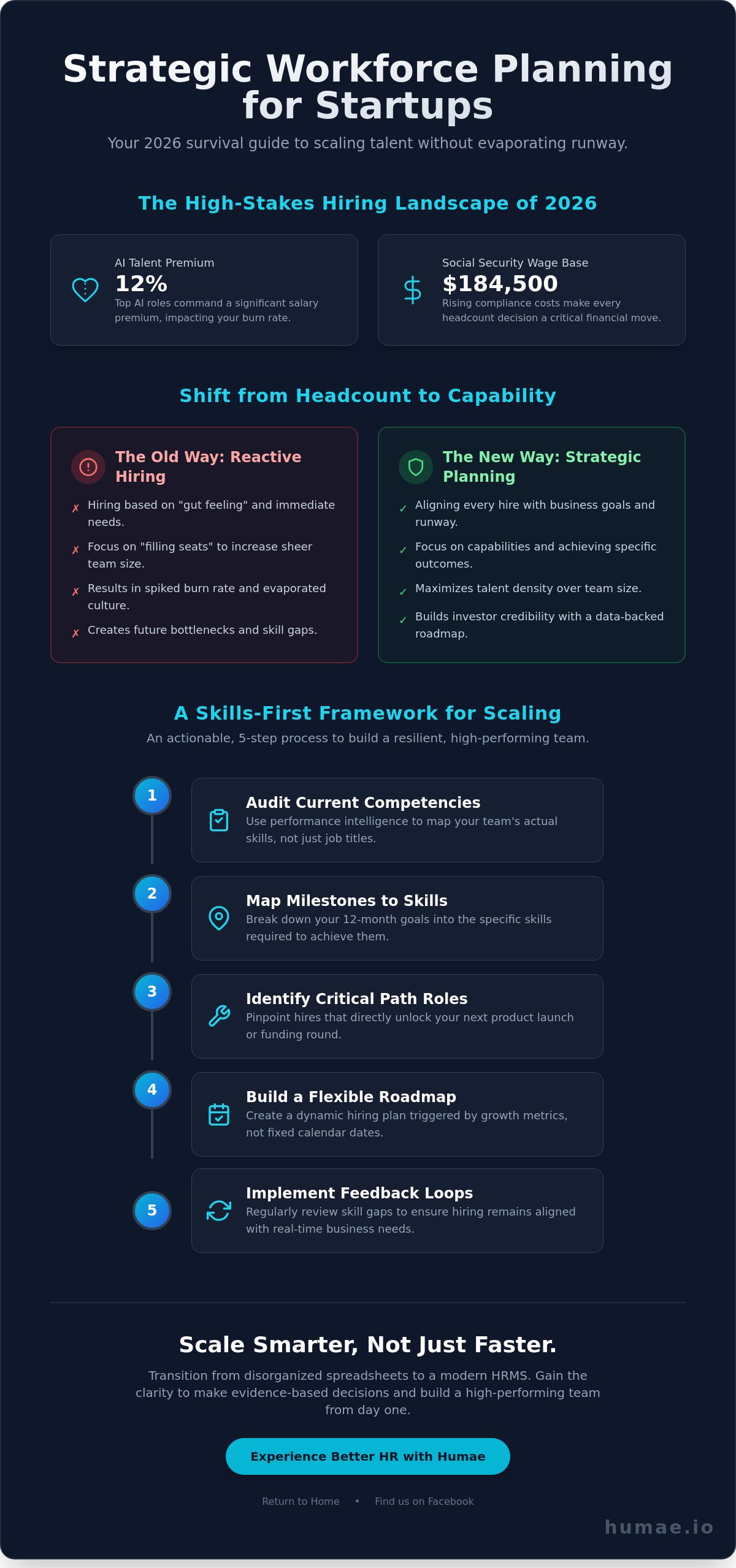
Hiring your fifty-first employee using the same reactive "gut feeling" you used for your first five is the fastest way to evaporate your runway in 2026. With the Social Security wage base hitting $184,500 and AI talent commanding a 12% salary premium, every headcount decision is a high-stakes financial move. Effective workforce planning for startups is no longer a luxury for the Series C stage; it's the intelligence infrastructure you need to survive the seed round without losing your culture or your cash.
You've likely felt the pressure of reactive hiring during a growth spurt, only to watch your burn rate spike while your original culture fades. It's a common struggle, but it's one you can solve with the right data. We'll show you how to master strategic workforce planning to align every hire with your runway goals and build a high-performing team from day one. You'll learn to navigate 2026's complex regulatory landscape, implement a "core-and-flex" talent model, and use performance intelligence to ensure your talent density remains elite as you scale.
Key Takeaways
- Learn how agile workforce planning for startups differs from traditional models by prioritizing runway-aligned growth over rigid annual cycles.
- Master a skills-first approach by auditing team competencies with performance intelligence to map your next twelve months of business milestones.
- Discover how to balance talent density with payroll costs to build investor credibility through data-backed hiring roadmaps.
- Transition from disorganized spreadsheets to a modern HRMS to manage 2026 compliance complexities like new paid leave laws and AI hiring regulations.
- Explore how centralized infrastructure streamlines the journey from applicant tracking to performance intelligence to ensure high talent density.
What is Workforce Planning for Startups?
Workforce planning for startups is the intentional process of aligning your human capital with your long term business goals and financial runway. It isn't just about hiring; it's about predicting the future. In the high velocity environment of 2026, where minimum wages are climbing toward $17.00 in states like California and AI roles command a 12% salary premium, you can't afford to guess. This discipline, often referred to as strategic workforce planning, ensures that every dollar spent on payroll directly accelerates your path to the next milestone.
Unlike corporate environments that rely on rigid annual cycles, startups require extreme agility. You aren't just planning for the year; you're planning for the next pivot. Effective workforce planning for startups helps you avoid the "blitz-scaling" trap where the burn rate explodes and the original culture evaporates. By using talent gap analysis and financial modeling, you can identify precisely which skills you need before they become a bottleneck. This proactive approach includes three key pillars:
- Talent Gap Analysis: Identifying the delta between your current team's abilities and the skills required for your next product launch.
- Financial Modeling: Calculating the exact impact of new headcount on your burn rate and survival timeline.
- Skill Mapping: Visualizing how specific roles will evolve as the company scales from ten to fifty employees.
Strategic Planning vs. Simple Headcount
Many founders confuse headcount with growth. Headcount is a budget line item; strategic planning is a capability map. To build a resilient organization, you must prioritize talent density over sheer team size. This means hiring one exceptional engineer who can architect scalable systems rather than three average ones who just "fill a seat." Strategic planning focuses on solving future business bottlenecks by identifying the core competencies required to hit your Series A or B targets. It's about moving from a "we need more people" mindset to a "we need these specific outcomes" strategy.
The Role of Workforce Management Infrastructure
Founder intuition is a superpower in the early days, but it doesn't scale. To sustain growth, you need a centralized workforce management infrastructure that serves as your single source of truth. This platform replaces messy spreadsheets with real time data on performance, capacity, and costs. When your people data is integrated into a modern HRMS, you gain the clarity to make evidence based decisions. You'll see exactly how a new hire affects your runway and how their performance contributes to your OKRs. This infrastructure isn't just a tool; it's the foundation of a modern organizational culture that values transparency and efficiency.
A Skills-First Framework for Startup Scaling
Scaling a startup in 2026 requires a surgical focus on capabilities rather than headcount. Traditional hiring models often fail because they focus on filling seats rather than bridging specific knowledge gaps. To build a resilient team, you need a framework that treats human capital as a dynamic resource. This transition to a skills-first approach is the cornerstone of modern workforce planning for startups. It allows you to pivot quickly when market conditions shift or when new technologies redefine your product roadmap.
To implement this, follow these five actionable steps:
- Step 1: Audit Current Competencies. Use AI-driven performance intelligence to identify what your team can actually do, beyond their job titles.
- Step 2: Map Milestones to Skills. Break down your 12-month business goals into the specific technical and soft skills required to achieve them.
- Step 3: Identify Critical Path Roles. Pinpoint the roles that directly influence your next funding round, such as lead developers for a core feature.
- Step 4: Build a Flexible Roadmap. Create a hiring plan that triggers based on growth metrics and revenue targets, not just calendar dates.
- Step 5: Implement Feedback Loops. Regularly review your skill gaps to ensure your hiring remains aligned with real-time business needs.
Mapping Skills to Growth Milestones
Distinguishing between "nice to have" and "mission critical" skills is vital for capital efficiency. In a year where early-stage salary increases have dropped to 3.0%, you must prioritize hires that drive revenue or product development. By leveraging performance intelligence, you can often find hidden talents within your existing team. Perhaps a marketing specialist has untapped data analysis skills that could fill a gap in your product team. This internal mobility preserves your culture and reduces the high costs associated with external recruitment.
The Shift from Roles to Competencies
The startups winning in 2026 don't hire for narrow job titles. They hire for versatile competencies. With AI and Machine Learning roles growing 88% year-over-year, the specific tools your team uses today might be obsolete in eighteen months. Building a "liquid" workforce means prioritizing adaptability and problem-solving over experience with a specific software suite. This approach ensures your organization stays lean and ready to evolve. If you're ready to move beyond static spreadsheets, you can explore modern HR tools that track these competencies in real time.
Balancing Runway and Talent Density
Every new hire is a high-stakes calculation for your company's future. In 2026, where the Social Security wage base has reached $184,500, miscalculating your headcount needs doesn't just slow you down; it threatens your survival. Effective workforce planning for startups requires a cold, hard look at the relationship between your payroll obligations and your remaining months of runway. Over-hiring during a period of perceived growth is a classic trap that leads to painful layoffs when market conditions shift. Instead, focus on maintaining high talent density by ensuring every team member is a force multiplier for your mission.
Investors look for more than just a great product; they look for fiscal discipline. When you can justify a new hire with data-backed planning, you build immense credibility during your next bridge round or Series A. Show them how each role directly shortens the path to your next milestone. This level of transparency proves you aren't just spending capital, but investing it strategically. By keeping your team lean and high-performing, you preserve the agility that defines a successful startup.
Linking OKRs to Workforce Capacity
Using OKR tracking allows you to see if your team is genuinely overstretched or simply misaligned. Often, a missed Key Result isn't a sign of poor performance; it's a signal that you lack the specific capacity to reach that target. By aligning individual goals with your workforce roadmap, you can spot these blockers before they stall your progress. It's about ensuring your ambitions never outpace your actual human infrastructure. This data-driven approach prevents the common mistake of hiring to fix a process problem that could have been solved with better alignment.
Managing Burn Rate Through Strategic Hiring
You must calculate the fully loaded cost of a new hire, including benefits, taxes, and software seats, before opening any requisition. With early-stage salary increases currently holding at 3.0%, budgeting accurately is easier but still requires precision. Consider using a "core-and-flex" model where you utilize contractors or specialized agencies for project-based needs, preserving your full-time headcount for mission-critical roles. Predictive analytics can then help you forecast future payroll obligations, ensuring you never wake up to a surprise cash crunch. This foresight allows you to scale up or down without the trauma of unplanned restructuring.
Building Your Modern HR Infrastructure
Static spreadsheets are where growth goes to die. They are slow, prone to human error, and hide the very insights you need to scale. In a 2026 business environment, where remote roles have a 9% higher offer acceptance rate than in-office positions, managing a distributed team requires more than a grid of cells. You need an AI-powered HR platform that provides real-time visibility into your most valuable asset. This infrastructure allows you to integrate your Applicant Tracking System (ATS) directly with your workforce planning for startups, ensuring that every candidate in your pipeline is measured against your actual capacity needs.
Automating the transition from candidate to productive team member is no longer optional. When your ATS and HRMS are synced, onboarding becomes a welcoming experience rather than a bureaucratic checklist. This seamless flow reduces time-to-productivity, which is critical when your burn rate is on the line. To move from reactive hiring to strategic orchestration, you can centralize your HR operations with Humae and ensure your growth remains organized from day one.
The Power of Analytics Dashboards
Visualizing your organizational chart through dynamic dashboards helps you identify silos and bottlenecks before they impact your milestones. Instead of guessing why a specific department is lagging, you can track turnover trends and productivity metrics in real time. This speed of decision-making separates visionary founders from those who are constantly reacting to crises. High-quality analytics allow you to adjust your future hiring needs based on actual performance data, ensuring your team remains lean and efficient.
AI and Sentiment Analysis in Planning
The most successful startups in 2026 are incorporating cultural health metrics into their growth plans. AI-driven sentiment analysis can gauge team morale by identifying patterns in feedback and engagement. This data informs proactive "stay interviews" and retention strategies, helping you predict potential departures before they happen. By understanding the human pulse of your organization, you can adjust your workforce planning for startups to prioritize retention. This is far more cost-effective than constant recruiting in a market where AI roles command a 12% salary premium.
Scaling Smarter with Humae
Scaling a startup doesn't have to feel like controlled chaos. While the previous sections of this guide have outlined the theory behind workforce planning for startups, successful implementation requires a platform that understands the unique pressures of the founder's journey. Humae isn't just an HRMS; it's the nervous system of your growing organization. By providing a centralized infrastructure, Humae allows you to move from reactive hiring to strategic orchestration. This ensures that every headcount decision is backed by real-time data rather than guesswork.
The journey from a candidate's first application to their first performance review should be seamless. Modern teams choose Humae because it bridges the gap between different stages of the employee lifecycle. You can track your OKRs and monitor employee sentiment in one unified place, giving you a holistic view of your company's health. This integration is vital for maintaining talent density. When your performance intelligence and workforce analytics live in the same ecosystem, you can identify high performers and potential bottlenecks with surgical precision.
Centralizing Your Workforce Data
As you scale, the complexity of your team grows exponentially. Humae helps you build a comprehensive employee directory that evolves alongside your organization. This single source of truth is essential for maintaining operational continuity, especially when managing time-off requests and distributed teams. In the 2026 landscape, where remote work flexibility increases offer acceptance rates by 9%, having a robust system to manage your global workforce is a competitive advantage. Humae ensures your data security and compliance remain ironclad as you expand into new markets, allowing you to focus on innovation rather than paperwork.
Driving Performance with AI Intelligence
Leveraging real-time analytics allows you to optimize team productivity without micromanagement. Humae helps you build a culture of continuous feedback, which is the lifeblood of a high-performing startup. By using performance intelligence to track progress against your milestones, you ensure that every team member is aligned with your long-term vision. This data-driven approach allows you to justify new hires to investors with confidence, proving that your growth is both sustainable and strategic. Ready to build your 2026 plan? You can explore Humae features to see how we transform HR into a growth engine.
Master Your Growth Trajectory
Your growth roadmap is only as strong as the team behind it. Throughout this guide, we've explored how a skills-first framework and a disciplined approach to runway data can transform your organization into a high-performing engine. Effective workforce planning for startups isn't a one-time event; it's a continuous process of aligning human potential with your most ambitious milestones. By moving away from disorganized spreadsheets and embracing data-driven insights, you ensure that every new hire is a strategic investment rather than a reactive expense that drains your cash reserves.
Success in the 2026 landscape depends on having the right infrastructure to support your vision. With AI-driven sentiment analysis, integrated OKR tracking, and a global workforce management infrastructure, you can maintain elite talent density while protecting your culture. It's time to stop guessing and start building with confidence. You have the tools to turn your scaling goals into a predictable, manageable reality. Your team is your greatest competitive advantage, and with the right strategy, your potential is limitless.
Start Building Your Modern Workforce with Humae and lead your organization toward a scalable, high-performing future.
Frequently Asked Questions
What is the most common mistake startups make in workforce planning?
The most common mistake is reactive hiring, where founders hire to solve a current bottleneck without looking at the long-term roadmap. This often results in a high burn rate and a team that lacks the versatility to pivot. Effective workforce planning for startups avoids this by mapping every new role to specific business outcomes and financial survival timelines rather than just filling immediate gaps.
How often should a startup update its workforce plan?
You should update your workforce plan at least once per quarter to stay aligned with market shifts. However, any major event like a new funding round, a product pivot, or a significant change in revenue should trigger an immediate review. In the fast-paced 2026 environment, waiting for an annual cycle is a risk that most early-stage companies can't afford to take.
Can AI really predict when an employee is likely to quit?
Yes, modern AI tools can predict turnover by analyzing patterns in engagement and sentiment data. These platforms identify subtle shifts in communication or productivity that often precede a resignation. This allows leaders to conduct proactive "stay interviews" and address morale issues before they lead to a loss of talent. It's about using technology to strengthen the human connection within your team.
What is the difference between headcount planning and workforce planning?
Headcount planning is primarily a budgeting exercise focused on the number of people, whereas workforce planning for startups is a strategic process that focuses on the skills required to hit business goals. It's about capability rather than just volume. By prioritizing talent density over simple headcount, you ensure your organization remains lean and agile as you scale toward your next major milestone.
How do I align my hiring plan with my startup runway?
You align hiring with your runway by calculating the fully loaded cost of every role, including benefits, taxes, and software seats. Compare these figures against your monthly burn rate and projected milestones to ensure each hire accelerates your path to the next funding round. This data-backed approach builds immense credibility with investors and prevents the trauma of unplanned restructuring later on.
Is specialized software necessary for workforce planning in a small team?
Specialized software is highly beneficial even for small teams because it eliminates the manual errors common in spreadsheets. Starting with a modern HRMS early allows you to build a scalable infrastructure that grows with you. It provides a single source of truth for employee data, making it much easier to manage compliance and performance intelligence as your team expands from five to fifty.
How does workforce planning impact startup culture?
Workforce planning protects your culture by ensuring that every new hire is intentional and aligned with your core values. It prevents the "cultural dilution" that often occurs when a team grows too quickly without a clear strategy. When you hire for talent density and mission alignment, you foster a more cohesive and engaged environment where every team member feels like a valued contributor.
What metrics should I track to ensure my workforce plan is working?
You should track metrics like time-to-productivity, talent density, and OKR completion rates to gauge success. It's also vital to monitor voluntary turnover and the ratio of payroll costs to revenue growth. These indicators provide a clear picture of whether your hiring strategy is actually driving the business forward or simply increasing your burn rate without a proportional increase in output.