Why Your Business Needs an Automated Time Off Request System in 2026
By Humae · 16 June 2026
automated time off request system
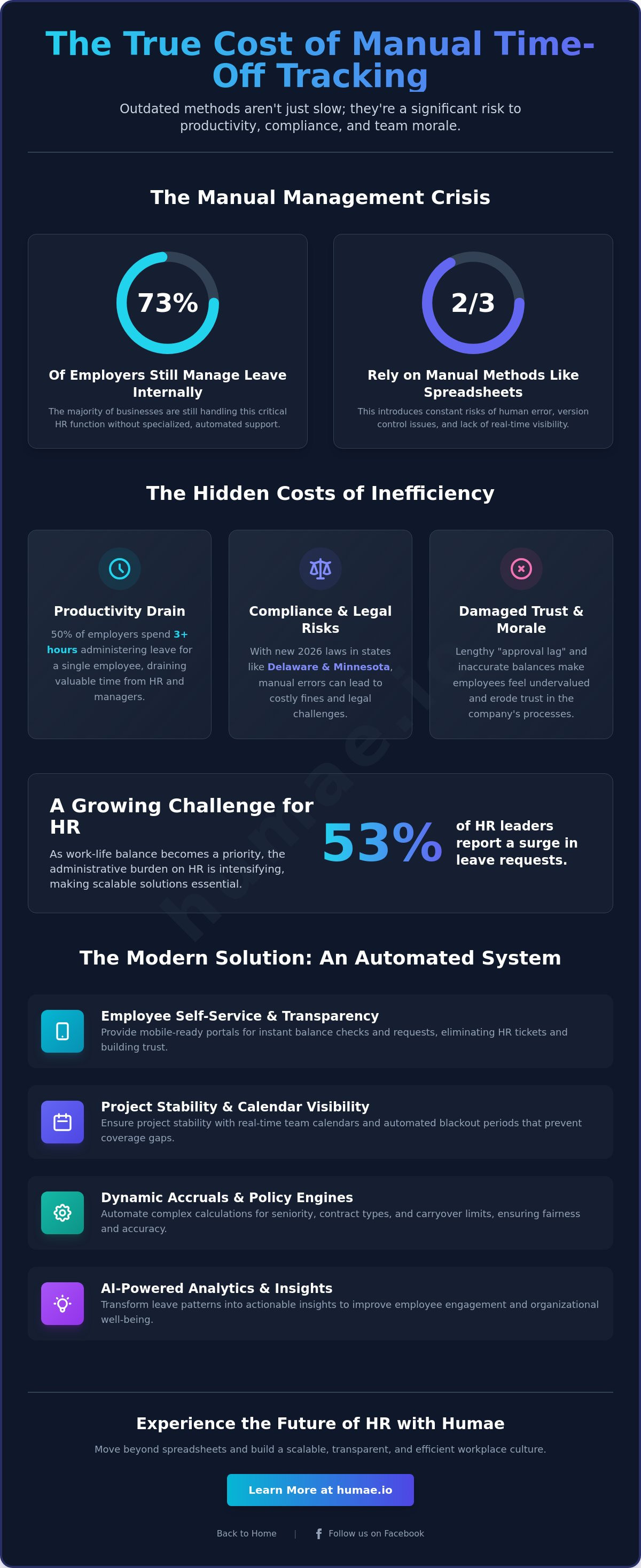
Did you know that 73% of employers still manage leave internally, with a staggering two-thirds of them relying on manual methods like spreadsheets? It’s a frustrating reality when you’re stuck fixing calculation errors or realizing too late that half your team is off during a critical project. You likely feel the weight of these administrative hurdles every time an employee asks for their remaining balance for the third time this month. It's clear that the old way of tracking time isn't just slow; it's a risk to your company's growth.
By adopting an automated time off request system in 2026, you can eliminate manual errors and ensure compliance with new state laws in places like Delaware and Minnesota. This article will show you how to build a scalable leave management process that offers zero-touch approvals and real-time calendar visibility for everyone. We’ll dive into how syncing this data with your payroll and performance intelligence can boost overall productivity and create a more supportive work culture.
Key Takeaways
- Uncover why 53% of HR leaders are seeing a surge in leave requests and how to manage this volume without administrative burnout.
- Transition to a scalable automated time off request system to support teams larger than ten people without the errors inherent in manual spreadsheets.
- Boost transparency and trust by providing employees with mobile-ready self-service portals for instant balance checks and requests.
- Ensure project stability through automated blackout periods that align team flexibility with your specific business requirements.
- Use AI-powered analytics to transform leave patterns into actionable insights for employee engagement and organizational well-being.
The Hidden Costs of Manual Time Off Tracking
Manual tracking is a silent leak in your company’s balance sheet. While a spreadsheet might feel "free," the reality is a chaotic web of email chains, sticky notes, and verbal promises that never make it to the master file. This lack of structure creates "shadow PTO," where time off is taken but never recorded. It leads to inaccurate balances and lost labor costs that most businesses don't realize they're paying. When managers rely on manual updates, they aren't just losing time; they're losing the ability to make data-driven decisions that protect the team's health.
The "approval lag" caused by manual systems is a major trust killer. When an employee has to wait days or weeks for a manager to dig through a spreadsheet to confirm their balance, morale takes a hit. It makes the company look disorganized and suggests that employee well-being is an afterthought. Transitioning to an automated time off request system solves this by providing instant clarity for everyone involved.
The Productivity Drain on HR and Managers
Reconciling PTO balances manually is a grueling task that drains your most valuable talent. Research shows that 50% of employers spend three or more hours administering a single employee's leave. For a growing team, this quickly snowballs into dozens of hours lost every month. Managers often face a heavy mental load, desperately checking team coverage across multiple calendars before hitting "reply" on a request. This friction is amplified during peak holiday seasons when request volumes spike. Without a centralized automated time off request system, your leadership team spends more time acting as clerks than as mentors.
Compliance and Legal Risks in 2026
The legal landscape for leave management has shifted dramatically this year. As of January 1, 2026, states like Delaware and Minnesota have introduced mandatory Paid Family and Medical Leave programs. Tracking these specific requirements alongside sick leave, bereavement, and parental leave is nearly impossible without professional tools. Modern automated time and attendance systems provide the necessary audit trails to protect your business during labor disputes or audits. Manual errors in calculating these complex balances don't just frustrate staff; they lead to costly payroll discrepancies and potential legal challenges. In 2026, a simple spreadsheet error can result in a regulatory fine that far outweighs the cost of professional software.
Key Features of a Modern Automated Time Off Request System
A modern automated time off request system does more than just replace paper forms. It creates a digital ecosystem where information flows freely between managers and their teams. The best tools focus on reducing friction while maintaining total control over business operations. Instead of just sending basic alerts; these systems build a foundation of clarity and trust. They transform a purely administrative task into a seamless part of your daily workflow.
Employee Self-Service and Transparency
Empowering your team starts with giving them the keys to their own data. When employees can check their balances instantly through a mobile app, it eliminates the endless stream of HR support tickets. They don't have to wait for an email response to plan a weekend getaway or a family visit. A mobile-first experience is essential for the hybrid workforce of 2026. Leave management becomes a collaborative effort rather than a top-down interrogation. Providing a clear request history allows employees to see exactly when and why their time was used; which prevents disputes before they even start. This transparency reduces anxiety and helps everyone feel more in control of their work-life balance.
Dynamic Accruals and Policy Engines
Your business is unique, and your leave policies should reflect that. An effective automated time off request system handles the heavy lifting of complex math. It automatically calculates accruals based on seniority or specific contract types; ensuring your long-term stars are rewarded correctly. These systems manage carryover limits and expiration dates without manual intervention. This is particularly vital in 2026 as new laws in states like Delaware and Minnesota require precise tracking of medical and family leave. You can also set "blackout dates" for your busiest periods to protect project timelines. This ensures that while flexibility is high, your business needs are always met. You can see how these customizable features can be tailored to your specific organizational structure to keep everything running smoothly.
Centralized team calendars are the final piece of the puzzle. They give everyone real-time visibility into who is in the office and who is away. This prevents coverage gaps that stall projects and frustrate clients. By automating these workflows; you're not just saving time. You're building a scalable infrastructure that grows with your company. Managers can approve requests with one click, knowing the system has already checked for overlapping vacations and policy violations. It's a faster, smarter way to lead a modern team.
Moving from Spreadsheets to Scalable Workforce Infrastructure
When a team grows beyond ten people, the cracks in manual tracking start to show. You might find yourself managing five different versions of the same Excel file. One for HR, one for finance, and three others buried in managers' inboxes. This isn't just an inconvenience; it's a structural risk. Transitioning to a professional workforce management infrastructure ensures that your data remains accurate as you scale. An automated time off request system serves as the backbone of this growth; providing a single source of truth that every department can trust. By centralizing this data early, you avoid the painful "data cleanup" projects that plague companies during rapid expansion.
Why Excel is Your Biggest Growth Bottleneck
Static spreadsheets are the enemies of agility. They lack real-time synchronization, meaning a manager might approve a vacation today that isn't reflected on the master sheet until next week. This delay creates a "single point of failure" where only one person truly knows the team's availability. Version control becomes a nightmare as departments drift apart. Without a centralized automated time off request system; you're essentially flying blind during peak seasons. The mental energy spent verifying if "v2_final_FINAL.xlsx" is actually the latest version is energy that should be spent on strategy and team development. Manual files also lack the security and encryption necessary for handling sensitive employee data in 2026.
The Power of Integrated Data
Your leave data shouldn't live in a vacuum. It's a critical part of your broader HRIS strategy. When time off requests sync automatically with your employee directory; every department gains instant visibility. This integration allows for smarter resource planning and prevents project stalls. While Federal leave policies provide a framework for legal compliance; your internal data tells the story of your company's pulse. Reporting becomes effortless; allowing executives to see absenteeism trends or burnout risks before they impact the bottom line. This level of insight is impossible to achieve with disconnected spreadsheets. The long-term ROI of a centralized platform is clear: you save hundreds of administrative hours while gaining the intelligence needed to lead a high-performing, resilient organization.
How to Implement Fair and Efficient Leave Policies
Setting a policy is easy. Enforcing it fairly is the real challenge. A modern automated time off request system removes the bias from leave management by applying the same rules to everyone, regardless of their role or department. It starts with establishing clear request lead times. For example, requiring two weeks' notice for any leave longer than three days ensures your team has ample time to adjust project deadlines. You can balance this flexibility with automated blackout periods during your most critical business cycles, such as year-end audits or product launches. This ensures your operations never stall while still giving employees the freedom to plan their rest.
Leave management is a pillar of modern employee engagement strategies. When people feel that the process is transparent and predictable, trust grows. It's not just about tracking days; it's about building a culture where rest is respected as a part of performance. Ready to build a fairer workplace? Discover how Humae simplifies leave policies.
Defining Your Approval Hierarchy
Your approval structure should reflect your team's size and complexity. For smaller teams, a "Manager-Only" approach keeps things fast and personal. As you scale, involving HR ensures that company-wide policies are followed consistently. For longer sabbaticals or extended medical leave, multi-level approvals provide the necessary oversight to manage long-term resource gaps. The goal is to minimize friction while maintaining accountability across the entire organization.
Burnout Prevention and Wellness Tracking
Data is your best defense against employee burnout. In 2026, forward-thinking managers use their dashboards to spot "unused PTO" as a red flag. If an employee hasn't taken a break in six months, the system can flag this for a proactive check-in. Encouraging "Recharge Days" or mental health breaks isn't just a perk; it's a strategic retention tool. By analyzing these patterns, you can intervene before a high-performer reaches their breaking point. This transforms leave from a simple subtraction of days into a proactive wellness tool that supports your most valuable asset: your people.
Humae: The AI-Powered Future of Time Off Management
Automation is often seen as a cold, mechanical process. At Humae, we view it as a way to make your business more human. By serving as the centralized hub for time off management, we give you more than just a calendar. We provide a lens into your team's health. Our automated time off request system leverages AI-driven sentiment analysis to find the hidden links between leave patterns and employee engagement. If a high-performer suddenly stops taking their planned breaks, the system doesn't just record it. It alerts you to a potential burnout risk before it impacts your culture. This proactive approach ensures that your most valuable assets feel seen and supported.
Performance Intelligence Meets PTO
In a modern organization, attendance isn't a silo. It's a key driver of your results. Humae links attendance data directly with performance analytics, creating a single source of truth for all people operations. This allows you to sync leave schedules with real-time OKR tracking. When you're planning your next big cycle, the AI helps predict team availability based on historical data and current requests. You'll never set an aggressive goal only to realize your lead developer is on a three-week sabbatical. This level of foresight turns simple tracking into true performance intelligence. It aligns individual rest with organizational success, ensuring that your team is always at its best when it matters most.
Getting Started with Humae
Moving away from messy spreadsheets shouldn't be a chore. We've designed the migration process to be as smooth as the platform itself. You can import your existing data and have your automated time off request system live in hours, not weeks. The intuitive interface is built for modern, remote-first teams who value speed and clarity. New hires are onboarded instantly, giving them immediate access to their balances and the team's schedule. This eliminates the "how many days do I have left" questions from day one. Stop fighting with static files and start leading with data. Join the future of workforce management today and see how a human-centered approach to technology can transform your business. It's time to build a workplace where everyone can thrive.
Build a Culture of High Performance and Well-being
Manual tracking is more than just a slow process; it's a barrier to your company's potential. By moving beyond spreadsheets, you eliminate the hidden costs of administrative lag and ensure your business remains compliant with the complex laws of 2026. A modern automated time off request system does more than manage absences. It provides the performance intelligence you need to protect your team from burnout while keeping your strategic goals on track. When you centralize your workforce management infrastructure, you gain the clarity to make better decisions for your people and your bottom line.
Integrating leave data with real-time OKR tracking and sentiment analysis transforms how you lead. It's time to stop reacting to requests and start building a resilient, data-driven workforce. Streamline your team with Humae; the AI-powered HR platform that puts your people first. Your team's success starts with a foundation of trust and clarity. We're here to help you build it.
Frequently Asked Questions
What is an automated time off request system?
An automated time off request system is a digital platform that manages the entire lifecycle of employee leave, from the initial request to final approval and balance updates. It replaces manual paperwork and fragmented spreadsheets with a centralized, real-time database. This ensures everyone in the organization has a clear view of team availability without the need for endless email chains or manual data entry. It's the foundation of modern, transparent people operations.
How do I automate employee leave requests without losing control?
You maintain total control by setting specific rules, limits, and "blackout dates" directly within the software's policy engine. The system automatically checks every request against your team's current coverage and company guidelines before passing it to a manager for a final, one-click approval. This setup prevents overlapping vacations in critical departments while removing the heavy administrative burden of manual checking. It empowers your team within the boundaries you've already defined.
Is there a way to sync time off requests with my company calendar?
Yes, modern systems integrate directly with professional tools like Google Calendar and Outlook to provide instant visibility. Once a request is approved, it automatically appears on the relevant team and company calendars. This real-time sync helps prevent project stalls because everyone knows exactly when a colleague will be offline. It eliminates the need for manual calendar updates and ensures your scheduling data is always accurate across all platforms.
How do automated accruals handle carryover days at the end of the year?
The software applies your specific carryover rules automatically on a set date; such as the end of the fiscal year. You can configure the system to allow a certain number of days to roll over, expire, or be flagged for payout based on local labor laws. This automation removes the high risk of human error that occurs when HR teams try to reconcile hundreds of balances manually during the busy holiday season.
Can an automated system handle different leave laws in multiple countries?
Absolutely, you can create localized policy profiles for every region where your team members are based. This is crucial in 2026 as new laws in states like Minnesota and Delaware introduce specific requirements for paid family and medical leave. The system tracks these unique regulations for sick leave, parental leave, and bereavement for each location. It ensures your global team stays compliant without requiring your HR staff to be international legal experts.
Why should I move away from Excel for vacation tracking in 2026?
Excel files are static, prone to version control errors, and lack the real-time transparency needed for modern teams. As your organization grows, a spreadsheet becomes a significant bottleneck that leads to "shadow PTO" and costly calculation mistakes. Transitioning to an automated time off request system provides a scalable infrastructure that integrates with your performance data. It's a shift from simple record-keeping to strategic workforce intelligence that supports your long-term growth.
How does time off management impact employee engagement?
Transparent leave management builds deep trust by showing employees that their well-being is a genuine priority. When the request process is fast, fair, and predictable, it reduces the anxiety often associated with asking for rest. Using data to proactively encourage breaks also prevents burnout, which is a primary driver of disengagement. A supportive system makes it clear that rest is an essential part of maintaining a high-performing and healthy company culture.
Can I customize approval workflows for different departments?
You can design unique approval paths that match the specific operational needs of each individual team. For instance, a creative team might only need a direct manager's sign-off, while a finance department might require a secondary check from HR for audit purposes. This flexibility ensures that your workflows remain efficient even as your organizational structure becomes more complex. It allows you to maintain accountability without slowing down the approval process for your staff.