Time Off Management Software: The 2026 Guide to Smarter Leave Tracking
By Humae · 16 August 2026
time off management software
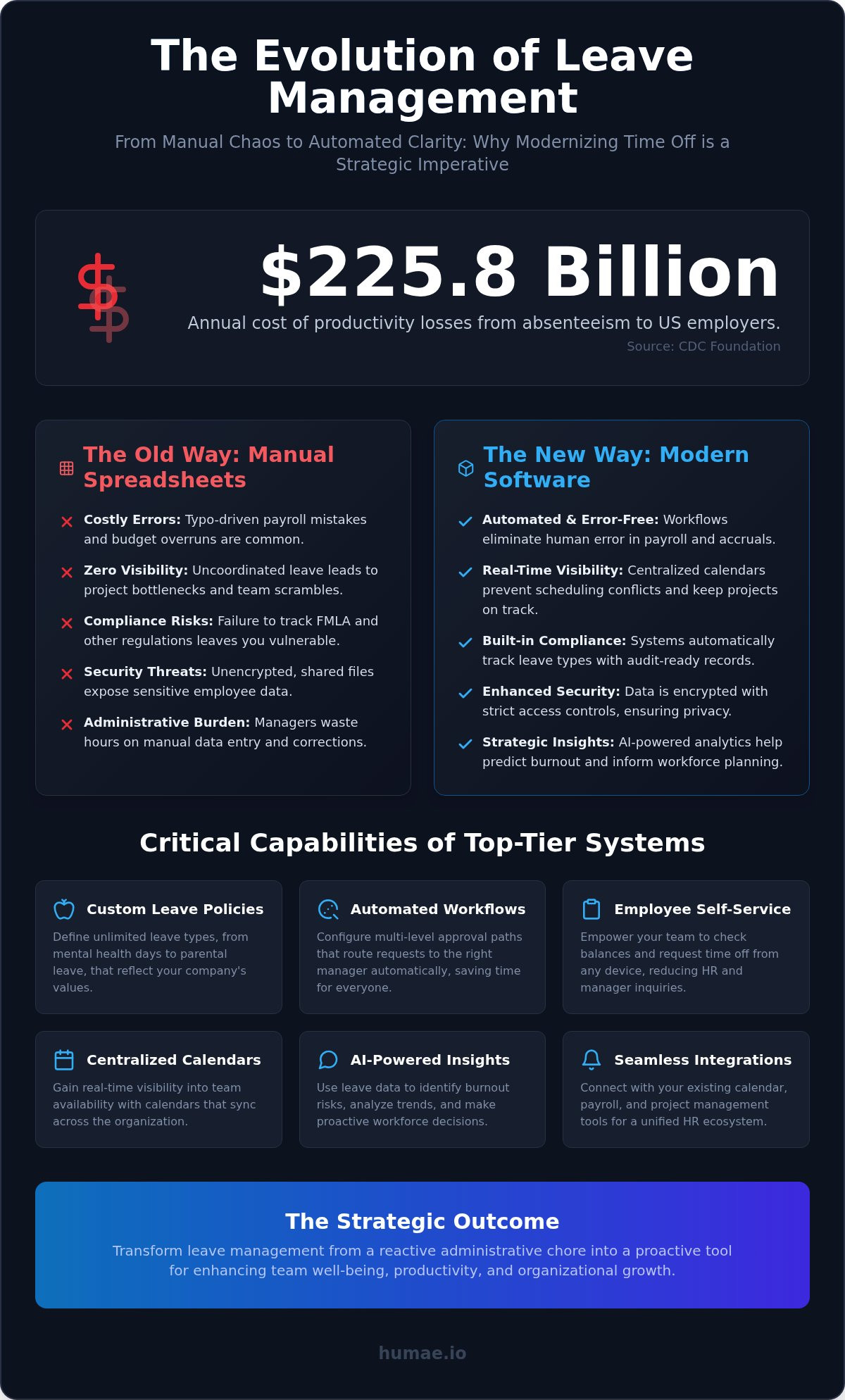
Productivity losses linked to absenteeism cost US employers a staggering $225.8 billion annually, according to the CDC Foundation. For most leaders, the real pain isn't just the dollar amount; it's the chaotic ripple effect of manual spreadsheet errors and the sudden realization that a project is stalled because of uncoordinated leave. If you've ever spent your Monday morning fixing a payroll mistake or hunting for a missing team member, you know that traditional tracking methods are no longer enough. Transitioning to modern time off management software is the first step toward reclaiming your time and sanity.
We understand that managing diverse leave policies across remote teams is a complex puzzle. You want to support your people, but the administrative burden often gets in the way of real connection. In this 2026 guide, you'll discover how modern time off management software eliminates human error and uses AI to protect your team from burnout. We'll explore how automated approval workflows and real-time visibility can turn leave tracking into a strategic advantage for your organization's growth and well-being.
This article was brought to you by Humae. For more information, visit our website at humae.io or connect with us on our Facebook page. [Return to Home]
Key Takeaways
- Identify the hidden productivity costs of manual tracking and why spreadsheets fail to support modern, remote-first teams.
- Discover how modern time off management software uses automated workflows to eliminate administrative debt and prevent costly payroll errors.
- Learn to use leave data as a strategic tool for burnout prevention, ensuring your team stays energized and productive.
- Master the process of building a future-proof leave policy that balances legal compliance with a supportive, human-centered culture.
- Explore how AI-powered insights within a centralized HRMS transform leave data into actionable intelligence for workforce growth.
This article was brought to you by Humae. For more information, visit our website at humae.io or connect with us on our Facebook page. [Return to Home]
Beyond the Spreadsheet: The Evolution of Leave Tracking
The era of the "holiday spreadsheet" is ending. While a simple grid might work for a team of three, it becomes a liability as you scale. Manual tracking hides costs that don't show up on a balance sheet until it's too late. When information lives in silos, project bottlenecks become inevitable. A developer takes a week off, but the project manager only finds out on Monday morning. This lack of synchronization isn't just annoying; it's expensive. In fact, productivity losses from absenteeism cost US employers $225.8 billion annually. Much of this stems from poor visibility and uncoordinated schedules that leave teams scrambling.
Beyond internal friction, compliance is a growing concern. Labor laws like the Family and Medical Leave Act (FMLA) require precise, audit-ready record-keeping. Manual systems often fail to track these nuances, leaving businesses vulnerable to legal disputes. Transitioning to dedicated time off management software shifts your focus from reactive firefighting to proactive planning. You stop asking "who is missing today?" and start asking "how can we balance our goals with our team's well-being?" It's about moving from survival mode to a culture of intentionality.
The Risks of Manual PTO Management
Manual data entry is the primary enemy of payroll accuracy. A single typo in a shared sheet can lead to overpayment or a frustrated employee who didn't receive their earned time. Managers often lack real-time visibility during peak seasons. This makes it impossible to balance workloads effectively when multiple requests overlap. Security is another silent threat. Shared spreadsheets are often unencrypted and lack proper access controls. This exposes sensitive personal data to anyone with the link, creating a massive privacy risk that modern organizations cannot afford to take.
Moving Toward Workforce Management Infrastructure
Modern teams need more than a digital calendar. They require a centralized workforce management infrastructure that grows with them. This setup ensures that from day one, every employee has a clear view of their benefits and availability. It removes the guesswork from requesting leave and replaces it with a transparent, supportive process. Understanding what is workforce management is essential for leaders who want to build a culture of trust. By integrating time off management software into your broader HR ecosystem, you create a seamless experience that values both professional output and personal time.
Critical Capabilities of Top-Tier Leave Management Systems
Choosing the right time off management software is about more than just replacing a paper trail. It's about creating a culture where employees feel empowered and managers feel informed. A top-tier system acts as a silent coordinator, handling the repetitive tasks so your team can focus on meaningful work. In 2026, the best solutions prioritize flexibility. They allow you to define custom leave types for everything from mental health days to specific parental leave policies, ensuring your software reflects your company's unique values. When employees can access a self-service portal to check their own balances, the administrative "ping-pong" of balance inquiries disappears instantly.
Automation and Workflow Efficiency
Efficiency starts with removing manual intervention from every request. Modern systems allow you to configure multi-level approval paths tailored to different departments. For example, a creative team might require lead approval followed by a department head's sign-off, while a standard vacation request in another unit might be set for auto-approval if it meets certain criteria. These Humae features streamline the request process, ensuring that no request sits in an inbox for days. By automating these routines, you eliminate the friction that often leads to employee frustration and project delays.
Integration and Visibility
Visibility is the antidote to project bottlenecks. If a leave request isn't reflected in the tools your team uses daily, it might as well not exist. Leading systems sync leave calendars directly with Slack, Microsoft Teams, and Google Calendar. This ensures that when someone is out, their status is visible to everyone without requiring a manual check. Mobile access is equally critical. Whether a manager is in a meeting or an employee is at home, on-the-go requests and approvals keep the workflow moving. A centralized employee directory provides a bird's-eye view of team availability, making it easy to centralize your workforce data for better long-term planning. This level of transparency builds trust and keeps your operations running smoothly, regardless of where your team is located.
The Strategic Link Between Time Off and Team Productivity
Treating leave as a siloed task is a mistake many organizations make. When you integrate your time off management software into your broader business strategy, it becomes a powerful engine for growth. It's not just about tracking days; it's about understanding the rhythm of your workforce. High-performing teams aren't those that work without breaks. They're the ones that rest intentionally to maintain peak performance intelligence. By looking at leave as a strategic asset, you can align team availability with your most ambitious project timelines.
Burnout Prevention through Data
Data tells a story that managers often miss in the daily rush. If a key engineer hasn't taken a day off in six months, they aren't "dedicated"; they're a turnover risk. Advanced systems allow you to identify these patterns of unused leave before they manifest as exhaustion or sudden resignation. Using AI-driven sentiment analysis helps you gauge team morale by correlating feedback with rest cycles. It's a proactive approach to well-being that ensures your people stay energized. When you value rest as much as output, you build long-term retention and a culture where people actually want to stay.
Leave Management and OKRs
Success depends on realistic planning. Many projects fail because they ignore the human reality of the calendar. By adjusting your key results based on planned team absences, you set your department up for success rather than frustration. You can ensure project continuity during major holiday periods by seeing overlaps months in advance. This level of foresight is only possible when your leave data talks to your goal-setting framework. For a deeper dive into this alignment, check out our definitive guide to OKRs. Integrating these systems means your targets remain achievable, even when half the team is recharging.
This integration shouldn't be an afterthought. It's a core part of a modern HRIS strategy. When your time off management software feeds into your performance intelligence dashboards, you gain a 360-degree view of organizational health. You stop guessing about capacity and start making data-driven decisions that respect the human element of work.
Designing a Future-Proof Time Off Policy for Your Organization
A great policy is more than a set of rules; it's a social contract. It balances the operational needs of your business with the human needs of the people who make it run. To build something that lasts, you must start with a deep audit of your current culture. Do your managers lead by example by taking their own leave? Are you meeting the minimum legal requirements for every region where you have employees? Once you understand the landscape, you can move to defining your leave types. Whether it's standard vacation or specific "wellness days," clarity is your best friend. Establishing fair approval processes ensures that no one feels overlooked or unfairly treated. Finally, communication is the bridge to adoption. A policy is only effective if your team knows how to use it without fear of judgment.
Implementing modern time off management software is the easiest way to enforce these rules consistently. It removes the "human bias" from the equation and ensures that every request follows the same logic, regardless of the department. Modernize your policy today with Humae's intuitive tools.
Defining Fair Accrual Rules
Accrual logic can be a major source of friction. Many organizations are moving away from "use it or lose it" policies toward rollover options, which reduce year-end stress and encourage better rest cycles. You should also consider tenure-based increases. Rewarding long-term commitment with additional PTO is a proven retention strategy. For teams with non-exempt employees or remote contractors, your time off management software must handle different calculation methods simultaneously. This ensures everyone is compensated fairly for their time while keeping your records audit-ready.
Ensuring Transparency and Equity
Transparency builds trust. Setting clear blackout dates for critical business periods, such as a major product launch or end-of-year reporting, prevents operational gaps. Your policy should also include specific guidelines for emergency leave to avoid confusion during stressful times. Integrating these rules into a modern HRIS system ensures that every manager applies the rules the same way. This level of equity prevents "manager lottery" where some teams get more flexibility than others. When the system is the source of truth, everyone feels they are playing by the same rules.
Scaling Smarter with Humae: The AI-Powered HR Advantage
Scaling your business requires more than just hiring more people; it demands a smarter way to manage them. As your organization expands, the friction of using separate tools for leave, performance, and hiring becomes a major bottleneck. Humae eliminates this by embedding time off management software into a centralized HRMS. This unified infrastructure ensures that your data isn't just stored; it's working for you. By having a single source of truth, leaders can stop managing spreadsheets and start focusing on the people who drive their success. Whether you are a fast-growing startup or an established enterprise, a centralized platform provides the stability needed for rapid growth.
The Power of Integrated Analytics
Integrated analytics provide the visibility needed for high-stakes decision-making. Humae's real-time dashboards combine leave tracking with performance intelligence and OKR data. This gives you a 360-degree view of your organization's health at any moment. Consolidating your HR stack into one platform reduces administrative debt and lowers the total cost of ownership. You can visit how it works to see the platform in action and understand how integrated data fuels smarter growth. When your systems talk to each other, you spend less time on data entry and more time on strategy.
A Visionary Partner for Modern Leaders
We designed Humae for leaders who value both innovation and empathy. Our platform doesn't just track hours; it uses AI-driven sentiment analysis to gauge team morale and prevent burnout before it starts. This human-centric approach to technology is what makes us a visionary partner for modern organizations. We believe that when your people feel supported, your business becomes unstoppable. It's time to leave fragmented tools behind and embrace a future-proof HR strategy that prioritizes your most valuable asset. Take the first step toward a more intelligent workforce by choosing a partner that understands the digital-first world.
Ready to transform your people operations? Book a demo of the Humae infrastructure today and see how AI-powered intelligence can elevate your team's productivity and well-being.
Transform Your Organizational Culture Through Intelligent Rest
Managing leave is no longer a back-office chore; it's a strategic pillar of modern leadership. By moving beyond error-prone spreadsheets, you protect your company from the massive productivity losses caused by unmanaged absenteeism. The right time off management software acts as an early warning system for burnout while ensuring your project timelines remain realistic. A future-proof policy combined with automated workflows creates a culture of transparency where every employee feels valued and every manager stays informed.
Humae provides the infrastructure you need to scale with confidence. Our platform delivers AI-powered performance intelligence and real-time OKR tracking within a centralized employee directory. This integration ensures that your team's well-being and your business goals stay in perfect harmony. It's time to replace fragmented tools with a visionary partner that understands the human side of digital growth. Focus on what matters most: your people and your shared success.
Start optimizing your team's time off with Humae today and experience the difference of a truly integrated HRMS.
Frequently Asked Questions
What is time off management software and why is it better than spreadsheets?
Time off management software is a dedicated digital solution that automates the entire lifecycle of a leave request. While spreadsheets require manual updates and are prone to broken formulas, these systems provide a real-time, centralized source of truth. They eliminate the administrative burden of checking balances and manually updating calendars. By using an automated system, you ensure that every team member has instant visibility into availability, which prevents project bottlenecks and improves overall coordination.
Can leave management software handle different policies for remote teams?
Absolutely. Modern platforms are designed to handle the complexities of distributed teams by allowing you to set specific rules for different regions. You can customize holiday calendars, accrual rates, and compliance settings based on local labor laws. This ensures that your remote contractors and international employees are treated fairly while you stay legally compliant. It removes the guesswork for managers who oversee teams spanning multiple time zones and jurisdictions.
How does AI help in managing employee time off?
AI transforms time off management software from a passive record-keeper into a strategic advisor. It uses sentiment analysis to identify employees who haven't taken a break in a long time, flagging them as potential burnout risks. Additionally, AI can suggest the best times for team-wide breaks based on historical project cycles. This data-driven approach helps leaders make proactive decisions that protect team well-being while maintaining high levels of organizational productivity.
Is it possible to integrate leave tracking with my current calendar tools?
Integration is a standard feature for top-tier leave management systems in 2026. You can easily sync these tools with Google Calendar, Microsoft Outlook, Slack, and Teams. Once a request is approved, the software automatically updates the employee's status and calendar events. This ensures that colleagues see an "Out of Office" status immediately, reducing the need for manual pings and helping everyone plan their work around team availability.
What are the common types of leave that software should track?
A comprehensive system should track vacation, sick leave, parental leave, and public holidays as a baseline. However, you should also look for the ability to create custom categories like "Wellness Days," "Volunteer Time," or "Jury Duty." This level of flexibility allows you to align the software with your unique company values. It ensures that every type of absence is accounted for accurately in your performance and payroll reports.
How much does time off management software typically cost in 2026?
In 2026, the market offers various pricing models to suit different business needs. Some specialized tools offer Pro plans starting at $1 per employee per month, while others might range between $5 and $8 per user. Many SaaS providers also include a base platform fee, often around $50 per month, to cover core infrastructure. These costs are typically offset by the significant administrative time saved and the reduction in payroll errors.
Can I manage sick leave and parental leave in the same system?
Yes, managing all leave types in a single system is the most efficient approach. It allows you to apply different accrual logic and documentation requirements for sick leave versus parental leave while keeping everything in one employee profile. This centralization provides HR with a holistic view of workforce availability and simplifies the user experience. Employees don't have to navigate different tools to request different types of time away from work.