Secure Employee Document Storage Solutions: The 2026 Guide to HR Infrastructure
By Humae · 27 May 2026
secure employee document storage solutions
Is your HR filing system a $10.22 million liability waiting to happen? With the average cost of US data breaches hitting record highs and the EU Pay Transparency Directive taking effect this June, the era of "good enough" document management is over. You're likely tired of chasing files across scattered drives and feeling the weight of manual data entry fatigue. It's a common struggle, but it doesn't have to be your reality.
This guide reveals how modern secure employee document storage solutions transform your HR infrastructure from a passive archive into a strategic asset. You'll learn to centralize and protect sensitive data using AI-powered frameworks that handle the heavy lifting of compliance for you. We'll show you how to build a single source of truth that automates audits and links your documents directly to performance intelligence and OKR tools for a truly seamless experience.
Experience the future of HR with Humae. Return to our home page to explore our full suite of HRMS and performance tools, or stay connected with our community on Facebook.
Key Takeaways
- Learn how to replace fragmented legacy systems with centralized secure employee document storage solutions that provide a single, encrypted source of truth for your team.
- Understand the necessity of Role-Based Access Control and AES-256 encryption in protecting sensitive personnel data from evolving cyber threats.
- Master the 2026 regulatory landscape, including the EU Pay Transparency Directive and new AI privacy acts, through automated compliance frameworks.
- Implement a frictionless transition by auditing your current data and establishing a permission matrix that aligns with your organizational hierarchy.
- Integrate document evidence into your OKR tracking and performance intelligence dashboards to turn static files into workforce intelligence; visit Humae or Facebook for more.
The Evolution of Secure Employee Document Storage in 2026
By May 2026, the definition of document storage has undergone a radical transformation. It's no longer just a digital filing cabinet where PDFs go to be forgotten. We now define secure employee document storage solutions as centralized, encrypted cloud repositories that manage a team member's data throughout their entire professional lifecycle. This evolution is the backbone of a modern workforce management infrastructure. The focus has shifted from reactive "parking" of files to proactive data intelligence. Instead of merely holding a document, these systems understand its content, control who accesses it, and know exactly when it requires an update or deletion to remain compliant.
This tech-forward approach doesn't ignore the human element. In fact, it protects it. When an organization moves away from scattered drives and toward a unified framework, it sends a clear message: we value your privacy and your time. It's about creating a culture where employees don't have to worry about their sensitive information being mishandled. By centralizing these assets, HR teams can stop acting as digital librarians and start acting as strategic partners who use data to drive growth and support their people.
Why Traditional File Systems Are a Liability
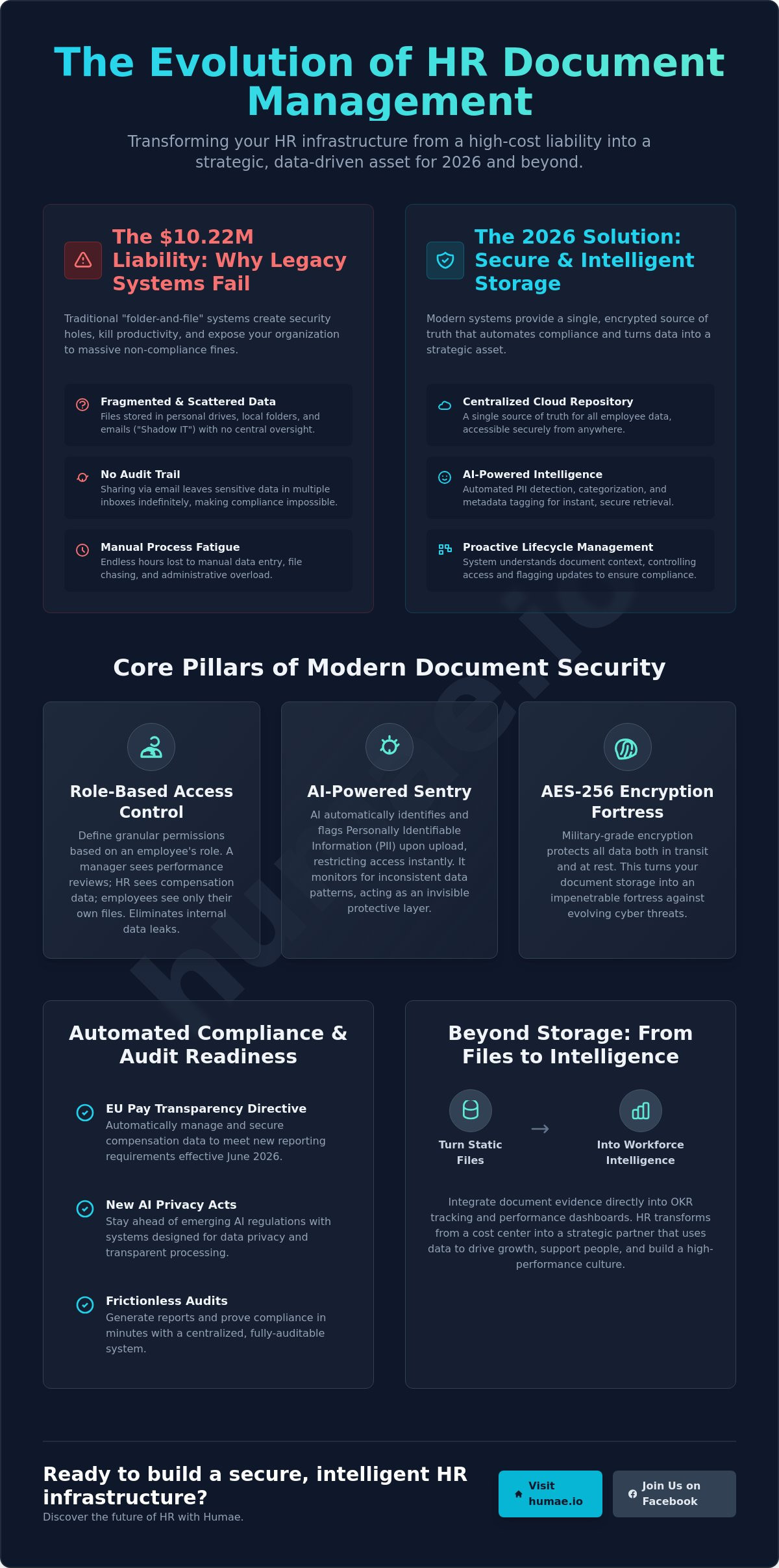
Legacy "folder-and-file" structures weren't built for the distributed, high-speed teams of 2026. They fail because they encourage "shadow IT," where managers store sensitive contracts or performance reviews in personal cloud drives or local folders. This fragmentation kills productivity and creates massive security holes. Sharing documents via email is another significant vulnerability. It's a method that lacks a proper audit trail and leaves sensitive data sitting in multiple inboxes indefinitely. While a basic Document Management System (DMS) provides a foundation, modern HR requires a more integrated approach to prevent the "data swamp" that leads to non-compliance fines and lost hours.
The Role of AI in Modern Document Security
Key Features of a Secure Employee Document Management System
Building a high-performance culture starts with a foundation of trust. If your team doesn't feel their sensitive data is safe, engagement suffers. Modern secure employee document storage solutions offer more than just a place to put files; they provide a sophisticated ecosystem designed to protect every piece of personnel data. These systems use specific technical guardrails to ensure that your HR infrastructure remains both accessible and impenetrable. By focusing on the human experience of security, you create a workplace where privacy is a priority, not an afterthought.
Role-Based Access Control (RBAC) is your first line of defense. It allows you to define exactly who sees what based on their position in the company hierarchy. A team lead might need access to performance reviews but shouldn't see an employee's private medical notes or bank details. By setting these granular permissions, you eliminate the risk of internal data leaks while keeping the workflow smooth. It's about giving your people the right tools without compromising their personal boundaries.
Data security relies heavily on end-to-end encryption. Using AES-256 standards, your information is protected at rest and while in transit. This means even if data were intercepted, it would be unreadable. Accountability is equally vital. Detailed audit trails maintain a chronological record of every action taken. You can see who accessed, edited, or shared a file and at what time. This transparency is crucial for internal security and external audits alike. Finally, automated retention policies take the guesswork out of compliance. They ensure that documents are archived or permanently deleted once they reach their legal expiration date, keeping your "data swamp" clean and your liability low.
Centralisation Through a Unified Employee Directory
A secure directory is the heart of your HR operation. It acts as a digital anchor, linking every document to a specific individual. This "single source of truth" is invaluable during onboarding and offboarding. When a new hire joins, their contracts and ID documents are instantly organized within their profile. When someone leaves, access is revoked across all files simultaneously. This level of organization is why modern HRIS systems have become the standard for businesses that value both security and speed. It's important to recognize that an employee directory is far more than just a contact list; it's the functional core of your document security. You can see how a centralized directory works in practice to streamline your daily tasks.
Version Control and Document Integrity
Legal safety depends on having "one true version" of every document. Version control prevents the confusion of multiple draft copies of a contract or a policy update. It ensures everyone is literally on the same page. Digital signatures integrate directly into this workflow, making it easy to finalize documents securely. Every file is protected by cryptographic timestamping, which prevents any unauthorized tampering. This ensures that your records remain authentic and legally binding for years to come.
Compliance and Audit Readiness: Navigating 2026 Regulations
"How do I know I won't get fined?" It's the question that keeps HR leaders up at night. As of May 2026, the stakes for data mismanagement have never been higher. The average cost of a data breach for US organizations has reached a record $10.22 million. Relying on manual reviews to stay compliant is no longer just inefficient; it's a massive financial risk. Modern secure employee document storage solutions remove this anxiety by embedding regulatory requirements directly into your digital workflow.
The regulatory landscape is shifting fast. The EU Pay Transparency Directive takes effect in June 2026, requiring documented pay equity audits and salary ranges. Simultaneously, the Colorado AI Act (CAIA) and Illinois House Bill 3773 now govern how AI interacts with employee data. These laws demand a level of transparency that paper files or basic cloud drives can't provide. A sophisticated system ensures you're prepared for the EU AI Act's strict prohibitions on emotion analysis and social scoring by keeping your data processing visible and controlled. To ensure your provider meets the highest security standards, always verify their SOC 2 Type II compliance, which guarantees rigorous, third-party testing of their internal controls.
Automating the Document Lifecycle
Compliance isn't a one-time event; it's a continuous cycle. You can set automated triggers for document expiration, such as work visas, professional certifications, or safety licenses. For organizations in specialized fields like oil and gas, you can check out PetroHab LLC to learn more about maintaining safety standards in hot work environments. When a deadline approaches, the system sends proactive notifications to both the employee and HR. This prevents the lapses that lead to heavy fines. Additionally, "Legal Hold" functionality allows you to instantly freeze specific records during litigation, ensuring that vital evidence isn't purged by standard retention policies. This automation turns compliance from a burden into a background process.
Preparing for Digital Audits
Steps to Implement a Secure Storage Solution Without the Friction
Your first move is to audit your current "data swamp." This means identifying every location where employee data currently lives, from personal cloud drives to forgotten email attachments. Once you've mapped your data, define a permission matrix based on your organizational hierarchy. This ensures that access is granted by necessity, not by default. When selecting your platform, look for a balance between high-level encryption and an intuitive user interface. If the system is too complex, your team will find workarounds that compromise security. Finally, execute a phased migration. Start with active employee files before moving on to historical archives to ensure zero downtime for your ongoing HR operations.
Cleaning and Categorising Your Data
Don't move your mess into a new house. Purge outdated documents that have passed their legal retention period before you begin the migration. This reduces your liability and makes the transition faster. Standardize your naming conventions immediately; for example, use a [YYYY-MM-DD]_[Name]_[DocType] format. This simple step significantly improves AI searchability and retrieval speed later. Be particularly mindful of "dark data," which consists of unstructured, unmanaged files sitting in local folders. Identifying and securing this hidden data is critical for preventing unexpected security breaches.
Training and Adoption
Security is a team sport. Communicate the changes clearly by highlighting how the new system protects the employees' own privacy. Managers need to understand their specific role in data handling to avoid accidental leaks. Emphasize the benefits of self-service portals, which allow employees to upload their own documents directly. This doesn't just improve data accuracy; it also slashes the administrative burden on your HR team. When people see that the new system makes their lives easier, adoption happens naturally.
Ready to build a more resilient HR foundation? Start your journey toward secure, centralized storage with Humae today.
Beyond Storage: Turning Documents into Workforce Intelligence
Most organizations treat their files as static dead weight, sitting in a digital drawer until an auditor calls. We see things differently. In 2026, a document is only as valuable as the insight you can extract from it. Modern secure employee document storage solutions shouldn't just lock data away; they should make that data work for your organization. By treating your documents as live data sources, you move from simple record-keeping to building a deep reservoir of workforce intelligence.
Humae’s AI-powered platform takes the information hidden within your files to fuel sophisticated performance intelligence. When a certification is uploaded or a feedback form is submitted, our system doesn't just store it. It analyzes the content to help predict engagement levels and potential turnover. Sentiment analysis of feedback documents allows you to spot cultural shifts before they become problems. This proactive approach turns your HR infrastructure into a visionary partner that helps you understand your people better than ever before.
Evidence-based management becomes a reality when you integrate document data directly into your OKR tracking. Instead of guessing progress, you can link specific documents, like project completions or training certificates, as verifiable milestones for key results. This creates a transparent, high-trust environment where success is documented and celebrated. You're no longer just managing files; you're managing growth.
Linking Files to Growth
Your performance reviews and training documents are the blueprints for career pathing. By connecting these records to real-time analytics dashboards, you can identify high-potential talent and skill gaps across your entire team. This synergy between secure storage and analytics ensures that your leadership team always has the data they need to make informed decisions. It’s about creating a roadmap for every individual, ensuring they have the support and resources to thrive within your organization.
The Humae Experience
We believe that technology should feel natural, not restrictive. Our human-centric design ensures that high-level security doesn't get in the way of a great user experience. As an all-in-one HR platform, we provide the tools to centralize your operations while keeping the human element at the center of everything. It's time to transform your HR department from a cost center into a powerful growth engine. By choosing a partner that prioritizes both security and actionability, you're investing in the future of your team and your company's success.
Build the Strategic HR Foundation of Tomorrow
Your HR infrastructure is the silent engine of your organization's success. By shifting toward modern secure employee document storage solutions, you're doing more than just checking a compliance box. You're building a fortress of trust and a launchpad for workforce intelligence. We've seen how centralizing data eliminates fragmentation while AI-powered frameworks turn static files into actionable growth insights. It's about moving from administrative fatigue to strategic leadership that puts people first.
The future of HR isn't about managing paperwork; it's about leveraging every piece of information to support your team. With a global compliance infrastructure and AI-driven performance intelligence, you can stop worrying about audits and focus on your culture. Real-time OKR tracking ensures your team stays aligned while their sensitive data remains protected by the highest encryption standards. It's time to lead your organization with confidence, empathy, and the right technology at your side.
Ready to secure your workforce? Discover Humae’s AI-powered platform.
Frequently Asked Questions
Is cloud storage more secure than on-premise servers for employee files?
What documents are legally required to be kept in an employee file?
Legally required documents typically include signed employment contracts, tax forms, I-9 verification in the US, and payroll records. You also need to maintain performance evaluations and any disciplinary records to support employment decisions. With the EU Pay Transparency Directive taking effect in June 2026, you'll also need documented pay equity audits and clear salary range disclosures to remain compliant with evolving labor laws.
How long should I store documents for terminated employees?
Most jurisdictions require you to store terminated employee records for three to seven years, though specific timelines vary by document type and location. For example, tax records often require longer retention than basic contact information. Modern systems use automated retention policies to purge data exactly when the legal requirement expires. This prevents the accumulation of "dark data" and reduces your liability in the event of a breach.
Can AI-powered HR platforms help with GDPR compliance?
Yes, AI-powered platforms simplify GDPR compliance by automatically identifying and tagging Personally Identifiable Information (PII) for faster retrieval or deletion. They can handle "Right to be Forgotten" requests in seconds by scanning your entire repository for a specific user's data. These secure employee document storage solutions also monitor for unauthorized access patterns, providing the proactive oversight that GDPR and the EU AI Act demand from modern organizations.
What is Role-Based Access Control (RBAC) and why does HR need it?
Role-Based Access Control (RBAC) is a security framework that restricts file access based on an individual's specific job function. HR needs it to ensure that sensitive data like medical records or salary details are only visible to authorized personnel. It prevents internal data leaks and ensures that a manager only sees the information necessary for their direct reports, maintaining a high standard of privacy and trust.
How do I migrate my paper files to a secure digital storage system?
Start by auditing your physical files and purging any documents that have already passed their legal retention date. Use high-speed scanners with Optical Character Recognition (OCR) to convert paper into searchable digital text. Once digitized, categorize the files using standardized naming conventions and upload them into a centralized repository. This phased approach ensures your team can access vital information without the friction of digging through physical filing cabinets.
Does Humae integrate with existing payroll or document tools?
What happens to my data if I decide to switch HR platforms?
Your data belongs to you, and modern platforms provide clear export paths to ensure data portability. If you decide to switch, you can export your entire document repository along with its associated metadata and audit logs. This ensures that you maintain a continuous legal record and don't lose vital workforce intelligence during the transition. We focus on building a partnership based on value, not on locking your data away.