OKR Tracking Software: The Best Platforms for High-Performance Teams in 2026
By Humae · 5 September 2026
ai-powered okr software
Why do most high-performance teams still dread the quarterly goal-setting ritual? It's usually because their tracking tools feel like a burden rather than a bridge to success. In 2026, the adoption of ai-powered okr software is changing that by removing the friction of manual updates. You've likely dealt with the frustration of spreadsheets that are outdated the moment they're saved, or the constant need to nag team members for progress. It's exhausting to manage work when you can't see how individual efforts move the needle for the company.
We believe technology should serve the person, not the other way around. This article helps you discover the top OKR tracking software to align your team, automate progress, and drive measurable results. We'll dive into how these modern platforms use AI to flag at-risk goals before they fail, ensuring your organization stays healthy and focused. You'll learn which tools integrate directly into your workflow to eliminate the "data entry tax" once and for all. Stay connected with our latest insights on Facebook as we redefine workplace performance together.
Key Takeaways
- Understand why manual spreadsheets usually collapse by the second quarter and how a dedicated digital system prevents strategy failure.
- Learn how ai-powered okr software uses real-time sentiment analysis to flag at-risk goals before they impact your quarterly results.
- Discover the benefits of integrating your OKRs directly into your workforce management platform to eliminate tool sprawl and automate updates.
- Get a step-by-step guide to auditing your current goal-setting culture and selecting a platform that fits your specific team rhythms.
- Explore why centralized performance intelligence is the key to organizational alignment in 2026, and join our community on Facebook for more innovation.
Beyond Spreadsheets: Why Modern OKR Tracking Requires Dedicated Software
A digital system of record for strategy execution is no longer a luxury for growth-oriented companies. While many teams start their journey using basic tools, they quickly realize that spreadsheets are where goals go to die. To truly understand the OKR meaning in a professional context, you must view it as a living, breathing process rather than a static document. In 2026, high-performance teams rely on ai-powered okr software to maintain momentum when manual systems inevitably falter.
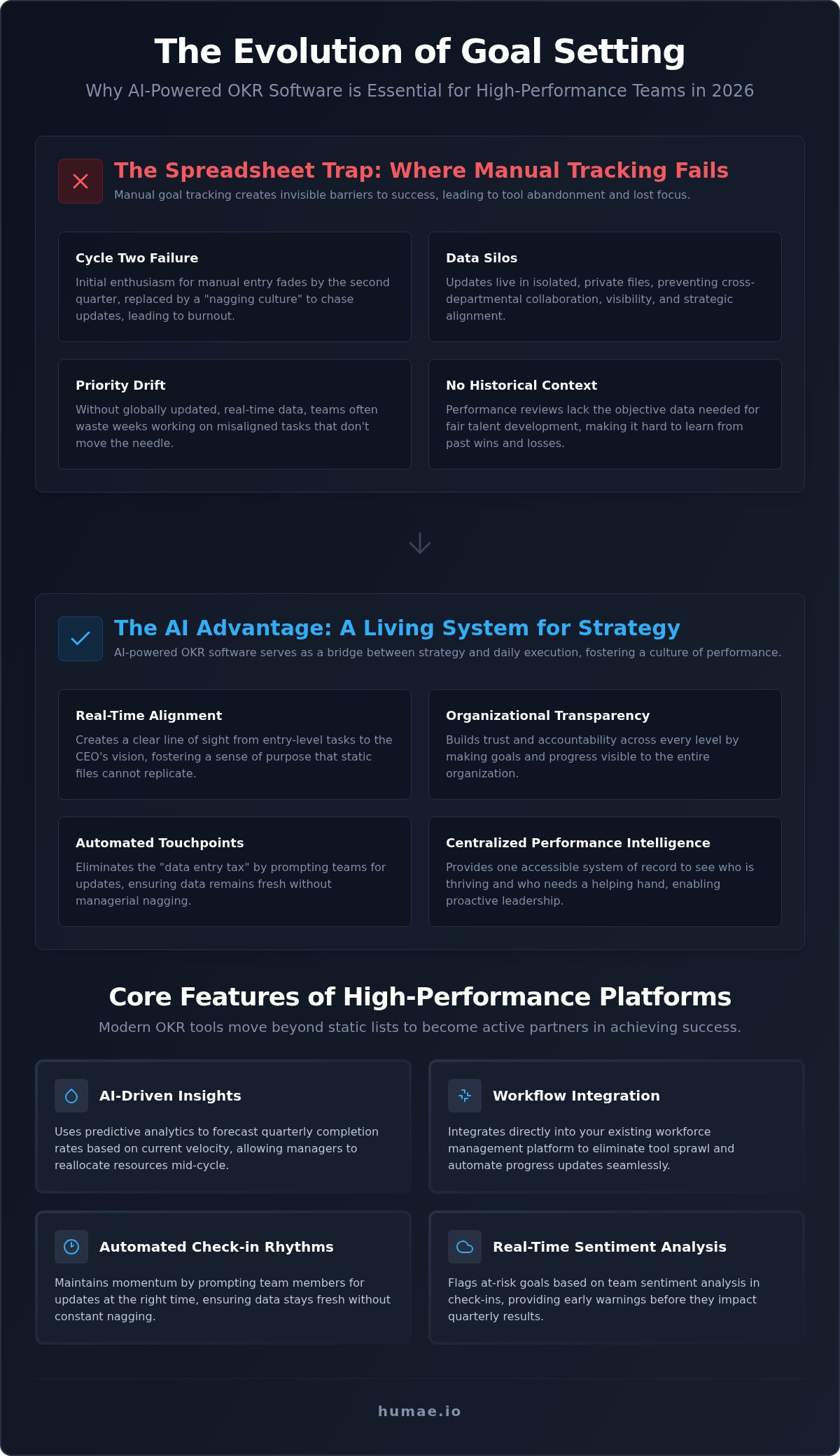
The most common pitfall is known as Cycle Two failure. In the first quarter of adoption, enthusiasm carries the weight of manual data entry. By the second quarter, the nagging culture takes over. Leaders spend hours chasing updates via email and chat, leading to tool abandonment and lost focus. Dedicated software automates these touchpoints, ensuring that Objectives and key results (OKR) remain at the forefront of every decision without the administrative burden.
The Hidden Costs of Manual Goal Tracking
Manual tracking creates invisible barriers to success. When data sits in isolated silos, leaders lose the ability to spot trends or provide support before a deadline is missed. It's frustrating for managers and demoralizing for employees who feel their progress isn't being recognized. Consider these common friction points:
- Data Silos: Updates live in private files, preventing cross-departmental collaboration and visibility.
- No Historical Context: Without a system of record, performance reviews lack the objective data needed for fair talent development.
- Priority Drift: When spreadsheets aren't updated globally, teams often waste weeks working on misaligned tasks.
Modern ai-powered okr software eliminates these risks by centralizing every goal in one accessible place. It provides the performance intelligence necessary to see who is thriving and who needs a helping hand. Connect with our community on Facebook to see how other leaders are moving beyond the spreadsheet era to build more connected workplaces.
Real-Time Alignment and Organizational Transparency
Visibility is the heartbeat of the modern hybrid workplace. In 2026, employees want to know that their work matters and contributes to something bigger. Software creates a clear line of sight from entry-level tasks to the CEO's vision, fostering a sense of purpose that static files simply cannot replicate. This transparency builds trust and accountability across every level of the organization. Check out our key features to see how alignment works in practice. OKR software is the bridge between strategy and daily execution.
Core Features of High-Performance OKR Platforms in 2026
High-performance teams in 2026 don't just track progress; they anticipate roadblocks before they happen. The shift from reactive management to proactive leadership is driven by ai-powered okr software. It is no longer enough to simply list objectives in a digital tool. Modern platforms must provide the intelligence to understand why certain goals are lagging and how to support the people behind them. By moving beyond static lists, these tools become active partners in achieving organizational success.
Momentum is the most fragile part of any goal-setting framework. To maintain it, automated check-in rhythms are essential. These systems prompt team members for updates at the right time, ensuring that data remains fresh without the need for constant managerial nagging. Because the modern workforce is increasingly hybrid, a mobile-first design is critical. Leaders need access to real-time analytics dashboards from any device to make informed decisions in the moment.
AI-Driven Performance Intelligence and Sentiment
AI-powered insights are the primary differentiator for platforms in 2026. While traditional tools tell you what happened last week, ai-powered okr software uses predictive analytics to forecast quarterly completion rates based on current velocity. This allows managers to reallocate resources mid-cycle rather than waiting for a post-mortem review. It's about being one step ahead of the curve.
A significant innovation this year is the use of sentiment analysis. By looking at the language used in weekly updates, the AI can detect signs of burnout or declining motivation. If a team sounds discouraged, the system flags it for a human conversation. This human-centric approach ensures that technology supports well-being alongside productivity. You can see how we integrate these human elements by following us on Facebook.
Seamless Ecosystem Integrations
For OKRs to be effective, they cannot live in a vacuum. They must be part of your daily communication workflow. Connecting your goals to Slack, Microsoft Teams, and project management tools like Jira reduces the friction of switching between apps. When updates happen naturally within the tools people already use, adoption rates skyrocket. This is why your tracking system must be part of a broader workforce management infrastructure.
Reducing administrative overhead is the ultimate goal of integration. When performance data lives alongside HR data, you gain a 360-degree view of your organization's health. This unified approach eliminates tool sprawl and ensures everyone is pulling in the same direction. If you are ready to simplify your tech stack, it might be time to explore how Humae aligns your team effortlessly.
The Best OKR Tracking Software of 2026: Top Picks
Selecting the right platform requires a balance between technical depth and user experience. In 2026, the leading choices distinguish themselves by how effectively they remove friction from the update process. Whether you need a standalone strategy hub or a unified workforce solution, your choice should align with your team's existing habits. It's helpful to consult a step-by-step plan for success before committing to a long-term contract. The right tool doesn't just track numbers; it fosters a culture of transparency and collective achievement.
Humae: The AI-Powered HR and Performance Leader
Humae stands out as the premier choice for organizations that want to eliminate tool sprawl. It is the only ai-powered okr software that connects goal tracking directly to a full HRMS. This integration allows managers to see how time-off requests or team capacity impact key results in real-time. By using sentiment analysis to gauge morale, Humae ensures performance doesn't come at the cost of burnout. It's a holistic approach that bridges the gap between human needs and business objectives. Check out our how it works section to see this in action.
Mooncamp and Specialist Strategy Tools
For teams that prefer a hyper-focused strategy environment, Mooncamp remains a strong contender. It offers deep customization for specialists who want to fine-tune every aspect of their goal health metrics. While specialized tools provide excellent depth, they often lack the breadth of an integrated platform. Smaller teams might appreciate the simplicity of a dedicated app, but growing enterprises often find that managing separate silos leads to data inconsistencies.
Lattice continues to serve large enterprises that must navigate complex legacy requirements and extensive compliance standards. While its interface can feel heavier than modern alternatives, its robust reporting makes it a staple for established corporations. However, for those seeking a more agile experience, ai-powered okr software like Humae offers a more responsive alternative for 2026. This shift toward integration reflects a broader trend of making technology more human and less administrative. Stay updated on the latest shifts in performance tech by visiting our Facebook page.
Choosing and Implementing Your OKR Tracking Platform
Selecting the right ai-powered okr software is a pivotal decision that impacts how your strategy translates into action. It's not just about flashy features; it's about finding a partner that fits your organizational rhythm. A successful implementation requires a structured approach to ensure the technology empowers your people instead of overwhelming them. Following a proven roadmap helps you avoid the common pitfalls of tool abandonment and organizational misalignment.
- Step 1: Audit your culture. Start by identifying where your current system breaks down. Are updates forgotten, or is the data simply too hard to find? Understanding these specific pain points ensures you choose a solution that addresses real problems rather than just adding another layer of complexity.
- Step 2: Define your ecosystem. Your goals should live where your work happens. Map out the necessary connections to your HRMS, Slack, or CRM data to ensure a seamless flow of information across all departments.
- Step 3: Run a pilot. Before a full rollout, test the How it works flow with a single department. This allows you to refine your processes, identify potential friction, and gather internal feedback in a controlled environment.
- Step 4: Roll out org-wide. Launch with clear training sessions and strong leadership buy-in. When executives actively use the platform to share their own progress, the rest of the organization naturally follows suit.
Evaluating Technical Fit and Scalability
Enterprise teams must look beyond the user interface. Security is paramount; ensure any cloud-based platform meets modern data protection standards for enterprise use. Scalability is equally important. A tool that works for a 10-person startup must also support a 500-person organization without losing performance or clarity. Advanced data needs require API access and custom reporting capabilities to provide the deep insights your leadership team demands. We share more technical tips and updates on our Facebook page for teams looking to scale efficiently.
Driving User Adoption Across the Team
The best software is useless if nobody uses it. Gamifying the check-in process can turn a routine task into an engaging experience that encourages consistent participation. OKR Champions play a vital role here; these internal advocates help their peers navigate the cultural change and keep the momentum alive. By using real-time feedback loops, you can maintain high engagement throughout the entire quarterly cycle. If you're ready to see how a unified platform can simplify this journey, explore our OKR tracking solutions to get started.
The Future of Performance: Integrated OKRs with Humae
The 2026 business landscape demands more than just record-keeping; it requires active intelligence. We've seen how siloed tools lead to fragmentation and employee burnout. The all-in-one approach of Humae solves this by making strategy a natural part of the workday. Choosing ai-powered okr software that lives where your people data resides is the most effective way to ensure long-term adoption and measurable success. It's time to move beyond simple tracking and start driving growth through intelligence that actually understands your team.
Success in modern management isn't about having the most features. It's about having the right connections. When your goals are isolated from your workforce data, you're only seeing half the picture. Humae bridges this gap by providing a centralized workforce management platform that empowers every individual to see their impact. We invite you to explore a system that doesn't just list tasks but fosters a culture of shared purpose and high performance.
Why Centralization is the Ultimate Strategy
It's tempting to think that more tools lead to more productivity. The reality in 2026 is often the opposite. Tool fatigue drains energy and creates data gaps that stall growth. By housing your OKRs inside your HRIS, you ensure that every goal is backed by real-time employee data. This connection eliminates the need for manual updates and creates a single source of truth for your entire strategy.
- Data Accuracy: Pulling information directly from a centralized employee directory prevents errors and ensures everyone's role is correctly aligned.
- Unified Source of Truth: Strategy and people operations work better when they share the same data foundation.
- Reduced Complexity: One login and one interface mean your team can focus on work instead of managing passwords.
Getting Started with Humae Today
Humae was built for the modern, human-centric organization. Our intuitive interface ensures that new hires can start contributing to company goals from day one with zero training. We believe technology should be accessible and supportive, not a barrier to entry. Whether you prefer monthly flexibility or annual stability, our SaaS models are designed to scale with your ambitions as you grow from a startup to an enterprise.
Don't let another quarter pass with disconnected goals and manual spreadsheets. Embrace the future of performance intelligence and see the difference a truly integrated system makes. We're excited to partner with you on this journey toward a more transparent and successful workplace. Join our growing community on the Humae Facebook page to stay ahead of the curve and connect with other visionary leaders.
Elevate Your Strategy with Intelligent Execution
The era of chasing updates in static spreadsheets is officially over. By 2026, the most successful teams have shifted their focus from simple recording to proactive execution. You now know that ai-powered okr software is the essential bridge between high-level strategy and daily employee impact. It eliminates the administrative burden while providing the clarity needed to keep every department aligned and motivated throughout the year.
Choosing an integrated approach ensures your goals aren't siloed from your people data. With AI-powered performance intelligence and real-time analytics dashboards, you can identify roadblocks before they derail your quarterly progress. This modern workforce management infrastructure doesn't just track work; it empowers your team to grow with purpose and confidence. Stay connected with our latest updates and community discussions on Facebook.
Start your journey toward high-performance growth with Humae and see how a human-centric platform transforms your organizational culture. Your path to measurable results starts with a single, intelligent step.
Frequently Asked Questions
What is the difference between OKR tracking software and project management tools?
Project management tools focus on the daily tasks and specific workflows needed to complete a job. In contrast, OKR software focuses on the high-level strategic outcomes those tasks are meant to achieve. While a project tool tells you if a task is done, ai-powered okr software tells you if that task actually moved the needle for your business. They work best when integrated so daily efforts update strategic goals automatically.
How much does OKR tracking software typically cost in 2026?
Pricing usually follows a SaaS model based on the number of users in your organization. Most modern providers, including Humae, offer both monthly and annual subscription fees to provide flexibility for different budget cycles. Annual plans often provide a discounted rate for teams seeking predictable workforce management costs. You should check the specific pricing pages of providers to find the plan that fits your current team size and growth goals.
Can OKR software integrate with my existing HRIS or HRMS?
Yes, integration is a cornerstone of modern workforce management infrastructure. The most effective platforms are built to pull data directly from your centralized employee directory to ensure accuracy. Humae takes this further by offering a fully integrated platform where your OKRs live alongside your core HR functions. This reduces tool sprawl and ensures that strategic goals are always connected to real-time people operations data without manual entry errors.
Does OKR software help with annual performance reviews?
It significantly improves the review process by providing a year-long record of objective achievements. Instead of relying on memory or recency bias, managers can use performance intelligence to see exactly how an employee contributed to company goals over time. This data-driven approach leads to fairer evaluations and more meaningful development conversations. It turns the annual review from a stressful event into a constructive summary of documented, measurable success.
Is AI really necessary for tracking OKRs effectively?
While you can track goals manually, ai-powered okr software is essential for teams that want to stay competitive in 2026. AI provides predictive analytics that can forecast if a goal is at risk based on current velocity. It also offers sentiment analysis to detect if a team is feeling overwhelmed or discouraged. These insights allow leaders to intervene with empathy and support before a project fails or a team member burns out.
How long does it take to implement an OKR tracking platform?
Implementation timelines depend on your organization's size and current goal-setting culture. Most teams can complete the technical setup and a pilot program within two to four weeks. A full organizational rollout usually takes a bit longer as you train employees and appoint internal OKR Champions. Starting with a single department allows you to refine your processes before scaling the system across the entire company for maximum strategic impact.
Can small startups benefit from OKR software or is it just for enterprises?
Startups often benefit the most because they need to move fast without losing focus. OKR software helps small teams stay aligned on their most important priorities during periods of rapid growth. It provides a professional structure that scales with you as you hire more people. By establishing a clear strategy execution hub early on, startups can avoid the data silos and communication gaps that typically plague growing businesses.