Non-Monetary Employee Rewards: The 2026 Strategy for High-Growth Teams
By Humae · 21 August 2026
non-monetary employee rewards
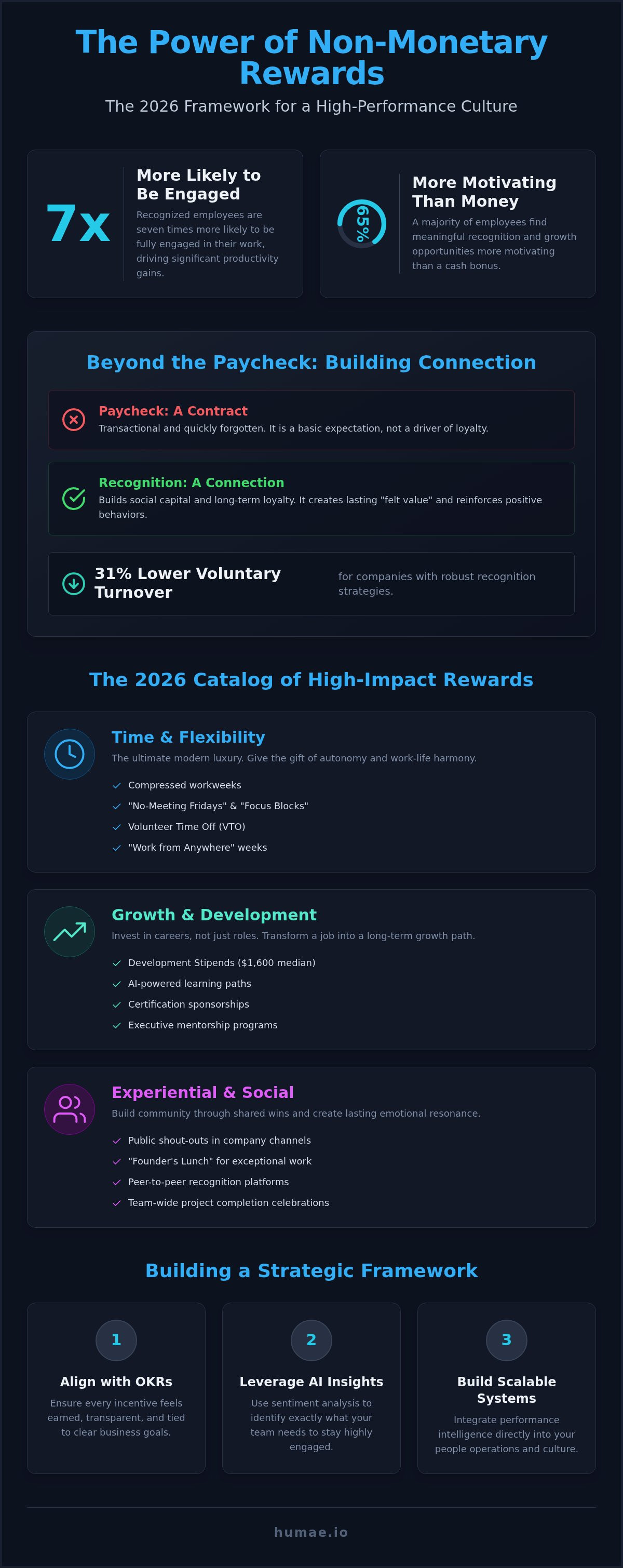
Did you know that recognized employees are seven times more likely to be fully engaged in their work? It is a staggering statistic that highlights a massive opportunity for leaders facing high turnover and tight budget constraints. While it is tempting to think that only a larger bonus can keep people happy, 65% of employees actually find recognition more motivating than money. Effective non-monetary employee rewards bridge the gap between a simple paycheck and a culture where high-performers actually want to stay.
You understand that a motivated, loyal workforce requires more than just a transaction; it requires a connection. We are here to help you build that bond. This guide reveals how to build a high-performance culture using personalized incentives that drive engagement without exhausting your budget. We will explore a scalable recognition framework designed for 2026, showing you how to use performance intelligence to boost employee sentiment scores and create a workplace where everyone thrives.
Key Takeaways
- Understand why modern talent in 2026 prioritizes flexibility and purpose over traditional pay raises.
- Implement high-impact non-monetary employee rewards that replace generic perks with meaningful, personalized growth experiences.
- Align your recognition framework with OKR tracking to ensure every incentive feels earned and transparent.
- Leverage AI sentiment analysis to identify exactly what your team needs to maintain high engagement.
- Build a scalable infrastructure for people operations that integrates performance intelligence directly into your organizational culture.
Beyond the Paycheck: Why Non-Monetary Employee Rewards Matter in 2026
A paycheck is a contract. Recognition is a connection. In a world where talent can work from anywhere, non-monetary employee rewards have become the primary currency of culture. These incentives aren't just about avoiding a payout; they provide value through experience, professional growth, or the gift of time. By 2026, the shift is undeniable. Modern professionals prioritize flexibility and purpose over marginal salary increases that are often swallowed by inflation or taxes. They want to feel that their contributions matter to the mission of the company.
Statistics from 2026 show that 65% of employees find recognition more motivating than money. It's not just a feeling. Companies with robust employee recognition strategies report a 31% lower voluntary turnover rate. This isn't about temporary excitement. It's about sparking intrinsic motivation, the kind of internal drive that keeps a team high-performing during challenging quarters. When you reward behavior rather than just results, you build a sustainable cycle of excellence.
The Psychology of Recognition
Real-time praise triggers a dopamine loop that reinforces positive behavior instantly. When a manager acknowledges a specific achievement, it creates a "felt value" that outlasts a one-time cash bonus. Cash is transactional and quickly forgotten once spent. Public praise, however, builds social capital. It signals to the entire team what excellence looks like, creating a shared standard of success. This emotional resonance is what builds a loyal workforce in a competitive market.
Total Rewards in the Modern Workplace
The 2026 total rewards model integrates non-cash benefits as a core pillar of compensation. It's no longer just salary plus health insurance. Modern packages include lifestyle spending accounts (LSAs), which are now offered by 65% of companies, or professional development stipends that have reached a median of $1,600. Aligning these perks with your broader people strategy is essential for growth. You can explore how this fits into the bigger picture of modern people operations at Humae. Strategic non-monetary employee rewards ensure your team feels supported as humans, not just as line items on a budget.
The 2026 Catalog: 15 High-Impact Non-Cash Incentives
Generic perks like office snacks or dusty "Employee of the Month" plaques are relics of a bygone era. In our hybrid, tech-driven world, impact matters more than physical presence. Modern non-monetary employee rewards must be as dynamic as the teams they serve. They aren't just "nice to have" additions; they're the fuel for a high-performance culture. According to data-backed insights, the most effective recognition is personalized, timely, and deeply relevant to the individual's life.
Time and Flexibility Rewards
Time is the ultimate luxury in 2026. High-growth teams are now using compressed workweeks as a tangible reward for hitting ambitious quarterly goals. "No-Meeting Fridays" or dedicated "Focus Blocks" have shifted from optional habits to standard, protected perks. For Gen Z and Millennial talent, Volunteer Time Off (VTO) allows them to connect their professional output with social impact. "Work from Anywhere" weeks have also emerged as a top-tier incentive, giving employees the autonomy to blend their personal adventures with professional excellence.
Growth and Development Incentives
Stagnation is a primary driver of turnover. Professional development stipends have doubled to a median of $1,600 in the first half of 2026, but the real value lies in the curated experience. AI-powered learning paths and professional certification sponsorships ensure your team stays ahead of industry shifts. Mentorship opportunities with executive leadership or departmental shadowing programs provide the social capital employees need to advance. These non-monetary employee rewards transform a standard role into a long-term career path.
Experiential and Social Recognition
Community is built through shared wins. Public shout-outs in centralized digital directories or a "Founder’s Lunch" for exceptional project delivery create lasting emotional resonance. Peer-to-peer recognition programs empower every team member to act as a culture champion, making appreciation a daily habit rather than an annual event. Instead of generic gifts, personalized "Experience Vouchers" tailored to an individual’s specific hobbies show that you truly see the human behind the screen. You can start building this culture of appreciation by exploring the recognition infrastructure that makes these moments effortless.
Strategy vs. Random Acts: Building a Reward Framework
A culture built on occasional, spontaneous kindness is a heart-warming start, but it isn't a scalable strategy. For high-growth teams, relying on "Random Acts of Kindness" often leads to inconsistent experiences and perceived favoritism. To make non-monetary employee rewards truly effective, you need a structured framework that removes guesswork. This ensures that recognition is not a rare event but a predictable outcome of excellence. When the process is standardized, it becomes a reliable engine for engagement rather than a manager's afterthought.
Consistency starts with transparency. Managers need a clear "Recognition Playbook" that outlines what behaviors are celebrated and how. Without this, organizations fall into the trap of "Recognition Bias," where the loudest voices or the most visible tasks get all the attention. By shifting to a data-backed approach, you ensure that quiet contributors receive the same level of appreciation as your most outgoing stars. Understanding OKR Meaning is the first step toward this alignment; it connects individual effort to the company's highest priorities and makes rewards feel earned.
The Link Between Performance and Praise
Effective praise must be tied to specific, measurable outcomes. When a reward is linked to a hit target or a demonstrated value, it reinforces the exact behaviors you want to see repeated. Using real-time data allows leaders to catch wins as they happen, rather than waiting for a quarterly review. This immediacy is a core component of A Modern Leader’s Guide to Workforce Management. When non-monetary employee rewards feel earned through transparent achievement, their psychological impact is significantly higher.
Equitable Recognition in Hybrid Teams
In a hybrid world, "proximity bias" is a silent culture killer. It's easy to recognize the person sitting across from you while overlooking the remote engineer who just solved a critical bug. Standardizing the value of different non-cash incentives helps level the playing field. Digital platforms ensure that every win is visible to the entire organization, regardless of physical location. By documenting and celebrating achievements in a centralized directory, you build a community where contribution is the only metric that matters. This scalable infrastructure is what separates high-growth teams from those struggling with high turnover.
The Role of Performance Intelligence in Personalizing Recognition
Stop asking your people what they want once a year. Start understanding them every day. Traditional recognition programs often fail because they treat a diverse workforce like a single, monolithic entity. By 2026, high-growth teams have moved beyond manual surveys to embrace performance intelligence. This technology identifies whether a specific team member is craving a professional certification or simply needs a few extra hours of "Focus Blocks" to stay productive. Personalizing non-monetary employee rewards at scale is no longer a luxury; it's a requirement for retention.
Data-Driven Personalization
A generic "good job" email is noise. A data-backed compliment that references specific OKR progress or positive peer feedback carries genuine weight. Performance intelligence is the bridge between raw data and human empathy. To build a culture that resonates, you must implement Employee Engagement Strategies that rely on real-time sentiment rather than outdated annual reviews. Using analytics dashboards allows HR leaders to see which incentives actually move the needle on sentiment scores. This ensures that your budget for non-cash perks is always invested in what your team truly values.
Predictive recognition is the next frontier for modern people operations. AI sentiment analysis can now spot the early signs of burnout risk before they manifest as a resignation letter. If a high-performer's engagement scores dip, a timely reward of a "Work from Anywhere" week can prevent turnover before the employee even realizes they're reaching their limit. This proactive approach transforms HR from a reactive department into a strategic growth partner.
Real-Time Feedback Loops
The gap between achievement and recognition should be measured in hours, not months. Continuous feedback loops reduce the psychological distance between effort and appreciation, reinforcing high-performance habits instantly. Integrating sentiment scores directly into manager dashboards gives leaders the emotional context they need to support their teams effectively. When you close this loop, your non-monetary employee rewards become a natural extension of the daily workflow. You can start building this data-driven culture today by exploring the performance intelligence tools offered by Humae.
Scaling Recognition with Humae: The Infrastructure for Modern Teams
Scaling a culture of appreciation requires more than good intentions; it needs a robust foundation. Managing non-monetary employee rewards for a growing team shouldn't be a full-time administrative burden. Humae provides the centralized infrastructure that modern people operations require. By integrating recognition directly into the daily tech stack, you ensure that no achievement goes unnoticed. This is about building a system where appreciation is baked into the organization's DNA, making it a natural part of every workday.
Most recognition programs are disconnected from business goals, which leads to confusion and a lack of impact. Humae changes this by linking OKR tracking directly to your recognition workflows. When a key result is met, the system can trigger a notification or a reward suggestion. This makes the recognition feel earned and transparent. It removes the subjectivity that often plagues manual programs, replacing it with a fair, data-backed framework that everyone trusts.
Automating the Recognition Workflow
Leaders should spend their time on people, not paperwork. Automating the administrative burden of time-off management and directory updates frees up HR teams for high-level strategic work. You can set up automated triggers for work anniversaries, birthdays, or specific project milestones. Explore the Humae features to see how performance intelligence can transform your administrative tasks into moments of genuine connection. By reducing manual admin, you allow your leadership team to focus on the human element of growth.
Building Your 2026 People Strategy
To build your 2026 people strategy, start by auditing your current engagement levels. Use Humae's analytics dashboards to identify which departments are thriving and which need more support. A scalable recognition framework isn't built overnight, but with the right tools, it becomes an effortless part of your organizational growth. An AI-powered HR platform is the foundation for a culture of appreciation that lasts. See how Humae works to turn your organizational vision into a high-performance reality where every non-monetary employee rewards program is backed by intelligence.
Transform Your Culture for a New Era of Growth
Building a high-performance team in 2026 requires a shift from transactional management to genuine human connection. You have seen how non-monetary employee rewards drive engagement by providing value through growth, flexibility, and real-time recognition. By moving away from random acts of kindness and toward a structured, data-backed framework, you ensure that every team member feels seen and valued. This isn't just about saving your budget; it's about creating an environment where the best talent wants to stay and thrive.
The right infrastructure makes this organizational transformation effortless. With real-time OKR tracking and AI-driven sentiment analysis, you can provide the personalized recognition your team deserves without the administrative burden. It's time to move beyond generic perks and build a scalable culture of appreciation. Optimize your team’s growth with Humae’s AI-powered HR platform and start seeing the impact of a truly motivated workforce. Your journey toward a more engaged, loyal, and successful organization starts today.
Frequently Asked Questions
What are the most effective non-monetary rewards for remote employees?
The most effective rewards for remote workers focus on autonomy and professional growth. High-impact options include "Work from Anywhere" weeks and curated AI learning paths. Digital recognition in a company-wide directory ensures visibility across time zones. These non-monetary employee rewards bridge the physical gap, making remote staff feel like a core part of the team. By prioritizing flexibility, you align with the 2026 trend where 48% of employees seek better work-life balance.
How do non-monetary rewards impact employee retention compared to raises?
These rewards often have a more sustainable impact on retention than marginal salary increases. While raises provide a temporary boost, meaningful recognition builds intrinsic motivation and long-term loyalty. Data shows that companies with strong recognition programs experience a 31% lower voluntary turnover rate. It is about the "felt value" of the work. When employees feel their contributions are seen through performance intelligence, they are seven times more likely to stay fully engaged.
Can non-monetary incentives replace a competitive salary?
Non-monetary incentives cannot replace a fair, competitive salary, but they do transform a standard job into a career. Salary acts as the baseline for security, while rewards build the organizational culture and purpose. Even though 65% of employees find recognition more motivating than money, they still require their basic financial needs to be met. Use these incentives to provide the "total rewards" experience that distinguishes your brand from traditional, salary-only competitors.
How do I ensure non-monetary rewards are distributed fairly?
Fairness is guaranteed when you align rewards with transparent, real-time OKR tracking. This data-driven approach eliminates "proximity bias" and ensures that remote or quiet contributors are recognized for their actual impact. By using a centralized platform like Humae, you create a "Recognition Playbook" that managers follow consistently. This removes the risk of favoritism and ensures that every incentive is earned through measurable outcomes, fostering a culture of trust and equity.
What is the best way to announce employee recognition publicly?
The best way to announce recognition is through a centralized digital directory or real-time communication channels. Public shout-outs build social capital and signal to the entire team what excellence looks like in your organization. For major milestones, a "Founder’s Lunch" or a feature in a company-wide newsletter provides lasting emotional resonance. This visibility ensures that high-performers feel seen by leadership, which is a critical driver of employee sentiment scores in 2026.
How often should non-monetary rewards be given to maintain motivation?
Recognition should be frequent and delivered in real-time to maintain high motivation levels. Waiting for an annual review is a relic of the past; modern teams thrive on micro-recognition for everyday contributions. Continuous feedback loops ensure that the gap between achievement and praise is minimal. By making non-monetary employee rewards a regular part of the weekly workflow, you reinforce positive behaviors instantly and keep the dopamine loop of achievement active and healthy.
What role does AI play in employee recognition programs?
AI plays a transformative role by providing the infrastructure for predictive recognition and sentiment analysis. AI-powered platforms identify which employees are craving growth versus those who need more flexibility to avoid burnout. This technology allows managers to move from guessing to understanding their people through real-time data. It ensures that every reward is personalized to the individual's current emotional state, making the recognition process both more efficient and deeply human.