Employee Onboarding Software: The 2026 Guide to Modern Workforce Integration
By Humae · 24 August 2026
employee onboarding software
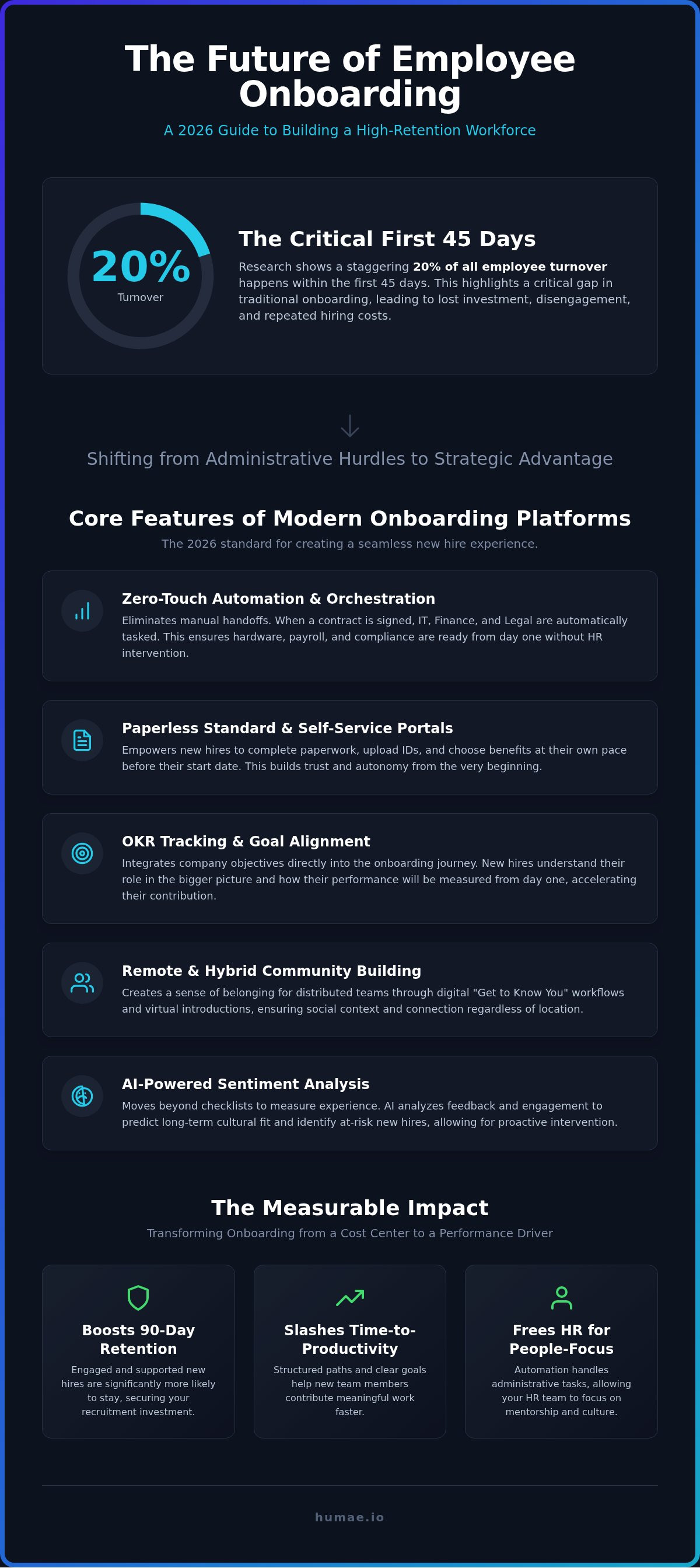
Research from the Work Institute shows that 20% of all employee turnover occurs within the first 45 days of employment. This staggering figure highlights a critical gap in how organizations welcome new talent. You probably know the feeling of drowning in repetitive paperwork and manual data entry while your newest team members sit idle, feeling lost or disengaged. It's a common frustration for HR leaders who want to focus on people but find themselves trapped in administrative hurdles.
Discover how to transform your new hire experience from a paperwork hurdle into a strategic performance advantage using AI-driven employee onboarding software. This 2026 guide explores how to build a seamless, paperless flow that helps new hires reach full productivity faster. We'll look at the latest trends in zero-touch automation and sentiment analysis that ensure higher 90-day retention rates. By the end of this article, you'll see how modern technology can finally put the human element back into workforce integration.
Humae | Back to Home
Connect with us on Facebook.
Key Takeaways
- Learn how to shift your focus from administrative checklists to performance intelligence that predicts long-term cultural fit.
- Discover the zero-touch automation standard for 2026 that eliminates manual handoffs between departments.
- Understand how modern employee onboarding software integrates OKR tracking to align new hires with company goals from their very first day.
- Identify the critical difference between basic administrative tools and integrated HRMS platforms that prioritize the employee experience.
- Gain actionable steps to audit your current manual processes and identify high-win automation opportunities without losing your company's unique culture.
Humae | Back to Home
Connect with us on Facebook.
Why Employee Onboarding Software Is Essential for High-Growth Teams
High growth teams don't have the luxury of slow starts. When a new hire signs an offer letter, the clock begins. If they feel ignored or overwhelmed during the weeks before their start date, they might "ghost" you for a competing offer. This is where employee onboarding software becomes your most valuable retention tool. It bridges the gap between the recruitment phase and actual workforce integration. It ensures that the excitement of the "yes" doesn't fade into the silence of administrative delays.
Modern platforms move beyond simple digital signatures. They focus on employee onboarding as a holistic journey of socialization and connection. By using modern HR infrastructure, companies can scale their culture without losing the personal touch that makes them unique. It turns a chaotic first week into a structured path toward success.
The Hidden ROI of a Structured Onboarding Experience
A well-designed onboarding process directly impacts your bottom line. Research from the Work Institute shows that 20% of employee turnover happens within the first 45 days. When you lose a new hire that early, you lose the entire recruitment investment plus the cost of starting the search again. Effective employee onboarding software boosts 90-day retention by making employees feel valued and prepared from day one. It also slashes the "time to productivity." Instead of spending weeks figuring out where documentation lives, new hires follow a guided path. They contribute faster. They feel more confident. Automation also prevents the administrative bottlenecks that often paralyze HR departments during hiring surges. It frees your team to focus on mentorship rather than chasing missing signatures.
Overcoming the Remote Onboarding Challenge
Distributed and hybrid teams face a unique hurdle: building belonging without a physical office. In 2026, onboarding isn't just a desk with a laptop; it's a digital experience. Modern software creates this sense of community through digital-first "Get to Know You" workflows. These aren't generic forms. They are interactive introductions that help new hires find their tribe within the organization. While the software handles compliance and hardware logistics automatically, the focus remains on the human connection. You ensure every new hire has the tools they need and the social context to use them. It makes the distance feel irrelevant.
Humae | Back to Home
Connect with us on Facebook.
Core Features of Modern Onboarding Platforms
In 2026, the best employee onboarding software functions as a central nervous system for your growing team. It moves beyond simple checklists to create a paperless standard where every document is signed, filed, and synced before the first coffee is poured. Self-service portals empower new hires to explore their new role at their own pace. They can upload IDs, choose benefits, and meet their team digitally before day one. This autonomy builds trust early. When these features integrate directly with your workforce management strategy, you create a single source of truth that prevents data silos across the organization. It ensures that the information gathered during hiring flows perfectly into the employee's long-term profile.
Intelligent Automation and Task Orchestration
True efficiency relies on orchestration, not just simple triggers. Modern platforms manage cross-departmental tasks automatically. When a contract is signed, IT receives a ticket for hardware provisioning, Finance sets up payroll, and Legal confirms compliance. You can use customizable templates to ensure a junior developer and a C-suite executive both get the specific support they need. Automated reminders keep the process moving without feeling like spam. It's about precision. It's about making sure no detail falls through the cracks during a period where the Importance of Onboarding Experience is at its highest. You can explore these intelligent features to see how they transform the first month of employment into a period of growth rather than stress.
AI and Sentiment Analysis in the First 30 Days
Remote work requires a new level of empathy. You can't always walk by a desk to see if a new hire looks confused or overwhelmed. AI-driven sentiment analysis solves this by using pulse surveys to gauge satisfaction in real time. These tools identify friction points in the journey automatically. If a new hire's engagement scores dip on day 14, the system flags it for the manager. Predictive analytics help leaders intervene before a minor misunderstanding turns into a resignation. This data-driven approach allows for a human-centric intervention exactly when it's needed most. It turns silent struggles into visible opportunities for connection, ensuring that every new team member feels heard even in a distributed environment.
Humae | Back to Home
Connect with us on Facebook.
Choosing the Right Onboarding Infrastructure: Experience vs. Administration
Selecting the right employee onboarding software requires a shift in perspective. Many leaders prioritize administrative efficiency, but the real value lies in the Employee Experience (EX). In 2026, mobile accessibility isn't a 'nice-to-have' feature. It's a non-negotiable standard. New hires expect to review their benefits or sign documents from their phones while at home or on the go. If your system forces them onto a legacy desktop interface, you're already signaling that your culture is behind the curve. You need to balance strict security compliance with an interface that feels as intuitive as a consumer app. A welcoming digital environment reduces anxiety and builds immediate brand loyalty.
Standalone Onboarding Tools vs. Integrated HR Platforms
Single-purpose apps often create data silos that haunt your HR team later. When onboarding data doesn't flow into your broader workforce management strategy, you end up with manual entry errors and fragmented employee records. A unified HRIS system provides a seamless transition from new hire to high-performer. This scalability is vital for startups. As you move toward enterprise status, having a single source of truth for every team member saves hundreds of hours in reporting and compliance audits. It's the difference between a temporary fix and a permanent foundation for your team's growth.
Evaluating the User Interface for New Hires
The first login sets the tone for the entire employment journey. A clean, distraction-free design signals that you value your employee's time and focus. Cluttered menus and cryptic labels create frustration during a period when the hire is already processing a massive amount of new information. Your digital welcome mat must be inclusive and accessible. This means ensuring the employee onboarding software works for everyone, regardless of their technical proficiency. An intuitive interface allows the new hire to focus on what matters: connecting with their new team and understanding their role. It removes the friction that often makes the first week feel like an uphill battle.
Humae | Back to Home
Connect with us on Facebook.
How to Implement Onboarding Software Without Disrupting Your Culture
Implementing employee onboarding software doesn't mean replacing your company's soul with an algorithm. It's actually the opposite. By automating the repetitive "busy work," you create more space for the human interactions that define your culture. The first step is a thorough audit of your current manual processes. Look for the friction points where paperwork slows down the excitement of a new start. These are your high-win automation targets. At the same time, identify your cultural "must-haves." If a personalized welcome video from the CEO is part of your identity, ensure the software supports and delivers that moment perfectly.
Train your managers to view the platform as a coaching asset rather than a monitoring device. When they can see a new hire's progress through their initial modules, they can tailor their 1:1 meetings to provide specific support. This turns the software into a bridge for deeper conversation. Finally, remember that implementation is an ongoing process. Gather feedback from your first cohort of hires and iterate. Their fresh perspective is the best data you have for refining the digital workflow.
Step 1: Mapping the New Hire Journey
Successful integration requires a clear roadmap from the moment the candidate says "Yes" until their 90th day. Map out every touchpoint. Distinguish clearly between administrative tasks, such as tax forms or policy reviews, and social connections like team introductions or buddy assignments. Setting clear milestones for the first week, month, and quarter helps new hires understand what success looks like. It removes the "lost at sea" feeling that often leads to early turnover. When the software tracks these milestones, it ensures no one misses a critical cultural beat.
Step 2: Technical Integration and Data Migration
Your onboarding experience should be a natural extension of your hiring process. Connect your Applicant Tracking System directly to your onboarding module to ensure a frictionless transition. This integration prevents the need for re-entering data, which reduces errors and saves time for both HR and the new hire. Focus on secure data transfer for sensitive payroll and benefits information. Don't forget to test the mobile experience thoroughly. In 2026, field workers and remote employees must be able to complete their entire integration from a smartphone. You can see how Humae streamlines this integration to keep your culture at the center of the experience.
Humae | Back to Home
Connect with us on Facebook.
Beyond the Welcome Email: Using AI and Intelligence with Humae
Onboarding shouldn't end when the paperwork is signed. While basic employee onboarding software often focuses solely on compliance, Humae treats the first day as the launchpad for a long term career. We move beyond the generic welcome email to provide a performance intelligence engine that predicts and supports growth. By positioning Humae as your central infrastructure, you ensure every new hire has a visionary partner guiding their integration. Real time analytics give managers the support they need to lead effectively from day one. It's about turning a technical tool into a higher level of user experience for everyone involved.
Immediate Goal Alignment with OKRs
Clarity is the greatest gift you can give a new employee. Humae integrates OKR tracking directly into the first week of employment. Instead of vague expectations, new hires see exactly how their role contributes to the mission. This alignment removes the guesswork and empowers team members to take ownership of their success immediately.
- Set "Quick Win" objectives to build immediate confidence and momentum.
- Connect individual tasks to the broader company goals for a deep sense of purpose.
- Visualize progress through intuitive analytics dashboards that make growth visible.
Continuous Feedback and Performance Intelligence
The traditional annual review is no longer enough for modern teams. High growth organizations need continuous, AI assisted feedback loops. Humae uses performance intelligence to shape career paths from the very beginning. Our platform encourages a growth mindset by making performance data transparent and supportive. Managers don't just monitor progress; they use the data to coach and mentor. This human centric AI approach identifies potential before it's even realized. It transforms employee onboarding software into a tool for community and shared success. When you treat onboarding as a performance start rather than a checklist, you build a foundation that lasts years, not just weeks.
Humae | Back to Home
Connect with us on Facebook.
The Future of Workforce Integration Starts Here
The transition from a candidate to a high-performing team member is the most critical phase of the employee lifecycle. By implementing modern employee onboarding software, you move beyond mere administrative checklists and embrace a strategic performance advantage. You've seen how a seamless, paperless flow saves time while AI-powered sentiment analysis ensures no new hire feels lost in a distributed world. It's time to stop treating the first week as a hurdle and start viewing it as a launchpad for long-term success.
Humae provides the integrated workforce management infrastructure needed to scale with confidence. Through real-time OKR tracking and a human-centric approach to performance intelligence, we help you align every new hire with your company mission from day one. Discover how Humae can transform your onboarding experience today and build a culture where everyone belongs. Your team's growth depends on how you welcome them; make it count. We're ready to be your visionary partner in this journey.
Humae | Back to Home
Connect with us on Facebook.
Frequently Asked Questions
What is employee onboarding software and how does it work?
Employee onboarding software is a digital platform that automates the transition from candidate to productive team member. It works by centralizing paperwork, training modules, and team introductions into a single, intuitive workflow. Instead of manual data entry, the system triggers tasks for IT and HR automatically. New hires use a self-service portal to sign documents and meet colleagues, ensuring a consistent and welcoming experience from their very first day.
Can onboarding software integrate with my current ATS or payroll provider?
Yes, modern platforms are designed to connect seamlessly with your existing Applicant Tracking System and payroll providers. Data flows directly from the signed offer letter into the onboarding module, eliminating the need for double entry. This integration ensures that employee records remain accurate across all systems. You should check if the software supports open APIs or has pre-built connectors for your specific workforce management infrastructure to ensure a smooth data flow.
How does AI improve the employee onboarding experience?
AI enhances the experience by personalizing the journey and providing real-time sentiment analysis. Task-specific agents orchestrate work behind the scenes, ensuring equipment and system access are ready before the start date. During the first 30 days, AI tools analyze pulse survey responses to detect signs of disengagement or confusion. This allows managers to provide proactive support exactly when it's needed, making the integration feel more human, responsive, and supportive.
Is onboarding software suitable for small startups or just large enterprises?
It is highly suitable for both, though the benefits scale differently. Startups use employee onboarding software to build a professional brand image and establish cultural standards early. Enterprises rely on it to manage high-volume hiring and maintain compliance across different regions. For smaller teams, automation prevents administrative bottlenecks. This allows founders to focus on growth and team connection rather than chasing missing signatures or manual data entry tasks.
How can software help with remote employee onboarding?
Software bridges the physical gap by creating a digital welcome mat for distributed teams. It manages hardware provisioning and secure document signing without requiring a physical presence. Digital buddy programs and virtual introductions ensure remote hires feel connected to the company culture immediately. By providing a structured roadmap of milestones and tasks, the platform ensures that remote employees never feel lost or ignored during their critical first week of work.
What are the key security features I should look for in HR software?
Security is paramount when handling sensitive employee data. Look for platforms that offer SOC 2 Type II compliance, data encryption both at rest and in transit, and multi-factor authentication. Role-based access control is also essential to ensure only authorized personnel can view payroll or personal identification details. In 2026, ensuring your software meets global data protection standards is a non-negotiable requirement for any modern workforce management infrastructure.
Does onboarding software help with I-9 and tax form compliance?
Yes, the software automates the collection and verification of essential documents like the Form I-9 and tax forms. As of August 2026, U.S. employers must use the Form I-9 edition dated "01/20/25" for all new hires. Modern employee onboarding software updates these forms automatically to ensure you stay compliant with the latest regulations. They also provide secure digital storage and audit trails, significantly reducing the risk of legal errors.
How long does it typically take to implement a new onboarding system?
Implementation time varies based on the complexity of your current data and the number of required integrations. A standard setup for a mid-sized team usually takes between two to four weeks. This period includes auditing your manual processes, migrating data from your ATS, and training managers on the new digital workflow. Starting with a clear map of your new hire journey can significantly speed up both the technical transition and cultural adoption.
Humae | Back to Home
Connect with us on Facebook.