Employee Goal Alignment: The 2026 Guide to Synchronizing Your Workforce
By Humae · 23 July 2026
employee goal alignment
Up to 20% of your payroll could be vanishing into thin air because of misaligned work. It's a staggering figure that highlights the hidden cost of a disconnected workforce in 2026. You likely feel this friction every day. Projects stall, resources scatter, and your best people lose interest when they can't see how their daily tasks fuel the bigger picture. Achieving true employee goal alignment isn't just about setting targets; it's about creating a shared heartbeat for your organization that resonates from the C-suite to the remote home office.
We know that keeping a hybrid team synchronized feels like a constant uphill battle. This guide will show you exactly how to bridge the gap between company strategy and individual execution using modern frameworks and AI-powered insights. We'll explore how real-time OKR tracking and performance intelligence can transform your corporate vision into a clear, actionable purpose for every team member. By the end, you'll have a roadmap to higher productivity and a culture where everyone moves in the same direction.
Discover how to empower your team at Humae. Connect with our vision on Facebook. Return to the Home Page.
Key Takeaways
- Modernize your strategy by replacing rigid, top-down hierarchies with dynamic synchronization between individual tasks and your company vision.
- Adopt the OKR framework as your primary tool for achieving consistent employee goal alignment across every level of the organization.
- Turn standard job descriptions into meaningful missions by connecting daily efforts to the overarching strategic purpose of the brand.
- Implement cascading goals and real-time communication rhythms to eliminate wasted resources and keep hybrid teams perfectly in sync.
- Use AI-powered performance intelligence and centralized directories to track progress and maintain cultural transparency effortlessly.
Explore the future of HR at Humae and follow our latest updates on Facebook. Navigate to Home Page.
The Strategic Necessity of Employee Goal Alignment in 2026
The 2026 business landscape demands more than just hard work; it requires a unified direction. Employee goal alignment is the intentional synchronization of every individual task with your organization's core vision. It acts as the connective tissue between high-level strategy and daily execution. Without it, your workforce is simply a collection of people working in parallel rather than a cohesive unit driving toward a singular destination. In modern workforce management, alignment is the difference between a team that survives and one that scales.
Traditional top-down alignment models are failing in today's decentralized workplace. Rigid hierarchies move too slowly for hybrid teams that need autonomy to stay productive. When orders take days to filter down from the C-suite, priorities often shift before they even reach the front line. The impact of this disconnect is measurable. Recent data indicates that mentions of misalignment in employee feedback have surged by 149%, while 64% of employees report experiencing department-level goal conflicts. This friction doesn't just slow you down; it stops innovation in its tracks.
The High Cost of Organizational Disconnect
Many organizations fall into the "activity versus results" trap. Teams stay busy, calendars stay full, and yet key objectives remain unmet. This happens because "busy" is often a mask for confused priorities. When employees don't have a clear North Star, they default to low-impact tasks that feel productive but don't move the needle. This inefficiency can waste up to 20% of your total payroll. Beyond the financial drain, misalignment is a primary driver of burnout. High performers become frustrated when their efforts don't seem to matter, leading to turnover and a visible dip in customer satisfaction as service quality becomes inconsistent.
Alignment as a Driver of Employee Engagement
There is a powerful psychological link between knowing "the why" and maintaining high levels of intrinsic motivation. When an employee sees exactly how their contribution helps the company succeed, their role transforms from a job into a mission. Transparency is the foundation of this trust. By making goals visible and interconnected, leadership proves that every person's work is valued. This clarity significantly reduces workplace anxiety and grievances. People feel more secure when they aren't guessing what success looks like. Clear alignment provides a sense of purpose that keeps talent loyal even in a competitive market.
Bridging the Gap with OKRs and Performance Intelligence
The annual review is a corporate fossil. In 2026, waiting twelve months to check if your team is on track is a recipe for organizational stagnation. High-performing companies have moved toward continuous performance intelligence. This shift is powered by the OKR (Objectives and Key Results) framework, which has become the gold standard for maintaining employee goal alignment. By integrating OKR tracking into daily workflows, businesses gain the agility to pivot when market conditions change. It turns strategy from a static document into a living, breathing conversation.
Real-time data is the heartbeat of this process. It allows leadership to see exactly where resources are flowing and identify misaligned departments before they drift too far. When everyone can see the data, accountability becomes a shared value rather than a top-down mandate. You can see how this infrastructure works in practice by exploring modern performance dashboards that centralize these insights for every stakeholder.
Objectives vs. Key Results: A Practical Breakdown
Objectives are your North Star. They should be qualitative, ambitious, and designed to inspire your team. An objective answers the question: "What is the most important thing we need to achieve?" Key Results are the objective proof of progress. These must be quantitative, measurable metrics. A common mistake in OKR implementation is the "set and forget" syndrome. OKRs fail when they are treated as a quarterly chore rather than a weekly guide. Avoid turning them into a simple to-do list; focus on the outcomes that truly matter to the business.
The Rise of AI-Powered Performance Analytics
This is where technology meets human empathy. AI doesn't just track percentages; it understands the context behind the numbers. Modern platforms use sentiment analysis to gauge team morale during high-stakes projects. If a department is hitting every Key Result but their sentiment scores are plummeting, the AI flags a burnout risk. This allows for proactive support before a resignation letter ever hits your desk. Predictive analytics can also spot "alignment drift" by identifying patterns where effort is slowly being diverted from core objectives, compromising your employee goal alignment. It provides a crystal ball for your workforce management, ensuring that every person stays connected to the mission.
The Psychology of Alignment: Purpose Meets Productivity
Humans have a fundamental need to feel that their efforts contribute to something larger than themselves. In the workplace, this manifests as a search for meaning. When employee goal alignment is absent, work feels like a series of disconnected chores. Productivity becomes a burden rather than an achievement. However, when you bridge the gap between a daily task and the company’s mission, you transform the employee experience. You aren't just asking someone to code a feature; you're asking them to build a tool that solves a real human problem. This shift in perspective is the most effective way to combat the "cog in the machine" syndrome that leads to quiet quitting.
A growth mindset thrives on feedback and visibility. When goals are transparent, employees don't have to guess if they are doing a good job. They can see their progress in real-time. This clarity reduces workplace anxiety and fosters a sense of agency. Addressing the common objection of "Why does my specific task matter?" requires more than a pep talk. it requires a structural connection between individual output and organizational outcomes. When people see the direct impact of their work, their internal drive replaces the need for constant external pressure.
Connecting Individual Meaning to Corporate Strategy
The "line of sight" is a critical psychological concept. It represents the clear path from an individual's desk to the organization's ultimate success. High-growth startups often use this clarity to preserve their culture during rapid scaling. When a team expands, the original sense of shared purpose can easily dilute. Effective alignment ensures that even as the company grows, every hire understands how their personal career goals mesh with the corporate strategy. This balance creates a partnership where both the individual and the business win together.
Transparency as a Cultural Catalyst
Silos are the enemies of mental well-being. They create a culture of suspicion and breed "us versus them" mentalities. Shared visibility through open analytics dashboards acts as a cultural catalyst. When everyone can see team goals and progress, accountability shifts from a management threat to a collective responsibility. Transparency allows for the celebration of small wins that might otherwise go unnoticed. These micro-successes build the psychological momentum necessary to tackle massive projects, fostering a resilient workforce that stays committed through challenges.
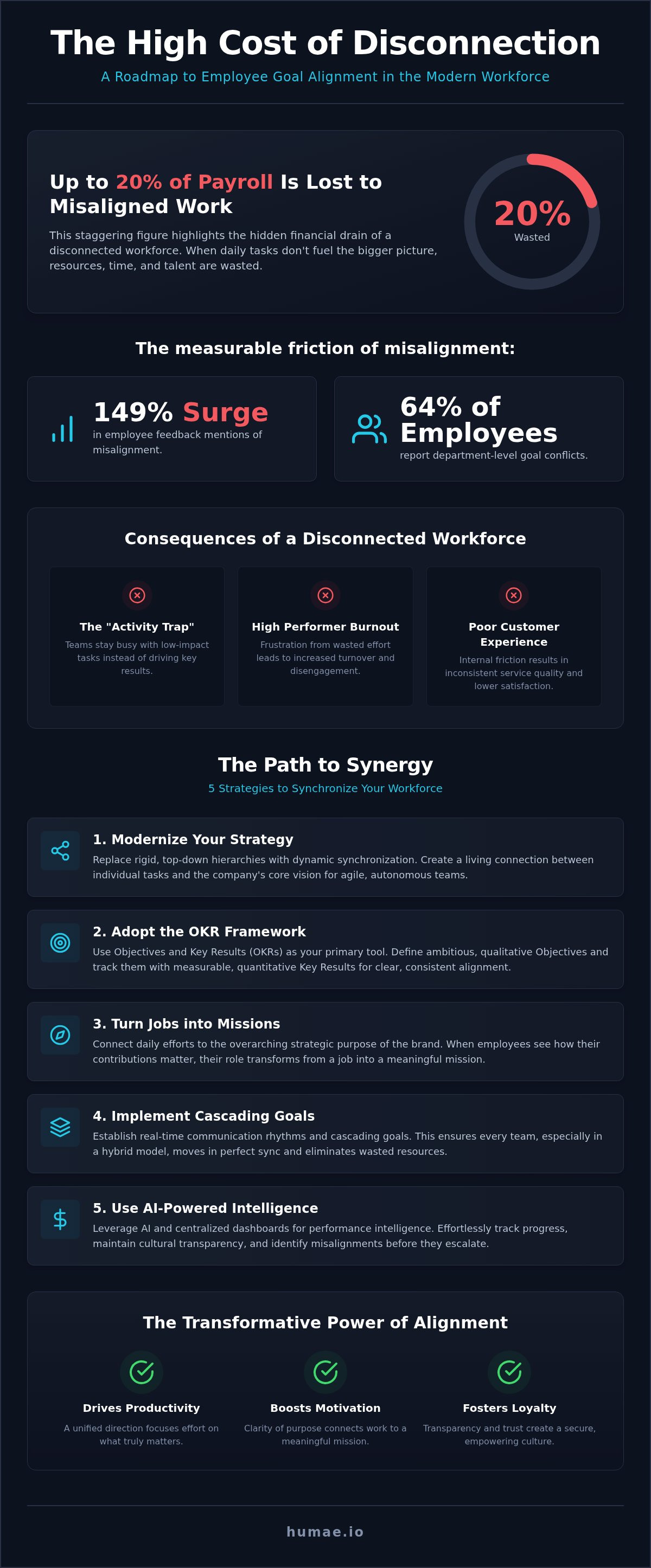
5 Strategies to Synchronize Your Workforce Today
Implementation is where most strategic visions go to die. Setting a direction is easy, but keeping hundreds of people moving toward it every day is the real challenge. Achieving sustainable employee goal alignment requires more than a quarterly slide deck. It demands a deliberate system that translates high-level ambition into daily action. By shifting from static planning to a dynamic synchronization model, you can eliminate the friction that slows down high-growth organizations.
Start by empowering your managers with the right workforce management infrastructure. Research shows that managers are responsible for 70% of the variance in team engagement. Most managers don't receive formal training until over a decade after they start leading people. You can close this gap by providing them with tools that automate the administrative side of alignment. This allows them to focus on coaching rather than chasing status updates. Pair this with a unified communication rhythm, where goal progress is discussed weekly, not just during annual reviews.
The Cascading Goals Framework
Alignment begins with a single North Star metric for the entire company. This top-level objective must then cascade down through every department. For example, if the corporate goal is to increase market share, the product team might focus on feature parity, while sales targets specific high-value segments. This vertical alignment ensures everyone pulls in the same direction. However, don't ignore horizontal alignment. Your marketing and sales goals must complement each other to avoid internal conflicts that waste resources and frustrate high performers.
Mastering the Continuous Feedback Loop
Static check-ins are too slow for the 2026 business cycle. You need continuous feedback loops that allow for real-time course correction. This involves providing constructive criticism that focuses on future performance rather than past mistakes. Use 1-on-1 meetings to discuss how individual tasks currently support the broader mission. Modern software can automate reminders and progress updates, ensuring that goals stay top-of-mind without adding to the manager's workload. Finally, audit your alignment regularly through pulse surveys to catch "alignment drift" before it impacts your bottom line.
Ready to turn your strategy into a synchronized mission? Explore the Humae platform to see how our OKR tracking and performance intelligence can transform your workforce today.
Leveraging Humae for Seamless Organizational Synergy
Strategy is only as effective as the tools used to implement it. In a world of decentralized teams and rapid shifts, your workforce needs a single source of truth to remain synchronized. Humae provides this infrastructure by centralizing your employee directory and goal tracking within one intuitive interface. When your data is fragmented across spreadsheets and chat apps, confusion is inevitable. By bringing these elements together, employee goal alignment stops being a manual chore and becomes a natural part of the daily workflow. This visibility ensures that every individual, regardless of their location, understands their role in the company's success.
Simplifying workforce management requires more than just listing tasks. It requires actionable analytics that tell a story. Humae transforms raw performance data into clear insights, allowing leadership to make informed decisions in real-time. Whether you are managing a small team or a global enterprise, our platform provides the clarity needed to keep everyone focused on what truly matters. We remove the guesswork from organizational growth, providing the structural support your culture needs to thrive.
AI-Driven Performance Insights
Data without context is just noise. Humae uses AI to highlight alignment gaps automatically, identifying where team efforts might be drifting away from core objectives. Our platform doesn't just track numbers; it utilizes AI-driven sentiment analysis to provide deeper performance intelligence. By gauging team morale alongside OKR progress, you can spot burnout risks or engagement drops before they impact your bottom line. This intelligent automation reduces the administrative burden on your HR team, turning complex data sets into actionable management strategies that foster a supportive and high-performing environment.
Building the Infrastructure for Growth
Modern startups and scaling enterprises face the "scaling cliff," where informal communication begins to fail as the team grows. Humae is the preferred choice for organizations navigating this transition because it offers a holistic view of productivity. By integrating time-off management with real-time OKR tracking, managers can plan resources more effectively without losing sight of long-term goals. This comprehensive approach is essential for maintaining employee goal alignment during periods of rapid change. Getting started with Humae is the first step toward transforming your team culture into a synchronized mission where every person is empowered to succeed.
Transform Your Strategy into a Shared Mission
Synchronizing your workforce requires more than a vision; it needs a modern infrastructure that bridges the gap between leadership and the front line. We've explored how transitioning from rigid hierarchies to dynamic OKR frameworks can save your organization from the "activity versus results" trap. By prioritizing employee goal alignment, you turn individual contributions into a collective force for innovation that drives measurable growth. This shift ensures that effort isn't just expended, but directed toward the outcomes that truly define success.
Purpose-driven teams don't just happen by accident. They're built through transparency, real-time feedback, and a deep understanding of team sentiment. With the right tools, you can ensure that every task performed by your hybrid or remote staff directly fuels your primary corporate objectives while reducing the risk of burnout. This holistic approach to workforce management is what separates market leaders from those left behind in the digital age. It's about moving from a culture of monitoring to a culture of empowerment.
Take the next step in your organizational evolution. Optimize your team performance with Humae AI. Experience the power of real-time OKR tracking and AI-powered sentiment analysis used by modern teams worldwide. Let's build a future where every employee feels their work truly matters and every goal is within reach. Your journey toward a fully synchronized workforce starts today.
Frequently Asked Questions
What is the difference between goal alignment and goal setting?
Goal setting is the process of establishing specific targets for a team or individual to achieve within a set timeframe. Employee goal alignment is the strategic process of ensuring those individual targets directly support the organization's overarching vision. While setting goals defines what needs to be done, alignment explains why it matters to the company's success and how every task fits into the bigger picture.
How often should we review employee goal alignment?
You should review alignment continuously rather than waiting for traditional annual appraisals. High-performing teams in 2026 use weekly check-ins and monthly progress audits to stay synchronized. This frequent rhythm allows for immediate course correction when priorities shift. It ensures that your valuable resources aren't wasted on outdated objectives that no longer serve the company's primary strategy.
Can goal alignment work for remote and hybrid teams?
Goal alignment is actually more critical for remote and hybrid teams where informal office communication is absent. It provides a shared digital North Star that keeps dispersed employees focused on the same outcomes. Without clear alignment, remote workers often feel isolated or unsure if their specific tasks contribute to the company's broader mission, leading to lower engagement and wasted effort.
What are the best tools for tracking employee goal alignment in 2026?
The most effective tools in 2026 integrate OKR tracking, performance intelligence, and centralized employee directories into a single interface. Humae is a leading platform that combines these features with AI-driven insights to make alignment effortless. Modern organizations prefer these unified systems because they eliminate data silos and provide real-time visibility into every team's progress across the entire organization.
How do I handle an employee whose personal goals do not align with the company?
Start with an open coaching conversation to find common ground between the employee's professional ambitions and the company's needs. Often, a simple adjustment in project focus or a shift in responsibilities can create a win-win scenario. If the gap remains too large, it might indicate a role mismatch that requires a more significant move to ensure the individual's growth doesn't conflict with organizational synergy.
Does employee goal alignment improve retention rates?
Clear employee goal alignment is a primary driver of retention because it gives daily work a sense of purpose. When people understand how their efforts drive the company forward, they feel more valued and less prone to burnout. Employees who see a clear line of sight between their tasks and the corporate vision are significantly more likely to stay committed to the organization long-term.
How do OKRs help with organizational alignment?
OKRs provide a transparent framework that connects high-level objectives with measurable key results at every level of the business. They break down complex corporate strategies into actionable pieces that teams can track independently. This transparency ensures that everyone knows exactly what success looks like and how their specific contributions move the needle for the entire organization in real-time.
What is the role of AI in employee performance intelligence?
AI plays a vital role in performance intelligence by identifying patterns and alignment gaps that human managers might miss. It can analyze team sentiment during high-stakes projects and predict potential burnout before it happens. This allows leadership to intervene proactively and keep the workforce synchronized through data-driven strategies rather than relying on guesswork or outdated spreadsheets.