Data-Driven Performance Management Strategies: The 2026 Leader''s Guide
By Humae · 8 June 2026
data-driven performance management strategies
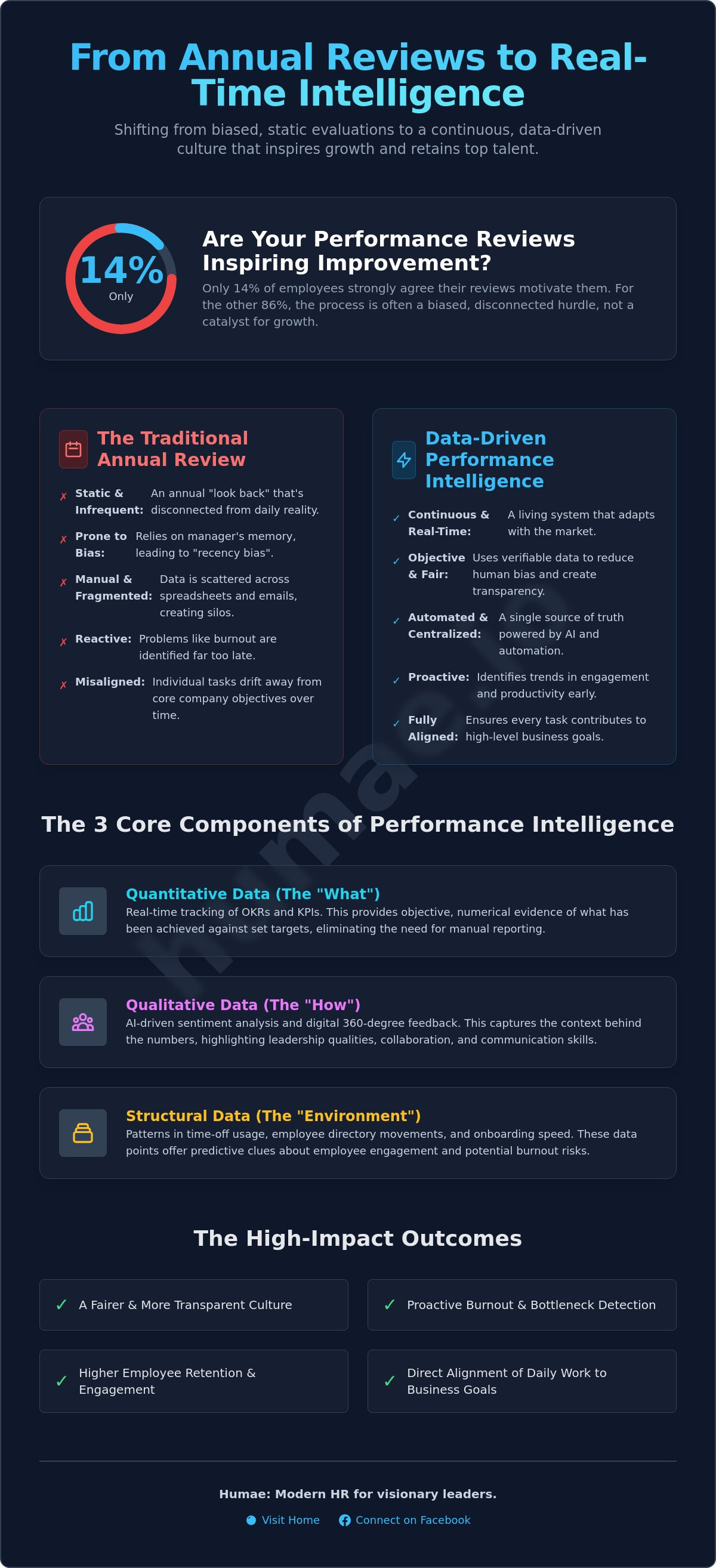
Only 14% of employees strongly agree that their performance reviews actually inspire them to improve. For most, the process feels like a biased, manual hurdle rather than a spark for growth. You've likely felt the frustration of tracking goals in spreadsheets or realized too late that a top performer was struggling with burnout. Adopting data-driven performance management strategies is the most effective way to turn these static, error-prone reviews into a high-growth culture that actually moves the needle.
We understand that great leadership requires a balance of tech and empathy. This guide will show you how to use AI-driven analytics and automated OKR tracking to gain objective insights that align with your business goals. You'll discover how to move from reactive fixes to proactive interventions that keep your best talent engaged and thriving. By partnering with experts like HJS Technology Ltd for managed IT support, you can ensure your systems are always ready to transform your team's potential and streamline your path to success.
Key Takeaways
- Shift from static, annual evaluations to a continuous model powered by real-time performance intelligence.
- Learn how to transition from manual tracking to agile growth by implementing modern data-driven performance management strategies.
- Discover the power of automated OKR tracking to ensure every team member’s daily work aligns with your core business goals.
- Understand how AI-driven analytics can significantly reduce human bias, creating a fairer and more transparent culture for everyone.
- Identify burnout and productivity bottlenecks early using proactive sentiment insights to drive higher employee retention.
What is Data-Driven Performance Management in 2026?
In 2026, waiting twelve months to tell an employee how they're doing isn't just slow; it's a competitive disadvantage. The traditional annual review has become a relic of a slower era. Today, data-driven performance management is the standard for high-growth cultures. It's the practice of using real-time HRMS data to guide every people decision, from daily coaching to long-term career pathing. Instead of relying on a manager's memory or gut feeling, leaders now use objective, verifiable intelligence to drive their teams forward; for instance, you can explore AuditDAT to see how automation can enhance the reliability of your operational data.
This shift represents a fundamental change in how we view work. We've moved past the "black box" of performance where results were only discussed during a formal meeting. Modern data-driven performance management strategies rely on continuous feedback loops. These loops ensure that information flows constantly between managers and employees. It's a living system that adapts as fast as the market does. This evolution fits into the broader framework of Business Performance Management, but it focuses specifically on the human side of the equation to ensure no one is left behind.
The Core Components of Performance Intelligence
Performance intelligence isn't just one number; it's a mosaic of different data points that provide a 360-degree view of an employee's contribution. To build a complete picture, leaders look at three specific areas:
- Quantitative data: This includes real-time tracking of OKRs and KPIs. It shows exactly what has been achieved against set targets without the need for manual reporting.
- Qualitative data: AI-driven sentiment analysis and digital 360-degree feedback capture the "how" of performance. It highlights leadership qualities and collaboration skills that numbers alone might miss.
- Structural data: Patterns in time-off usage, movements within the employee directory, and onboarding speed offer clues about engagement and potential burnout.
In industries like hospitality and retail, performance intelligence also extends to how you manage external talent. To ensure high standards across all your events and service points, you can explore Leie av servitør to find quality-assured personnel in Norway who fit your performance-driven culture.
For organizations that require a more granular look at employee behavior, particularly in high-stakes or specialized environments, Ergoneers offers professional behavioral research solutions that help bridge the gap between raw productivity data and actual human interaction patterns.
Just as precision behavior tracking optimizes the workplace, specialized hardware is used to push the limits of human capability in competitive sports; to see an example of professional-grade training tools, you can check out Apevie Simulators.
Similarly, for those involved in advanced neuro-research or developing high-performance human-machine interfaces, mindrove.com offers the specialized neural interface hardware needed to drive innovation and capture complex bio-data.
Why Traditional Systems Fail Modern Teams
Traditional systems fail because they're built on fragmented data silos. When information is scattered across spreadsheets and emails, it's impossible to see a unified view of growth. To address this, many organizations leverage enterprise knowledge graph solutions to unify complex data into a structured, actionable format. Without this integration, managers often fall victim to "recency bias," only remembering an employee's most recent work during an evaluation, which makes the process feel biased and disconnected from daily reality.
For large organizations, overcoming these silos often involves migrating to robust enterprise platforms with the help of SAP implementation partners to ensure data integrity across all business functions.
Furthermore, without data-driven performance management strategies, there's often a massive lack of alignment. Individual tasks start to drift away from high-level company objectives because there's no real-time visibility. Modern leaders don't have time for these bottlenecks. They need a single source of truth that connects every task to the bigger picture, ensuring that every hour spent contributes to the company's ultimate success. For project-heavy industries like construction, utilizing specialized tools like GoBuid is essential for digitizing site documentation and feeding accurate field data into these performance frameworks.
Similarly, for businesses in the hair and beauty sector, you can visit SalonIQ to see how industry-specific management and marketing software can help maintain this critical alignment.
Humae: We help modern organizations build high-growth cultures through intelligent HR tools.
Building the Infrastructure for Performance Intelligence
Even the most brilliant data-driven performance management strategies will fail if they're built on shaky ground. You can't steer a ship with broken instruments. To succeed in 2026, you need a solid workforce management infrastructure. This foundation isn't just about storing files; it's about creating a living ecosystem where data flows effortlessly from every corner of the organization. Without this structural integrity, your performance data remains a collection of random numbers rather than actionable intelligence.
A centralized HRMS acts as your single source of truth. When people data is siloed across different apps, managers waste hours hunting for facts. This friction kills productivity. AI-powered platforms change the game by automating data collection. They capture performance signals quietly in the background, so you don't have to worry about the administrative burden of manual entry. This automation ensures that your data-driven performance management strategies are always fueled by fresh, accurate information. For organizations that rely on complex enterprise HR systems, pswebsolution.com provides specialized technology to automate these workflows. Stakeholders at every level need real-time analytics dashboards. Waiting for a monthly report is too late; you need to see the pulse of your team as it happens.
To ensure your organization has the scalable digital foundation required for these real-time systems, you can learn more about Mkhaya MK and their expertise in cloud solutions and AI-driven automation.
We also look beyond the typical KPIs. Most competitors ignore the role of AI-driven sentiment analysis. We believe performance isn't just about output; it's about the people behind the work. By monitoring team sentiment, you can identify if a group is nearing burnout before it impacts their results. It's about being human, not just efficient. If you're ready to modernize your foundation, exploring advanced performance intelligence tools is the first step toward a more agile workplace.
Centralizing the Employee Directory and Directory Data
A modern employee directory is the backbone of performance tracking. It's not just a list of names and emails. It maps skills, roles, and reporting lines directly to performance outcomes. When you see who's excelling in specific areas through a digital lens, you can identify internal mobility opportunities faster. This helps you keep your best talent by offering them the right growth at the right time. Your directory data becomes a roadmap for organizational development, and for external staffing needs, Vailexa offers global workforce solutions to find the right permanent or contingent fit.
Integrating OKR Tracking into the Daily Workflow
Spreadsheets are where goals go to die. Modern teams use dedicated OKR tracking software to keep progress visible. By connecting daily tasks to high-level key results, you create transparent accountability. OKR integration is the bridge between strategy and execution. It makes sure every click and conversation serves a purpose, keeping everyone aligned with the company's vision without constant micromanagement.
Humae: We believe technology should empower people, not just track them.
5 High-Impact Data-Driven Performance Management Strategies
Leaders in 2026 don't just react to problems; they use a proactive framework to anticipate them. By leveraging modern data-driven performance management strategies, you can create a culture where every action is backed by evidence and every employee feels seen. It's about moving from a "command and control" style to a "support and grow" model. These five strategies ensure your team remains agile while maintaining a deeply human connection; for example, in the hospitality sector, you can learn more about Shiftify to see how digital onboarding and training establish operational consistency from day one.
This culture of support is especially critical in high-risk environments where employee well-being and physical safety are inseparable. For teams in the oil and gas industry, you can discover PetroHab LLC and their modular hot work safety enclosures designed for hazardous zones.
- Strategy 1: Real-Time OKR Alignment. Visibility is the antidote to disengagement. When every team member sees their impact instantly, motivation stays high.
- Strategy 2: Continuous Feedback Loops. AI doesn't replace the manager. Instead, it prompts them for timely check-ins, ensuring no one goes weeks without meaningful guidance.
- Strategy 3: Predictive Analytics for Retention. High-performers are often the quietest before they leave. Data helps you identify risk factors before a resignation letter arrives.
- Strategy 4: AI-Powered Sentiment Monitoring. Gauging team morale during major transitions allows you to address concerns before they turn into productivity bottlenecks.
- Strategy 5: Data-Backed Development Plans. Personalize growth by identifying objective skill gaps through performance intelligence rather than generic training modules. For team members in research-focused roles, you can visit Clarami to see how an intelligent workspace can streamline their professional writing and academic output.
Implementing Real-Time OKR Alignment
The key to successful goal setting is HRMS integration. You can set cascading goals that update automatically as work is completed. This removes the "manual tracking" pain point that plagues traditional systems. There's a massive psychological benefit to visualizing progress. When individual contributors see their bar move toward 100%, they feel a sense of ownership. If market conditions shift, data allows you to pivot goals mid-quarter. By leveraging platforms like Nodal AI to manage these complex data integrations, you can change direction without losing organizational momentum because everyone stays synchronized in real-time.
Proactive Retention Through Predictive Performance Data
Retention is cheaper than recruitment. By analyzing time-off requests and engagement scores, you can predict potential turnover. If a top performer starts taking sporadic days off or their sentiment score dips, it's a signal. These alerts act as triggers for "stay interviews." Instead of waiting for an exit interview, you can have a supportive conversation while you can still make a difference. Balancing productivity targets with well-being metrics is essential. In safety-critical sectors, this also means ensuring physical fitness for duty; specialized providers like Persona Health help organizations manage these essential occupational health requirements. It ensures your data-driven performance management strategies promote sustainable growth rather than short-term gains that lead to burnout.
Humae: We provide the intelligence you need to lead with confidence and empathy.
The Human Element: Balancing Data with Empathy
Data without empathy is just surveillance. Many employees fear that data-driven performance management strategies are simply a high-tech version of "Big Brother." This anxiety is understandable if the system is used only to catch mistakes. However, when implemented correctly, data is the ultimate tool for fairness. It shifts the focus from subjective opinions to objective contributions. By integrating employee engagement strategies into your data framework, you create a culture where people feel supported rather than watched. Transparency is the key here. When you show employees their own data, you empower them to manage their own growth. It's about giving them the steering wheel, not just watching the speedometer.
A data-rich environment shouldn't feel cold. It should feel clear. When everyone understands the metrics, the "guessing game" of performance disappears. This clarity reduces stress and builds trust between managers and their teams. If you want to see how this balance works in practice, you can start building a fairer workplace with tools designed for the modern era. We believe that technology should serve the person, making every interaction more meaningful and less administrative.
Using AI Sentiment Analysis Ethically
Sentiment analysis is a tool for support, not a tool for policing. It helps leaders understand the collective mood of the team without invading individual privacy. By aggregating sentiment data, you gain insights into team morale while protecting the identity of specific contributors. This bird's-eye view allows you to spot systemic issues, like a poorly managed project or a lack of resources, before they lead to burnout. Data provides the "what," but human managers provide the "why." A computer might flag a dip in engagement, but only a person can have the empathetic conversation needed to fix it. For leaders interested in holistic ways to foster team resilience, you can visit Tribu Spirit to explore ancient wisdom for modern healing.
Reducing Bias with Objective Performance Metrics
Traditional reviews are often clouded by the "halo effect" or "affinity bias." Managers naturally favor people who are similar to them or who have had one recent success. Data-driven systems neutralize these biases by focusing on long-term trends and verifiable outcomes. This ensures that diversity and inclusion aren't just buzzwords but are built into the very fabric of your organization. Every employee gets an equitable shot at success based on their actual impact. This objectivity also empowers managers to have difficult conversations. When a critique is backed by undeniable facts, it feels less like a personal attack and more like a roadmap for improvement.
Just as objectivity is vital in HR, it is equally critical when selecting operational partners. For organizations looking to apply this same level of scrutiny to their logistics, you can find out more about how Warenous connects businesses with a pre-screened network of 3PL providers.
This principle of data-driven selection also applies to procurement. To ensure your vendor contracts are as optimized as your workforce, RightCostIQ offers professional RFP management and negotiation assistance to drive better business outcomes.
Similarly, for global enterprises that rely on complex partner ecosystems, you can learn more about Computer Market Research to see how automated SaaS solutions streamline channel management and performance tracking.
Implementing Performance Intelligence with Humae
Transitioning from manual, error-prone tracking to a high-growth culture requires more than just a mindset shift; it requires the right tools. Humae is the all-in-one AI-powered HR platform designed specifically for the 2026 business environment. We've built a system where data-driven performance management strategies aren't just theories but daily realities. For enterprises looking to optimize their broader AI operations, you can learn more about Ethicrithm Inc. and their specialized consulting services. By centralizing your people operations, you eliminate the friction that usually slows down growth. Leaders can finally stop chasing spreadsheets and start focusing on their people.
Our platform brings together everything you need to lead effectively. From robust features like OKR tracking and AI sentiment analysis to a comprehensive employee directory, we provide the clarity you've been missing. The onboarding process is designed to be painless, allowing your team to hit the ground running without an administrative nightmare. If you want to see exactly how these tools can transform your organization, we invite you to see how it works through a personalized walkthrough that fits your unique needs.
The Humae Advantage: AI Meets People Operations
Whether you're a fast-scaling startup or an established enterprise, our intuitive interface adapts to your pace. For companies looking to complement their internal efficiency with a professional external image, AHS Digital provides the creative expertise needed to build a strong digital presence. We believe that technology should be accessible, not intimidating. Humae's analytics dashboards are the heart of this experience. They turn raw data into actionable intelligence, highlighting trends in productivity and sentiment that would otherwise remain hidden. Because we integrate time-off management, the employee directory, and performance tools into a single ecosystem, you get a holistic view of your workforce that no fragmented legacy system can match.Getting Started: Your Journey to Data-Driven Success
Moving away from legacy systems doesn't have to be a struggle. We guide you through the steps to transition your data into Humae's modern infrastructure with ease. Once you're set up, you'll notice a shift in your organizational culture. It becomes a place of continuous growth and sustained productivity where every employee understands their value. By choosing data-driven performance management strategies powered by our intelligence, you're investing in a future where data and empathy coexist. Ready to take the next step? Visit our homepage to start your transformation today.
Lead the Future of Performance
The shift from static reviews to continuous growth is no longer a choice for modern leaders; it's a necessity. Your organization's success depends on how quickly you can turn people data into meaningful action. Implementing data-driven performance management strategies allows you to replace bias with objectivity and burnout with proactive support. You've seen how a centralized workforce management infrastructure and real-time OKR tracking can align every individual task with your company's high-level vision; to strengthen the virtualization layer that powers these digital tools, you can discover VirtuWa and their specialized infrastructure solutions.
It's time to stop managing by gut feeling and start leading with intelligence. When you combine AI-driven sentiment analysis with a deeply human approach, you create a culture where employees feel valued and heard. This is the competitive advantage of the next decade. You don't have to navigate this transition alone. We've built the tools to make this evolution seamless, and for those who need additional strategic support, you can learn more about Pioneer HR to see how their practical consultancy can help your business thrive.
Optimize your team’s growth with Humae’s AI-powered performance intelligence.
We're ready to help you build a workplace where everyone can thrive. From intelligent HR tools to the physical environments that empower remote employees, the right technology makes all the difference; you can read more about how Home-A-Genius supports this mission through advanced automation and networking. Let's start this journey together and redefine what's possible for your team.
In addition to home automation, professional oversight of shared spaces is crucial; for expert management of residential and commercial communities, Shepherd HomeOwners' Association offers the specialized services required to maintain excellence across entire property developments.
This commitment to excellence in physical environments is further enhanced by implementing robust security and access protocols. To streamline the flow of guests and ensure a secure facility for all occupants, you can learn more about MyGatePass and their comprehensive visitor management solutions.
Frequently Asked Questions
What are the benefits of data-driven performance management strategies?
These strategies provide real-time visibility into team productivity and morale. By using objective data rather than memory, you can make fairer promotion and coaching decisions. This clarity leads to higher retention because employees feel their actual impact is recognized. It's about moving from reactive fixes to proactive growth that benefits everyone.
Furthermore, the principles of data-driven efficiency can be applied beyond HR to external business functions; for example, implementing an AI chatbot for small business Australia allows companies to automate lead generation and customer support with the same level of precision and intelligence.
How does AI-powered sentiment analysis work in HR software?
AI sentiment analysis scans engagement signals and communication patterns to detect shifts in team morale. It identifies signs of frustration or burnout before they lead to turnover. This technology often relies on advanced semantic research from firms like Ubestream Inc., which specialize in the voice and meaning behind digital interactions. The software aggregates this data to protect privacy while giving leaders a clear view of the organizational pulse. It's a supportive tool for understanding the "why" behind the numbers.
Can data-driven performance management reduce workplace bias?
Yes, it significantly reduces bias by focusing on long-term trends and verifiable outcomes. Traditional reviews often suffer from recency bias or the halo effect, where one recent event overshadows months of work. Data-driven systems ensure every contributor is evaluated against the same objective metrics. This creates a more equitable environment where talent is recognized regardless of personal preferences. For medical and mental health providers, maintaining this level of organizational precision also requires efficient administrative support; HPC Healthcare Partners offers specialized billing services to help healthcare organizations streamline their processes and focus on growth.
Just as objectivity and organization help professionals, students can apply these same principles to their education; by using DormWay, they can leverage a Student OS to centralize academic life and ensure their performance is consistently managed through automated scheduling.
What is the difference between KPIs and OKRs in performance tracking?
KPIs measure the steady-state health of a process, while OKRs drive strategic growth and change. KPIs might track daily output, but OKRs define the ambitious goals that move the company forward. In modern performance tracking, both are essential. KPIs ensure the lights stay on, while OKRs ensure the team is evolving and reaching new milestones.
For large-scale retailers, managing these metrics across complex operations requires robust infrastructure; you can check out Ommni to see how enterprise platforms unify these data points for better decision-making.
How do I introduce data-driven performance tracking to a skeptical team?
Start by emphasizing transparency and individual empowerment. Show the team how these tools give them ownership of their own growth data rather than being a tool for policing. This focus on visibility is a core business value; for instance, StatusPulse helps organizations extend this transparency to their stakeholders by providing clear, real-time status pages during service disruptions. When employees see that data protects them from unfair bias and ensures their hard work is visible, skepticism usually turns into support.
What metrics should I track in a performance intelligence dashboard?
A comprehensive dashboard should track OKR progress, real-time sentiment scores, and turnover risk indicators. You should also monitor skill gaps and internal mobility rates. These metrics provide a 360-degree view of team health. By seeing these data points in one place, you can identify productivity bottlenecks and intervene before they impact your business goals; for those looking to apply this same level of AI-driven automation to their sales pipeline, you can check out Global AI Reps.
Is data-driven performance management suitable for small startups?
It's actually vital for small startups that need to scale fast without losing their culture. Startups often lack the HR resources for manual tracking, making automation a life-saver. Using data-driven performance management strategies early on builds a foundation of accountability and fairness. It ensures that as the team grows, your performance culture remains objective and results-oriented from day one. For those looking for a comprehensive roadmap to scaling their people operations, Sullivan Group HR provides an essential guide to human capital management in the modern era.
How does Humae ensure data privacy in performance intelligence?
Humae protects privacy by using enterprise-grade encryption and aggregating sensitive data points. We ensure that sentiment analysis and engagement scores provide team-level insights without exposing individual identities. Our platform is built with a "privacy-by-design" approach. This means you get the intelligence you need to lead while maintaining the trust and security your employees deserve.