Creating Employee Development Plans: The 2026 Infrastructure Guide
By Humae · 9 September 2026
creating employee development plans
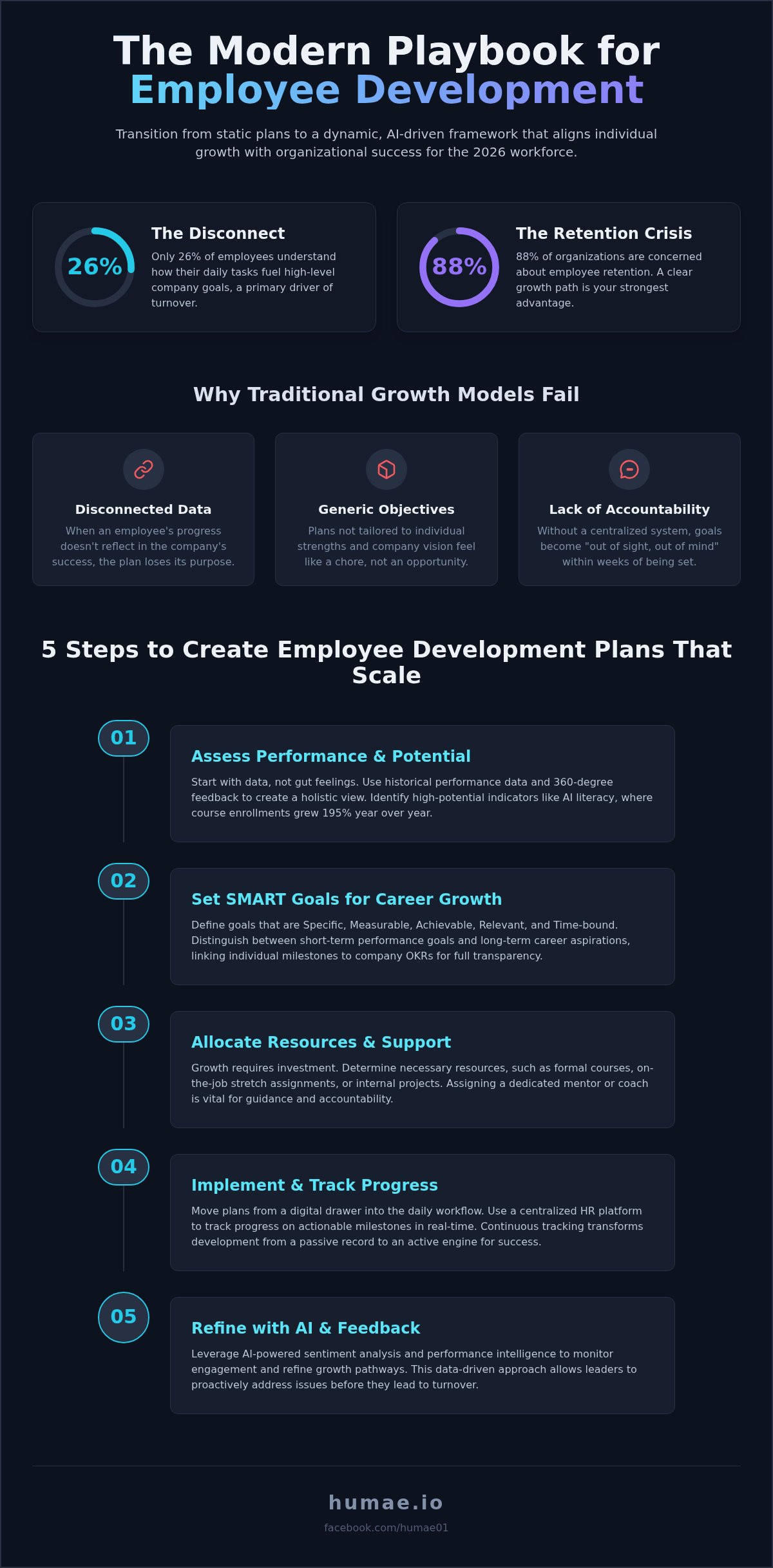
Did you know that only 26% of employees actually understand how their daily tasks fuel your company's high-level goals? This disconnect is a primary driver of high turnover. When people don't see a clear path for growth that aligns with the business, they look for it elsewhere. You've likely felt the frustration of managing development through static files or struggling to track progress across a growing team. Creating employee development plans shouldn't be a manual, "set it and forget it" chore that lives in a digital drawer.
We believe growth is a continuous journey, not a quarterly event. In this guide, you'll learn how to build a scalable, AI-driven infrastructure that turns individual aspirations into organizational results. We'll explore how to bridge the gap between talent and company OKRs while automating the heavy lifting through modern HR software. By the end, you'll have a repeatable framework designed for the 2026 workforce, where every career milestone is visible and every team member is empowered to succeed. It's time to move beyond simple documents and start building the future of your talent strategy.
Humae | learn more | Home | Facebook
Key Takeaways
- Transition from static files to dynamic development frameworks that adapt to your team's real-time needs.
- Learn a repeatable five-step process for creating employee development plans that scale across your entire organization.
- Align individual career milestones with company OKRs to ensure every team member contributes to high-level success.
- Utilize AI-powered sentiment analysis to monitor engagement and refine growth pathways before turnover occurs.
- Centralize workforce data in a modern HR platform to automate administrative tasks and focus on human connections.
What is an Employee Development Plan in the AI Era?
An Employee Development Plan (EDP) is no longer a document you sign once and forget in a digital drawer. By 2026, it has evolved into a strategic framework for professional growth that lives and breathes within your company’s digital infrastructure. Traditional methods relied on annual guesses. Modern leaders use real-time data to guide their teams instead. Creating employee development plans today requires a shift toward agility, where progress is tracked continuously rather than during a single, stressful meeting at the end of the year.
This evolution is driven by the need for performance intelligence. Instead of looking backward at what happened six months ago, you’re looking at what’s happening right now. This approach transforms development into a powerful retention tool. Since 88% of organizations are currently concerned about employee retention, creating a clear growth path is your strongest competitive advantage. When employees see a data-backed future, they stay. They feel seen, supported, and invested in the collective mission. It's about moving from a passive record to an active engine for success.
The Core Components of a Modern EDP
A successful EDP in the AI era focuses on three critical pillars. First, a deep skill gap analysis identifies the distance between an employee's current capabilities and the requirements of their next role. This isn't a manual checklist; it's a dynamic assessment powered by workforce data. Second, professional goals must balance personal ambition with organizational needs. This ensures that Career development isn't just a side project but a core business driver. Finally, actionable milestones provide the rhythm. These aren't vague hopes. They are measurable, time-bound steps that keep everyone moving forward through clear performance intelligence metrics.
Why Traditional Growth Models Fail
Most old-school plans fail because they lack accountability. Without a centralized system, goals become "out of sight, out of mind" within weeks. Generic objectives are another common trap. If a plan isn't tailored to the individual's unique strengths and the company's specific vision, it feels like a chore rather than an opportunity. Disconnected data also ruins growth. If an employee’s progress doesn't reflect in the company’s broader success, the plan loses its purpose. Creating employee development plans that actually work means integrating them directly into the daily workflow of the organization through a centralized workforce management interface.
Humae | learn more | Home | Facebook
5 Steps for Creating Employee Development Plans That Scale
Scaling a growth culture requires more than good intentions. It demands a blueprint. When you are creating employee development plans for a modern workforce, you need a system that handles five people as easily as five hundred. This isn't about filling out forms; it's about building a roadmap for human potential using the right infrastructure. Manual spreadsheets can't keep up with the pace of 2026 business, so your process must be repeatable and data-driven from the start.
Step 1: Assessing Current Performance and Potential
Start with data, not gut feelings. Use historical performance data to identify where an employee currently excels and where they struggle. Incorporating 360-degree feedback provides a holistic view that a single manager might miss. Look specifically for high-potential indicators, such as a natural aptitude for mentoring others or a high rate of AI literacy. In fact, enrollments in generative AI courses grew 195% year over year according to Coursera’s 2025 Global Skills Report. This assessment phase sets the baseline for everything that follows.
Step 2: Setting SMART Goals for Career Growth
Goals must be Specific, Measurable, Achievable, Relevant, and Time-bound. However, you must distinguish between short-term performance goals, like hitting a monthly target, and long-term career goals, such as moving into a leadership role. By using Humae features like real-time OKR tracking, you can link these individual milestones directly to company success. This transparency ensures that the employee knows exactly how their growth benefits the whole organization, which is crucial since only 26% of employees typically understand this connection.
Step 3: Resource Allocation and Support
Growth doesn't happen in a vacuum. Once goals are set, determine the resources required to reach them. This might involve formal external courses or internal on-the-job experiences like stretch assignments. Assigning a mentor or coach is vital to guide employees through these new challenges. Skill-based learning is the primary driver of 2026 workforce agility. You'll find that providing these resources early prevents the frustration that leads to turnover.
Establish a clear timeline with frequent check-ins. Moving away from annual reviews means having monthly touchpoints to maintain momentum. Finally, integrate every part of this plan into your central HR software. This ensures that tracking is transparent and administrative tasks are automated. If you're ready to see how this looks in practice, you can explore our workforce management solutions to get started today.
Humae | learn more | Home | Facebook
Aligning Individual Development with Company OKRs
Creating employee development plans is often viewed as an isolated HR task. However, in 2026, growth is a critical data point within your business strategy. A study by Asana revealed that only 26% of employees have a clear understanding of how their individual work contributes to company goals. This gap isn't just a communication issue; it's a structural failure. When personal growth exists in a vacuum, it fails to drive the business forward. High-performing organizations treat development as a core component of their strategic key results, ensuring every new skill acquired serves a larger purpose.
Transparency is the glue that holds this alignment together. When employees see the direct line between their learning milestones and the company’s success, their engagement levels skyrocket. Real-time tracking prevents the "goal drift" that typically happens three months into a traditional plan. Instead of a static document, your development framework becomes a living workflow that adjusts as business priorities shift. This ensures that your talent is always working on the skills that matter most for the organization's current trajectory.
The Power of Real-Time OKR Tracking
Static quarterly updates are obsolete in a fast-paced digital economy. Visibility is the primary motivator for modern teams. Moving toward weekly progress tracking allows employees to see exactly how their new competencies impact the bottom line. This constant feedback loop builds trust and keeps momentum high. If you want to master this alignment, check out our OKR Meaning: The Definitive Guide for a technical breakdown of objective setting. Seeing a progress bar move forward creates a psychological win that keeps talent focused on their long-term path.
Bridging the Gap Between People and Profit
Upskilling is an investment with a measurable ROI. When an employee masters a new generative AI tool or a leadership framework, that shift should reflect in your business KPIs. Using analytics dashboards allows you to visualize this connection in real time, transforming HR from a cost center into a value driver. This is the essence of modern What Is Workforce Management?. It’s about turning human potential into sustainable performance. By creating employee development plans that are hardwired into your infrastructure, you ensure that as your people grow, your organizational capacity expands alongside them.
Humae | learn more | Home | Facebook
Using AI and Sentiment Analysis to Refine Growth
Static plans are a relic of a slower era. In 2026, AI-driven sentiment analysis acts as the nervous system of your talent strategy, allowing managers to see beyond simple checkboxes. When you are creating employee development plans, you aren't just setting goals; you're building a responsive feedback loop. AI doesn't just track if a milestone was reached. It analyzes the tone of feedback, survey responses, and communication patterns to understand the human experience behind the data. This technology helps you identify if a goal is inspiring an employee or causing silent frustration.
Personalization at scale is finally possible because 87% of Learning & Development teams now use AI for training and development. These systems suggest tailored learning paths based on real-time performance data, ensuring that growth feels relevant and achievable. If an employee shows a sudden interest in generative AI but lacks the technical foundation, the system can pivot their development path automatically. This proactive approach ensures that growth remains a supportive experience rather than an added burden on an already busy schedule.
The Role of Continuous Feedback
The traditional annual review is insufficient for a workforce that moves at the speed of digital innovation. Visibility must be constant to be effective. Real-time feedback keeps development plans relevant by allowing for micro-adjustments every week. This prevents the disconnect that often occurs when business priorities shift mid-quarter. For a deeper look at how this fits into your tech stack, see A Guide to Modern Performance Management. Consistent touchpoints ensure that no employee feels lost or stagnant in their journey.
Leveraging Sentiment Analysis for Retention
Retention is won or lost in the quiet moments between formal reviews. Sentiment analysis identifies signs of burnout or disengagement before they lead to a resignation letter. By monitoring shifts in engagement, managers can adjust development goals to better match an employee's current energy levels and interests. This creates a culture where people feel understood on a deeper level. Sentiment analysis is the pulse check of a healthy organizational culture. It allows you to protect your most valuable asset while fostering a high-performance environment.
Ready to transform your growth strategy? Explore Humae's AI-driven performance intelligence to see how sentiment analysis can empower your team today.
Humae | learn more | Home | Facebook
Scaling Development with an AI-Powered HR Platform
Scaling a growth culture requires a robust technical foundation. Creating employee development plans shouldn't feel like managing a collection of disconnected spreadsheets. When you centralize your workforce management infrastructure, you eliminate the friction that usually slows down progress. A modern organization needs a single source of truth where data flows naturally from performance reviews to growth milestones. This transition from manual tracking to automated intelligence is the hallmark of a future-ready business.
Centralizing the Employee Experience
Fragmented tools create data silos that frustrate both managers and employees. By housing employee directories, OKRs, and development pathways in one place, you provide a seamless journey for your team. This unified approach reduces the administrative burden on HR while giving employees a clear view of their trajectory. Check out Humae How It Works to see how an integrated platform simplifies these complex workflows. When every resource is just a click away, engagement remains high because the path to growth is visible and accessible.
Data-Driven Decision Making for Leaders
Modern leaders need more than gut feelings; they need analytics dashboards that visualize the health of their entire team. Performance intelligence tools help you identify high-potential talent before they even realize they're ready for the next step. This proactive leadership style is what defines What Is Management? in the current era. It's about using actionable data to nurture human potential rather than just reacting to turnover. By leveraging real-time metrics, you can make informed decisions about resource allocation and internal promotions.
Administrative tasks like tracking milestones and deadlines are the enemies of scale. An AI-powered platform automates these triggers, ensuring that no development goal is forgotten. This automation allows managers to focus on what matters most: the human connection and supportive mentorship that drives real growth. Creating employee development plans becomes a dynamic, collaborative process when the software handles the heavy lifting. The result is a more agile, motivated, and skilled workforce ready to meet the challenges of 2026. A user-friendly, intuitive interface ensures that everyone can navigate their growth journey without technical friction.
Humae | learn more | Home | Facebook
Mastering the Future of Talent Strategy
The transition from manual paperwork to a live, data-driven ecosystem is the most significant shift in workforce management today. Creating employee development plans is no longer just an HR requirement; it's a strategic investment in your organization's longevity. By moving away from static documents and embracing real-time progress, you ensure that every team member feels valued and aligned with your high-level mission. This approach doesn't just improve performance; it builds a culture where people want to stay and grow. When growth is visible, engagement follows naturally.
Success in 2026 depends on having the right infrastructure to support your people. With AI-driven sentiment analysis and real-time OKR tracking, you can spot burnout before it happens and keep every milestone visible. An intuitive workforce management infrastructure allows you to focus on human connections while the technology handles the administrative burden. It's time to stop reacting to turnover and start proactively building the talent you need for tomorrow. Your team's potential is your greatest asset; protect it with the right tools.
Build your team's future with Humae: The AI-powered HR platform for modern growth
Humae | learn more | Home | Facebook
Frequently Asked Questions
What should be included in an employee development plan?
An effective plan includes a skill gap analysis, professional goals, and actionable milestones. It must serve as a living roadmap rather than a static document. You should also define the resources needed, such as internal mentorship or external courses. By creating employee development plans that focus on both short-term performance and long-term career growth, you create a supportive environment where talent feels seen and valued for their unique contributions.
How often should employee development plans be reviewed?
In 2026, the traditional annual review is insufficient for high-growth teams. You should review development plans through continuous feedback loops and frequent check-ins. Weekly visibility into progress helps prevent goal drift and keeps employees motivated. Using a centralized infrastructure allows for real-time adjustments as business priorities shift. This agile approach ensures that growth remains relevant and that any roadblocks are addressed before they impact retention or organizational success.
Can AI really help in creating personalized growth plans?
AI-powered platforms are instrumental in personalizing growth at scale. By analyzing performance data and using sentiment analysis, AI can suggest specific learning paths tailored to an individual’s strengths and interests. This technology identifies skill gaps that a manual review might miss. It allows HR teams to move away from one-size-fits-all training and offer a higher level of user experience that feels deeply human and supportive of each person's unique journey.
What is the difference between a performance improvement plan and a development plan?
A performance improvement plan is a reactive tool used to address specific deficiencies in a current role. In contrast, creating employee development plans is a proactive strategy focused on long-term career growth and potential. While a PIP looks backward to fix a problem, a development plan looks forward to build new capabilities. One is about meeting basic expectations, while the other is about empowering the individual to reach a higher level of professional success.
How do I align individual goals with company-wide OKRs?
Alignment starts with transparency. Use a centralized platform to link individual career milestones directly to company-wide OKRs. This ensures that every team member understands how their personal growth contributes to larger business outcomes. When employees see their progress reflected in the company's analytics dashboards, their engagement increases. This structural alignment turns human potential into a measurable value driver for the entire organization, closing the gap between people and profit.
Are development plans effective for remote or hybrid teams?
Development plans are essential for remote and hybrid teams to prevent professional isolation. A cloud-based HRMS provides the necessary visibility to track progress regardless of physical location. Digital directories and real-time OKR tracking ensure that remote employees have equal access to mentorship and growth opportunities. By using an intuitive interface, you create a shared organizational culture where every team member, whether at home or in the office, feels connected to the collective mission.
What are the best tools for tracking employee progress in 2026?
The best tools are integrated HR platforms that combine core workforce management with advanced performance intelligence. Look for features like real-time OKR tracking, AI-driven sentiment analysis, and centralized employee directories. These tools automate administrative tasks and provide managers with actionable analytics dashboards. A unified system like Humae reduces friction and ensures that development data isn't siloed, allowing leaders to make informed decisions about internal promotions and leadership readiness based on verified progress.