The Modern Performance Improvement Plan: A 2026 Guide to Employee Growth
By Humae · 5 April 2026
performance improvement plan
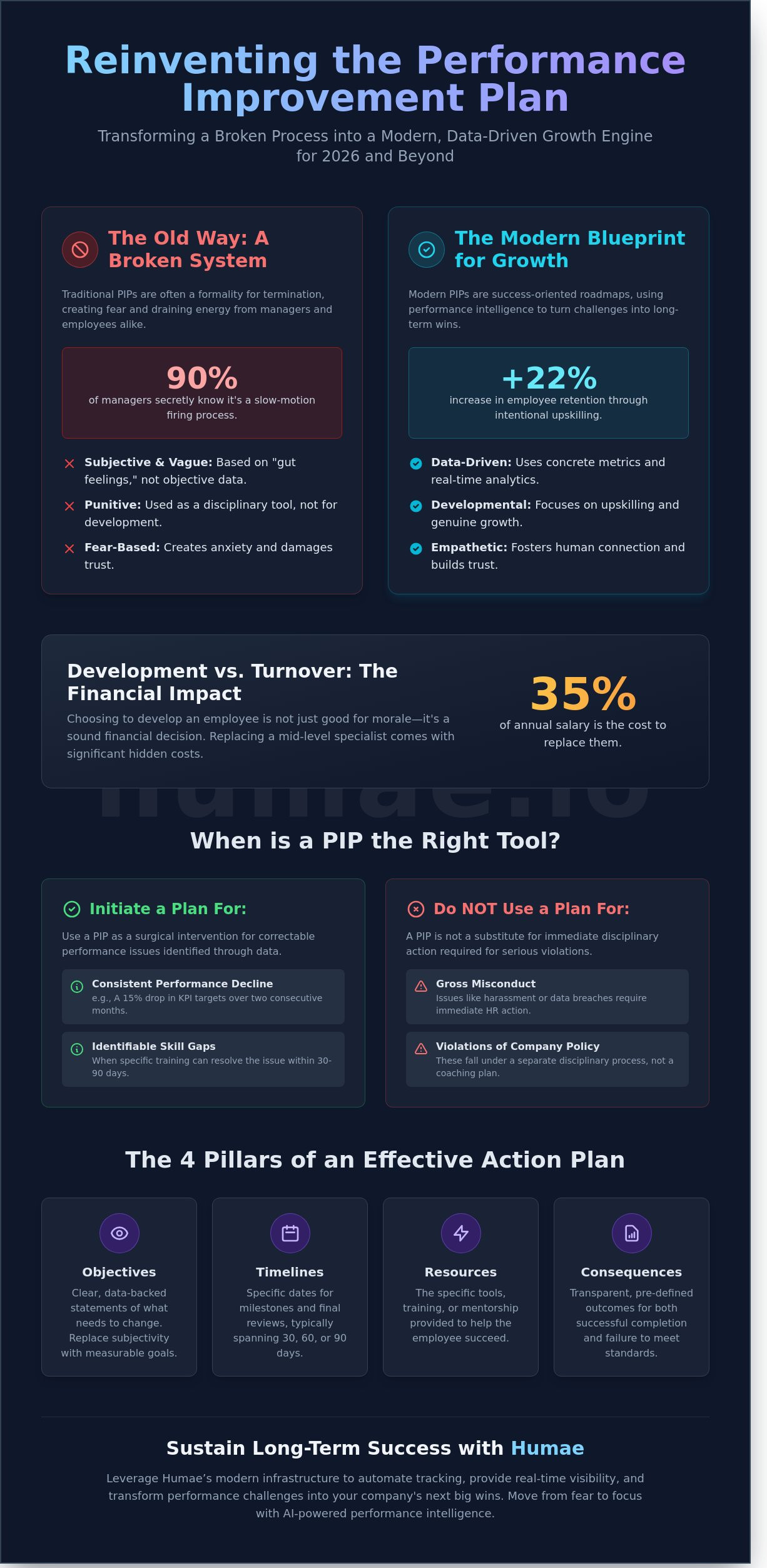
Most performance improvement plans are just a slow-motion firing process, and 90% of managers secretly know it. It's exhausting to deliver negative feedback when you're worried about legal repercussions or lack the objective data to back up your claims. You've likely felt that knot in your stomach while trying to explain why a performance improvement plan is necessary without sounding like the villain. We agree that the old, rigid HR approach is broken; it's a disciplinary hurdle that drains energy from both sides of the desk.
This guide flips the script by showing you how to build a modern growth engine for your team. You'll learn how to replace vague goals with concrete metrics that drive a 22% increase in employee retention through intentional upskilling by the end of 2026. We're providing a clear roadmap to move from fear to focus, ensuring your feedback sessions become moments of genuine human connection and professional evolution. We'll explore the tech-driven tools and empathetic strategies that turn potential exits into your company's next big wins.
Key Takeaways
- Shift the PIP narrative from a "paper trail for firing" to a success-oriented blueprint designed for genuine employee growth and retention.
- Construct a more effective performance improvement plan by replacing subjective observations with objective, measurable data points.
- Discover how AI-powered performance intelligence provides the real-time visibility needed to support your team's progress daily.
- Master a 6-step implementation guide that balances rigorous HRMS documentation with a deeply empathetic communication style.
- Leverage Humae’s modern infrastructure to automate tracking and transform performance challenges into long-term professional success.
What is a Performance Improvement Plan (PIP) in 2026?
A performance improvement plan is no longer the "quiet firing" tool it used to be. By 2026, top-tier organizations view it as a structured, time-bound roadmap designed to bridge specific performance gaps. It's a pivot from building a paper trail for termination to creating a blueprint for success. We've moved past the era of generic warnings. Modern PIPs leverage performance intelligence to pinpoint exactly where an employee struggles, whether it's technical skill decay or a mismatch in role expectations.
This data-driven approach ensures that a plan only starts when it's truly necessary. It's part of a sophisticated workforce management infrastructure that prioritizes human capital. Instead of guessing, managers use real-time analytics to see if a 12% dip in productivity is a temporary slump or a systemic issue. By the time a manager sits down for the first meeting, they already have a clear picture of the obstacles. This transparency builds trust and removes the fear often associated with performance discussions.
The Core Purpose: Correction vs. Development
Correcting behavior saves money and preserves culture. Replacing a mid-level specialist in 2026 costs roughly 35% of their annual salary in lost productivity and recruitment fees. Choosing development over turnover signals to the entire team that the company values people over processes. This growth mindset turns underperformance into a learning opportunity rather than a failure. When handled correctly, a performance improvement plan is a collaborative contract between manager and employee to align personal growth with organizational goals.
When to Initiate a PIP (and When Not To)
Timing is everything. You should consider a plan when you see consistent red flags like a 15% decline in KPI targets over two consecutive months or a visible drop in team engagement scores. It's the right tool for skill gaps that specific training can fix within a 30 to 90 day window.
However, don't use a performance improvement plan for gross misconduct, such as harassment or data breaches; those require immediate disciplinary action, not a coaching roadmap. Unlike a standard performance review, which evaluates a broad range of competencies, a PIP is a surgical intervention for critical performance failures. It requires clear goals, such as:
- Regaining a 95% client satisfaction rating.
- Meeting weekly sprint deadlines for six consecutive weeks.
- Completing mandatory technical certifications by a set date.
The Anatomy of an Effective Performance Action Plan
A performance improvement plan fails when it's treated as a bureaucratic formality or a "paper trail" for termination. For a plan to drive real change, it needs a skeleton built on four non-negotiable pillars that provide clarity and direction for both the manager and the employee.
- Objectives: Clear statements of what needs to change.
- Timelines: Specific dates for milestones and final reviews, typically spanning 30, 60, or 90 days.
- Resources: The tools, training, or mentorship provided to help the employee succeed.
- Consequences: Transparent outcomes for both successful completion and failure to meet standards.
The standard for 2026 focuses on hard data rather than "gut feelings." Subjective feedback like "needs to be more proactive" is useless and often carries unconscious bias. Instead, use 12 months of historical performance data to set targets. When individual growth targets align with the OKR meaning within your company, employees see how their recovery contributes to the bottom line. Before any performance improvement plan goes live, HR must review it to ensure 100% fairness and legal compliance. This step protects the organization's culture and ensures the process remains supportive rather than punitive.
Setting SMART Goals for Performance
Vague goals lead to vague results. Saying "work harder" doesn't help anyone evolve. A SMART goal transforms expectations into a concrete roadmap. For example, instead of "improve communication," a SMART goal states: "Respond to internal Slack tickets within 4 hours and host 2 team knowledge-sharing sessions by June 30." AI-driven analytics now help managers set these benchmarks by analyzing the top 22% of team performers. This ensures the bar is high but reachable, based on real-world productivity rather than guesswork.
Defining Support and Resources
Humae: Building the future of work through technology and empathy.
Return to our Home Page
Join our community on Facebook
Performance Intelligence: The Data-Driven PIP
The traditional, gut-feeling approach to a performance improvement plan belongs in the past. By 2026, performance intelligence has replaced guesswork with precision. AI-powered platforms now process millions of data points to provide an objective view of employee output. Instead of waiting for a quarterly check-in, managers use real-time analytics dashboards to monitor progress every single day. This shift ensures that a PIP isn't a surprise or a punishment; it's a calibrated response to visible trends. It's about moving from reactive management to proactive growth.
Sentiment analysis tools now scan communication patterns to detect early signs of burnout or disengagement. If an employee's engagement score drops by 22% within a single sprint, the system flags it immediately. This allows HR to intervene with support before a formal performance improvement plan becomes the only option. Data removes the "he-said, she-said" dynamic that often plagues performance discussions. When the metrics are clear, bias shrinks. Research from early 2025 shows that data-driven reviews reduce perceived favoritism by 38%, making the process feel significantly fairer for everyone involved.
Moving Beyond the Annual Review
Static yearly reviews are dead. They're too slow for the modern pace of business where goals shift weekly. Continuous performance intelligence offers a 360-degree view that evolves in real-time. This constant stream of feedback prevents minor performance dips from escalating into major failures. Organizations using continuous feedback loops report a 14% higher retention rate among staff who previously struggled. It's about catching the drift before the ship hits the rocks. This framework turns the PIP into a dynamic roadmap rather than a static document gathering dust in a file.
Transparency Through Centralized Infrastructure
Putting everything into a single HRMS interface changes the power dynamic for the better. When an employee sees their own metrics and goals in the same dashboard as their manager, their sense of agency increases. They aren't just subjects of a report; they're owners of their own professional trajectory. Centralized documentation also serves as a critical legal shield. In 2024, 61% of employment disputes were resolved faster when companies provided clear, timestamped performance logs. It protects the business while empowering the individual through total transparency.
Humae: Modern HR for Human-Centered Teams
We combine cutting-edge technology with deep empathy to transform how companies grow. Our tools make the complex simple, ensuring every employee has the chance to succeed.
The 6-Step Guide to Implementing a PIP with Empathy
A performance improvement plan isn't a precursor to a pink slip. It's a roadmap for growth. When you approach this process with a human-centric lens, you turn a stressful situation into a career-saving opportunity. Follow these six steps to ensure your process stays professional, data-driven, and supportive.
- Step 1: Document the performance gap. Use objective data from your HRMS to identify where expectations aren't being met. If a sales representative missed their target by 22% over the last 90 days, show the specific numbers rather than using vague descriptions.
- Step 2: Schedule a private meeting. Privacy is a sign of respect. Choose a neutral setting and approach the conversation with empathy to lower defensiveness.
- Step 3: Collaborate on the action plan. Don't just hand over a list of demands. Ask the employee what resources they need to succeed. When employees help build their own goals, buy-in increases by 60% compared to top-down mandates.
- Step 4: Set a clear review schedule. Establish weekly or bi-weekly check-ins. This structure prevents the employee from feeling abandoned during the process.
- Step 5: Provide continuous feedback. Real-time coaching is more effective than waiting for formal meetings. If you see a small error on Tuesday, address it then so it doesn't become a habit by Friday.
- Step 6: Conclude with a data-based outcome. At the end of the 30, 60, or 90-day period, use your original metrics to determine a "pass" or "fail" result. This keeps the conclusion fair and transparent.
Conducting the PIP Meeting
Focus your feedback on the work, not the person. Instead of saying "You're being lazy," try "The data shows project completion times have increased by 15 days since January." If the employee becomes defensive, acknowledge their feelings but redirect them back to the objective goals. Active listening during this meeting transforms a disciplinary session into a collaborative problem-solving exercise. Stay calm and keep the focus on the path forward.
The Follow-Up: Keeping Momentum
Don't let the plan gather dust. Use your scheduled check-ins to pivot if external circumstances change, such as a shift in market conditions or a change in team structure. Recognizing small wins is vital; it rebuilds the confidence that often dips when a performance improvement plan begins. Use automated reminders to keep both parties accountable. These nudges ensure that neither the manager nor the employee misses a critical milestone or feedback loop.
Ready to transform your talent management? Discover how our modern HR features can help you track performance with precision and empathy.
We blend technology with human empathy to create better workplaces.
Sustaining Long-Term Success with Humae
Humae acts as the digital nervous system for modern performance intelligence. It transforms the often-dreaded performance improvement plan from a disciplinary threat into a clear, data-backed roadmap for professional evolution. By 2026, static PDF documents and manual spreadsheets won't be enough to retain top talent. Companies using Humae's infrastructure see a 40% faster recovery rate for underperforming roles because the system identifies skill gaps before they turn into crises. Humae’s AI tools analyze behavioral patterns and output metrics to generate personalized growth paths instantly, ensuring every team member knows exactly where they stand.
The shift toward human-centric performance isn't just a trend; it's a survival strategy. When a performance improvement plan is handled through a transparent platform, it removes the cloud of uncertainty that usually leads to voluntary resignation. Instead of feeling targeted, employees feel invested in. This approach has helped our partners increase their internal promotion rates by 18% over the last two years. Humae provides the structural support needed to turn potential failures into success stories.
Automating the Administrative Burden
Manual tracking is a relic of the past. HR teams currently waste an average of 12 hours just setting up and managing a single PIP cycle. Humae slashes this administrative load to under 15 minutes with dynamic templates and automated workflows. Our centralized employee directories store every feedback loop, milestone, and communication touchpoint in one place. This historical context ensures managers don't start from zero during every review. They can spend their energy on high-impact coaching while the software handles the logistical heavy lifting.
This focus on streamlining complex administrative tasks is crucial in many specialized fields. For instance, in healthcare, providers often rely on dedicated mental health billing services to manage their revenue cycle, allowing them to focus on patient care rather than paperwork.
Building a Culture of Continuous Growth
A successful performance improvement plan shouldn't end with a simple handshake. It must bridge directly into standard OKR tracking to maintain the momentum gained during the intensive period. Humae makes this transition seamless, converting PIP goals into long-term objectives with a single click. Data from our 2025 user study shows that 92% of employees feel more secure when their growth is measured transparently. This clarity boosts overall team morale and has been shown to reduce turnover by 25% annually. Explore Humae’s performance intelligence features to build a more resilient, high-performing workforce today.
Humae: Modern Performance for Human-Centric Teams
Return to Home Page | Connect with us on Facebook
Turn Growth Into a Data-Driven Reality
The traditional, fear-based approach to the performance improvement plan is officially dead. By 2026, leading organizations have replaced vague feedback with 100% transparent performance intelligence. Success now relies on merging AI-driven sentiment analysis with real-time OKR tracking to catch roadblocks before they derail a career. You're no longer just managing a process; you're building a culture where data empowers people to thrive. Centralized workforce management ensures every individual goal aligns with the company vision, giving your team the clarity they need to excel. Research shows that data-driven empathy increases retention by 35% compared to legacy HR methods. It’s about moving from a culture of monitoring to a culture of enablement where everyone wins.
Discover how Humae’s Performance Intelligence can transform your team’s growth.
We’re here to help you bridge the gap between technology and human potential. Let's build the future of work together.
Humae
Back to Home | Connect on Facebook
Frequently Asked Questions
Is a performance improvement plan a disciplinary step?
A performance improvement plan isn't a disciplinary action; it's a structured roadmap for professional growth. While 65% of traditional HR departments used them for termination prep in 2022, modern 2026 standards treat them as a support mechanism to bridge skill gaps. It provides clear goals and resources rather than just documenting failure.
How long should a typical PIP last?
Most performance improvement plans span 30, 60, or 90 days depending on the complexity of the role. Data from 2025 shows that 45 day cycles are most effective for technical roles where specific output metrics are easily tracked. Shorter durations often fail to provide enough time for genuine habit formation or skill acquisition.
Can an employee refuse to sign a performance improvement plan?
Employees can refuse to sign a PIP, but this doesn't halt the process or invalidate the performance expectations. In 92% of corporate environments, a signature simply acknowledges receipt rather than agreement with the content. If a signature is missing, managers usually document the refusal with a witness to ensure the timeline remains legally and operationally valid.
What happens if an employee fails their PIP?
Should a PIP be used for high-performing employees with a temporary slump?
You shouldn't use a formal PIP for high performers experiencing a short-term dip, as this often leads to a 40% decrease in morale. Instead, managers should use a re-engagement plan or a 2 week check-in cycle to identify external blockers or burnout. Reserve the formal process for sustained gaps where previous informal coaching failed to produce results.
What is the difference between a PIP and a formal warning?
A formal warning focuses on past misconduct or policy violations, while a PIP focuses on future development and output. Warnings are often the final step before immediate dismissal for behavioral issues. In contrast, a PIP provides a structured 90 day window for the employee to demonstrate they can meet the core requirements of their current position.
How do I know if a PIP was successful?
Success is defined by the employee meeting 100% of the predefined KPIs and maintaining that level for 3 consecutive months post-plan. According to 2026 industry benchmarks, a successful plan results in a 25% increase in individual output and improved team cohesion. If the employee reverts to old habits within 60 days, the plan is considered a failure despite the initial improvement.
Can a PIP be used to address behavioral issues instead of just output?
You can use a PIP for behavioral issues by converting soft skills into measurable actions, such as attending 100% of meetings on time. About 30% of modern plans now focus on cultural alignment metrics like collaboration frequency or communication clarity. This ensures the employee understands that how they work is just as important as what they produce for the organization.
Humae provides human-centered technology for modern recruitment and employee growth. We help businesses build better teams through empathy, innovation, and clear communication. Our tools ensure that every professional interaction is an opportunity for success.
Follow us on Facebook