HR Technology Trends 2026: The Shift to Agentic Intelligence and Infrastructure
By Humae · 30 August 2026
hr technology trends
By 2026, the global agentic AI in the labor market is projected to reach $6.50 billion, marking a massive shift from simple automation to systems that actually think and act for you. If you feel buried under a dozen disconnected apps and struggle to see how your team is actually progressing toward goals, you aren't alone. Most leaders are tired of tool fatigue and the constant friction of manual data entry. Keeping up with modern hr technology trends shouldn't feel like a second job, but the pressure to implement AI safely while maintaining a human touch is real. It's time to stop juggling platforms and start leading with clarity.
This guide will show you how to move beyond fragmented tools and build a centralized workforce management infrastructure that works. You'll discover how agentic intelligence can transform your administrative burden into automated workflows and real-time performance insights. We'll explore the critical shifts in HR governance, the impact of the EU AI Act, and the design of a people-first tech stack that balances technical efficiency with genuine empathy. By the end, you'll have a roadmap to create a high-performance culture where technology supports human potential instead of getting in its way.
For more information, please visit the Humae official website: https://humae.io/
Connect with us on Facebook: https://www.facebook.com/humae01
[Back to Home]
Key Takeaways
- Replace fragmented tools with a unified workforce management infrastructure to eliminate data silos and tool fatigue.
- Discover how current hr technology trends are moving toward agentic AI that proactively executes workflows rather than just answering prompts.
- Learn to leverage real-time performance intelligence and OKR tracking to drive continuous growth and organizational alignment.
- Navigate the intersection of HR and IT to build secure, compliant systems that protect employee data and follow global regulations.
- Design a people-first tech stack that uses automation to remove administrative burdens, allowing leaders to focus on human connection.
For more information, please visit the Humae official website: https://humae.io/
Connect with us on Facebook: https://www.facebook.com/humae01
[Back to Home]
The Evolution of Workforce Management Infrastructure in 2026
Modern people operations no longer rely on a digital filing cabinet. In 2026, the backbone of every successful organization is its workforce management infrastructure. This isn't just a collection of tools; it's a living system that connects every touchpoint of the employee lifecycle. As we examine current hr technology trends, it's clear that the era of app sprawl is ending. Companies are trading ten disconnected subscriptions for unified, AI-powered platforms that offer a holistic view of their talent.
Effective Workforce management (WFM) has evolved from simple scheduling into a proactive optimization engine. By centralizing data into a single employee directory, remote and hybrid teams can maintain visibility without the constant friction of hunting for information. It's about moving from reactive record-keeping to a state where the system anticipates needs before they become problems. This shift allows leaders to focus on strategy while the infrastructure handles the operational heavy lifting.
Moving Beyond Legacy HRIS Systems
Traditional systems often act as static databases. For a fast-growing startup, these legacy models fail because they can't keep pace with rapid shifts in team structure or market demands. Leadership in 2026 requires real-time data to make informed decisions on the fly. If you're still relying on monthly reports that are outdated the moment they're generated, you're falling behind. Understanding What Is an HRIS? in the context of 2026 means looking for infrastructure that prioritizes agility and intelligence over mere storage.
The Rise of Integrated People Operations
Centralized systems are the primary cure for administrative friction. When your hiring, onboarding, and performance data live in the same ecosystem, the human part of HR returns to the spotlight. This unified approach creates a single source of truth, ensuring that a new hire's information flows seamlessly from the ATS into the employee directory and OKR tracking modules. The result is a frictionless employee experience that boosts retention and engagement from day one. By 2026, the most successful hr technology trends will be those that simplify the complex, turning fragmented tasks into a cohesive, supportive journey for every team member.
For more information, please visit the Humae official website: https://humae.io/
Connect with us on Facebook: https://www.facebook.com/humae01
[Back to Home]
Agentic AI and the Rise of Performance Intelligence
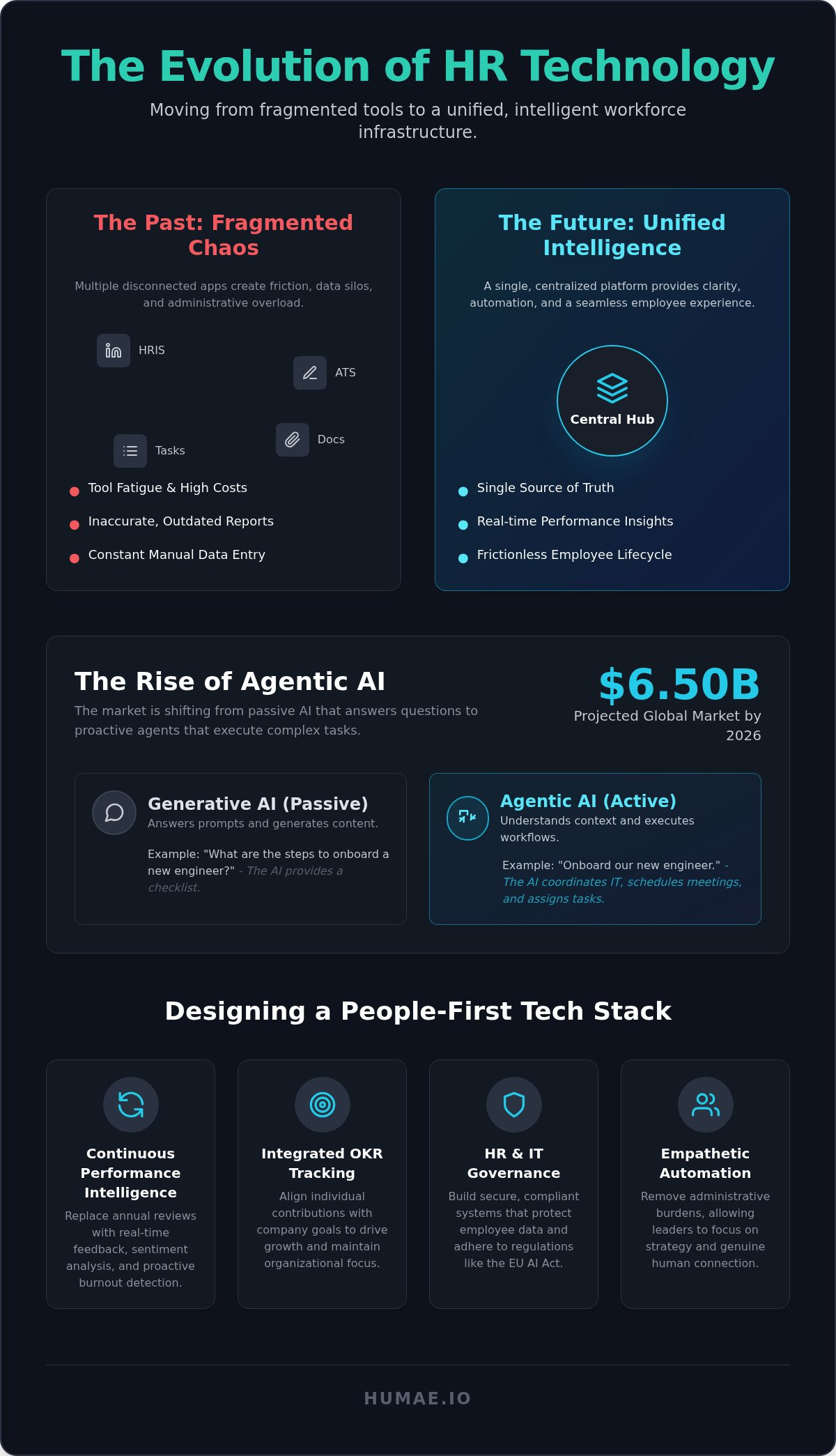
Agentic AI is the defining force within 2026 hr technology trends. Unlike early generative AI that simply answered questions, agentic systems are designed to act. These autonomous agents understand the context of your organization and execute multi-step HR workflows with minimal human oversight. They don't just tell you that a team member is due for a check-in; they prepare the data, schedule the meeting, and suggest talking points based on real-time performance metrics. This shift represents a move from passive tools to active partners in workforce management.
From Generative AI to Agentic Workflows
The transition from passive chatbots to active HR agents marks a turning point for people operations. While generative AI produces text, agentic AI facilitates movement. It can handle complex, multi-stage onboarding processes by coordinating between IT, finance, and team leads without manual pings. It manages time-off approvals by checking team capacity and project deadlines automatically. Agentic AI in 2026 represents a shift from software that records work to software that actively facilitates work. This evolution allows HR teams to move away from administrative gatekeeping and toward strategic leadership.
Predictive Analytics and Sentiment Intelligence
Performance intelligence software has officially replaced the dreaded annual review. Instead of looking backward once a year, organizations now use continuous feedback loops to drive growth. By integrating AI-driven sentiment analysis, leaders can identify early signs of burnout before they lead to turnover. These tools analyze communication patterns and feedback in real time, alerting managers when a team's morale shifts or engagement levels drop unexpectedly.
This data-driven approach extends to goal alignment as well. Real-time OKR tracking ensures that every employee understands how their daily tasks contribute to the company's vision. When performance intelligence tools provide managers with actionable coaching insights, the relationship between employee and supervisor becomes one of partnership rather than policing. To see how these systems work in practice, explore our guide on Modern Performance Management.
Implementing these hr technology trends doesn't have to be a technical hurdle. By choosing an intuitive interface that automates workflows, you can ensure your team remains focused on what matters most: the people.
For more information, please visit the Humae official website: https://humae.io/
Connect with us on Facebook: https://www.facebook.com/humae01
[Back to Home]
The Critical Intersection of HR Governance and IT Security
The silos between HR and IT have finally crumbled. In 2026, your people operations are only as strong as your digital security. This interdependence is a cornerstone of current hr technology trends, where technical infrastructure and human capital management are two sides of the same coin. As organizations implement agentic AI, the need for robust governance becomes non-negotiable. Protecting sensitive employee data isn't just an IT ticket; it's a fundamental HR responsibility. With 83% of organizations experiencing at least two successful identity-centric breaches in the past year, the stakes for your workforce data have never been higher.
One of the biggest risks facing modern teams is 'Shadow HR'. This occurs when departments adopt unapproved AI tools to bypass administrative friction. While these tools might offer a quick fix, they often lack the security protocols necessary to protect personal information and comply with regulations like the EU AI Act. A centralized workforce management infrastructure prevents this by providing the powerful, intuitive tools teams actually want to use, ensuring all data remains within a secure, governed environment.
Building an Effective Data Environment
For AI to deliver meaningful insights, the underlying data must be high-quality and interoperable. You can't run advanced sentiment analysis on fragmented spreadsheets. Your infrastructure must be secure by design, ensuring that privacy is baked into every workflow. When you utilize AI to gauge team morale, the system must anonymize sensitive inputs while still providing managers with the intelligence they need to act. This balance allows you to enjoy the benefits of automation without compromising the trust of your workforce.
Human-in-the-Loop AI Governance
Even the most advanced agentic AI requires a human at the helm. Effective governance defines clear boundaries between automated execution and human decision-making. AI can flag performance trends or suggest goal adjustments, but the final word on coaching and career progression must remain with the manager. HR leaders in 2026 serve as the ethical guardians of this technology. By maintaining transparency in how performance intelligence is calculated, you ensure that AI remains a supportive tool rather than a mysterious black box. This human-centric approach is vital for sustaining a culture of fairness and accountability as hr technology trends continue to evolve.
For more information, please visit the Humae official website: https://humae.io/
Connect with us on Facebook: https://www.facebook.com/humae01
[Back to Home]
Designing a People-First Tech Stack for Modern Teams
Building a tech stack in 2026 requires a fundamental shift in perspective. It's no longer enough for tools to simply work; they must actively support the human experience. The most successful hr technology trends focus on removing the digital friction that prevents teams from doing their best work. A modern, people-first stack must include a centralized Applicant Tracking System (ATS), integrated OKR tracking, and comprehensive analytics dashboards. These components should function as a single ecosystem where data flows freely between modules. For instance, when you integrate time-off management with workforce forecasting, you gain the ability to predict team capacity and prevent burnout before it impacts your projects.
Accessibility is the new standard for the modern workforce. Your team members expect mobile-first, intuitive interfaces that mirror the consumer apps they use every day. If an HR platform requires a lengthy training manual to navigate, it will fail to gain adoption. High-performance teams need tools that empower them to manage their own data through self-service portals. This reduces the administrative burden on your HR department while increasing employee autonomy and trust. By prioritizing simplicity, you ensure that technology serves your people rather than the other way around.
Bridging Engagement and Performance
Engagement isn't a soft metric anymore; it's a leading indicator of organizational health. By utilizing real-time analytics, you can see the direct correlation between team sentiment and project outcomes. OKR tracking plays a vital role here by transforming abstract goals into a shared sense of purpose. When employees see exactly how their daily tasks contribute to the company's vision, their commitment deepens. To build a more resilient and aligned team, explore our data-driven framework on Employee Engagement Strategies.
Optimizing Growth with Analytics Dashboards
Data-driven leadership means looking forward rather than just reflecting on the past. Advanced analytics dashboards allow you to identify talent gaps and plan for succession long before a vacancy appears. These tools help you balance labor costs with productivity, ensuring that your growth remains sustainable and profitable. By moving toward self-service HR tools, you foster a culture of transparency. Employees can track their own progress, request time off, and access benefits without waiting for a manual response, creating a faster and more responsive work environment.
Ready to modernize your people operations? Build your workforce management infrastructure with Humae today.
For more information, please visit the Humae official website: https://humae.io/
Connect with us on Facebook: https://www.facebook.com/humae01
[Back to Home]
Humae: The Infrastructure for the Future of Work
Humae stands at the heart of the 2026 HR revolution. It's the centralized AI-powered platform designed to anchor your people operations and eliminate the chaos of tool fatigue once and for all. While legacy systems often feel like a digital weight, Humae offers an intuitive interface that streamlines workforce management from the initial hiring phase to continuous professional growth. By weaving performance intelligence into the fabric of daily operations, we ensure that every data point serves a purpose. This is the ultimate response to current hr technology trends, where fragmented apps are replaced by a robust, intelligent infrastructure that supports your most valuable asset: your people.
Our platform isn't just a suite of features; it's a partner in your organizational success. By choosing Humae, you're investing in a system that prioritizes clarity and empathy. We've built an environment where administrative tasks happen in the background, leaving you free to focus on leadership and culture. It's about moving away from the friction of the past and stepping into a future where technology and human potential are perfectly aligned.
Scaling with Intelligence
Startups and global enterprises face the same core challenge: maintaining clarity during rapid growth. Humae addresses this with a centralized employee directory that keeps your global workforce connected and visible, regardless of time zones. High-growth organizations use our real-time OKR tracking to ensure that every team member remains aligned with the company's evolving mission. This isn't just about monitoring progress; it's about fostering a culture of transparency. Our AI-driven sentiment tools provide continuous feedback, allowing you to identify burnout or engagement gaps before they impact your results. This proactive intelligence enables you to scale with confidence while keeping your culture intact.
Getting Started with Modern Workforce Management
Transitioning to a centralized infrastructure is a strategic move for any modern leader. Humae is built for those who understand that technology and human connection aren't mutually exclusive. Our platform simplifies the migration process, allowing you to replace clunky, disconnected systems with a single, high-performance source of truth. Whether you are automating time-off requests or optimizing your hiring pipeline, the experience is designed to be seamless. We help you move beyond the administrative gatekeeping of the past. It's time to embrace a system that values your time and your people.
Explore the full range of Humae features and discover how it works to support your team's unique journey. The future of work isn't just coming; it's already here, and it's built on the foundation of intelligent infrastructure.
For more information, please visit the Humae official website: https://humae.io/
Connect with us on Facebook: https://www.facebook.com/humae01
[Back to Home]
Building Your Future-Ready People Operations
The transition to agentic intelligence is more than a technical upgrade; it's a commitment to a more human-centric work environment. By replacing fragmented apps with a centralized workforce infrastructure, you eliminate the friction that holds your team back. Staying ahead of hr technology trends in 2026 means embracing tools that don't just store data, but actively facilitate growth. With real-time OKR tracking and AI-driven performance intelligence, you can finally align individual aspirations with organizational success. This shift allows HR leaders to move away from administrative gatekeeping and toward high-impact strategic advisory roles.
Success in this new era requires a careful balance of innovative automation and strong ethical governance. As you design your tech stack, prioritize platforms that value transparency and security while removing the heavy administrative burdens of the past. It's time to stop managing disconnected software and start leading people with the clarity and empathy they deserve. You have the power to build a culture where everyone can thrive and reach their full potential. The future of work is yours to shape, provided you have the right foundation in place.
Explore Humae: The All-in-One AI-Powered HR Platform
For more information, please visit the Humae official website: https://humae.io/
Connect with us on Facebook: https://www.facebook.com/humae01
[Back to Home]
Frequently Asked Questions
What are the top HR technology trends for 2026?
The most significant trends include the transition to agentic AI, the rise of centralized workforce management infrastructure, and a focus on real-time performance intelligence. Organizations are moving away from fragmented apps toward unified platforms that integrate hiring, onboarding, and goal tracking in one place. These hr technology trends prioritize operational efficiency while maintaining a deep focus on the human experience, ensuring that technology supports human potential rather than creating administrative friction.
What is agentic AI in human resources?
Agentic AI refers to autonomous systems designed to execute multi-step workflows rather than just answering prompts or generating text. In HR, this means an AI agent can coordinate onboarding tasks across departments or manage complex time-off approvals by checking team capacity and project deadlines. It marks a shift from passive record-keeping tools to active partners that facilitate work. This technology reduces administrative burdens, allowing HR professionals to focus on high-level strategy.
How can AI-powered HR platforms improve employee retention?
AI-powered platforms improve retention by identifying early signs of burnout through sentiment analysis and continuous feedback loops. By providing managers with real-time insights into team morale, these systems enable proactive coaching and timely support. When employees feel heard and supported, their engagement levels naturally rise. Additionally, centralized tools reduce the frustration of tool fatigue, creating a smoother and more meaningful daily work experience for every member of the organization.
Is it safe to use AI for employee performance intelligence?
Yes, it is safe when implemented with strong governance and transparency. Modern performance intelligence tools prioritize data privacy and comply with global regulations like the EU AI Act. Security is maintained through anonymized sentiment data and human-in-the-loop oversight, ensuring that automated insights support human judgment rather than replacing it. By keeping the decision-making process ethical and transparent, organizations build trust while leveraging the power of data-driven coaching and professional growth.
What is workforce management infrastructure and why does my company need it?
Workforce management infrastructure is the centralized digital backbone of your people operations. It replaces a dozen disconnected apps with a single source of truth for hiring, directories, and performance tracking. Your company needs this infrastructure to eliminate data silos and tool fatigue, which often lead to administrative errors and employee frustration. A unified system provides the visibility required to manage modern teams effectively, ensuring every process from recruitment to retirement is seamless.
How do OKR tracking and performance intelligence work together?
OKR tracking and performance intelligence create a continuous loop of alignment and growth. While OKRs define the strategic direction and measurable goals, performance intelligence provides the real-time feedback and coaching insights needed to achieve them. This combination ensures that every team member understands their purpose and receives the support necessary to succeed. Together, they transform static annual reviews into a dynamic, data-driven culture that fosters both individual development and organizational excellence.
What should I look for in an applicant tracking system in 2026?
In 2026, you should look for an ATS that integrates seamlessly with your broader workforce management infrastructure. Essential features include agentic AI for automated candidate screening, mobile-first interfaces for a better candidate experience, and real-time analytics to identify talent gaps. The system must also prioritize data security and compliance with international labor laws. A modern ATS should act as the starting point for a unified employee journey, feeding data directly into onboarding.
How does HR technology help with remote and hybrid team management?
HR technology provides the visibility and connectivity that remote and hybrid teams need to thrive. Centralized employee directories and real-time communication tools ensure that information is accessible to everyone, regardless of their location. Advanced hr technology trends like sentiment analysis help managers stay connected to the morale of distributed teams, while integrated OKR tracking keeps everyone aligned on shared goals. These tools bridge the physical gap, fostering a sense of community and purpose.
For more information, please visit the Humae official website: https://humae.io/
Connect with us on Facebook: https://www.facebook.com/humae01
[Back to Home]