Employee Value Proposition: The 2026 Strategy for Modern HR Leaders
By Humae · 22 July 2026
employee value proposition
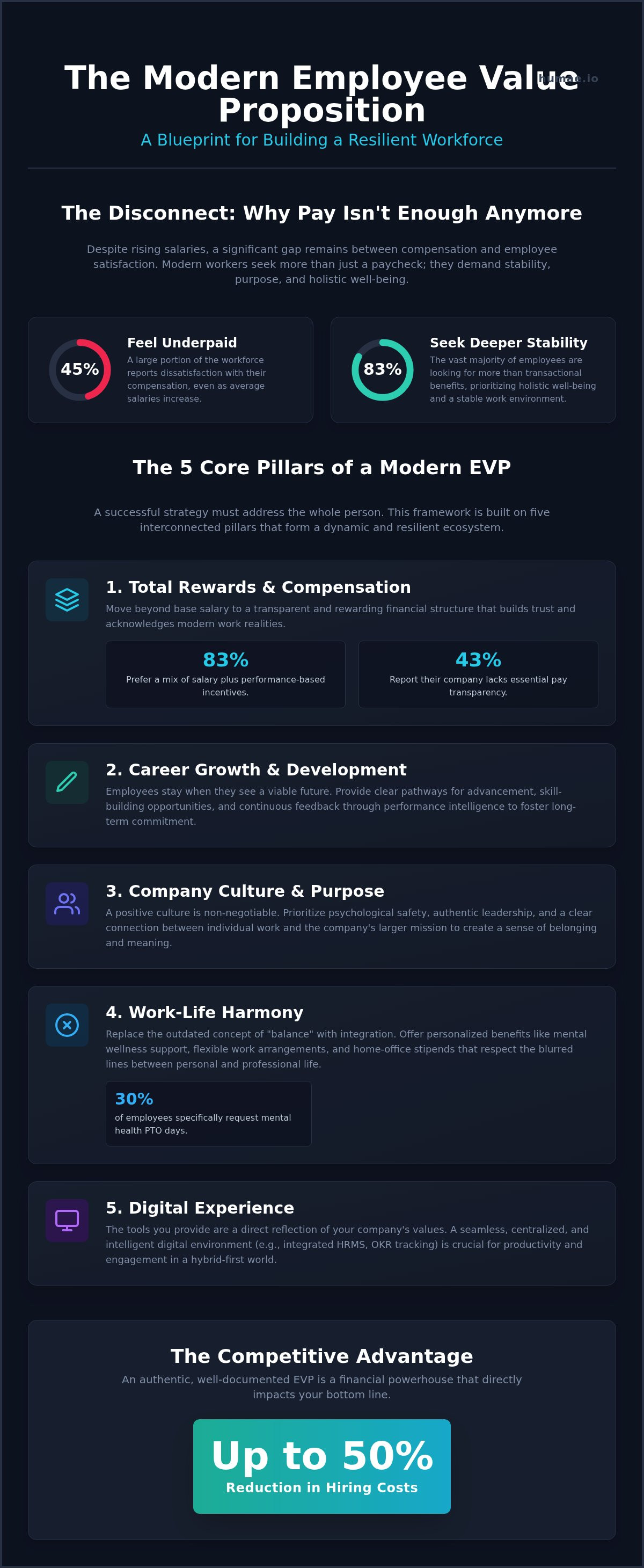
45% of employees still report feeling underpaid despite average salary increases rebounding to 4.8% last year. It's a sobering reality for HR leaders who know that a competitive paycheck is no longer the sole driver of loyalty. You've likely felt the frustration of high turnover or the uphill battle of attracting specialized talent when your company’s daily reality doesn't quite match the glossy recruitment brochure. A static employee value proposition is no longer enough to compete in a market where 83% of workers are looking for deeper stability and holistic well-being.
We're here to help you turn those challenges into a competitive advantage. This guide provides a clear roadmap to master the art of creating a live, AI-driven EVP that fosters long-term retention and truly resonates with your team. We'll show you how to use performance intelligence and real-time data to build an authentic employer brand that slashes recruitment costs and ensures your best people stay for the long haul.
Discover how Humae empowers modern teams at humae.io. Connect with us on Facebook. Back to Home.
Key Takeaways
- Learn how to redefine your employee value proposition as a holistic ecosystem that replaces outdated, transactional work models.
- Identify the five core pillars of a modern EVP, focusing on work-life harmony and total rewards that go beyond base salary.
- Master a framework for auditing internal culture and using AI-driven sentiment analysis to capture the authentic voice of your employees.
- Discover strategies to close the experience gap by ensuring leadership practices align perfectly with your organizational promises.
- Explore how centralized tools like OKR tracking and performance intelligence turn your cultural vision into a measurable daily reality.
Discover how Humae empowers modern teams at humae.io. Connect with us on Facebook. Back to Home.
What is an Employee Value Proposition? Redefining the Deal for 2026
The traditional "work for pay" deal has officially expired. In 2026, an employee value proposition is no longer just a bulleted list of benefits on a career page. It's a holistic ecosystem of values, rewards, and daily experiences that define why a talented professional should choose your organization over a sea of competitors. While a foundational Employee Value Proposition describes the balance between rewards and performance, the modern version is a living promise. It serves as the bedrock for your entire workforce management infrastructure, ensuring every tool and policy aligns with a central human purpose.
The transactional model of work died because employee expectations shifted toward stability and meaning. Recent industry research indicates that 45% of employees still report feeling underpaid despite rising salary averages. This disconnect proves that money alone cannot bridge the gap between a company and its people. You must distinguish between your employer brand, which is the external perception of your company, and your true EVP, which is the internal reality. One is the marketing invitation; the other is the lived experience. Without a strong EVP, your branding is just an empty shell.
The Shift from Perks to Purpose
Free snacks and ping-pong tables no longer move the needle for specialized talent. High performers in 2026 prioritize psychological safety and the certainty that their work contributes to something larger than a bottom line. Modern EVP is a strategic alignment between company goals and human needs. It's about creating a culture where 83% of workers, who now prefer incentive-based pay, feel they have the autonomy and support to actually earn those rewards while growing personally.
EVP as a Competitive Advantage
A documented, authentic strategy is a financial powerhouse. Organizations with a strong proposition can reduce hiring costs by up to 50 percent because they spend less time convincing candidates to join. When your team believes in the promise, employee referral rates naturally climb. This strategic focus is a critical component of modern people operations, where technology and empathy work together to drive retention. By making your EVP visible through transparent data, you turn a vague concept into a measurable asset.
The 5 Core Pillars of a Modern Employee Value Proposition
A winning 2026 strategy requires more than just a list of benefits. It demands a balanced framework that addresses the whole person, not just the worker. Viewing your employee value proposition as a dynamic ecosystem allows you to adapt to a hybrid-first world where the lines between work and life are permanently blurred. By treating your EVP as a Strategic Framework, you create a foundation for engagement that survives market shifts and talent wars. This framework stands on five pillars: financial compensation, work-life harmony, career development, company culture, and the digital experience.
Financial Rewards and Work-Life Integration
Base salary is the floor, not the ceiling. In 2026, 83% of employees prefer a mix of salary plus incentives over a flat structure. While the average civilian compensation reached $49.32 per hour in March 2026, the real value lies in transparency. Currently, 43% of workers say their company lacks pay transparency. Closing this gap builds immediate trust. Beyond the paycheck, personalized benefits are the new standard. This includes mental wellness support and home-office stipends that acknowledge the reality of remote work. Effective time off management is equally vital. With 30% of employees specifically requesting mental health PTO days, your ability to prevent burnout is a major part of your value promise. Building this digital infrastructure is easier when you use an integrated HRMS and performance platform.
Career Growth and Performance Intelligence
Employees stay when they see a future. They want to know their work matters and that there is a clear path forward. Implementing OKR tracking gives your team a sense of impact by connecting individual tasks to high-level company goals. This transparency replaces the anxiety of annual reviews with the confidence of continuous, data-driven feedback. Performance intelligence software empowers individual growth by providing real-time clarity on how daily efforts contribute to collective success. When people can see their progress in real time, they feel more ownership over their careers. This digital experience, the quality of the tools your team uses every day, is the final pillar that holds the entire proposition together.
How to Build Your EVP Strategy: A Step-by-Step Framework
Building an authentic employee value proposition isn't a one-time HR project; it's a continuous process of alignment. You can't simply copy a competitor's list of benefits and expect your turnover rates to drop. A successful 2026 strategy requires a rigorous, data-backed framework that turns raw sentiment into a compelling reason to stay. This journey moves from deep listening to strategic execution across five key stages.
- Step 1: Audit. Look at your current internal culture and external reputation. Check Glassdoor, but also look at internal churn data.
- Step 2: Insight. Use AI-driven sentiment analysis to find the "why" behind employee behavior. Don't guess what they want; let the data tell you.
- Step 3: Narrative. Define your unique value pillars. What makes your organization's mission different from everyone else's?
- Step 4: Test. Run your draft proposition through cross-functional focus groups. If it doesn't resonate with a junior dev and a senior manager, it isn't ready.
- Step 5: Integrate. Launch and embed the EVP into the full employee lifecycle, making it visible in every meeting and milestone.
Auditing and Gathering Employee Feedback
Standard annual surveys often fail because they're static. They capture a single moment in time, often missing the "hidden" frustrations that lead to quiet quitting. To build a true employee value proposition, you need real-time dashboards that identify trends in satisfaction as they happen. Honesty is your best tool here. You must be brave enough to address the gaps where your company's promises don't meet the daily reality. If your data shows a disconnect between your flexibility claims and actual manager behavior, that's where your strategy starts.
Mapping the Employee Journey
Your EVP must be felt from the first interaction. Aligning your value promise with your onboarding process ensures new hires don't experience "buyer's remorse" in their first thirty days. Infuse your narrative into every touchpoint, from the initial ATS application to the final exit interview. To make this effective, create specific personas for different departments. A specialized engineer might value technical autonomy, while a sales leader might prioritize incentive-based pay. Tailoring the message ensures the promise feels personal and attainable for everyone.
Closing the Experience Gap: Moving from Practice to Promise
Most organizations treat their employee value proposition like a static marketing brochure. It's printed, shared once during onboarding, and then tucked away in a digital folder. This creates a dangerous "experience gap" between the promises made to candidates and the daily reality of your staff. In 2026, talent is too mobile to tolerate a disconnect. If your proposition promises work-life harmony but your culture rewards midnight emails, your brand will suffer. Closing this gap requires leadership to model the values they preach while using technology to ensure accountability at every level.
Scaling presents another challenge for modern HR leaders. An EVP that thrives in a 15-person startup often breaks when the company reaches enterprise status. You need a way to maintain that founding spirit while introducing the structure necessary for a larger workforce. This is where digital infrastructure becomes your best ally. It allows you to track whether your cultural promises are being kept across multiple departments and time zones, ensuring the experience remains consistent as you grow.
The Power of Real-Time Feedback
Once-a-year check-ins are a relic of the past. They don't provide the agility needed to manage a modern team. Continuous listening is now the gold standard for high-performing organizations. AI-powered sentiment analysis can flag turnover risks months before an employee actually hands in their resignation by identifying subtle patterns in feedback and engagement. Acting on this data immediately is the only way to maintain the credibility of your employee value proposition. When people see that their input leads to tangible change, their trust in the organization deepens.
Transparency Through OKRs and Analytics
Shared goals are the glue of a healthy organization. When success is visible, it fosters a deep sense of belonging and purpose. Using analytics dashboards helps you move beyond gut feelings to prove the actual ROI of your people strategies. You can see exactly how your culture initiatives impact retention and performance. For a comprehensive look at building a data-driven culture, check out our framework for Employee Engagement Strategies. Transparency isn't just a buzzword; it's a management tool that ensures everyone is moving in the same direction.
Ready to close the experience gap? Explore the Humae platform to see how real-time intelligence can transform your workplace.
Leveraging Humae to Deliver Your EVP Promise
Defining a powerful employee value proposition is a vital first step, but the real challenge lies in daily execution. A promise of growth or flexibility means very little if your team is struggling with fragmented tools and opaque processes. Humae provides the AI-powered infrastructure to turn your strategic vision into a lived experience. By centralizing the employee journey into a single, intuitive interface, you ensure that every interaction reinforces your core values. It’s about moving beyond the "what" of your culture and mastering the "how" through seamless technology.
Our platform streamlines the administrative burden that often keeps HR leaders away from high-impact human connection. When you automate workforce management and time-off requests, you create space for mentorship and strategic planning. This technology-forward approach doesn't just improve efficiency; it builds a modern employer brand that attracts specialized talent. It shows candidates and current staff alike that your organization respects their time and invests in their success. Humae acts as the engine that makes your EVP promises both visible and measurable.
Infrastructure for a Modern Team
Cohesion is the biggest challenge for remote and hybrid teams in 2026. A professional employee directory serves as more than just a contact list; it's the digital map of your organizational community. It fosters belonging by making expertise and roles transparent across the entire company. Additionally, simplifying time-off management ensures employee boundaries are always respected, preventing the burnout that leads to high turnover. AI-driven intelligence helps managers transition into mentors. By flagging sentiment trends and goal progress, the platform provides the data needed for empathetic, proactive leadership.
Ready to Transform Your Employee Experience?
The gap between a company's promise and its practice is where talent is lost. Now is the time to invest in a platform that supports your values with concrete data and transparent workflows. A tech-enabled culture isn't just a trend; it's a long-term strategy for stability and growth in an increasingly competitive market. When your tools align with your employee value proposition, you create a workplace where people don't just show up, they thrive. Take the lead in modern HR by choosing a partner that understands the intersection of technology and human potential.
Experience the future of HR with Humae and start building a more resilient organization today.
Lead the Future of Talent Strategy
The era of the transactional workplace is over. You now have the roadmap to transform your employee value proposition from a static document into a living, data-backed experience. Success in 2026 depends on your ability to close the gap between brand promises and the daily reality of your team. By prioritizing transparency and holistic well-being, you create a culture that naturally attracts and retains top talent.
Don't let your strategy sit on a shelf. Use AI-powered sentiment analysis to listen to your team and real-time OKR tracking to make their impact visible. When you combine integrated workforce management with genuine human empathy, you build an organization that thrives. It's time to lead with vision and back it with the right infrastructure. You've got this, and the results will speak for themselves.
Build a world-class employee experience with Humae
Frequently Asked Questions
What is the primary goal of an employee value proposition?
The primary goal of an employee value proposition is to define the unique exchange of value between an organization and its people. It serves as a strategic magnet for specialized talent while fostering deep loyalty within your existing team. By aligning the company mission with individual growth and human needs, it ensures that your workforce feels valued for their contributions beyond just a base salary.
How often should a company update its EVP?
You should treat your EVP as a live strategy rather than a static document. While a formal audit is recommended annually, modern HR leaders use real-time feedback tools to make continuous adjustments. This ensures your promise stays relevant to shifting market conditions and internal cultural changes throughout the year. Staying agile prevents the experience gap from widening as your organization evolves.
What is the difference between EVP and employer brand?
Your EVP is the internal substance and the actual promise you make to your team. The employer brand is the external marketing of that promise to the talent market. Think of the employee value proposition as the authentic product experience and the employer brand as the reputation that attracts people to try it. One defines the daily reality, while the other manages the perception.
Can a small startup have a strong EVP without high salaries?
Absolutely. Small startups often win on autonomy, equity, and the ability to make a direct impact. Since 83% of workers currently prefer incentive-based pay structures over flat salaries, startups can leverage performance-based rewards and high-growth opportunities to compensate for lower base pay. It's about the total experience, not just the paycheck. Focus on your unique mission and flexibility to stand out.
How do you measure the success of an EVP strategy?
Success is measured through concrete metrics like offer acceptance rates and employee referral numbers. You should also track retention rates and use analytics dashboards to monitor shifts in employee sentiment. A successful strategy leads to lower recruitment costs and a higher percentage of tenured roles within the organization. When your acceptance rates climb and churn drops, your proposition is working effectively.
What are the most common mistakes when creating an EVP?
The biggest mistake is the experience gap where company promises don't match daily management. Other pitfalls include using generic corporate language that lacks personality or failing to gather honest feedback from all levels of the organization. If your team doesn't recognize themselves in your stated values, the strategy will fail. Authenticity is the only way to build lasting trust with your workforce.
How does AI impact the development of an EVP?
AI transforms the employee value proposition from a guess into a data-driven certainty. By using sentiment analysis, you can identify hidden frustrations and turnover risks before they escalate into resignations. This technology allows you to move from annual check-ins to a continuous listening model. It ensures your proposition remains authentic by basing it on the real-time needs and feelings of your staff.
Is an EVP relevant for remote-only companies?
It's arguably more critical for remote-only teams. Without a physical office, your EVP defines the digital experience, communication norms, and how you maintain work-life harmony. It provides the cultural glue that keeps distributed teams connected to a shared mission. A strong proposition prevents the isolation that often leads to churn, ensuring remote workers feel like a valued part of a community.