Continuous Feedback Software: The 2026 Guide to Performance Intelligence
By Humae · 1 August 2026
continuous feedback software
Why are we still pretending that a conversation held once a year can drive performance in a world that changes every hour? If you're tired of the "review season" dread, where managers scramble for forgotten data and employees feel disconnected, you're not alone. Transitioning to continuous feedback software is no longer just an HR trend; it's the critical shift toward a high-speed engine for growth and real-time performance intelligence.
We agree that traditional reviews are often biased, outdated, and too late to matter for your top talent. This guide promises to show you how to turn stagnant rituals into a dynamic culture of development. You'll learn how to gain instant visibility into team sentiment, automate feedback loops, and leverage the 2026 strategies that help organizations boost retention by 14% through more meaningful growth conversations. We're here to help you replace guesswork with actionable data, ensuring every 1-on-1 actually moves the needle.
Key Takeaways
- Transition from reactive annual reviews to a proactive culture built on real-time performance intelligence.
- Discover how modern continuous feedback software eliminates bias by capturing multi-channel input when it actually happens.
- Align individual career paths with company objectives using integrated OKR tracking and AI sentiment analysis.
- Empower managers to lead with empathy and data, turning routine meetings into meaningful coaching opportunities.
- Build a centralized infrastructure that improves retention and makes your organization a magnet for top talent.
What is Continuous Feedback Software and Why Does it Matter in 2026?
Performance management is undergoing a radical transformation. In its simplest form, continuous feedback software is a digital infrastructure that enables real-time, ongoing performance conversations. It replaces the rigid, once-a-year evaluation with a fluid stream of insights that move at the speed of business. By 2026, the focus has shifted entirely from retrospective reviews to proactive performance intelligence. We're no longer just looking at what happened six months ago; we're predicting what will happen next month.
Static annual reviews often fail because they rely on human memory, which is notoriously biased and selective. In high-growth environments, waiting twelve months to address a bottleneck is a recipe for stagnation. Modern systems integrate the principles of a Continual Improvement Process to ensure that growth is a daily habit, not a yearly event. This shift is powered by AI that goes beyond collecting simple comments. Today’s tools analyze the sentiment behind the words, helping leaders understand the underlying health of their culture before issues escalate into crises.
The Core Components of a Modern Feedback System
A robust system isn't just a digital form. It's an ecosystem designed to support every layer of the organization. Key features include:
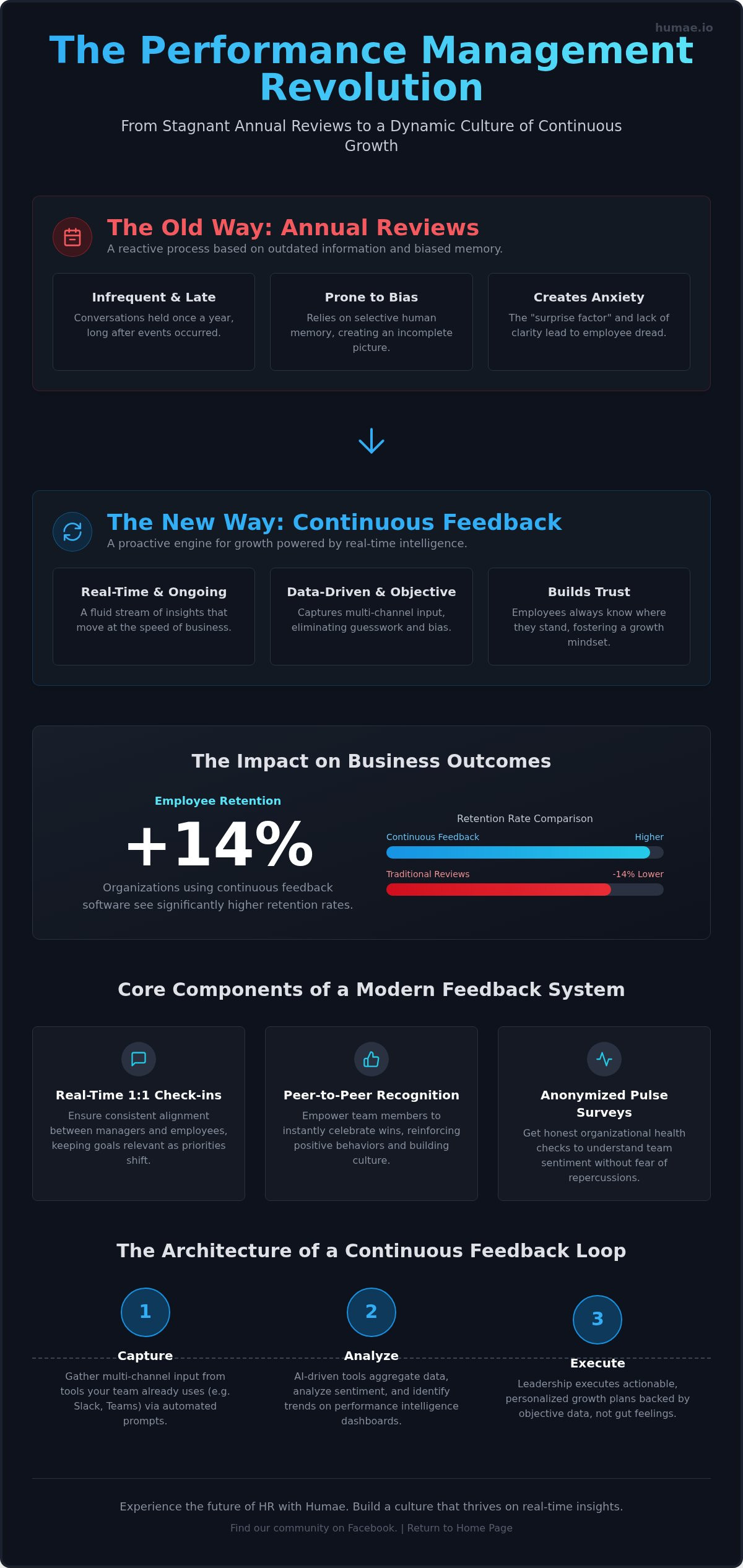
- Real-time 1:1 check-in modules: These ensure consistent alignment between managers and employees, keeping goals relevant as priorities shift.
- Peer-to-peer recognition: Building a culture of appreciation is easier when team members can celebrate wins instantly, reinforcing positive behaviors.
- Anonymized pulse surveys: These provide honest organizational health checks, giving leadership a clear view of team sentiment without the fear of repercussions.
How Continuous Feedback Drives Employee Retention
Retention is a primary concern for modern leaders. Organizations using structured continuous feedback software see retention rates that are 14% higher than those relying on traditional methods. This happens because the "surprise factor" is eliminated. Employees always know where they stand, which reduces anxiety and builds trust. Beyond simple clarity, by monitoring the frequency and tone of interactions, these platforms can identify early signs of burnout. This allows for empathetic interventions long before a resignation letter hits the desk. You're fostering a growth mindset by rewarding the progress made every day, rather than just the final results on a balance sheet.
The Architecture of a Continuous Feedback Loop
To build a truly resilient team, you need more than just periodic conversations. You need a structured architecture that turns every interaction into a data point for growth. High-performing continuous feedback software acts as the central nervous system of your organization; it doesn't just record what people say, it maps how they feel and where they're headed. This loop transforms the static nature of HR into a living, breathing engine of development.
The loop begins with capturing real-time input. Instead of waiting for a quarterly sync, the system gathers multi-channel check-ins through the tools your team already uses. Once captured, this data is aggregated into performance intelligence dashboards. This is where the magic happens. AI-driven tools analyze sentiment and trends, identifying whether a drop in productivity is a skill gap or a cultural friction point. Finally, leadership can execute actionable growth plans backed by objective data, rather than gut feelings. This ensures that every employee receives a personalized development track that evolves as they do.
Capturing Data Without the Manager Burden
Managers are often the bottleneck in feedback cycles. By using automated prompts, the software keeps conversations on schedule without requiring a manual nudge from HR. Integrating these touchpoints into existing workflows like Slack or Microsoft Teams ensures that giving feedback feels natural, not like an extra chore. Automation effectively removes the manual overhead of HR follow-ups, allowing people leaders to focus on the actual human connection rather than chasing status updates. It's about making the process invisible so the results can be remarkable.
From Raw Feedback to Performance Intelligence
Raw data is only valuable if it's contextualized. Centralized directories help link specific feedback to an employee's career stage, tenure, and current goals. This requires a strong workforce management infrastructure to ensure that every piece of praise or critique is tied to the bigger organizational picture. When you visualize team health through real-time analytics dashboards, you see patterns that were once invisible. You can spot rising stars and teams at risk of burnout long before the quarter ends. If you're ready to stop guessing and start leading with clarity, exploring an integrated performance system is the next logical step for your growth strategy.
Key Features to Look for in Performance Intelligence Software
Selecting the right continuous feedback software is about more than just ticking boxes on a feature list. In 2026, the baseline for excellence has shifted. You need a platform that doesn't just store data but interprets it in real time. This is where performance intelligence distinguishes itself from traditional HR tools. It's the difference between a static spreadsheet and a living, breathing map of your team's potential. To move beyond mere record-keeping, your software must act as a proactive partner in your growth strategy.
The most critical feature is AI-powered sentiment analysis. It helps leaders understand the "why" behind the words. If a developer mentions "workflow friction" across multiple check-ins, the AI identifies this as a systemic issue rather than an isolated complaint. This allows for multi-directional feedback, including 360-degree and peer reviews, to be synthesized into a clear picture of organizational health. For distributed and remote teams, mobile-first accessibility is a non-negotiable requirement. It's the only way to capture insights as they happen, ensuring that a brilliant idea or a critical concern is never lost in the shuffle of a busy workday.
AI and Sentiment Analysis: The 2026 Standard
AI analysis is now the gold standard for high-performance cultures. By identifying subtle patterns in constructive criticism, these systems suggest specific coaching paths for managers before a small misunderstanding becomes a major conflict. Using sentiment scores allows you to benchmark team morale over time, giving you a quantitative view of qualitative data. We believe in high-tech with a human heart; this means ensuring AI analysis remains a tool for support, not surveillance. The goal is to empower employees with insights that help them thrive, while maintaining strict standards for privacy and ethics.
Integrating Feedback with Goal Frameworks
Feedback without context is often just noise. This is why OKR tracking must be baked into your feedback loop. When a manager gives praise, it should directly link to a specific Key Result or objective. This connection turns daily wins into visible progress toward long-term company goals. By building a transparent employee directory where goals and feedback intersect, you create a culture of accountability and shared success. Every interaction becomes a building block for the company's vision, making individual growth inseparable from organizational achievement.
Implementing Continuous Feedback: A Strategy for Adoption
Successful implementation is the bridge between buying a tool and building a culture. Adopting continuous feedback software is not a technical event; it's a strategic shift in how your organization communicates. To ensure this transformation sticks, you must begin at the top. Securing leadership buy-in happens when you demonstrate the direct link between real-time insights and business impact. When executives see that structured feedback loops lead to higher retention and faster goal attainment, the software moves from an HR expense to a core business asset.
The next step involves training managers to evolve their role. Most managers are used to "policing" performance rather than coaching it. You need to provide them with the skills to facilitate coaching-style 1:1s that focus on future growth rather than just status updates. We recommend a gradual rollout to manage this change effectively. Start by moving from annual reviews to quarterly check-ins, then eventually to real-time interactions. By setting clear expectations for both the frequency and the quality of these touchpoints, you remove the ambiguity that often stalls new initiatives.
Overcoming the 'Too Many Meetings' Objection
One of the biggest hurdles to adoption is the fear of calendar bloat. The solution lies in focusing on quality over quantity. A 15-minute high-impact check-in is often more valuable than an hour-long rambling session. By using asynchronous feedback tools, teams can share updates and praise without needing a synchronous meeting. Modern software helps managers prepare for these 1:1s in seconds, not hours, by aggregating recent wins and sentiment data into a single view. If you want to see how this works in practice, you can explore our intuitive performance interface.
Fostering Psychological Safety in Digital Feedback
Trust is the fuel for any feedback loop. For employees to be honest, they must feel safe. Encouraging "upward feedback" where team members review their leads is a powerful way to build trust across hierarchies. You should normalize constructive criticism as a standard tool for professional development, not a disciplinary measure. To help this process, provide templates and AI-assisted writing tools that help employees phrase their thoughts effectively. This ensures that the message remains supportive and actionable, reducing the friction of "difficult" conversations. When feedback becomes a shared language of success, your team’s potential becomes limitless.
Elevating Your Team with Humae Performance Intelligence
Choosing the right platform means finding a balance between technical power and human empathy. Humae isn't just another HR tool; it's a visionary ecosystem designed for leaders who value growth as much as results. By combining the core functionality of an HRMS with advanced AI sentiment analysis, we've created a space where performance isn't a mystery. It's a clear, actionable path. Our continuous feedback software integrates seamlessly with your daily operations, ensuring that every piece of praise or guidance is captured exactly where it happens.
We believe that clarity drives culture. That's why we centralize performance data, OKRs, and employee directories into one intuitive interface. Leaders no longer have to hunt through spreadsheets to understand team health. Instead, you get actionable analytics that help you make data-driven people decisions with confidence. By reducing administrative friction, we empower your managers to stop acting like clerks and start acting like mentors. This allows your entire organization to focus on what truly matters: the people driving your success.
The Humae Advantage: AI-Driven Insights
Our platform uses automated sentiment tracking to help you stay ahead of engagement trends. You'll see shifts in team morale long before they impact your bottom line. Because we've integrated time-off and workforce management, you get a complete view of every employee's journey. This context is vital for empathetic leadership; knowing when a team member is nearing burnout or ready for a new challenge makes all the difference. You can see how it works to transform your organizational culture into a high-performance engine that people love being part of.
Ready to Modernize Your Performance Strategy?
Modern startups and established enterprises choose Humae because we provide the growth infrastructure they need to scale without losing their soul. Our onboarding process is designed for speed, integrating with your existing tech stack in days, not months. We don't just offer features; we offer a partnership in building a resilient, future-proof organization. It's time to leave the dread of annual reviews behind and join the future of modern management. Let's build something remarkable together.
Lead the Evolution of Your Workplace
The era of the static annual review has passed. Today, the most successful organizations treat growth as a daily conversation rather than a yearly event. By adopting continuous feedback software, you're building a culture where every team member feels seen, heard, and aligned with your mission. You've seen how the right architecture transforms raw data into performance intelligence, using AI-powered sentiment analysis to stay ahead of cultural trends.
It's time to replace administrative friction with meaningful connections. With integrated OKR tracking and a user-friendly interface designed for modern teams, you can bridge the gap between individual career paths and company goals. We're here to help you move from retrospective guessing to proactive leadership. Your team deserves a growth engine that works as hard as they do. Let's start building a workplace where everyone has the intelligence they need to thrive.
Book a demo of Humae to see Performance Intelligence in action
Frequently Asked Questions
What is the main difference between continuous feedback and annual reviews?
Annual reviews look at the past while continuous feedback software focuses on the present and future. Instead of a high-stakes meeting once a year, employees receive bite-sized insights that allow for immediate course correction. This prevents minor issues from becoming major roadblocks and ensures that praise is given when it's most impactful. It's about moving from a "grading" mindset to a "coaching" culture that values real-time growth.
How does continuous feedback software improve employee engagement?
Engagement improves because employees feel seen and supported in real-time. When wins are celebrated instantly and challenges are addressed before they cause frustration, trust grows. This constant loop ensures everyone understands how their daily tasks contribute to the company's vision. Organizations using these structured tools see 14% higher retention rates because growth becomes a shared, daily experience rather than a distant annual goal that feels disconnected from reality.
Is continuous feedback software suitable for small startups?
Yes, startups often benefit the most because they need to pivot quickly. In a fast-scaling environment, waiting a year for feedback is a luxury you can't afford. Small teams rely on agility and clear communication to survive. Implementing a lean feedback system early helps establish a culture of transparency and meritocracy. It makes it significantly easier to attract and keep top talent as the company grows and roles evolve.
How does AI-driven sentiment analysis work in HR software?
AI-driven sentiment analysis parses the natural language used in check-ins and surveys to identify emotional patterns. It looks beyond the literal text to detect signs of burnout, excitement, or frustration. By benchmarking these sentiment scores over time, leaders can spot morale shifts across specific departments. This allows for empathetic interventions long before a drop in productivity or a spike in turnover occurs, keeping the human element at the center of tech.
Can continuous feedback tools integrate with my existing HRIS?
Most modern performance intelligence platforms are designed to integrate with your existing HRIS or workforce management infrastructure. This ensures that employee data remains centralized and consistent across all tools. Syncing your directory allows the software to automatically map feedback to specific roles, teams, and career stages. This integration reduces administrative friction, allowing HR teams to focus on people strategy rather than manual data entry or managing siloed information.
What are the common challenges when implementing a continuous feedback loop?
Cultural resistance and the perceived "manager burden" are the most common implementation hurdles. Employees may initially view real-time feedback as a form of surveillance; managers might fear it adds more meetings to their calendar. Overcoming these challenges requires clear communication about the benefits of psychological safety. Using automated prompts helps keep the process efficient and supportive rather than intrusive, ensuring that the transition feels like an upgrade, not a chore.