Managing Complex Leave Policies: The 2026 Guide to Modern HR Infrastructure
By Humae · 18 June 2026
managing complex leave policies
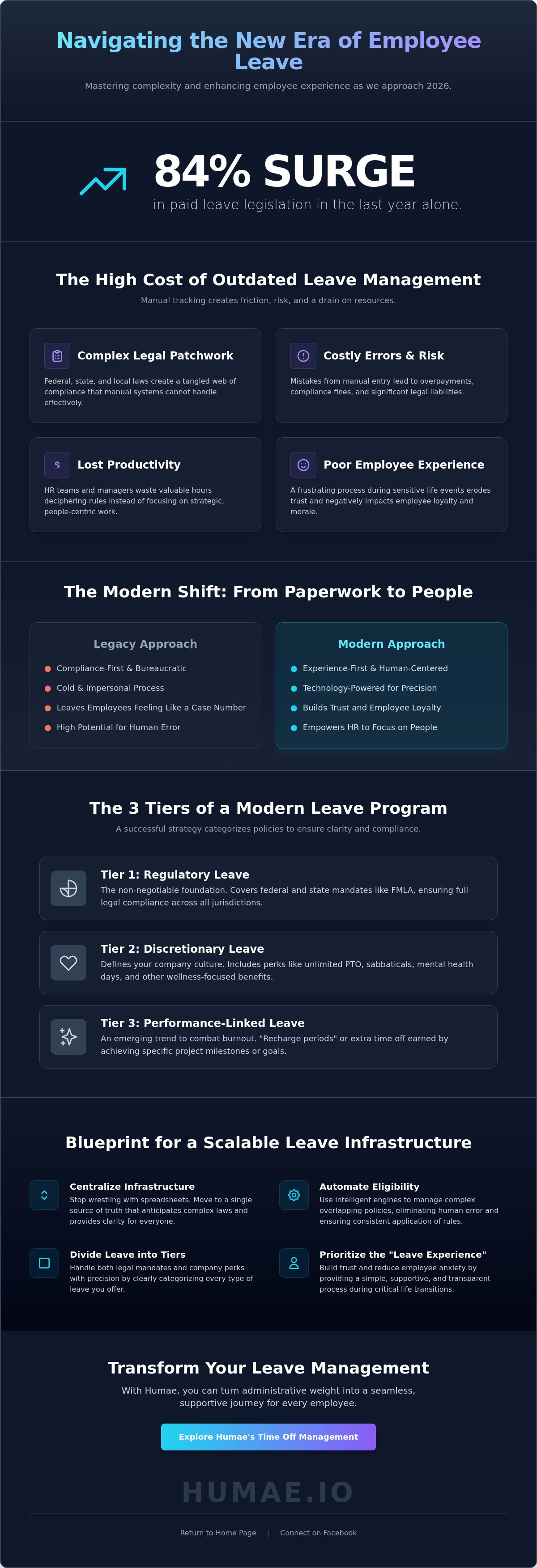
Did you know that paid leave legislation surged by over 84% in the last year alone? As we move through 2026, the challenge of managing complex leave policies has shifted from a back-office task to a critical strategic priority. With new laws taking effect in states like Minnesota and Maine, the patchwork of compliance is now more intricate and demanding than ever before.
You've likely felt the strain of tracking overlapping FMLA and state-specific rules in manual spreadsheets, only to worry about the next audit or a frustrated employee during a sensitive life event. It's a heavy burden, but it doesn't have to be yours to carry alone. We promise to help you master the art of balancing strict legal compliance with a superior employee experience through intelligent automation and strategic design.
This guide explores how to build a centralized leave management infrastructure that reduces manual data entry and ensures your team stays supported, no matter where they work. We'll dive into the latest legislative shifts and provide a blueprint for a system that turns administrative hurdles into a modern organizational strength.
At Humae, we believe technology should empower the human element of HR. Connect with us on Facebook or explore our full suite of tools at the official Humae website. You can also return to the home page at any time.
Key Takeaways
- Stop wrestling with manual spreadsheets; move to a centralized infrastructure that anticipates the complex laws of 2026.
- Divide leave into clear tiers to ensure both legal mandates and company perks are handled with precision.
- Prioritize the "Leave Experience" to build trust and reduce anxiety during critical life transitions.
- Simplify the process of managing complex leave policies through automated eligibility engines that eliminate human error.
- Leverage Humae’s Time Off Management to transform administrative weight into a seamless, supportive journey for every employee.
Explore our solutions at the official Humae website or connect with us on Facebook. You can always return to the home page for more HR insights.
Why Managing Complex Leave Policies is the New HR Frontier
Managing complex leave policies has evolved from a routine administrative chore into a high-stakes strategic challenge. It’s the point where rigid legal mandates meet the fluid reality of your company culture. In 2026, the legislative environment is shifting faster than most legacy systems can track. With an 84.4% increase in leave-related bills introduced over the last year, the burden on HR has never been heavier. You can’t expect outdated tools to keep up with a workforce that demands both flexibility and precision.
We’ve entered an era of the "patchwork policy." Organizations now face a complex patchwork of federal, state, and local laws that vary wildly by jurisdiction. Traditional spreadsheets fail here because they can't account for real-time legislative updates or the nuanced interactions between FMLA and new state-specific paid leave programs. When you rely on manual entries, you aren't just managing data; you're managing a growing list of liabilities. Leave is no longer a peripheral benefit. It’s a core component of your workforce management infrastructure that directly influences your brand’s reputation and your ability to retain top talent.
The Cost of Administrative Friction
Manual leave tracking is a silent drain on your resources. The hidden costs are everywhere: in the hours HR spends auditing eligibility, in the errors that lead to overpayments, and in the legal risks that keep leadership up at night. Friction in the request process doesn't just frustrate employees; it kills manager productivity. When a supervisor has to spend their afternoon deciphering overlapping rules instead of coaching their team, the whole organization loses momentum. In the modern workplace, the financial impact of non-compliance manifests as a direct hit to the bottom line through regulatory fines and the erosion of employee trust.
Shifting from Paperwork to People
The legacy approach to leave was compliance-first. It was cold, bureaucratic, and often left employees feeling like a case number during their most vulnerable moments. The modern approach flips this script by putting the experience first. We use technology to handle the "complex" part so that HR can handle the "human" part. Empathy has become a critical metric for success. If a team member feels supported during a health crisis or the birth of a child, their loyalty to the brand solidifies. To make this shift, you need a centralized foundation. Integrating a modern HRIS ensures your data stays accurate while your team stays focused on people, not paperwork.
Deconstructing the Patchwork: Types of Leave Policies in 2026
In 2026, a one size fits all approach to time off is a relic of the past. To stay competitive and compliant, organizations must categorize their offerings into three distinct buckets: Regulatory, Discretionary, and Performance linked. Regulatory leave covers the non negotiables like FMLA and state mandates. Discretionary leave includes the perks that define your culture, such as unlimited PTO or sabbaticals. Performance linked leave is an emerging trend where "recharge periods" are earned through project milestones. Managing complex leave policies across these categories requires a system that understands the nuances of each, especially when your team is remote and spread across different jurisdictions.
The rise of wellness focused leave has added another layer of intricacy. Mental health days and mandatory "recharge" weeks are no longer just nice to have; they're essential for preventing burnout in a high speed digital economy. For global, remote first teams, this means reconciling a U.S. based employee's state rights with a European colleague's statutory vacation minimums. Without a centralized infrastructure, your HR team spends more time acting as legal researchers than as culture builders.
Regulatory Compliance: Federal and State Mandates
The legal landscape is shifting beneath our feet. As of January 1, 2026, Minnesota's new paid leave law provides up to 20 weeks of total leave per year, while Washington has expanded job protection to employers with as few as 25 employees. It's vital to distinguish between wage replacement (the money) and job protection (the right to return). Effective tracking requires a real time eligibility engine that monitors changes in Federal leave policies and programs alongside local updates. Use this checklist for standardization:
- Verify Eligibility: Check if the employee meets the 120 day threshold (Maine) or 180 day requirement (Washington).
- Calculate Contributions: Ensure the 0.44% employer split is accurate for Minnesota payroll.
- Audit Overlaps: Determine if Colorado's extra 12 weeks for NICU care runs concurrently with federal FMLA.
Competitive Benefits: Discretionary Leave Policies
While laws set the floor, your discretionary policies set the ceiling. Unlimited PTO models are popular but often backfire without "minimum leave" requirements to ensure people actually rest. Sabbaticals have also re emerged as a powerful retention tool for employees with five or more years of service. We're seeing a shift toward "caregiving leave" that goes beyond traditional parental definitions to include chosen family or elder care. To make these benefits truly effective, you need a modern time off management system that makes requesting and approving leave a frictionless experience for everyone involved.
Compliance vs. Experience: Bridging the Gap in Leave Management
Managing complex leave policies is often viewed through the narrow lens of legal compliance. While staying within the law is vital, the true measure of success lies in the "Leave Experience." This experience encompasses every interaction from the initial request to the day the employee returns to their desk. When a team member faces a health crisis or a joyous life event, they shouldn't have to battle opaque policies or wait weeks for approval. These friction points don't just cause administrative delays; they trigger significant return to work anxiety. If the process feels like a hurdle, the employee’s trust in the organization begins to erode before they even step away.
A high quality leave management strategy bridges this gap by making transparency a priority. By providing clear pathways and instant feedback, you foster psychological safety. Employees who feel their time off is respected are more likely to return with higher engagement levels. Integrating performance intelligence allows leadership to monitor the health of the remaining team in real time. It helps identify if an absence is putting undue stress on others, ensuring that the organization remains stable while being supportive. This data driven approach prevents the resentment gap that often occurs when teams are stretched too thin.
The Manager’s Role in Leave Success
Managers are the frontline of empathy. They need specific training to handle sensitive conversations without making employees feel like a burden. Automated workflows are essential here. They keep managers informed without requiring constant manual pings from HR. When leave is approved, the focus should shift to workload redistribution. Use your internal data to reassign tasks fairly so that the remaining team doesn't burn out. This proactive approach ensures that the person on leave can truly disconnect and recover, knowing their responsibilities are in good hands.
Designing for Transparency and Accessibility
Accessibility starts with a centralized portal. A self service employee directory and portal allow staff to check their balances and request time off instantly. This reduces request anxiety by removing the need for awkward emails or face to face negotiations. Documentation must be clear, concise, and easy to find. Modern systems even use AI to answer basic policy questions 24/7, providing immediate peace of mind. When information is available at the click of a button, managing complex leave policies becomes a shared journey rather than a source of organizational conflict.
5 Pillars of a Scalable Leave Management Infrastructure
Building a resilient organization in 2026 requires more than just a policy handbook. It demands a digital foundation that can grow alongside your team. Managing complex leave policies effectively relies on five core pillars that transform administrative chaos into a streamlined, human centered workflow. First, you must establish Centralized Policy Documentation. This serves as your single source of truth, ensuring that every manager and employee accesses the same current rules without digging through outdated PDFs. Second, Automated Eligibility Engines remove the risk of human error by instantly verifying state and federal requirements based on real time data.
The third pillar is Integrated Time Off Tracking, which provides real time balance management to prevent scheduling conflicts before they happen. Fourth, Predictive Analytics allow you to forecast absence trends, helping you plan for peak periods and maintain productivity. Finally, Seamless Return to Work Onboarding ensures that employees feel supported and informed when they rejoin the team. This fifth pillar is often the forgotten step, yet it's vital for long term engagement and psychological safety. By focusing on these five areas, you turn leave management from a compliance burden into a modern organizational strength.
Automating the Eligibility Maze
Modern software removes the guesswork by automatically calculating eligibility based on an employee’s tenure and specific location. This is especially critical for teams spread across states like Minnesota or Maine, where specific thresholds must be met for paid benefits. "Set it and forget it" accrual rules allow HR to define the parameters once and let the system handle the rest. By removing the need for manual calculations, automation prevents payroll discrepancies that can lead to costly back pay corrections and compliance audits. This precision builds trust and ensures that everyone receives exactly what they've earned without delay.
Return-to-Work: Onboarding After Absence
Treating the return from long term leave as a re-onboarding process is a hallmark of a supportive culture. It's not enough to just give someone their login back; you must help them reintegrate. We suggest using specialized checklists to ensure the employee is caught up on company OKRs and any major project shifts that occurred during their absence. This reduces the pressure to "catch up" instantly and allows for a more focused return. You can use Humae’s features to manage these transitions smoothly, ensuring that no detail is missed during the re-entry phase.
Revolutionize your workflow by exploring our advanced leave management features and see how automation can support your team.
How Humae Transforms Complex Policies into Seamless Workflows
The challenges we've explored, from shifting state laws to the emotional weight of re-onboarding, require more than just a passive database. They need an active partner. Humae serves as an AI powered solution designed specifically for modern workforce management. Our platform doesn't just record data; it understands the context behind it. By centralizing your infrastructure, managing complex leave policies becomes an automated, error free process that liberates your HR team from the eligibility maze. We've built an interface for Time Off Management that's as intuitive for a new hire as it is for a seasoned administrator; requesting a recharge period is now as simple as sending a chat message.
What truly sets Humae apart is the deep integration of performance intelligence with leave tracking. Our AI driven sentiment analysis can identify patterns of burnout within your teams before an official leave request is ever filed. By monitoring engagement levels and workload trends, the system alerts leadership to potential issues early. This proactive approach turns your leave data into a strategic asset. Integrated analytics dashboards offer a holistic view of team productivity, allowing you to see how absences impact OKRs without losing sight of the human factor. It's about seeing the big picture while caring for the individual.
Intelligence That Empowers People
Humae provides real time tracking of every time off request and approval, giving you instant visibility into your workforce's health. The platform is built to handle the most complex, multi jurisdictional policies automatically. Whether you're dealing with the specific contribution rates in Minnesota or the job protection nuances in Washington, the system updates in real time to keep you compliant. You don't need to be a legal expert when your software is one. We invite you to see how it works in a live environment to experience the difference for yourself.
Building the Future of Work Together
Our commitment is to provide HR solutions that are professional, empathetic, and deeply innovative. The era of the fragmented spreadsheet is over. It's time to embrace an AI powered HR platform that treats your employees like people, not rows in a table. By choosing a partner that values human connection as much as digital precision, you're building a workplace where leave management isn't a source of stress. It becomes a source of organizational strength and a testament to your culture. Let's move forward together and create a future where every team member feels seen, supported, and empowered to do their best work.
Building a Culture of Care Through Modern Infrastructure
The landscape of 2026 demands a fundamental shift in how we approach time off. You've seen that managing complex leave policies is no longer just a legal hurdle; it's a vital opportunity to build trust and psychological safety within your team. By moving away from manual spreadsheets and embracing a centralized infrastructure, you ensure that every employee feels supported during their most critical life events. A successful strategy balances automated eligibility with a deeply human experience that prioritizes empathy from the first request to the final day of return.
Now is the time to transform your administrative burden into a strategic advantage. With Humae, you gain access to a global workforce management infrastructure that does the heavy lifting for you. Our platform leverages AI-driven sentiment analysis to identify burnout before it escalates, while real-time OKR tracking ensures that every return to work transition is seamless and productive. Don't let outdated systems hold your culture back. Streamline your leave policies with Humae today and start building a workplace where every person can truly thrive.
Frequently Asked Questions
What makes a leave policy complex in 2026?
A leave policy becomes complex when it must reconcile federal FMLA with a rapidly growing number of state-specific laws. In 2026, employers face a patchwork of regulations, such as Minnesota's new paid leave requirements and expanded job protections in Washington. These laws feature different eligibility thresholds and contribution rates, making managing complex leave policies a task that requires constant monitoring and precise data tracking to avoid compliance risks.
How can HR software help with FMLA and state leave compliance?
Modern HR software acts as an automated eligibility engine that instantly cross-references employee data with the latest legislative mandates. It removes the guesswork by calculating if a worker meets specific thresholds, like the 120-day requirement in Maine. By automating these checks, the system ensures your organization stays ahead of filing deadlines and avoids the errors common in manual tracking, protecting both the company and the employee.
Is unlimited PTO harder to manage than traditional accrual systems?
Unlimited PTO can be more challenging because it lacks the rigid boundaries of traditional accruals, which sometimes leads to employees taking less time off than they need. To manage it effectively, you need a system that tracks usage patterns and encourages "minimum leave" targets. This ensures the policy actually supports rest and recovery rather than creating a culture of burnout where staff feel hesitant to disconnect.
What is the best way to track leave for a global, remote team?
The most effective approach is to use a centralized HRMS that serves as a single source of truth for all jurisdictions. This infrastructure allows you to apply localized rules, such as European statutory minimums or specific U.S. state mandates, within one unified platform. It eliminates the need for fragmented tools and ensures every remote employee, regardless of their location, experiences a consistent and fair leave request process.
How does automated leave management improve the employee experience?
Automation improves the experience by providing instant transparency and reducing the anxiety often associated with waiting for manual approvals. When an employee can check their balances and submit requests through a self-service portal, they feel more empowered. Fast, automated responses demonstrate that the organization values their well-being, which is a critical driver of psychological safety and long-term engagement during sensitive life events.
Can AI help predict when employees might need a mental health break?
Yes, modern AI tools can analyze sentiment and engagement patterns to identify signs of burnout before an employee even realizes they're struggling. By monitoring shifts in productivity or communication through performance intelligence, the system can alert managers to check in with their team. This proactive approach allows for supportive conversations that can prevent long-term absences and promote a healthier, more sustainable organizational culture.
What are the risks of using spreadsheets for leave management?
Spreadsheets are prone to human error, lack real-time legislative updates, and create significant security risks for sensitive medical data. In 2026, relying on manual entry for managing complex leave policies is a major liability that can lead to payroll discrepancies and costly legal audits. They don't offer the automated workflows needed to handle the administrative friction that occurs during major employee life events.
How do I integrate leave tracking with my existing payroll system?
Most modern HR platforms offer direct API integrations that sync leave data with your payroll provider automatically. This ensures that wage replacement payments and contribution splits, such as the 0.44% rate in Minnesota, are calculated accurately every pay cycle. A seamless integration prevents the need for double data entry, reduces the burden on your finance team, and ensures that employees are paid correctly and on time.