How to Prevent PTO Request Conflicts: The 2026 Strategy for Modern Teams
By Humae · 19 June 2026
how to prevent PTO request conflicts
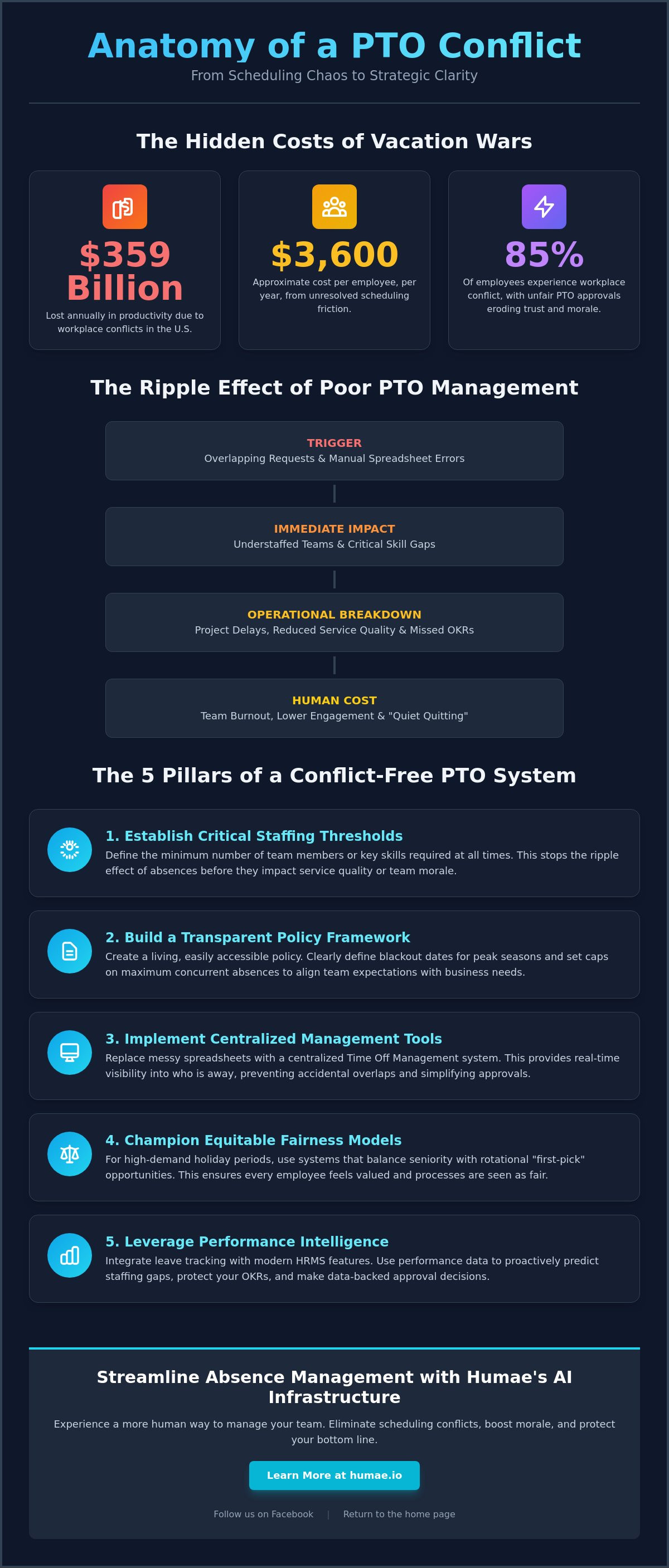
Did you know that workplace conflicts cost businesses an estimated $359 billion annually in lost productivity? Much of this friction stems from "vacation wars" where overlapping requests leave departments understaffed and managers exhausted. If you're struggling with how to prevent PTO request conflicts while navigating new 2026 state-level paid leave programs, you've likely felt the pressure of manual errors that lead to team burnout or perceptions of unfairness.
We believe that managing a modern workforce requires a blend of technological precision and genuine empathy. This article promises to help you eliminate scheduling overlaps by implementing the latest policy frameworks and AI-driven management tools. You'll learn how to build a conflict-free holiday schedule and automate approval workflows, ensuring high morale even during peak vacation seasons. We'll preview how to handle the rise of "PTO hacking" and the transition to experience-based leave management that keeps your team's productivity at its peak.
Key Takeaways
- Identify critical staffing thresholds to stop the ripple effect of overlapping absences before they impact your service quality or team morale.
- Establish a transparent policy framework with clear blackout dates to align individual vacation goals with your organization's peak seasons.
- Master how to prevent PTO request conflicts by implementing centralized Time Off Management tools that offer real-time visibility for the entire team.
- Navigate high-demand holiday periods using equitable fairness models that balance seniority with rotational systems to ensure every employee feels valued.
- Leverage modern HRMS features to integrate leave tracking with performance intelligence; this allows you to predict staffing gaps and protect your OKRs.
Defining PTO Request Conflicts and Their Impact on Operations
A PTO request conflict isn't just a calendar overlap. It's an operational bottleneck where staffing levels fall below the critical threshold needed to maintain momentum. When multiple key players are away at once, the remaining team members don't just pick up the slack; they often hit a wall. This friction reduces service quality and creates a chaotic environment where errors flourish. Understanding how to prevent PTO request conflicts starts with recognizing that Annual leave is a necessary recharge period, not a logistical hurdle to be cleared with manual spreadsheets.
The ripple effect extends far beyond the HR department. It hits your customers and your bottom line directly. When your best engineers or support staff are out without a coverage plan, response times lag and project velocity drops. These hidden costs are staggering. Project delays aren't just inconveniences; they represent missed milestones and stalled OKRs. When coverage planning fails, the burden shifts to the infrastructure. Without a robust workforce management foundation, you aren't just managing time off; you're managing a slow-motion crisis that drains your team's energy and resources.
The Psychological Cost of Scheduling Friction
Unfair PTO approvals are a fast track to lower engagement scores. Research indicates that 85% of employees experience some form of workplace conflict. When that conflict involves denied rest, "quiet quitting" often becomes a survival strategy for the frustrated. Modern teams now use performance intelligence to gauge team health during peak vacation months. If approvals feel arbitrary or biased, turnover spikes. It's about empathy and transparency. Denying a request without a clear, data-backed reason feels like a personal slight rather than a business necessity.
Quantifying the Operational Downtime
Productivity loss isn't abstract. Workplace conflicts cost U.S. businesses roughly $3,600 per employee annually. When key stakeholders vanish simultaneously, the momentum of long-term OKR tracking breaks down. Milestone delivery slows to a crawl, and the cost of catch-up work eats into your margins. If you are looking for how to prevent PTO request conflicts in a high-growth environment, start by realizing that a conflict is a failure of visibility rather than a failure of policy. By integrating your Time Off Management with performance data, you move from reactive firefighting to proactive organizational growth.
Establishing a Transparent PTO Policy Framework
Transparency acts as the ultimate deterrent against unrealistic scheduling. When your team understands the "why" behind approval decisions, friction disappears. A modern policy isn't a static PDF hidden in a folder; it's a living framework accessible through a centralized Employee Directory. This visibility ensures everyone knows the boundaries before they even plan a trip. With 48% of U.S. workers already hesitant to use their full vacation allowance, a clear policy removes the anxiety of asking and sets expectations from day one.
Setting clear blackout dates is essential for industry-specific peak seasons. For instance, a retail team might restrict leave during the holiday rush, while a finance department focuses on year-end closing. Beyond dates, you must define maximum concurrent absences. If your core development team only has five members, allowing three to leave simultaneously is a recipe for disaster. By capping absences at a specific percentage of the department or by critical skill sets, you maintain operational stability without guesswork. This data-driven approach is a cornerstone of how to prevent PTO request conflicts in high-growth environments.
Following federal guidelines on annual leave can provide a structured baseline for your policy, ensuring compliance while you build a custom culture of trust. A well-defined policy answers the question of how to prevent PTO request conflicts by removing the ambiguity that leads to resentment and turnover. It's about creating a fair playing field for everyone.
Notice Periods and Submission Windows
Tiered notice periods are a game changer for resource planning. For a single day off, a one-week notice might suffice. However, for a two-week international vacation, requiring three months of lead time allows for proper reallocation. Seasonal deadlines also help. If summer is your busiest time, requiring all July and August requests by April 1st gives managers the bird's-eye view they need to spot overlaps early. This structure balances the need for business continuity with the flexibility modern hybrid teams crave.
Formalizing Coverage Requirements
Don't let managers carry the entire burden of coordination. Require employees to identify a "coverage partner" before they hit submit. This encourages peer-to-peer communication and ensures that critical tasks always have an owner. Cross-training becomes the natural byproduct of this requirement, making your team more resilient. Integrating these steps into your workforce management infrastructure transforms an administrative task into a strategic advantage. When employees take ownership of their absences, the entire organization benefits from a more supportive, high-performing culture.
5 Practical Ways to Prevent PTO Request Conflicts
Static spreadsheets and shared calendars are reactive tools that often fail in fast-paced environments. They don't stop a conflict; they just record it after the damage is done. If you want to know how to prevent PTO request conflicts, you must shift to a proactive model where visibility is the default setting. Modern teams require infrastructure that identifies staffing gaps before they become operational crises. By moving away from manual tracking, you empower your team to make informed decisions about their own time off.
Proactive management involves five core strategies:
- Deploy a centralized time off management system to replace fragmented email chains.
- Enable self-service visibility so employees can see potential overlaps before submitting a request.
- Set up automated approval workflows that apply policy rules consistently.
- Use predictive analytics to forecast high-demand periods based on historical data.
- Sync leave tracking with project management tools to protect critical deadlines and OKRs.
This integrated approach ensures that your team stays productive while individuals get the rest they deserve. It's about creating a system where the data does the heavy lifting, leaving managers free to focus on mentorship and high-level strategy.
Maximizing Visibility with Real-Time Dashboards
Real-time analytics dashboards are the antidote to scheduling blind spots. They provide managers with a bird's-eye view of team availability across departments, which is crucial for cross-functional projects. When employees have access to a shared directory, they can check team capacity before planning their trips. This transparency encourages a culture of mutual respect. In 2026, many employees use "PTO hacking" to maximize holidays; dashboards help you spot these clusters early and adjust expectations before the work piles up.
Automating the Approval Hierarchy
Manual approvals are prone to bias and delays. By using a modern HRIS, you can set up logic-based rules that streamline the process. For example, the system can auto-flag any request that would drop department capacity below 70 percent. This creates a standardized, fair environment where every request is measured against the same criteria. It effectively answers how to prevent PTO request conflicts by removing the human error and emotional friction from the approval loop, ensuring your team stays balanced and burnout-free.
Navigating the Challenges of High-Demand Holiday Scheduling
The final week of December is often the ultimate stress test for any leave policy. It's the moment when the objection "but we all want the same week off" becomes a reality. If your current approach relies on a first-come, first-served basis, you're likely fostering a culture of toxic competition. This race-to-the-bottom model rewards the fastest clicker rather than the most dedicated contributor. It creates unnecessary anxiety and often leads to resentment among those who missed out by mere seconds. Managers already spend between 20% and 40% of their time on conflict resolution; your holiday schedule shouldn't add to that burden.
Solving how to prevent PTO request conflicts during these peak windows requires a shift toward more sophisticated fairness models. Seniority is a traditional choice, yet it can alienate your younger, high-potential talent. A better approach involves integrating performance intelligence. By rewarding employees who consistently hit their OKRs with priority choice for holiday dates, you transform a logistical headache into a powerful motivational tool. This ensures that your top performers feel valued while maintaining the operational integrity of the team. It's a data-driven way to ensure that the people driving your success get the rest they've earned.
The Rotational Approval System
A rotational system is one of the most equitable ways to manage high-demand periods. By tracking historical data, you can ensure that an employee who took the previous year's holiday off moves to the back of the queue for the current year. Some organizations implement a points-based system where "premium" dates cost more points, encouraging a natural distribution of leave. The key to success here is communication. When you must deny a request, explaining the data-backed "why" maintains trust and prevents the perception of favoritism. It effectively answers how to prevent PTO request conflicts by making the process predictable and fair for everyone.
Incentivizing Off-Peak Time Off
Sometimes the best way to handle a conflict is to prevent it from happening. Offering "bonus" hours or additional perks for those who volunteer to work during blackout dates can significantly reduce the volume of holiday requests. You can use sentiment analysis to identify team members who might be more flexible with their dates in exchange for these rewards. Ensure that your employee directory clearly reflects these incentives and availability statuses. This proactive transparency helps everyone see the value in choosing alternative vacation windows. Modernize your holiday planning with Humae's automated leave management tools.
Streamlining Absence Management with Humae AI Infrastructure
Traditional tools tell you who is away. Humae tells you how that absence impacts your future. By integrating Time Off Management with Performance Intelligence, we provide a holistic view of your team's health. This isn't just about tracking days off; it's about understanding how to prevent PTO request conflicts while protecting your most ambitious goals. Our AI-powered infrastructure analyzes historical patterns to predict potential staffing shortages before they manifest, allowing you to adjust resources proactively. We believe that technology should serve people, and our platform is designed to make that connection seamless and intuitive.
Many organizations find that switching to automated workflows can reduce administrative burdens by roughly 40 percent. This efficiency allows HR leaders to move away from clerical tasks and focus on what truly matters: the people. Humae positions itself as a partner in this transition, offering a human-centric approach to workforce management that values both organizational success and individual well-being. When the system handles the logic, you can focus on the culture. It effectively solves the puzzle of how to prevent PTO request conflicts by providing the visibility and data needed to make fair, fast decisions every time.
Integrated Time Off and Performance Intelligence
Imagine seeing the direct impact of a leave request on your current team OKRs in real-time. Humae's platform makes this possible by syncing attendance with project data. The AI doesn't just flag overlaps; it suggests the optimal windows for leave based on upcoming project milestones and historical team capacity. This ensures that no one is denied rest simply because of a lack of planning. Humae is more than a tool; it is a growth engine that ensures your team remains energized and effective through every season.
Getting Started with Modern Workforce Management
Transitioning from manual spreadsheets to a modern platform is simpler than you think. Our centralized Employee Directory serves as the single source of truth, making conflict prevention a natural part of your daily workflow. By consolidating your HRMS and performance tools into one interface, you create a seamless experience for every team member. This integration removes the friction that leads to burnout and turnover. Ready to transform your organization? Explore our features and book a demo today to see how we can help you build a conflict-free culture.
Future-Proof Your Team's Time Off Strategy
Mastering the balance between personal rest and professional results is the hallmark of a high-performing organization. Transitioning from reactive conflict resolution to proactive, automated visibility is the most effective way to protect your team's energy. By establishing transparent frameworks and embracing real-time visibility, you eliminate the friction that leads to understaffing. Mastering how to prevent PTO request conflicts ensures that your culture remains supportive, even during high-demand seasons.
The modern workforce deserves a strategy that blends technological precision with deep empathy. Utilizing AI-driven sentiment analysis and real-time OKR tracking allows you to make decisions that empower your people while hitting every milestone. A robust global workforce management infrastructure transforms administrative hurdles into strategic advantages for your brand. It's time to replace manual errors with a system that prioritizes human connection and organizational health. We are here to help you navigate this transition with confidence and ease.
Optimize your team’s growth with Humae’s AI-powered HR platform. Let's build a future where every team member returns from their break inspired and ready to succeed.
Frequently Asked Questions
How do you handle overlapping PTO requests fairly?
Fairness is achieved through rotational or points-based systems rather than subjective management choices. By tracking who took the previous year's peak holidays off, you ensure that every team member has an equal opportunity for rest over time. Data-backed decision-making prevents the perception of favoritism and keeps team morale high during competitive scheduling periods. This structured approach respects the individual while protecting the collective output of the group.
Can a manager deny a PTO request due to staffing issues?
Managers have the authority to deny requests when they threaten operational capacity or drop staffing below safe levels. However, a denial should always be accompanied by a clear, transparent reason such as a project milestone or a pre-defined blackout period. Communicating the "why" behind the decision is essential for maintaining trust. Offering alternative dates or incentives for working during peak times can also soften the impact of a denied request.
What is the best way to track employee time off in 2026?
The most effective method is using an integrated HRMS that combines time off management with performance intelligence and real-time visibility. Moving away from manual spreadsheets reduces errors and provides a centralized source of truth that both managers and employees can access. This technology allows for predictive analytics, helping you spot potential staffing gaps months in advance. It transforms an administrative burden into a strategic advantage for the entire organization.
How far in advance should employees request time off?
Employees should follow a tiered timeframe, providing at least three months of notice for vacations longer than one week. For peak seasons, setting fixed deadlines like April for summer holidays helps managers understand how to prevent PTO request conflicts before the schedule is locked. This structured approach allows for better resource reallocation and ensures that no department is left understaffed during high-demand periods. Clear windows of submission reduce last-minute stress for everyone involved.
What are the most common causes of PTO request conflicts?
Most conflicts stem from a lack of visibility into team calendars and the absence of defined blackout dates for peak seasons. When employees plan trips in a vacuum, they often target the same holiday weekends or bridge days without realizing their colleagues have done the same. Without a centralized system to flag these overlaps early, managers are forced into reactive firefighting. Identifying these high-demand clusters through data is the first step toward a conflict-free culture.
How does an HRMS help prevent scheduling overlaps?
An HRMS uses automated logic and self-service dashboards to flag scheduling overlaps before they are even submitted for approval. By setting capacity thresholds, the system can auto-reject or flag requests that drop staffing below critical levels. This technology effectively solves the challenge of how to prevent PTO request conflicts by providing a single source of truth that everyone can see in real-time. It removes human error and emotional bias from the approval loop entirely.
Is a "first-come first-served" PTO policy legal and fair?
A first-come, first-served policy is legally permissible but frequently creates a sense of inequity and unnecessary stress within the team. It often penalizes those who aren't constantly monitoring the system and ignores historical context or performance. Transitioning to a rotational or performance-based model creates a more equitable environment for everyone. Modern organizations prefer systems that reward contribution and ensure that holiday opportunities are distributed fairly across the entire workforce over several years.
How can I manage holiday time off for a remote team?
Remote holiday leave is best managed via a centralized directory that accounts for regional holidays and diverse time zones. Since distributed teams often have different local calendars, an integrated platform helps synchronize global schedules in one view. Clear communication and early submission windows are essential for maintaining coverage in a distributed environment. This ensures that project momentum continues even when team members are celebrating different cultural or national holidays across the globe.