Choosing the Best Skills Tracking and Management Software for 2026
By Humae · 12 August 2026
skills tracking and management software
What if your most valuable business asset was hiding in plain sight, buried under a mountain of outdated spreadsheets? You likely already know that manual tracking is broken. It's nearly impossible to identify internal talent for new projects or provide clear career growth paths without robust skills tracking and management software. You aren't alone. With the global market for these tools reaching $0.63 billion in 2026, the shift toward intelligent workforce mapping is no longer optional.
Finding the right platform is the first step toward transforming your organization into a skills-first powerhouse. We understand that you need more than just a digital list; you need a way to map organizational gaps and automate career pathing for every employee. This guide explores the top-tier platforms for 2026, focusing on AI-driven intelligence and the critical regulatory updates affecting AI in hiring. You'll discover how to move beyond basic directories to a system that supports data-driven promotion and long-term retention.
Key Takeaways
- Learn how to transition from static job roles to a skills-first model that uncovers internal talent and reduces organizational turnover.
- Identify the most critical features in skills tracking and management software, such as real-time visualization and AI-driven gap analysis.
- Understand why continuous feedback loops offer a more accurate and human picture of employee value than traditional annual reviews.
- Master a five-step deployment strategy to audit your existing data and build a revenue-driving competency framework.
- Discover how integrating AI-powered sentiment analysis transforms basic skill lists into a comprehensive performance intelligence engine.
Why Skills Tracking and Management Software is Essential in 2026
Business moves fast. If you're still relying on static job titles to define your team, you're already behind. Modern skills tracking and management software isn't just a digital filing cabinet. It's a dynamic engine that records, analyzes, and predicts employee competencies in real time. It transforms the way leaders view their people, moving away from rigid roles toward a fluid, skills-first organizational model.
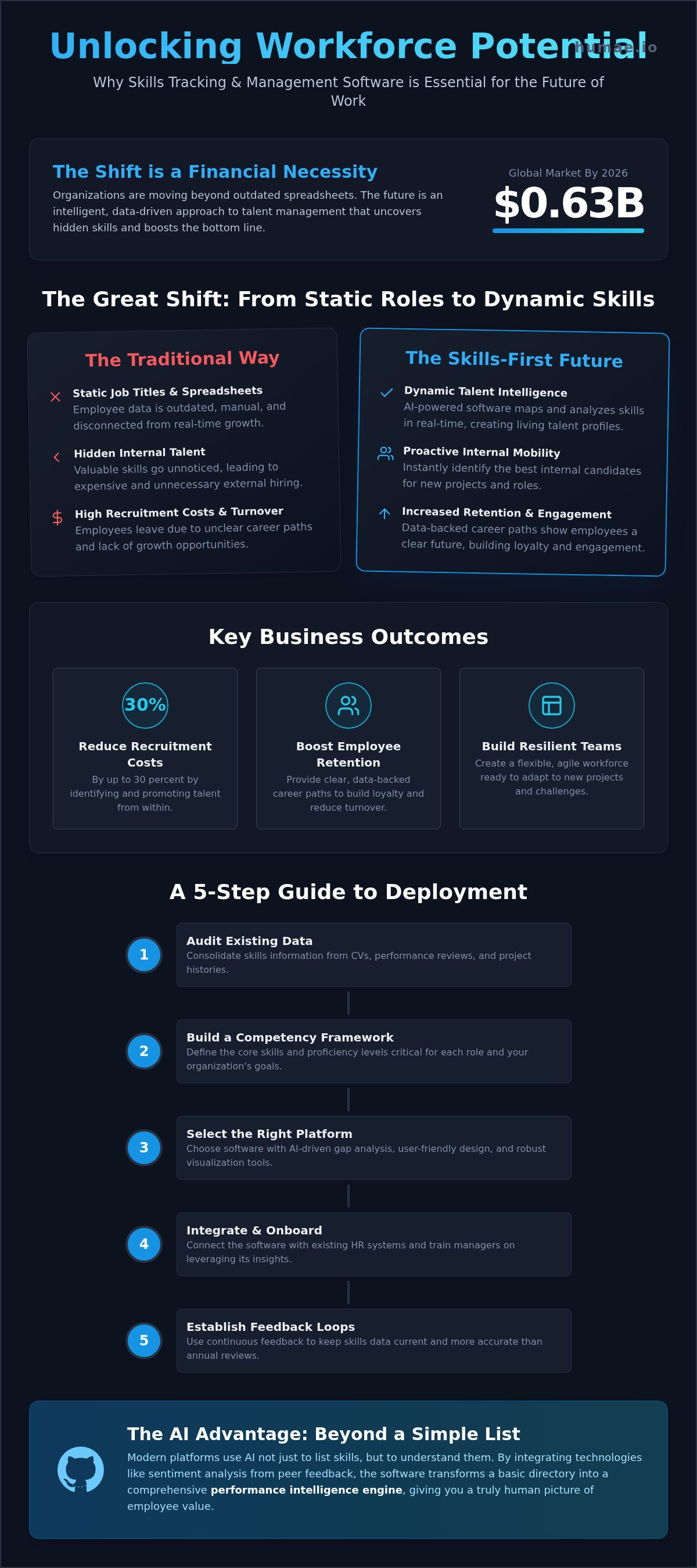
This shift is more than a trend; it's a financial necessity. Industry reports indicate that organizations utilizing comprehensive skills data can reduce recruitment costs by up to 30 percent. By identifying internal talent for new projects, you avoid the expensive and time-consuming process of external hiring. This approach creates a more resilient workforce management infrastructure, built on the foundations of a robust Competency management system. It ensures that every person in your organization is positioned where they can provide the most value.
The Shift from Static Directories to Dynamic Intelligence
Traditional employee directories are where data goes to die. They capture a moment in time, usually from an initial CV, and rarely change. In 2026, that isn't enough to stay competitive. Traditional directories fail because they don't capture real-time growth or the "hidden" talents employees develop on the job. AI-powered platforms change this by turning basic profiles into living talent maps. These systems analyze project outcomes and peer feedback to update skills automatically. You don't just see a name and a title; you see a evolving professional ready for the next challenge. This level of transparency is a core part of modern HR infrastructure, ensuring no talent is overlooked.
Bridging the Gap Between Hiring and Retention
The journey starts on day one. By using skills tracking and management software during the onboarding process, you can identify specific training needs immediately. This proactive approach prevents the "skills gap" from ever impacting team productivity. There's a deep emotional impact here as well. When employees see a clear, data-backed map for their career growth, their engagement levels skyrocket. They feel seen and supported. Providing clear paths for advancement doesn't just fill roles; it builds loyalty. In a market where high turnover is a constant threat, showing your team exactly how they can grow with you is the ultimate retention strategy.
Key Features to Look for in a Skills Management Platform
Not all platforms are created equal. Selecting the right skills tracking and management software requires looking past basic lists to find a tool that understands your team's potential. This is especially vital as organizations recognize that Developing workforce skills for a strong economy is now a prerequisite for long-term survival. You need a system that offers a dynamic skills matrix, providing real-time visualization of where your team shines and where they need support.
A modern platform must also include AI-driven gap analysis. Instead of manually guessing what training is needed, the software should automatically identify missing competencies based on your upcoming project requirements. This intelligence links directly to performance intelligence, ensuring that skill development isn't just a checkbox exercise but a driver of actual business output. When you connect these dots, you can explore how these elements come together in a unified HR platform designed for modern teams.
Adoption is the final piece of the puzzle. Even the most advanced skills tracking and management software will fail if it's too complex for daily use. A user-friendly interface is essential to ensure high adoption rates across the entire organization. It should feel like a supportive partner, not a technical hurdle, for both managers and employees.
Automated Skills Taxonomies and Libraries
Manual data entry is the enemy of accuracy. If your team has to type in every skill they learn, your data will be inconsistent and quickly outdated. Modern platforms use AI to suggest skills based on project history and peer feedback. This standardizes competencies across different departments and roles, ensuring everyone speaks the same "skills language." It removes the administrative burden and provides a clean, reliable dataset for decision-making.
Real-Time OKR and Goal Integration
Skills tracking shouldn't exist in a vacuum. It must be tied to your specific business objectives. By monitoring how new skill acquisition impacts key results, you gain a clear picture of your ROI. You can see exactly which competencies are moving the needle on your most important targets. Integrating these insights with performance tracking features allows you to build a culture where growth and achievement are perfectly aligned.
Skills Tracking vs. Traditional Performance Reviews
Traditional performance reviews are often a source of anxiety. They rely on a "snapshot" of the past twelve months, which is inherently flawed and prone to recency bias. In contrast, skills tracking and management software offers continuous monitoring. This isn't about constant oversight; it's about accuracy. Real-time feedback loops create a more human and precise picture of employee value by capturing growth as it happens. You no longer have to wait for an annual meeting to recognize an achievement or address a hurdle.
By moving away from retrospective cycles, you fundamentally reduce bias in promotions. Objective skills data replaces manager intuition. This ensures that career advancement is based on demonstrated competencies rather than "gut feelings" or personal visibility. For organizations ready to make this transition, industry experts at AIHR offer vital guidance on developing a competency model. This framework serves as the backbone for an unbiased, data-driven evaluation process that employees can actually trust.
The Move Toward Performance Intelligence
Performance intelligence is the new standard. It's the intersection of technical skills, actual project output, and emotional sentiment. While legacy systems focus solely on the "what," modern leaders use analytics dashboards to understand the "how." Sentiment analysis helps you see if a team is thriving or if a skill gap is causing systemic frustration. These insights allow you to identify high-potential employees who might be overlooked in modern performance management systems that lack a dedicated skills-first focus. It's about seeing the person behind the data points.
Fostering a Culture of Continuous Growth
When employees take ownership of their own skills profile, the organizational dynamic changes. They aren't just passive participants in their careers. Instead, they see their progress daily on a digital dashboard. This visibility makes constructive criticism more effective because it's tied to specific, measurable milestones. The psychological benefit is significant. Seeing a "skill bar" move from intermediate to expert provides a sense of tangible achievement. It turns the workplace into a space for constant, supported evolution where every individual knows exactly where they stand and where they can go next.
A 5 Step Guide to Selecting and Deploying Skills Tracking Software
Implementation is where your vision for a skills-first culture meets reality. Selecting the right skills tracking and management software requires a strategic approach that goes beyond just looking at a list of features. You need a deployment plan that respects your existing data while paving the way for future growth. Follow these five steps to ensure your transition is smooth and effective.
- Audit your current data sources: Most employee information is hiding in plain sight. It's often scattered across archived PDF resumes, LinkedIn profiles, or project-specific Slack channels. Gather these fragments to understand your starting point.
- Define your core competency framework: This is the blueprint of which skills drive your revenue and cultural success. Don't try to track everything at once. Focus on the technical and soft skills that actually move the needle for your business.
- Choose a platform that scales: Startups need lean, agile tools that allow for quick shifts. Enterprises require deep hierarchical structures and complex reporting. Ensure the tool you choose can grow alongside your headcount.
- Run a pilot program: Testing your skills tracking and management software with a single department, like Marketing or Engineering, provides a low-risk environment to refine your taxonomy and iron out technical kinks.
- Integrate with your HRMS: To avoid data silos, your skills platform must sync perfectly with your existing people data. This creates a single source of truth that prevents administrative fragmentation.
Evaluating Vendor Scalability and Support
Fragmented tool stacks are the enemy of efficiency. An all-in-one approach usually outperforms a collection of disconnected apps, especially for hybrid teams that need a centralized hub. Check for mobile accessibility and a clean interface that won't require weeks of training for your staff. You can explore how Humae works to see a platform built for intuitive scaling and high user adoption.
Data Privacy and Employee Trust
In 2026, compliance is about more than just avoiding fines; it's about building a culture of trust. With new state-level AI regulations active in Illinois and Texas as of January 1, 2026, transparency is mandatory. Explain the "why" to your team from day one. When employees see that tracking their growth leads to personalized career paths and better promotion opportunities, they'll engage with the system honestly. Setting clear permissions ensures they feel safe sharing their growth areas without fear of judgment.
Build a more transparent organization with Humae.
Humae: The AI-Powered Hub for Skills and Performance Intelligence
Humae stands at the very center of the modern employee lifecycle. While legacy HR systems focus on administrative checkboxes, Humae provides a centralized infrastructure that prioritizes the human element of your business. It's a comprehensive skills tracking and management software that integrates naturally into your daily operations. By combining technical data with AI-powered sentiment analysis, the platform offers a depth of understanding that simple lists simply cannot match. You don't just see what your team can do; you understand their engagement and their true potential for future growth.
The platform connects OKR tracking directly to your workforce management strategy. This ensures every skill developed is tied to a specific, measurable business objective. Leaders can access intuitive analytics dashboards that simplify complex data into clear, actionable steps. You can visualize team progress in real time and align individual growth with the company's high-level vision. It's about making data accessible so you can lead with both confidence and empathy, replacing fragmented tool stacks with a single, intelligent hub that supports your entire team.
Seamless Onboarding and Directory Management
Onboarding shouldn't be an administrative chore. With Humae, it becomes your first strategic opportunity to gather vital skills data. As new hires join, the system automatically builds their profiles, creating a clean and searchable employee directory that stays current. This centralized directory infrastructure updates itself as your people grow and take on new challenges. By automating these repetitive tasks, you significantly reduce the administrative burden on your HR teams. This allows your people experts to focus on what really matters: building a thriving, supportive company culture where everyone can succeed.
Actionable Insights for Modern Leaders
Great leaders are often already in your building, just waiting for the right opportunity to be discovered. Humae uses real-time intelligence to help you identify the next generation of talent within your existing team. This proactive approach does more than just fill roles; it actively prevents burnout and improves retention by ensuring people are in positions that challenge and fulfill them. When you understand the emotional and professional pulse of your organization, you can make decisions that support both business health and employee well-being. Ready to see the difference for yourself? You can start your journey with Humae today and experience a platform built for the future of work.
Build Your Skills-First Powerhouse Today
The future of work belongs to organizations that prioritize agility and human potential. We've seen how moving beyond static job descriptions to a dynamic skills-first model allows you to identify hidden talent and bridge productivity gaps before they ever impact your bottom line. Implementing the right skills tracking and management software is the foundation of this transformation. It turns fragmented data into a clear map for organizational success and employee fulfillment.
Choosing your infrastructure is about more than just technical features. It's about empowering your people with an experience that fosters growth and trust. Humae provides the intuitive workforce management infrastructure required to stay competitive in 2026. By utilizing AI-driven sentiment analysis and real-time OKR tracking, you can finally align individual aspirations with your highest business goals. The tools are ready. Now, it's time to lead your team into a more transparent and productive future.
Optimise your team’s growth with Humae’s AI-powered platform and discover how a centralized hub can redefine your organizational culture.
Frequently Asked Questions
What is the best skills tracking and management software for small businesses?
The best skills tracking and management software for small businesses is one that balances powerful AI insights with an intuitive interface. Startups often lack dedicated HR departments, so they need a platform like Humae that automates data gathering. This prevents administrative bloat while providing the talent visibility usually reserved for enterprises. Look for tools that offer clear visualization of your team's growth without requiring extensive technical training for your managers or staff.
How does AI improve the accuracy of skills management?
AI improves accuracy by removing the subjectivity of manual self-reporting. Instead of relying on an employee's memory, AI analyzes project outcomes, peer feedback, and even communication patterns to suggest new competencies. This dynamic approach ensures your talent map reflects real-world performance rather than just a static CV. It also helps identify "hidden" skills that an employee might not realize are valuable to the organization's current goals and project needs.
Can skills tracking software integrate with my existing HRIS?
Yes, modern platforms are designed to integrate seamlessly with your existing HRIS or HRMS. This connectivity ensures that your employee directory, time-off data, and performance metrics stay synced across all systems. By creating a single source of truth, you eliminate the risk of duplicate entries and data fragmentation. Most software in 2026 uses standard APIs to make this process straightforward for your internal IT or HR teams to implement quickly.
What is the difference between a skills matrix and a competency framework?
A competency framework is the strategic blueprint that defines which skills are necessary for your company's success. It's the "what" and "why" behind your talent strategy. A skills matrix is the visual representation of that framework in action. It shows exactly who possesses which skills and at what level. Think of the framework as the map and the matrix as the live GPS showing where your team currently stands on their professional journey.
How often should employee skills be updated in the system?
Skills should be updated as close to real-time as possible. In a fast-paced environment, waiting for an annual review means your data is already obsolete. The best practice is to update competencies after every major project milestone or when an employee completes a specific training module. AI-driven platforms handle much of this automatically, ensuring your talent map stays current without requiring constant manual input from your busy team members throughout the year.
Is skills tracking software worth the investment for teams under 50 people?
Investing in skills tracking and management software is highly beneficial for teams under 50 people. Small teams often have employees wearing multiple hats, making it difficult to track who is capable of what. By formalizing this data early, you prevent "talent debt" and build a scalable foundation for growth. It helps you make smarter hiring decisions and ensures you're utilizing every team member's full potential from the very beginning of your company's journey.