The Evolution of HRIS Systems: A 2026 Guide to Modern Workforce Infrastructure
By Humae · 26 March 2026
hris systems
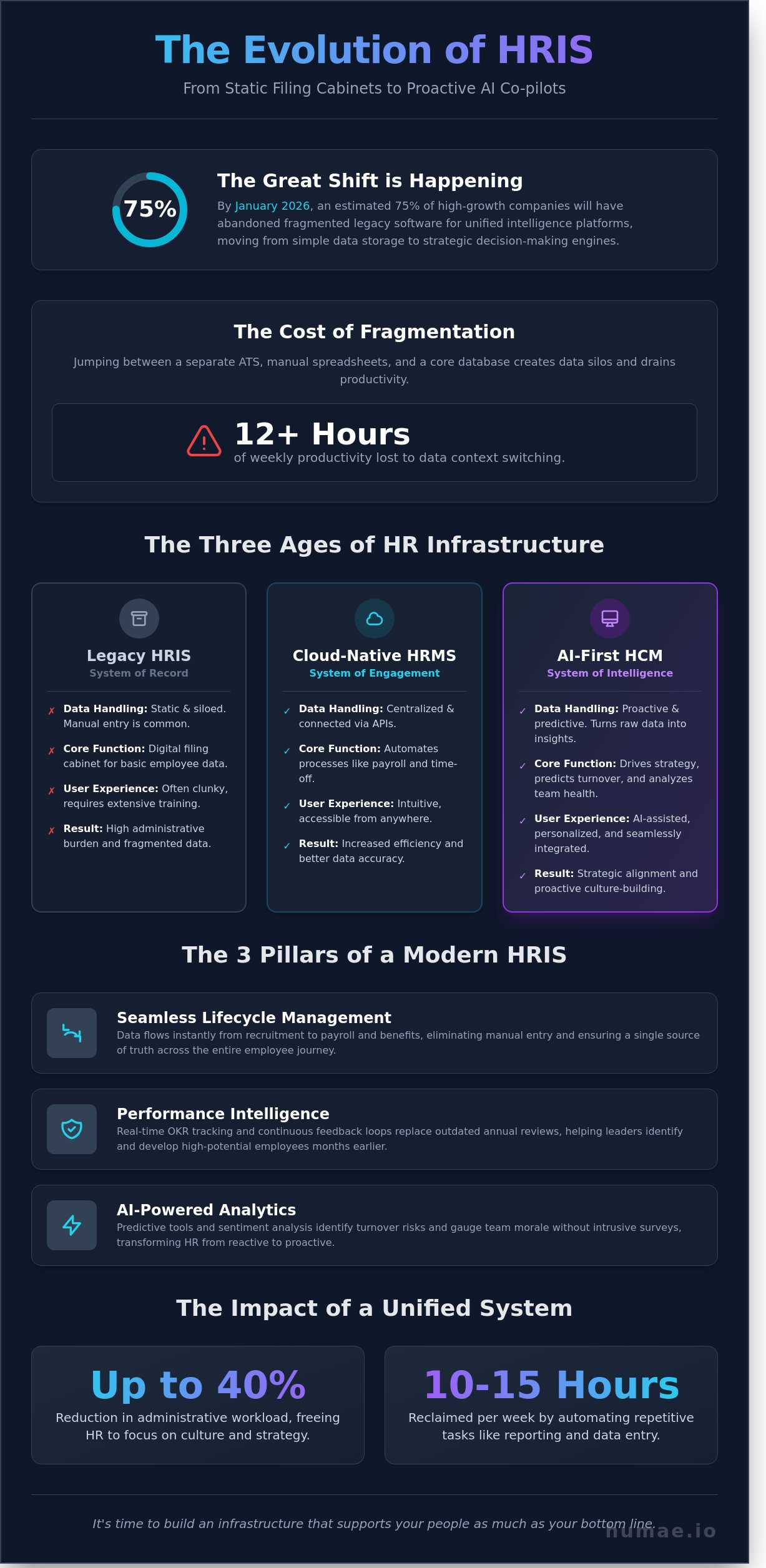
By January 2026, 75% of high-growth companies will have abandoned fragmented legacy software for unified intelligence platforms. If you're still jumping between a separate ATS, a manual spreadsheet for OKRs, and a core database, you're losing over 12 hours of weekly productivity to data context switching. We all know that managing people shouldn't feel like fighting a spreadsheet. You want to focus on your culture and your team's growth, not why your performance data doesn't talk to your payroll. Modern hris systems are no longer just digital filing cabinets; they're the engine of your company culture.
This guide shows you how the latest platforms have evolved into proactive AI partners that drive real performance. You'll discover how to replace manual tracking with automated workforce management and turn raw employee data into real-time intelligence. We'll explore the shift toward a single intuitive interface that connects every stage of the employee lifecycle. It's time to build an infrastructure that supports your people as much as your bottom line.
Key Takeaways
- Understand the shift from static databases to AI-driven systems of intelligence that proactively support team growth and decision-making.
- Learn how modern hris systems unify the entire employee lifecycle, from seamless hiring to continuous performance intelligence.
- Identify the critical differences between legacy, cloud-native, and AI-first infrastructures to future-proof your HR tech stack.
- Follow a structured 5-step framework to audit your manual bottlenecks and select a platform that aligns with your specific growth goals.
- Discover how integrating performance intelligence with core HR functions can transform your company culture and candidate experience.
What is an HRIS? Redefining Systems in the AI Era
An HRIS is the central nervous system of your digital workplace. It's no longer just a passive filing cabinet for contracts. By 2026, industry experts predict that 75% of high-growth companies will pivot from using a simple "System of Record" to a "System of Intelligence." This shift means modern hris systems don't just store data; they analyze it to predict turnover, suggest training, and streamline the entire employee lifecycle. Data is power, but only if you can use it. Modern platforms transform raw numbers into actionable insights that help managers spot burnout before it happens.
In practice, a Human Resource Management System (HRMS) serves as the single source of truth for your team. When every department looks at the same dashboard, silos disappear. You stop chasing spreadsheets and start building culture. Whether you're a startup or an established enterprise, having a unified data hub ensures that your people strategy is rooted in reality, not guesswork. It creates a seamless flow where information moves instantly from recruitment to payroll without manual errors.
HRIS vs. HRMS vs. HCM: Does the Name Matter?
Technically, an HRIS focuses on data management, while an HRMS adds process automation, and HCM (Human Capital Management) tackles strategic growth like talent acquisition. These lines are blurring fast. Platforms like Humae merge all three into one intuitive interface. You shouldn't have to care about the acronym; you should care about results. If you're managing 15 people, you need data focus. If you're at 150, you need process and strategy. Choose a system that matches your current maturity but scales with your ambition.
The Core Functions of a Modern System
A robust system handles the heavy lifting so you can focus on the human side of HR. It's about efficiency and security. Most hris systems today prioritize three pillars to ensure 99.9% data accuracy across the board:
- Digital Personnel Files: A centralized directory where every document, from tax forms to performance reviews, is accessible in two clicks.
- Automated Absence Tracking: Real-time time-off management that syncs with calendars and calculates accruals without manual entry.
- Compliance and Security: Encrypted, GDPR-compliant document storage that protects sensitive employee information 24/7.
The 3 Pillars of Modern HRIS Infrastructure
Modern hris systems aren't just digital filing cabinets; they're the engine of your company culture. When built on a robust foundation, these platforms reduce administrative workloads by up to 40%. This efficiency allows HR teams to stop chasing paperwork and start building high-performing teams. A true infrastructure connects every touchpoint, ensuring data continuity from the first application to the final exit interview. By maximizing the value of an HRIS, businesses transform raw data into a strategic roadmap for growth.
- Pillar 1: Seamless Lifecycle Management - Data flows instantly from recruitment into payroll and benefits, eliminating manual entry errors.
- Pillar 2: Performance Intelligence - Real-time feedback loops replace the outdated annual review process.
- Pillar 3: AI-Powered Analytics - Predictive tools identify turnover risks and team health trends before they impact the bottom line.
Performance Intelligence as a Core Component
Forget the dreaded annual review. It's too slow for the 2024 business cycle. High-performing teams now integrate OKR tracking directly into their daily workflow. This keeps everyone aligned with the company's North Star goals. Real-time feedback loops provide a continuous stream of data, helping leaders identify high-potential employees 3 to 6 months earlier than traditional methods. It's about proactive development rather than reactive correction. If you want to see how this looks in practice, you can reimagine the employee experience with our modern tools.
The Role of AI in Workforce Management
AI-driven sentiment analysis is the new pulse check for organizational health. These hris systems analyze communication patterns and engagement levels to gauge team morale without intrusive surveys. Automation now handles 80% of repetitive tasks like reporting and data entry. This shift isn't just about speed; it's about accuracy. Predictive analytics can now forecast potential turnover with 85% accuracy, allowing managers to intervene with personalized retention strategies before a top performer decides to leave. Using technology this way ensures your workforce planning is based on evidence, not intuition.
Comparing HRIS Systems: Legacy vs. Cloud-Native vs. AI-First
Choosing the right architecture defines your team's velocity for the next decade. While a traditional human resources information system (HRIS) served as a reliable database, modern hris systems must do more than just store PDF contracts. Legacy systems, often built in the late 1990s, offer deep customization but require 12 to 18 months for full deployment. These platforms demand heavy IT involvement and six-figure consulting fees just to change a single workflow. They're powerful, but they're anchors in a fast-moving market.
Standard Cloud-Native SaaS platforms improved the user experience significantly starting around 2015. They're faster to boot up, yet they often function merely as digital filing cabinets. They lack the deep intelligence needed for 2026 budgets. AI-First platforms, like Humae, represent the third wave. These systems prioritize automation and predictive growth. They don't just record data; they analyze it to forecast turnover or suggest the best internal mobility paths. For a 200-person company, switching to an AI-first model saves an average of 15 hours of administrative labor every week.
Who Are the Major Players in Each Category?
Established legacy providers still dominate the Fortune 500, yet they often struggle with "People First" cultures. They're built for compliance, not connection. Many standard SaaS platforms serve small businesses well by digitizing basic tasks. However, high-growth startups and enterprises are moving toward AI-powered platforms. These tools integrate recruitment and retention into a single, proactive ecosystem that scales without adding extra HR headcount.
The "Hidden" Costs of Cheap Systems
Low upfront costs usually mask long-term drains on your budget. Integration friction is the primary culprit. When your HRIS won't talk to your ATS, your team loses 22% of their productivity to manual data entry. Employee adoption rates also plummet when interfaces are clunky. A 2023 industry report showed that difficult software leads to a 35% drop in self-service tool usage. This forces HR managers back into a "help desk" role. Manual workarounds aren't just annoying; they're expensive. Replacing "free" or disconnected tools with integrated hris systems reduces the total cost of ownership by 18% through sheer efficiency gains.
A 5-Step Framework for Choosing Your HRIS
Selecting the right platform transforms HR from a back-office function into a strategic engine. Don't just buy software; invest in a foundation that supports your people. Follow this five-step framework to ensure your investment delivers real value.
- Audit your infrastructure: Map out every manual touchpoint. If your team spends 12 hours weekly on manual data entry across spreadsheets, that's your primary bottleneck to solve.
- Prioritize features: Distinguish between "must-haves" like automated payroll and "nice-to-haves" like AI-driven predictive turnover analytics. Build your core foundation before adding the bells and whistles.
- UX is everything: Test the interface with a non-HR employee. If a manager can't approve a leave request in 15 seconds, the system will fail to gain internal traction.
- Check the ecosystem: Ensure your hris systems integrate seamlessly with core business tools. For example, while a good HRIS handles payroll, a healthcare practice might also need a specialized service for medical billing; you can learn more about HPC Healthcare Partners to see how such services complement a core HR platform.
- Cultural alignment: Run a sentiment test on the vendor. Choose a partner that views HR as a human experience, not just a series of database entries.
Defining User Needs and Project Limits
Success starts with a cross-functional task force. Include IT for security protocols and Finance for budget oversight from day one. A typical migration for a 150-person company takes roughly 90 days. Don't rush this timeline. Use a weighted scorecard during vendor demos to grade performance on a scale of 1 to 10. This data-driven approach removes emotional bias from the final decision. Clean your data before moving it; importing "dirty" records into a new system creates 2x more work later.
The Importance of Scalability
Your platform must grow as fast as your headcount. A system that works for 20 people often breaks at 200 or 2000. Look for hris systems that offer global compliance features for 2025's remote-first market. A flexible SaaS model is usually superior to rigid per-module pricing. It allows you to unlock features as you scale without renegotiating contracts every six months. This agility is what separates market leaders from firms stuck in administrative loops.
Humae: The AI-Powered Future of HRIS
Centralized Infrastructure for Modern Teams
Fragmentation kills productivity. Humae provides one interface for hiring, onboarding, and managing your entire directory. Instead of clicking through five tabs to find a performance review, everything lives in a single source of truth. This consolidation reduces tool fatigue by 40% for HR managers who previously juggled multiple subscriptions. Our actionable analytics dashboards don't just show charts; they reveal the story behind the numbers. You can track real-time OKRs to ensure every team member stays aligned with company goals. When everyone has 100% clarity on their impact, engagement scores naturally rise.
- Unified Workflow: Manage the entire employee lifecycle from a single dashboard.
- Performance Intelligence: Use AI to identify high-potential talent before they burn out.
- Goal Alignment: Connect individual tasks to high-level company objectives instantly.
Getting Started with a 2026-Ready Platform
Transitioning from manual spreadsheets to AI-driven intelligence shouldn't take months. Humae's implementation is designed for speed, often reaching full deployment in under 72 hours. We've replaced rigid, old-school setups with intuitive workflows that feel natural from day one. Modern hris systems need to be as agile as the teams they support. Our platform handles the heavy lifting of data migration so you can focus on building culture. It's time to move beyond basic record-keeping and embrace a partner that understands the digital landscape. You can experience the future of HR with a Humae demo and see how we prioritize your people while scaling your processes.
Build Your 2026 Workforce Infrastructure Today
The landscape of hris systems is shifting from static databases to living, predictive ecosystems. By 2026, Gartner predicts that 60% of mid-market enterprises will prioritize AI-first infrastructure to manage their global talent. You can't rely on legacy tools that only track attendance; modern success requires 100% visibility into employee engagement and performance intelligence. Transitioning to a cloud-native platform isn't just a technical upgrade. It's a strategic move to protect your company culture in a digital-first world.
Humae bridges the gap between high-tech automation and human empathy. Our platform provides real-time feedback through AI-driven sentiment analysis, ensuring you never miss a pulse within your organization. You'll manage the entire employee lifecycle from a centralized infrastructure that handles hiring and onboarding in one place. With integrated OKR tracking, your team's goals stay aligned with 24/7 clarity. It's time to move beyond spreadsheets and embrace a partner that values your people as much as your data.
Streamline your workforce with Humae’s AI-powered HR platform. Your team deserves a future-proof foundation that grows as fast as they do.
Frequently Asked Questions
What is the primary difference between HRIS and HRMS?
An HRIS focuses on managing quantitative employee data like payroll, benefits, and core records, while an HRMS adds talent management features like recruitment and performance tracking. Think of an HRMS as a more robust layer that handles the entire employee lifecycle. HRIS systems serve as the data foundation, but HRMS layers on the qualitative human elements that drive growth and engagement.
How much does a typical HRIS system cost in 2026?
Expect to pay between $15 and $35 per employee per month for a mid-market HRIS in 2026. Implementation fees usually range from $5,000 to $25,000 depending on your company size and data complexity. These costs reflect the 4.2% annual inflation rate seen in SaaS pricing since 2023. Investing early prevents the higher costs of manual errors and fragmented data silos.
Can an HRIS help with employee retention?
Yes, an HRIS can boost employee retention by 15% through automated pulse surveys and transparent career pathing tools. These platforms identify turnover risk factors before they lead to exit interviews. By using data to personalize the employee experience, you show your team that their growth matters. High-performing teams stay longer when they feel supported by clear, data-driven career milestones.
Is an HRIS necessary for a small startup with under 50 employees?
A startup with even 20 employees needs an HRIS to prevent administrative debt and ensure 100% compliance with labor laws. Manual spreadsheets often fail once you hit the 15-employee mark, leading to a 20% increase in data entry errors. Starting early builds a scalable culture. You'll spend 10 fewer hours per week on paperwork, allowing you to focus on hiring the right talent.
How long does it take to implement a new HRIS system?
Implementing a new system typically takes 6 to 12 weeks for companies with 50 to 250 employees. Larger enterprises might require 6 to 9 months for full data migration and complex software integrations. You'll spend the first 3 weeks on data cleansing and the final 2 weeks on team training. A structured rollout ensures your staff actually uses the tool rather than reverting to old habits.
What is AI sentiment analysis in the context of HR software?
AI sentiment analysis uses natural language processing to scan internal feedback and identify the emotional tone of your workforce. It flags a 10% drop in morale across specific departments in real-time. This tech doesn't just read words; it understands the intent behind them. It helps leaders address burnout before it leads to resignations, keeping the human element at the center of your digital strategy.
Does an HRIS system handle payroll processing?
Most modern hris systems include native payroll processing or offer seamless 1-click integrations with providers like Gusto or ADP. Native payroll reduces data duplication by 30% because employee hours and tax info live in one secure place. You won't have to manually export CSV files every month. This automation ensures your team gets paid accurately, which is the foundation of trust in any workplace.
How does OKR tracking integrate with an HRIS?
OKR tracking integrates with an HRIS by linking individual performance metrics directly to company-wide strategic goals. This visibility increases goal attainment by 22% compared to static annual reviews. Employees see exactly how their daily tasks contribute to the bigger picture. It turns the platform from a simple database into a roadmap for collective success and personal achievement.